Hungary election results 2026 Péter Magyar victory reshapes power
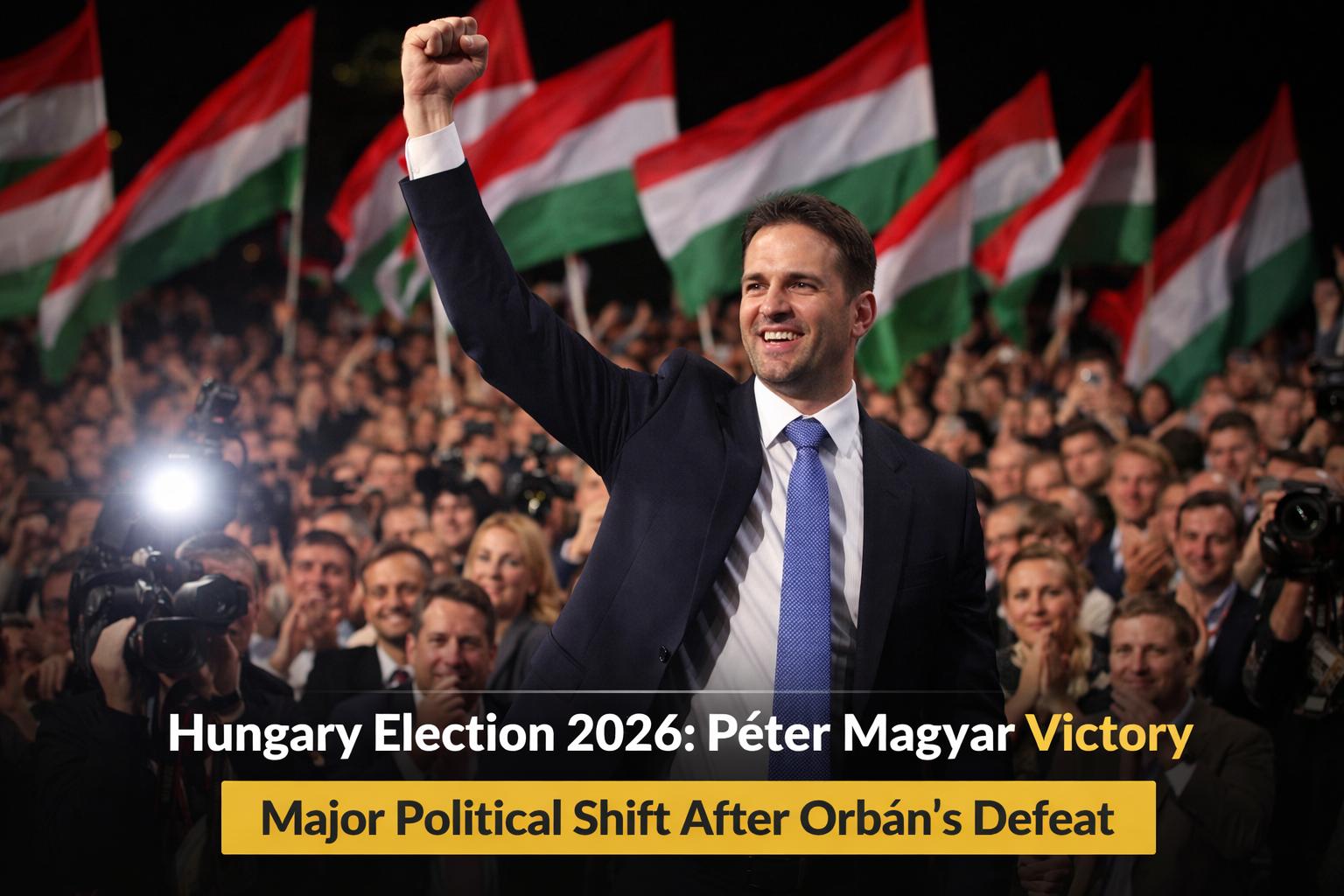
Hungary’s political landscape has undergone a dramatic shift after Péter Magyar secured a sweeping victory, ending Viktor Orbán’s long-standing rule. The Hungary election results 2026 mark one of the most significant political transitions in Europe in recent years, with wide implications for democracy, the economy, and EU relations.For many voters, this election was not just about leadership—it was about direction. The outcome signals a clear demand for change after more than a decade of centralized power.
What changed after Hungary’s election results 2026
Magyar’s Tisza party won a commanding parliamentary majority, giving it the power to push through major reforms without relying on coalition partners. This ends 16 years of continuous governance under Orbán’s Fidesz party. The new leadership is already moving quickly. Plans are underway to accelerate the formation of parliament and begin legislative action, particularly in areas like media oversight, anti-corruption enforcement, and political term limits.Orbán, acknowledging defeat, called it the “end of an era,” but indicated he may remain active in politics. His party, however, has been significantly weakened, losing much of its influence in parliament.
Why Hungary’s political shift matters globally
The Hungary politics transition is not just a domestic story—it carries broader implications for Europe and beyond. For years, Hungary’s relationship with the European Union has been strained over concerns about rule of law and governance. Magyar has pledged to rebuild trust with EU institutions, including steps toward transparency and accountability. This could unlock billions in frozen EU funds, which are critical as Hungary faces economic challenges. For global observers, especially in the United States, the shift highlights how voter sentiment can rapidly reshape entrenched political systems. It also signals potential changes in Hungary’s foreign policy, including a more balanced approach toward Russia and the West.
Key background behind Orbán’s defeat
Orbán’s leadership, while dominant, had faced growing criticism over corruption allegations, media control, and democratic backsliding. Younger voters, in particular, played a crucial role in the election outcome, favoring reform and stronger ties with Europe. Economic pressures also contributed. Hungary’s struggling economy and delays in major infrastructure projects, such as energy developments, weakened public confidence in the government. Magyar capitalized on these concerns, positioning himself as a reformist alternative focused on restoring checks and balances and tackling corruption.
What happens next for Hungary and the EU
With a supermajority in parliament, Magyar’s government is expected to move aggressively on reforms. Key priorities include restructuring state media, investigating alleged corruption, and potentially introducing term limits that could prevent long-term political dominance.Another immediate focus will be stabilizing Hungary’s economy and securing energy supplies, including diversifying oil sources and restoring key pipelines.Relations with the European Union are also set to improve, with ongoing discussions aimed at meeting governance criteria required to release withheld funding.
The Hungary election results 2026 represent more than a leadership change—they mark a turning point in the country’s political and economic trajectory. Péter Magyar’s rise reflects a broader demand for transparency, accountability, and renewed international alignment.As Hungary enters this new phase, the speed and effectiveness of reforms will determine whether this historic shift delivers lasting change both at home and across Europe.