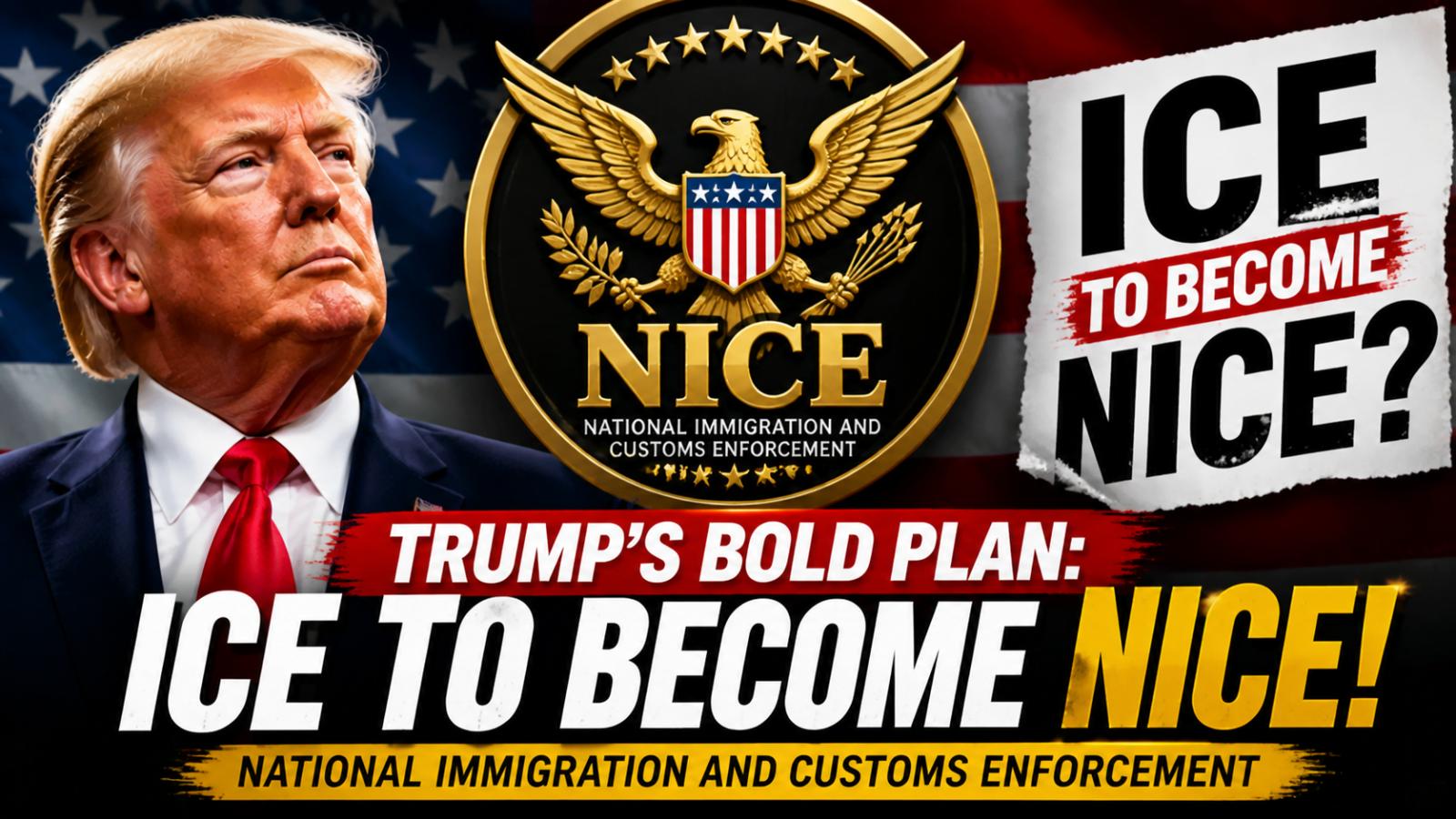
US President Donald Trump has generated significant attention on social media after sharing a proposed logo design for a rebranded version of the US Immigration and Customs Enforcement (ICE). The new design features a prominent eagle with outstretched wings, styled in gold and black, holding arrows and an olive branch. At the center, a shield with stars and stripes is flanked by stars above and below, with the acronym ‘NICE’ boldly displayed in the center. The proposal to rename ICE to the National Immigration and Customs Enforcement (NICE) was shared on Truth Social by Trump, who enthusiastically supported the idea, writing, “GREAT IDEA!!! DO IT. President DJT.”
The idea of renaming ICE to NICE has been circulating on social media, originally proposed by conservative influencer Alyssa Marie. She expressed the desire for Trump to make the change, suggesting it would force the media to say “NICE agents” repeatedly, which she viewed as a playful challenge. Trump’s endorsement of the idea has contributed to its rapid spread, sparking polarized reactions from both sides of the political spectrum.
Democratic Congresswoman Pramila Jayapal strongly criticized ICE in response to the proposal. She accused the agency of terrorizing communities, detaining US citizens, and allowing people to die in custody. She called for the abolition of ICE, a sentiment echoed by many of her supporters. On the other hand, conservative figures such as commentator Nick Sortor voiced their support for the proposal, agreeing with the renaming suggestion and encouraging Trump to follow through.
While renaming a federal agency would typically require congressional approval, the proposal has added fuel to the ongoing debate over immigration enforcement in the United States. The idea of rebranding ICE to NICE continues to spark both support and criticism, further intensifying the political discourse surrounding immigration policies. The White House, however, declined to comment beyond directing inquiries to Trump’s Truth Social post. The proposal has sparked interest and debate, illustrating the continued national divide over immigration enforcement strategies.