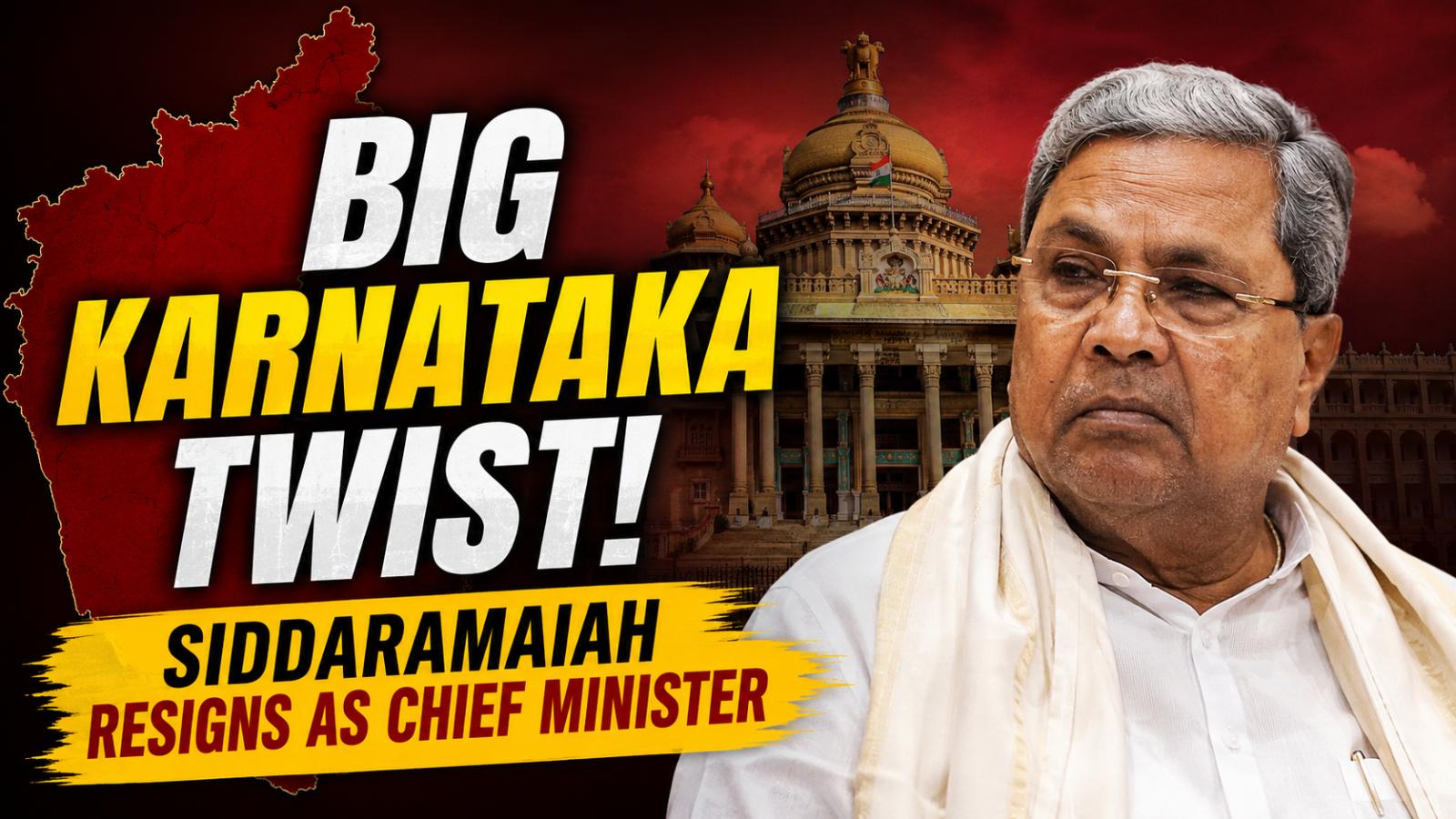
Siddaramaiah resigned as Karnataka Chief Minister on May 28, 2026, after following the Congress high command’s direction and submitting his resignation letter at the Governor’s office in Bengaluru. The move has triggered major political attention in Karnataka, with focus now shifting to the Congress party’s next Chief Minister choice.
Siddaramaiah resigned as Karnataka Chief Minister on Thursday, marking a major political turn in the state after days of speculation over a leadership change within the Congress government. The senior Congress leader submitted his resignation letter at the Governor’s office in Bengaluru after receiving directions from the party high command. Since Governor Thaawarchand Gehlot was reportedly out of town, Siddaramaiah said the letter was handed over to the official secretary.
The development brings an important chapter in Karnataka politics to a pause and opens the door for a fresh leadership arrangement in the state. Siddaramaiah, one of Karnataka’s most experienced political figures, said he respected the decision of the Congress high command and would abide by the party’s instructions. His statement was aimed at projecting discipline and unity at a time when the Congress is managing a sensitive power transition in one of its most politically important states.
Siddaramaiah’s resignation has immediately shifted public attention to the next Chief Minister of Karnataka. Deputy Chief Minister DK Shivakumar has been widely discussed as a key contender in the leadership transition. However, Siddaramaiah indicated that the final decision would rest with the Congress high command and the party’s legislative process. The move is expected to influence not only the functioning of the Karnataka government but also the Congress party’s internal balance ahead of future electoral battles.
Why Siddaramaiah’s Resignation Matters
Siddaramaiah’s exit from the Chief Minister’s post is not just a routine administrative change. It carries political weight because Karnataka remains one of the Congress party’s strongest state-level power centres. Any change in leadership here can affect caste equations, cabinet balance, regional influence, party worker morale and the Congress party’s larger national strategy.
During his tenure, Siddaramaiah was seen as a leader with strong mass appeal, especially among backward classes, minorities and welfare-focused voter groups. His governance style often focused on social justice, guarantee schemes and state welfare programmes. His resignation, therefore, raises questions about how the next leadership will continue or reshape those priorities.
The Congress high command’s role in this decision also highlights the centralised nature of leadership management within the party. By publicly stating that he followed the high command’s instruction, Siddaramaiah avoided open confrontation and sent a message that party discipline would be maintained. This is important because leadership transitions can easily create factional tensions, especially in states where multiple senior leaders have strong support bases.
At the same time, the timing of the resignation has created intense public curiosity. Voters, party workers and political observers are now watching whether the Congress can manage a smooth handover without damaging its image. If the transition is handled well, the party may project unity. If not, the opposition could use the moment to question Congress stability in Karnataka.
What Happens Next In Karnataka Politics
The immediate next step will be the formal acceptance of the resignation and the selection of the next Chief Minister. Once the Congress leadership finalises the name, the Governor is expected to invite the chosen leader to form the government. The new Chief Minister will then have to manage cabinet expectations, reassure MLAs, maintain continuity in governance and avoid any impression of internal division.
For Siddaramaiah, resignation from the Chief Minister’s post does not necessarily mean the end of political relevance. He remains one of the most influential Congress leaders in Karnataka. His future role within the party, whether as a senior strategist, campaign face or advisory figure, will be closely watched. His comments after stepping down suggest that he is not withdrawing completely from public life.
For DK Shivakumar, if he is chosen as the next Chief Minister, the challenge will be immediate and demanding. He will need to prove administrative control, maintain the Congress voter base, work with Siddaramaiah loyalists and deliver on the government’s promises. Leadership change may create excitement among one section of party workers, but it can also create anxiety among those who were politically aligned with the outgoing Chief Minister.
The opposition is also expected to sharpen its attack. BJP leaders may portray the resignation as a sign of instability or internal pressure within Congress. Congress, on the other hand, will likely present the transition as an orderly party decision and a sign of disciplined leadership. The public narrative in the coming days will depend on how quickly and smoothly the new leadership is announced.
Siddaramaiah’s resignation has now become one of the biggest political developments in Karnataka in 2026. It closes one phase of governance and begins another phase of uncertainty, negotiation and political repositioning. For the people of Karnataka, the key question is simple: whether the leadership change will improve governance or merely shift power from one camp to another. That answer will become clearer only after the new Chief Minister takes charge and begins making decisions.