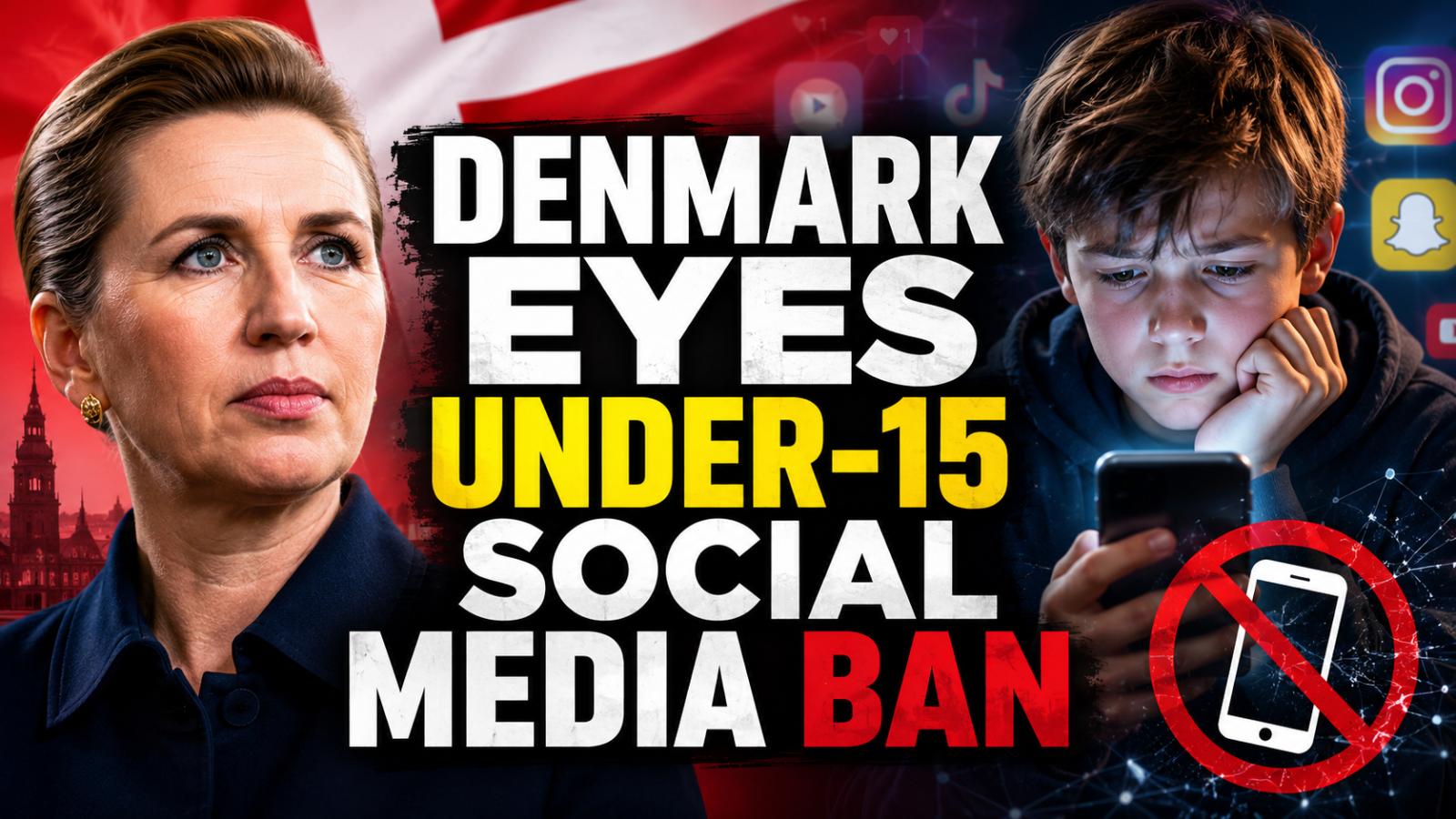
Denmark’s plan to restrict social media access for children has become a major talking point after Prime Minister Mette Frederiksen made a controversial comparison between children’s social media use and smoking. Her remark triggered strong reactions online, but it also pushed an important question into the spotlight: how far should governments go to protect children from harmful digital spaces?
The debate is linked to Denmark’s proposal to stop children under 15 from using social media platforms. Under the plan, children aged 13 and 14 may be allowed to use some platforms only with parental permission. The proposal is part of a wider child safety push as many countries look for stronger ways to reduce online harm among young users.
Why Mette Frederiksen’s Comment Went Viral ?
Frederiksen said she would rather have small children smoke than leave them alone on social media. The comment was meant to show how seriously she views the risks of unsupervised online exposure, but many people felt the comparison went too far.
Critics argued that smoking causes proven physical damage and should not be used as a casual comparison. Others said her wording was extreme but the larger concern was valid. For many parents, teachers and child safety experts, the issue is not just screen time. The bigger worry is what children are seeing, who is contacting them, and how social media algorithms influence their behavior.
Frederiksen later clarified that she does not support smoking among children. Her point, she said, was to make adults take children’s digital wellbeing more seriously.
What Denmark Is Proposing ?
Denmark is considering a social media age limit that would block children under 15 from using social media platforms. Teenagers aged 13 and 14 may still get access if their parents give consent.
The rule is expected to focus on large platforms used by children and teenagers, including apps where young users spend long hours watching videos, chatting, sharing content or receiving algorithm-based recommendations. Similar restrictions are being discussed or introduced in other countries as governments look for ways to protect young people from online harm.
The proposal has also raised practical questions. How will platforms verify a child’s age? Will parents have enough control? Can children bypass the rules using fake profiles or VPNs? These are the weak spots Denmark will need to solve if the law moves forward.
Why Supporters Want Stronger Rules ?
Supporters say children are being exposed to digital risks before they are mature enough to handle them. These risks include cyberbullying, harmful images, addictive scrolling, online grooming, blackmail, drugs, violent content and unrealistic beauty standards.
Many parents also feel they are fighting a losing battle against apps designed to keep users online for as long as possible. Even when parents set limits, children can still face pressure from friends, school groups and social trends.
Supporters of the Denmark child social media ban believe the issue should not be left only to families. They argue that platforms make money from attention, and children are especially vulnerable to emotional manipulation, comparison, fear of missing out and addictive design.
Why Critics Are Concerned ?
Not everyone agrees with a strict ban. Critics say social media is not always harmful. For many teenagers, it is a place to learn, stay connected, follow news, explore hobbies, build communities and express themselves.
Some also argue that banning children from social media may not fix the real problem. If platforms continue to promote harmful or addictive content, older teenagers and adults will still face the same risks. Others worry that strict age limits may push children into hidden online spaces where parents have even less visibility.
There is also a fairness issue. Children from digitally aware families may get guided access, while others may be completely cut off from useful online tools. A ban may reduce exposure, but it cannot replace digital education, parental involvement and platform accountability.
The Real Issue: Algorithms, Not Just Screen Time
The debate should not be reduced to “phones are bad” or “social media is bad.” That is too simple. The real concern is how platforms are designed.
Many social media apps reward outrage, shock, comparison and endless scrolling. A child may open an app to watch a harmless video but quickly be pushed toward extreme content, beauty pressure, bullying, dangerous challenges or adult material.
This is why many experts and parents want stronger rules not only for children but also for the companies behind these platforms. Age limits may help, but they will not be enough unless platforms are forced to reduce harmful recommendations, improve safety tools and act faster on dangerous content.
What Parents Should Take From This Debate ?
Whether Denmark’s rule becomes a model for Europe or not, parents should not wait for laws to protect children. The first step is knowing what children are using, who they are talking to, and what type of content they are being shown.
Parents should avoid treating screen time as only a number of hours. One hour of educational content is different from one hour of bullying, adult content or addictive short videos. The quality of online activity matters as much as the quantity.
Children also need open conversations, not only restrictions. If a child is scared of being punished, they may hide online problems. Parents need to make it easy for children to report bullying, suspicious messages, blackmail, inappropriate content or pressure from strangers.
Europe’s Bigger Online Safety Question
Denmark’s proposal is part of a larger debate across Europe and beyond. Governments are now asking whether children should have full access to platforms that were never truly designed for them.
The challenge is balance. Children need protection, but they also need digital literacy. Parents need control, but children also need trust and education. Platforms need freedom to innovate, but they should not be allowed to ignore child safety.
Denmark’s debate shows that online safety is no longer a small parenting issue. It is becoming a public policy issue involving governments, schools, technology companies and families.
Final Thoughts
Mette Frederiksen’s smoking comparison may have been badly worded, but it succeeded in forcing a serious conversation. Children are growing up in digital spaces where harmful content, bullying, grooming and addictive design can reach them quickly.
A social media ban for children under 15 may help reduce some risks, but it is not a complete solution. The stronger answer is a mix of age rules, parental consent, digital education, safer platform design and real accountability for technology companies.
Denmark’s child social media ban debate is not just about one country. It reflects a global question every parent and government now faces: how do we give children the benefits of the internet without leaving them unprotected inside it?