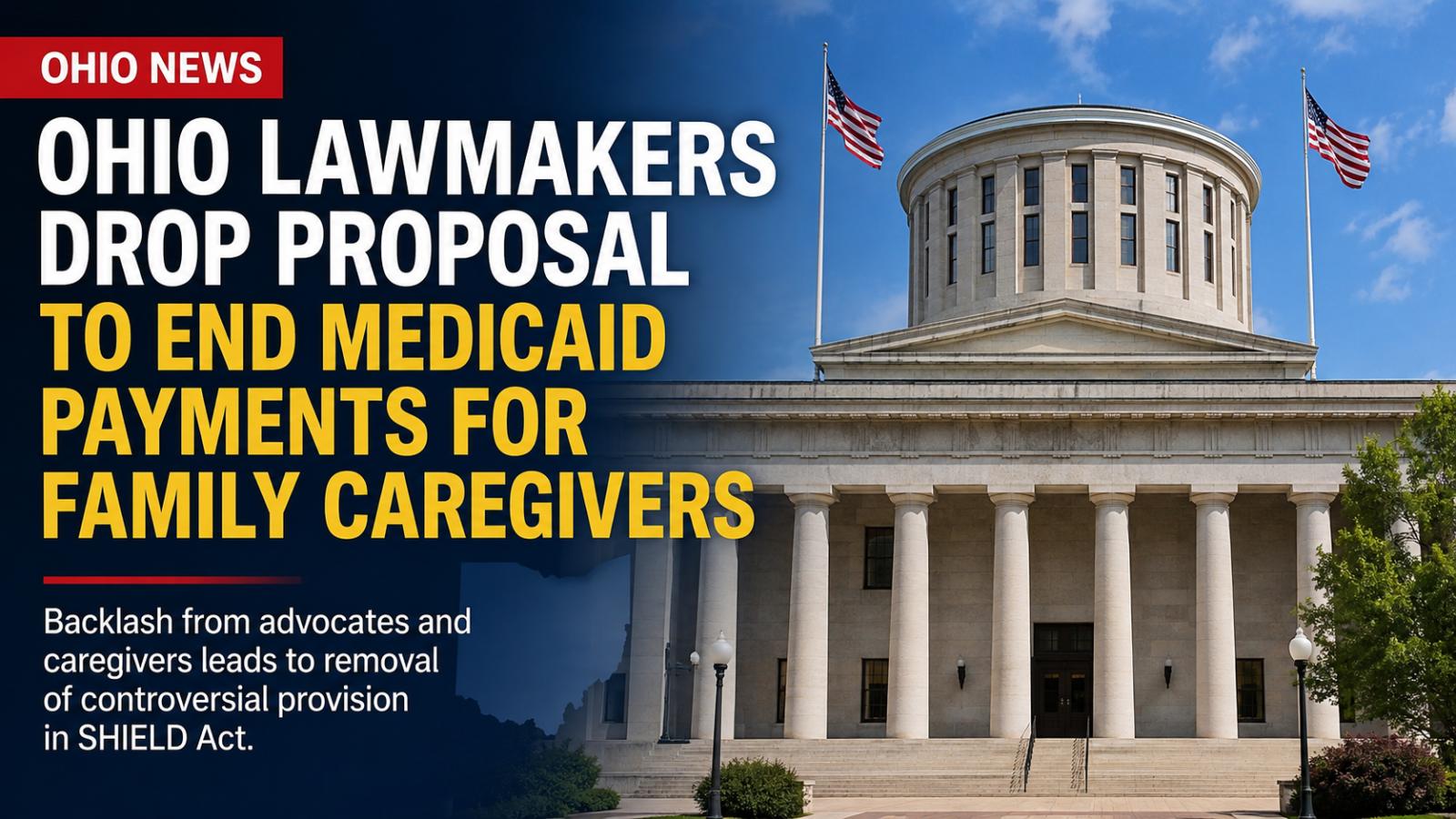
Ohio Medicaid family caregiver payments will continue under revised legislation after state lawmakers removed a proposal that would have barred some relatives from being paid for caring for loved ones with developmental disabilities.
The proposal drew strong opposition from caregivers, families, and disability rights advocates, who argued that family caregiving often involves intensive daily support, not simple companionship.
SHIELD Act Provision Removed After Caregiver Backlash
The restriction had been added to the “Safeguarding Healthcare Integrity Through Electronic Location Data,” or SHIELD Act, as state officials examined ways to strengthen oversight of Medicaid-funded home healthcare services.
Supporters of the original language said the proposal was intended to prevent misuse of taxpayer-funded programs, particularly in cases where relatives were allegedly being paid for companionship rather than substantial care services.
A new amendment introduced Monday removed the language that would have restricted Medicaid payments to relatives who provide qualified care for family members with developmental disabilities.
Why Ohio Disability Advocates Opposed the Medicaid Change
Disability advocates and affected families said the proposal underestimated the work many relatives perform every day. They said family caregivers often help manage medical needs, daily living tasks, appointments, safety concerns, and around-the-clock support.
Advocates also warned that limiting Medicaid payments to family caregivers could place more pressure on families already struggling to secure consistent home-based care.
The issue brought caregivers and disability rights supporters to the Ohio Statehouse, where they urged lawmakers to recognize the role relatives play in helping people with developmental disabilities remain in their homes and communities.
What the Revised Medicaid Legislation Means
The revised legislation still allows lawmakers to pursue healthcare oversight and fraud-prevention measures, but it no longer includes the proposed restriction on Medicaid payments to family members providing qualified care.
For Ohio families relying on home-based disability support, the change is a significant policy reversal. It keeps paid family caregiving available while leaving broader Medicaid accountability debates open at the Statehouse.