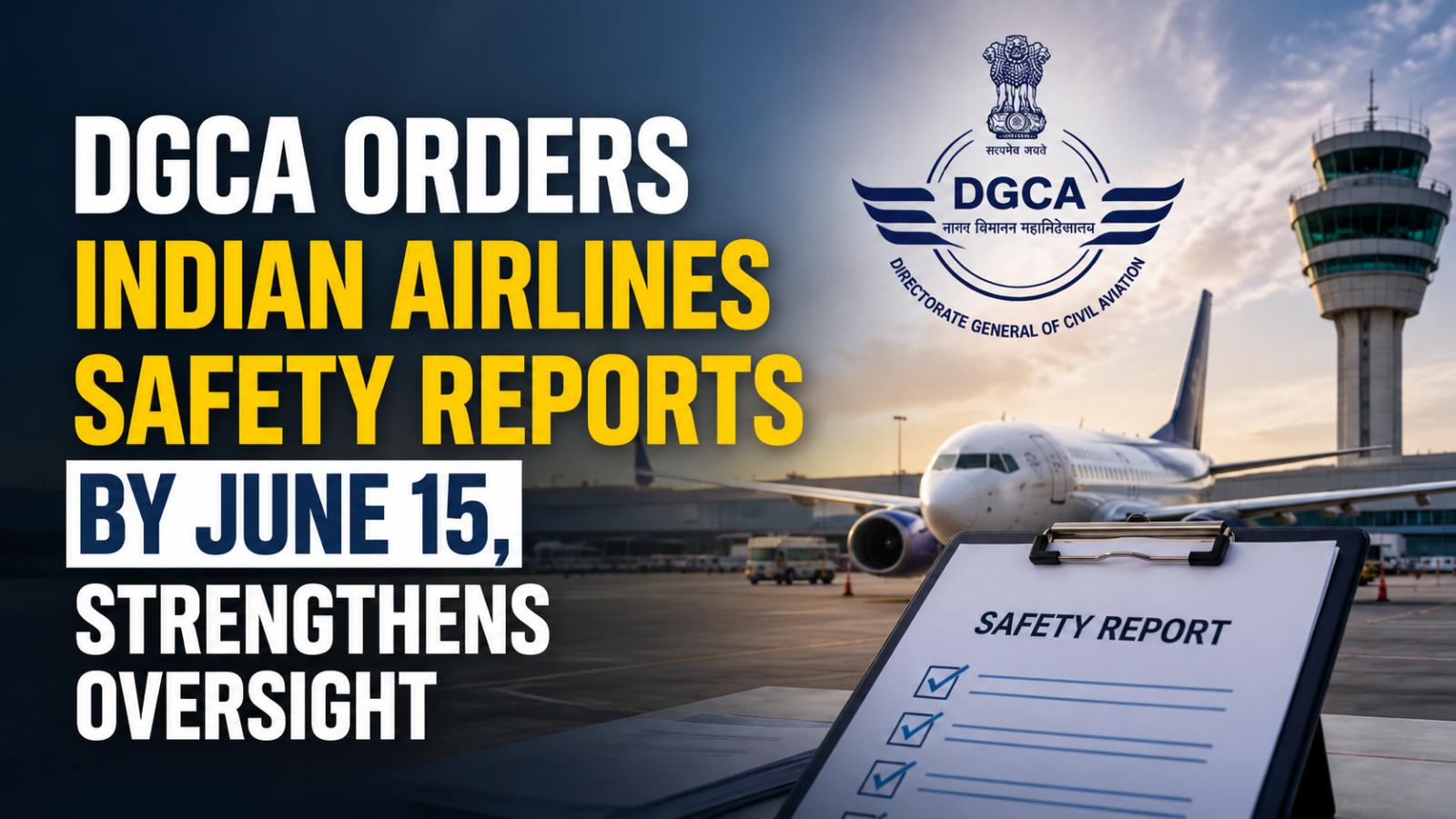
NEW DELHI — India’s civil aviation regulator, the Directorate General of Civil Aviation (DGCA), has asked major domestic carriers and airport operators to submit detailed action‑taken reports (ATR) by June 15, 2026, outlining corrective steps taken to fix safety issues uncovered during its routine and surprise inspections. The deadline and renewed emphasis on compliance come after a series of meetings involving the DGCA, Indian airlines, the Bureau of Civil Aviation Security, international carriers and airport operators, all aimed at strengthening aviation safety standards across the country’s rapidly growing air traffic network.
The regulator has signalled that these safety reviews will no longer be occasional but part of a quarterly stakeholder engagement process to ensure carriers internalise safety protocols and maintain consistent standards. A senior source familiar with the matter said the overarching goal of this intensified oversight is to raise the overall safety culture in Indian aviation and make air travel safer for passengers across all segments. Airlines that fail to meet safety system requirements risk penalties, the source added.
During routine inspections at airports nationwide, DGCA officials review critical operational areas including aircraft ramps, emergency exits, step ladders and seating structures, among other components. These checks are intended to confirm that planes and ground equipment meet regulatory safety norms and are in sound condition before carrying passengers.
In early June, the DGCA met with top leadership from several Indian carriers — including SpiceJet, Akasa Air, IndiGo, Air India and Air India Express — to review existing safety mechanisms and compliance gaps. Additional meetings with other operators such as Star Air, Alliance Air, Blue Dart and Fly 91 are scheduled, along with sessions with flying training organisations later in the month to address training and operational concerns.
The meetings come on the heels of broad discussions held in May with 80 international airlines operating in India, during which carriers were given opportunities to raise grievances and discuss shared challenges. That three‑day engagement, held in batches due to the large number of participants, highlighted the regulator’s intent to align domestic and global safety practices.
In parallel, the Civil Aviation Ministry has navigated industry pushback on previous directives, such as a March 17 order to cap seat selection fees on flights, which was rolled back on April 2 after airlines expressed concerns about financial viability amid rising Aviation Turbine Fuel (ATF) prices and route disruptions. With cancellations on West Asia and other major destinations and heightened operating costs, the ministry acknowledged that implementing such fee restrictions was not feasible at this time.
Amid these safety and regulatory developments, Air India has proposed a new initiative allowing passengers to opt out of in‑flight meals on select domestic flights, a consumer‑focused option expected to debut on short‑haul routes. Airlines across the sector continue to adapt practices and service offerings as they balance safety priorities with financial realities in a dynamic aviation environment.