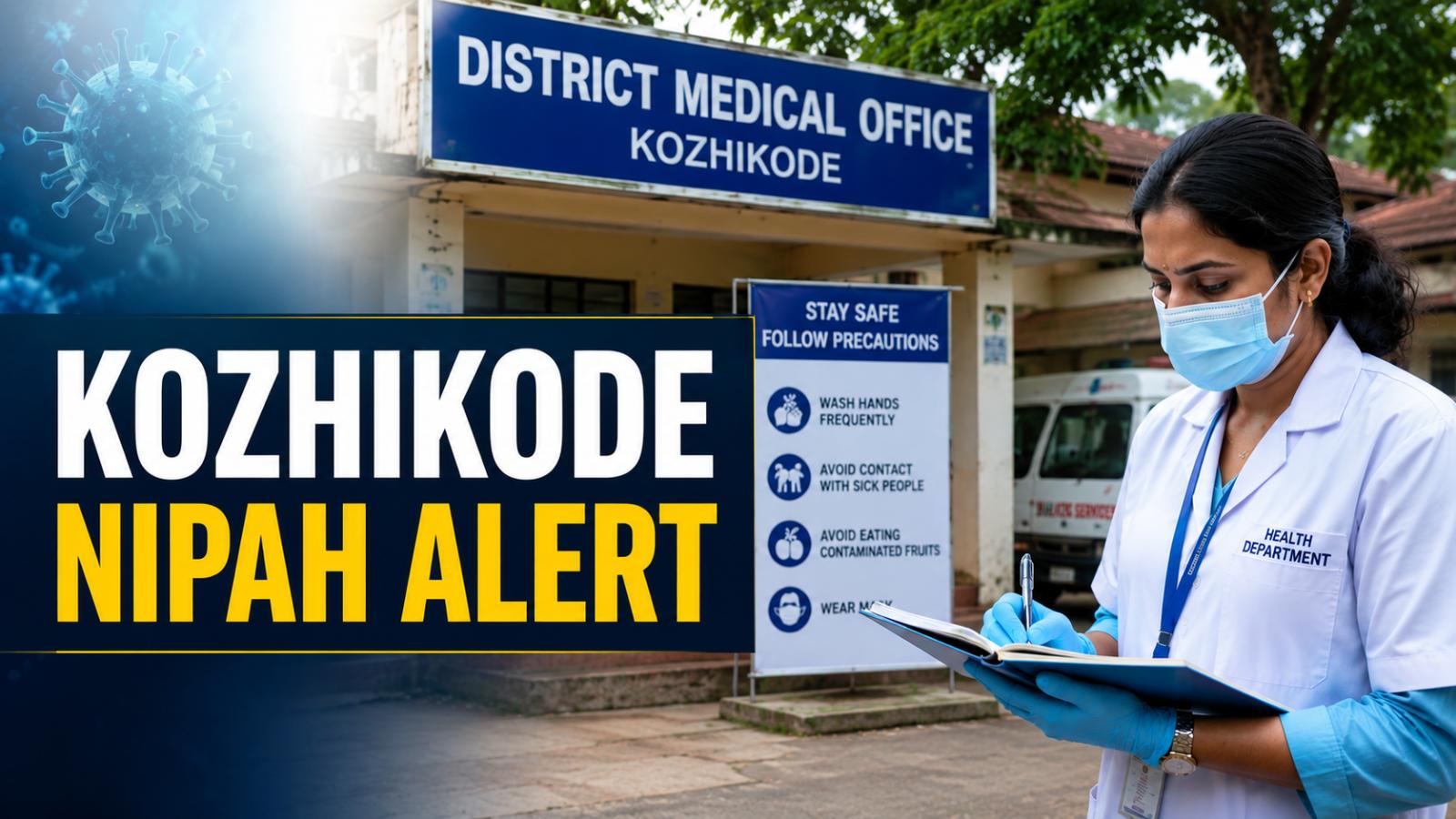
Kozhikode Nipah Alert: Kerala Steps Up Surveillance After New Case
Kerala has stepped up health surveillance in Kozhikode after a fresh Nipah virus case was reported in the district. The patient, a 43-year-old man from the Kozhikode region, is undergoing treatment at Kozhikode Medical College Hospital, according to reports.
Health officials have traced 77 people who came in contact with the patient. The contact list includes healthcare workers, family members and others who may have had direct or indirect exposure. Officials have placed high-risk contacts under quarantine as a precautionary step.
Contact Tracing Intensified
The health department has started field-level monitoring and containment measures in the affected area. Officials are also checking the patient’s movement history to identify possible exposure points and prevent further spread.
Public health teams are focusing on early detection, isolation support and infection-control measures. Authorities have urged people to cooperate with health workers and avoid spreading unverified information.
No Need For Panic, Say Officials
Officials have advised the public to remain cautious but not panic. People with fever, headache, breathing difficulty or unusual symptoms after possible exposure have been advised to seek medical guidance quickly.
Nipah is a zoonotic virus that can spread from animals to humans and can also spread through contaminated food or close contact with infected people. Fruit bats are considered a natural host of the virus.
Public Safety Advice
People have been advised to avoid fruits that appear bitten or contaminated, maintain hand hygiene, avoid close contact with sick animals and follow health department instructions during surveillance.
Hospitals and healthcare workers have also been asked to follow strict infection-control measures while handling suspected cases. The focus now is on quick contact tracing, careful monitoring and public cooperation.
The Kozhikode case has once again highlighted the importance of Kerala’s early warning and rapid response system for infectious diseases. Health officials are continuing surveillance to ensure that any possible spread is detected at the earliest.