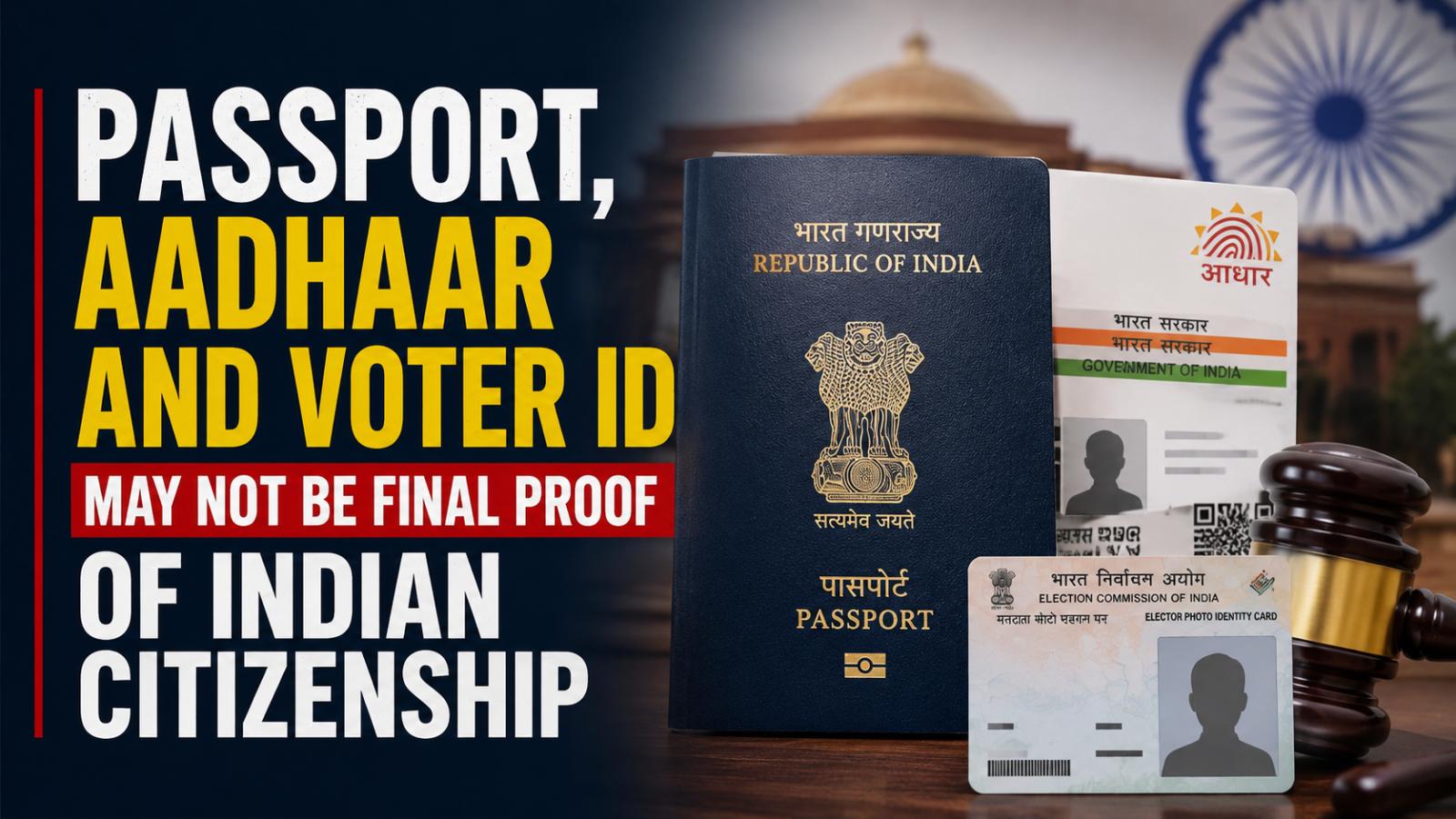
The recent clarification that an Indian passport is not legally considered conclusive proof of citizenship has sparked widespread discussion and confusion among citizens. For decades, passports, Aadhaar cards and voter ID cards have been widely accepted as the primary documents that establish a person's identity and nationality. However, under India's legal framework, these documents may not always serve as final proof of citizenship in certain legal or administrative situations.
The issue gained attention after officials explained that a passport is primarily an international travel document that creates a strong presumption of nationality but is not absolute evidence of citizenship under the Citizenship Act, 1955. This distinction has raised an important question among millions of Indians: if common government-issued documents are not enough, what documents actually prove Indian citizenship?
What Documents Are Accepted As Proof Of Indian Citizenship?
According to legal experts, the most definitive proof of Indian citizenship is a Certificate of Registration or Certificate of Naturalisation issued by the Ministry of Home Affairs under the provisions of the Citizenship Act, 1955. These certificates are granted to foreign nationals and individuals of Indian origin who legally acquire Indian citizenship through the prescribed process.
For citizens born in India, a birth certificate can also serve as proof of citizenship, but the rules vary depending on the date of birth. People born in India between January 26, 1950, and July 1, 1987, are generally considered Indian citizens by birth regardless of their parents' nationality. Those born between July 1, 1987, and December 3, 2004, must show that at least one parent was an Indian citizen at the time of birth. Individuals born after December 3, 2004, may need additional documents proving that both parents are Indian citizens or that one parent is an Indian citizen and the other is not an illegal migrant.
Why Aadhaar, Passport And Voter ID May Not Be Sufficient
The Unique Identification Authority of India clearly states that Aadhaar is only proof of identity and residence and does not establish citizenship. Similarly, voter ID cards carry significant value because only Indian citizens can vote, but they may not be treated as conclusive evidence in complex legal disputes.
In cases involving citizenship verification, courts and tribunals often examine older records, including ancestral land documents, family records, government registers and legacy data to determine nationality. Legal experts say that proving citizenship in a disputed case often requires a chain of historical documents that satisfy the conditions laid down under the Citizenship Act.
The latest clarification serves as a reminder that identity documents and citizenship documents are not always the same. As questions around documentation and nationality continue to emerge, maintaining important records such as birth certificates, family documents and government-issued certificates remains essential for anyone who may need to establish Indian citizenship in the future.