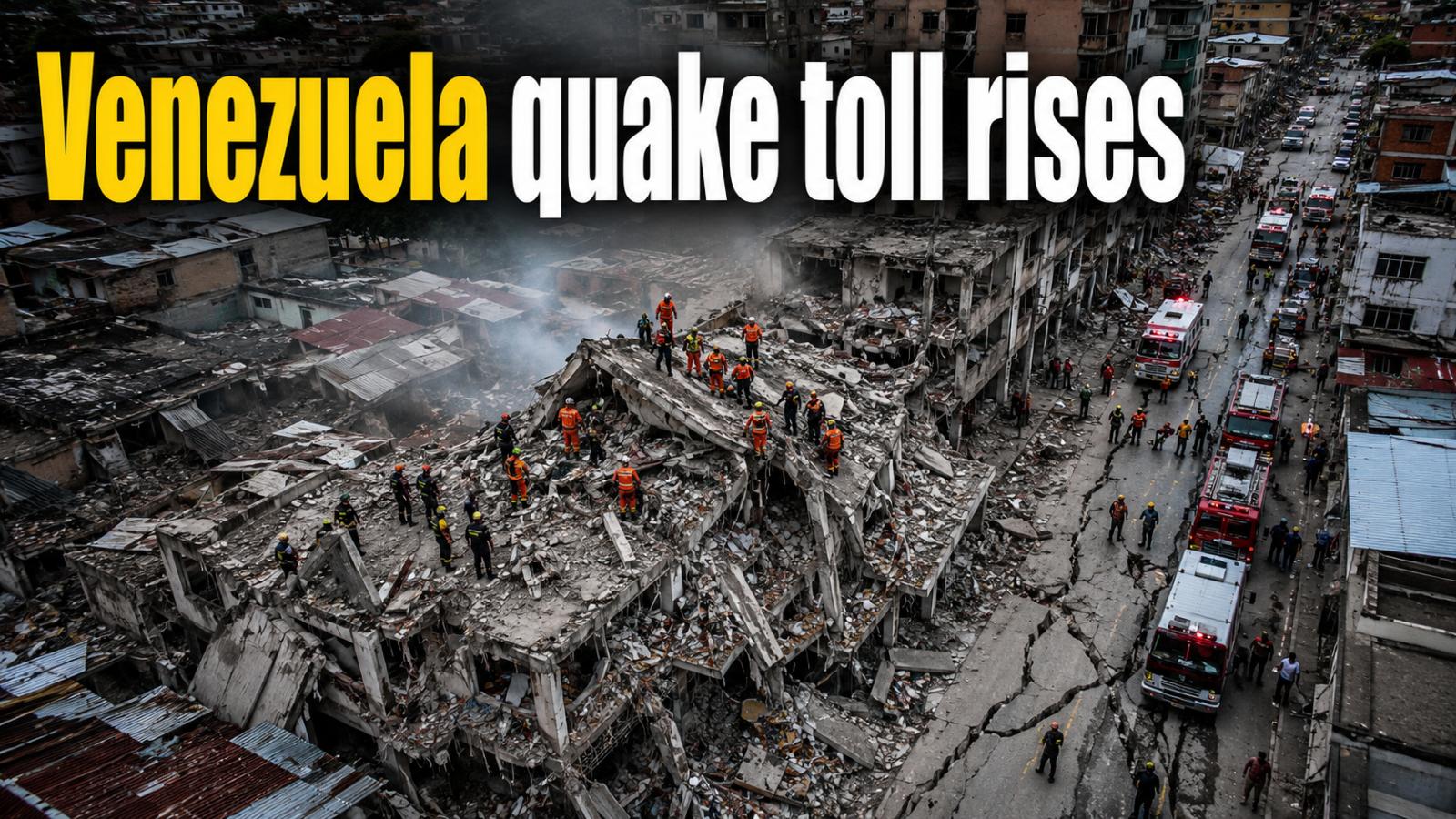
Venezuela is facing one of its worst natural disasters in recent years after two powerful earthquakes struck on June 24, causing widespread destruction and leaving thousands of families in distress. Officials said the death toll has risen to around 1,450, while more than 3,000 people have been injured and nearly 13,000 have been moved from unsafe areas. Rescue teams are still searching through collapsed buildings, damaged homes and broken streets as relatives wait for news of missing family members.
Twin earthquakes caused severe destruction
The disaster unfolded when two strong tremors, measured at magnitude 7.2 and 7.5, hit within less than a minute. The impact was felt across northern Venezuela, with La Guaira among the worst-affected areas. Drone footage from damaged neighbourhoods shows collapsed structures, cracked roads, blocked streets and rescue workers moving through piles of concrete and metal. Authorities said hundreds of buildings were damaged, including many that collapsed completely, forcing residents to sleep outdoors or move to emergency shelters.
Search teams race against time
Emergency workers, soldiers, volunteers and foreign rescue teams are continuing operations in unstable conditions. Their biggest challenge is reaching people believed to be trapped under debris while aftershocks continue to threaten already weakened buildings. Officials said several survivors have been pulled out alive, giving rescue crews hope even as the chances of finding more people decrease with each passing day. Hospitals and relief centres remain under pressure as injured residents continue to arrive from badly hit communities.
La Guaira struggles to recover
In La Guaira, authorities are working to restore basic services while rescue operations continue. Power has reportedly returned to much of the state, and water supply has improved in several areas. Some roads have also reopened, allowing food, drinking water, medicine and rescue equipment to reach affected communities. However, many families are still afraid to return home because damaged buildings may not be safe. Officials are inspecting structures before allowing residents back inside.
Schools remain closed amid safety checks
Schools in affected areas will remain closed as authorities assess classroom buildings, roads and public facilities. The closure is aimed at protecting children from unsafe structures and possible aftershocks. Officials said rescue and relief work will remain the top priority until more missing people are accounted for and emergency shelters are better supplied.
What happens next
The coming days will be critical for Venezuela as rescue teams continue searching for survivors and officials begin the larger task of recovery. The immediate focus is saving lives, treating the injured, restoring essential services and helping displaced families. For many residents, the disaster has left not only physical destruction but also deep fear, uncertainty and grief as the country confronts the scale of the earthquake damage.