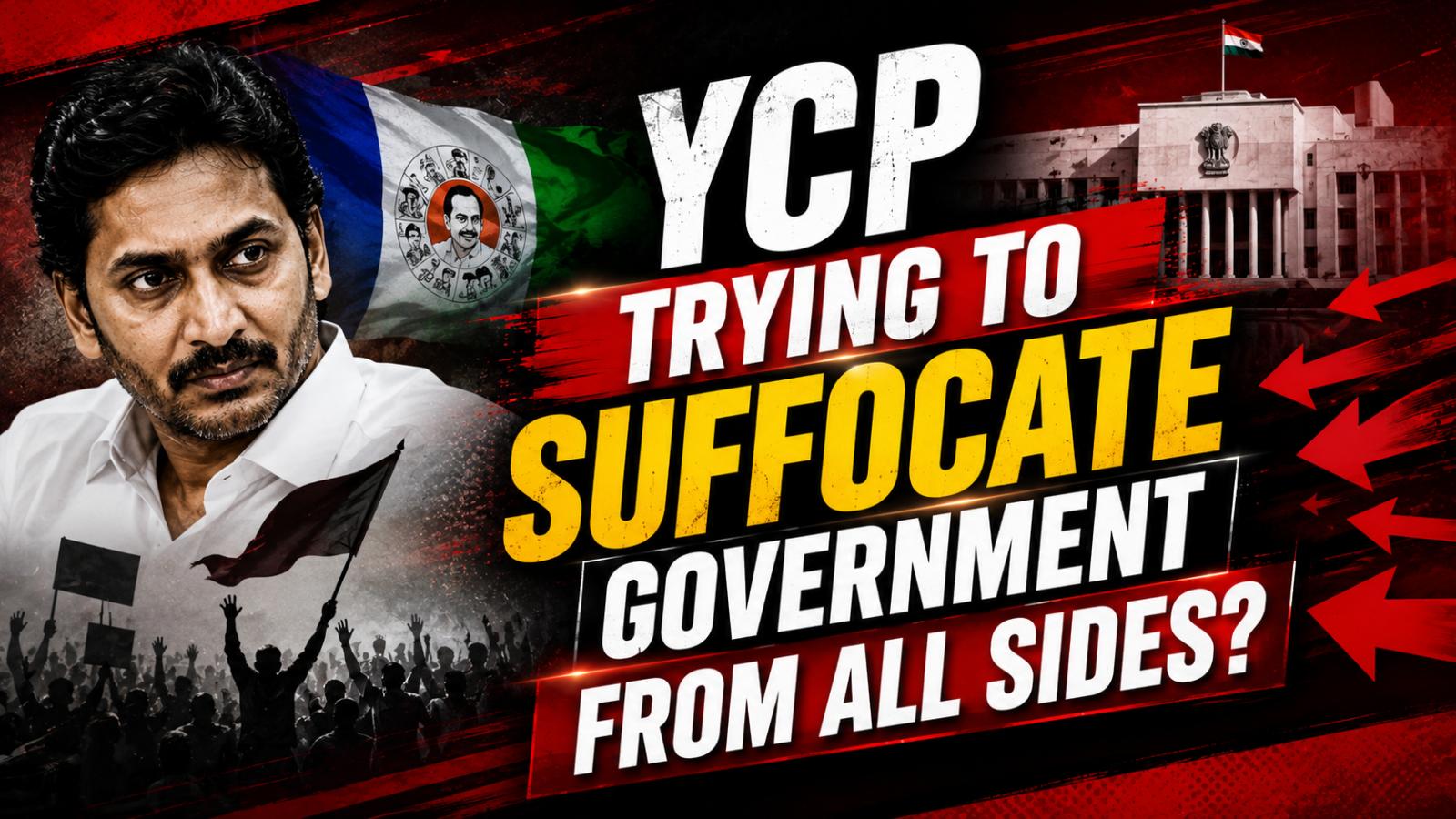
YCP steps up pressure campaign against Andhra coalition government
With the Andhra Pradesh coalition government still in the first half of its term, the opposition YSR Congress Party appears to be intensifying its political campaign on multiple fronts. A series of recent controversies, local incidents and development-related disputes are increasingly being used to question the administration, putting the ruling alliance of the TDP, Jana Sena and BJP under sustained political pressure.
YSRCP chief YS Jagan Mohan Reddy and his party leaders have been reacting quickly to incidents across the state and turning them into broader political debates. The strategy appears aimed at challenging the government’s claims on law and order, public safety, development and social harmony.
While the ruling coalition may dismiss several of these issues as politically motivated campaigns, the opposition’s constant engagement has ensured that many local developments receive statewide attention. The larger political question is whether the government can effectively respond without allowing separate controversies to combine into a broader anti-incumbency narrative.
Local incidents turn into statewide political battles
The controversy surrounding Gaade Sai Krishna became one of the recent flashpoints between the opposition and the government. YSRCP leaders strongly raised questions over the issue, forcing the administration and ruling parties to defend their position amid an expanding political debate. Another sensitive matter involves the long-running Sugali Preethi case. Her mother’s decision to initiate legal action involving Deputy Chief Minister Pawan Kalyan created fresh political attention. The case has once again become a subject of debate, with opposition leaders questioning the government’s handling of the issue.
The disappearance of a young girl named Jhanvi in Kakinada also gained wider attention after Jagan Mohan Reddy publicly criticised the government. An incident that might otherwise have remained largely a local law-and-order story quickly became part of a statewide discussion over public safety and administrative responsibility. Similarly, after fishermen went missing following a boat accident off the Visakhapatnam coast, the YSRCP moved quickly to raise the issue. Party leaders linked to the fishing community were brought into the campaign, increasing pressure on the government to respond to the families and explain rescue and relief measures.
Visakhapatnam controversies add to opposition attack
Visakhapatnam has become another major political battleground. The beach shack proposal, promoted as part of efforts to boost tourism, has faced criticism from the opposition. YSRCP leaders have portrayed the initiative as a threat to local culture and social values, while supporters of the proposal argue that regulated tourism infrastructure could improve the city’s appeal and economy.
The controversy involving YouTuber Raavan also dominated political discussions for several days. The YSRCP raised questions surrounding the issue and brought caste-related arguments into the debate, adding another sensitive dimension to the political confrontation. The opposition’s approach suggests a wider strategy of reacting to every significant controversy and ensuring that the ruling coalition remains under continuous public scrutiny. Instead of concentrating only on Assembly debates or major policy decisions, the party appears to be building its campaign around a combination of local grievances, social issues and development disputes.
Amaravati and alliance unity become key political targets
The MAVIGUN issue has also become an important point of confrontation. Jagan Mohan Reddy has taken a strong position on the matter, while the ruling coalition has accused the opposition of attempting to create uncertainty around Amaravati’s development and discourage investor confidence.
The opposition, however, is likely to continue questioning government decisions related to land, development priorities and implementation. Amaravati remains one of the most politically sensitive issues in Andhra Pradesh, and any disagreement surrounding the capital project can quickly become a major electoral debate.
Another area attracting attention is the relationship between the TDP and Jana Sena. YSRCP leaders from the Kapu community have become increasingly active in criticising Pawan Kalyan and the ruling alliance. Political observers see this as part of an effort to test the strength of the TDP-Jana Sena partnership ahead of the next Assembly election cycle.
For the ruling coalition, maintaining unity between its partners will be crucial. Any public disagreement could provide the opposition with an opportunity to question the stability and durability of the alliance.
The YSRCP appears to be building a sustained opposition campaign by linking separate incidents into a broader narrative that the state government is facing problems in law and order, public administration, development and alliance management. The ruling coalition, on the other hand, will need to address individual issues quickly and communicate its response effectively. Andhra Pradesh politics is therefore entering a more aggressive phase well before the next election. Whether the opposition’s multi-front pressure strategy creates lasting public dissatisfaction, or whether the government succeeds in countering it through governance and political communication, will be closely watched in the months ahead.