Monsoon rains bring relief from the heat but can also increase exposure to mosquitoes, respiratory infections and contaminated food or water. Simple hygiene, safe drinking water, mosquito control and timely medical care can lower health risks.
Why monsoon illnesses rise during the rainy season
The monsoon brings cooler weather, fresh greenery and relief from summer heat, but it also creates favourable conditions for the spread of several seasonal illnesses. Stagnant rainwater can become a breeding ground for mosquitoes that spread diseases such as dengue and malaria, while contaminated food and water may increase the risk of typhoid, cholera, gastroenteritis and other stomach infections. Seasonal flu and other respiratory infections can also spread more easily when people spend longer periods indoors and in crowded spaces.
Staying healthy during the rainy season does not require complicated routines. Simple precautions such as drinking safe water, eating fresh food, washing hands regularly and preventing water from collecting around the home can make a major difference. People should also pay attention to early symptoms such as persistent fever, severe body pain, vomiting, dehydration, unusual weakness or breathing difficulty and seek medical advice when symptoms are severe or worsening.
Important monsoon health precautions
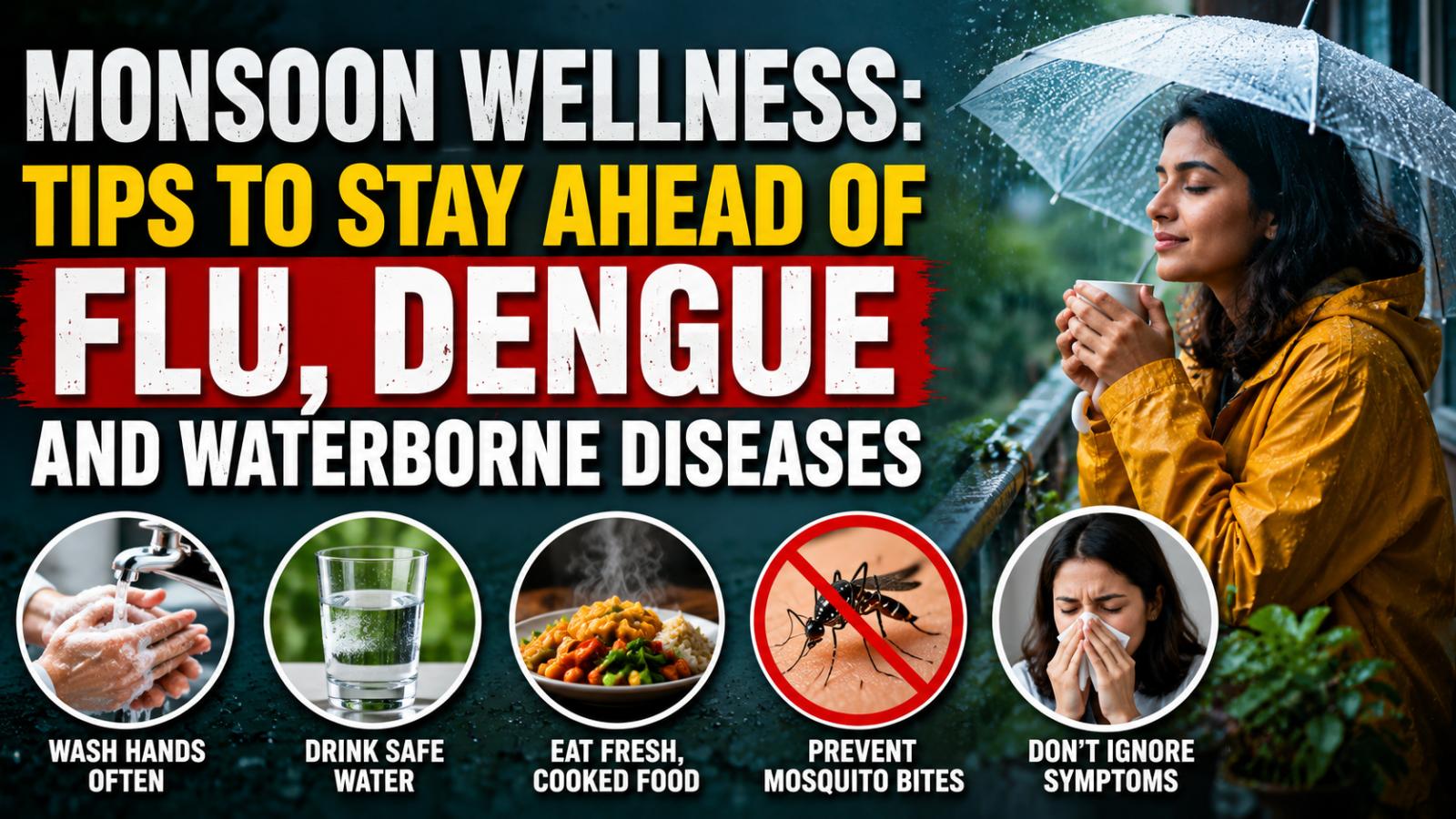
- Drink safe and clean water
Use filtered, purified or otherwise reliably safe drinking water. Store water in clean, covered containers and avoid drinking from uncertain sources, especially after flooding or water-supply disruption. - Wash hands regularly
Wash hands before eating, after using the toilet and after returning from crowded public places. Proper hand hygiene can reduce the spread of many foodborne and respiratory infections. - Eat freshly prepared food
Choose hot, freshly cooked meals during the rainy season. Avoid uncovered street food, stale food and cut fruits that may have been exposed to contaminated water, flies or poor storage conditions. - Prevent mosquito breeding
Empty water from flowerpots, buckets, coolers, trays, tyres and other containers. Even small collections of stagnant water can provide breeding sites for mosquitoes. - Protect yourself from mosquito bites
Use mosquito repellents, window screens and nets where needed. Wear full-sleeved clothing and clothing that covers more of the skin when practical, especially in areas with increased mosquito activity. - Do not ignore fever
Not every fever should be dismissed as a simple seasonal viral infection. Persistent high fever, severe body pain, rashes, repeated vomiting or unusual weakness should be medically evaluated.
Flu prevention and early care
Seasonal influenza can cause fever, cough, sore throat, body aches, headache and tiredness. People who develop flu-like symptoms should rest, stay hydrated and avoid close contact with others while they are unwell. Staying home during the active phase of illness can reduce the chance of spreading infection to family members, colleagues and others.
People at higher risk of complications, including older adults, young children, pregnant women and those with chronic medical conditions, should be especially cautious and seek timely medical advice when symptoms are severe or persistent.
Flu care:
- Rest adequately and maintain regular sleep.
- Drink enough fluids throughout the day.
- Avoid unnecessary contact with others while unwell.
- Cover coughs and sneezes properly.
- Avoid self-medicating with antibiotics unless prescribed.
- Seek medical attention if symptoms worsen or breathing becomes difficult.
Food, nutrition and hydration during monsoon
Good nutrition is also important during the rainy season. A balanced diet containing seasonal vegetables, fruits, protein-rich foods and other nutritious foods supports general health. Probiotic foods such as curd may be included when suitable for the individual, while hydration should not be ignored simply because the weather feels cooler.
People often drink less water during the monsoon because they do not feel as thirsty as they do in summer. However, the body still needs adequate fluids. Safe water, soups and other suitable fluids can help maintain hydration.
Nutrition tips:
- Eat balanced meals at regular times.
- Include seasonal fruits and vegetables.
- Add adequate protein to daily meals.
- Drink enough safe water.
- Avoid food that has been left uncovered for long periods.
- Refrigerate and store leftovers properly.
- Wash fruits and vegetables thoroughly before use.
Mental wellness also matters during rainy weather
Monsoon wellness is not only about preventing infection. Cloudy days, reduced outdoor movement and disrupted routines can affect mood, sleep and motivation. Some people may feel unusually sluggish or less active when they remain indoors for long periods.
Maintaining a regular daily routine can help. Short walks when the weather is safe, indoor stretching, reading, hobbies and conversations with family and friends can support emotional wellbeing. Adequate sleep and regular movement also help people maintain healthier habits throughout the season.
Mental wellness tips:
- Maintain regular sleep and wake-up times.
- Stay physically active indoors or outdoors when conditions are safe.
- Avoid spending the whole day scrolling on phones or social media.
- Stay connected with family and friends.
- Make time for relaxing hobbies.
- Seek professional help when low mood, anxiety or sleep problems become persistent.
Warning signs that should not be ignored
People should seek medical advice when fever or other symptoms become severe, persistent or unusual. Early diagnosis can be important in conditions such as dengue and severe dehydration.
Warning signs include:
- Persistent high fever.
- Severe abdominal pain.
- Repeated or persistent vomiting.
- Rash with fever.
- Bleeding from the nose or gums.
- Severe weakness or unusual drowsiness.
- Difficulty breathing.
- Signs of dehydration, including very low urine output, dizziness or extreme thirst.
- Confusion or worsening general condition.
Monsoon health is largely about consistent everyday habits. Safe water, hygienic food, mosquito control, regular sleep, balanced nutrition and timely medical care can help reduce seasonal health risks. With sensible precautions, people can enjoy the rains without allowing preventable illnesses to spoil the season.