Venezuelan opposition leader Maria Corina Machado has underscored her determination to assume the presidency of Venezuela as the nation grapples with a complex political transition, even as the United States appears to prioritize engagement with acting President Delcy Rodriguez. Machado’s remarks came during a high-profile visit to Washington this week that highlighted deepening divisions over the future of Venezuelan leadership, democratic reform and international diplomatic strategy.
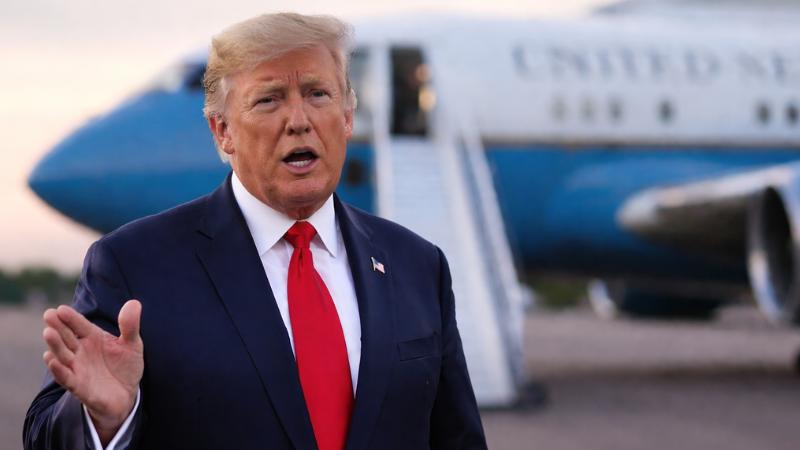
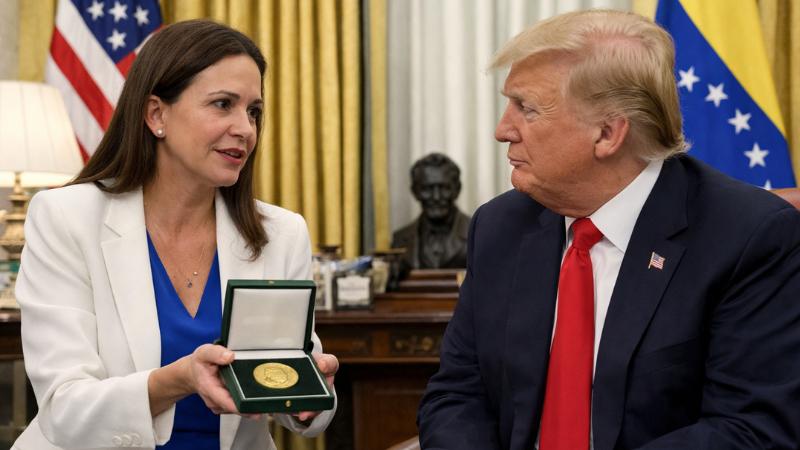
On Thursday, Machado met with former U.S. President Donald Trump at the White House, where she presented him with the Nobel Peace Prize medal she was awarded in 2025, describing the gesture as recognition of what she views as his role in supporting Venezuelan freedom. Although the Norwegian Nobel Institute has emphasized that the Peace Prize title cannot be transferred, the symbolic act punctuated Machado’s effort to rally international support for her vision of democratic governance in Venezuela. Trump publicly acknowledged the gesture, calling it one of “mutual respect,” even as he stopped short of endorsing her as Venezuela’s next leader.
Machado, who has long championed democratic reform and criticizes the administration of former President Nicolás Maduro, said she believes she has a clear mandate from Venezuelan citizens and affirmed her readiness to lead whenever the political moment arrives. She insisted that the legitimacy she claims has not diminished despite the U.S. administration’s cautious stance on her candidacy. Speaking with reporters this week in Washington, Machado expressed gratitude to U.S. lawmakers who have voiced support for democratic elections in Venezuela but acknowledged that securing formal backing remains a challenge.
The backdrop to Machado’s visit is extraordinary. On January 3, a U.S. military operation in Caracas led to the capture of Maduro, who was subsequently transported to New York to face federal drug trafficking and weapons charges. The dramatic removal of Maduro has thrust Venezuelan politics into uncertainty, prompting debate over who should lead the country through a transition that includes restoring democratic processes and stabilizing its economy.
Rather than offering unequivocal support to Machado, the Trump administration has engaged with Delcy Rodriguez, Maduro’s former vice-president, who was sworn in as acting president in early January under a ruling by Venezuela’s Supreme Tribunal of Justice. Rodriguez has taken significant steps to position her government as ready for diplomatic dialogue, including meetings with U.S. officials aimed at building trust and exploring avenues for economic cooperation, particularly in the oil sector. The discussions reportedly also touched on intelligence cooperation and efforts to prevent Venezuela from becoming a haven for transnational criminal networks.
Rodriguez, in her first state of the union address as acting president, emphasized her willingness to pursue diplomatic engagement with the United States and to pursue reforms designed to attract foreign investment in Venezuela’s key oil industry. She has sought to strike a balance between asserting Venezuela’s sovereignty and responding to international pressure for change. U.S. officials, including the Director of the Central Intelligence Agency, have met with Rodriguez in Caracas to reinforce the message that Washington seeks constructive relations going forward.
Supporters of Machado gathered outside the White House during her visit, waving Venezuelan flags and chanting slogans in her favor. Machado has stated repeatedly that her commitment to Venezuela’s democratic transition will not waver and that she remains willing to serve in whatever capacity is most beneficial to her country. Despite that pledge, she faces the complex reality of competing political claims and divergent representations in the international arena.
Analysts note that the U.S. stance reflects broader strategic priorities, including securing stability in Venezuela’s oil output and mitigating geopolitical risks in the region, while also navigating domestic and international expectations for democratic accountability. Machado’s meeting with Trump and her public pronouncements this week underscore the intense contest for influence as Venezuela’s political future remains unsettled.
The unfolding developments in Venezuela highlight the challenges inherent in managing a political transition under extraordinary circumstances. Machado’s visit to Washington, her presentation of the Nobel Peace Prize and her continued advocacy for democratic reform signify both her personal ambition and the broader aspirations of many Venezuelans seeking change. Meanwhile, diplomatic engagement between the United States and Rodriguez’s interim government signals a potentially new chapter in U.S.-Venezuelan relations, the outcome of which will likely shape the country’s trajectory in the months to come.