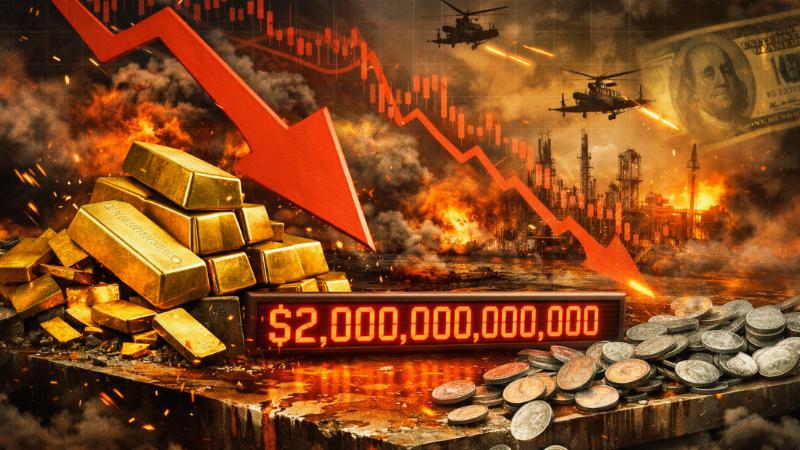
In a stunning turn of events, the global precious metals market witnessed a staggering $2 trillion wipeout, a rare occurrence that has rattled financial markets. This unprecedented crash occurred in just hours, disrupting the long-held belief that metals like gold and silver serve as ultimate safe-havens, especially during times of crisis. What makes this even more perplexing is that the meltdown happened amid an escalating war, with oil prices still elevated and investors seeking refuge in commodities.
The cause of this unexpected event can be traced to a perfect storm of rising US bond yields, a stronger dollar, and the sheer weight of market positioning. The yield on the US 10-year treasury note surged to around 4.4%, signaling stickier inflation and fewer rate cuts than previously anticipated. As a result, big investors are reconsidering their holdings in gold, traditionally seen as the ultimate hedge against uncertainty, in favor of higher-yielding US Treasuries. The sudden spike in yields is drawing capital out of the metals market and pushing it into government bonds, a safer investment in the current environment.
Simultaneously, the US dollar has regained its status as a safe-haven asset. As tensions with Iran rise, the greenback has strengthened, creating a double blow for gold and silver. Not only does a stronger dollar put pressure on dollar-priced metals, but it also offers a more liquid and secure place for investors to park their capital. This dynamic has transformed gold, once considered a reliable hedge, into a volatile asset that now moves in sync with equities, rather than acting as a safeguard during geopolitical crises.
Moreover, the market's structure played a crucial role in the scale of the sell-off. Gold and silver markets had been buoyed by excessive leverage and speculative positioning. Many investors had bought into these assets with borrowed capital, betting on continued price increases. However, when prices broke through key support levels, a chain reaction of margin calls, stop-losses, and forced liquidations occurred. This led to a rapid and deep drop in prices, further exacerbated by the thin liquidity in the market. The result was a complete meltdown, with precious metals, including gold and silver, experiencing massive losses in a very short period.
According to Naveen, a Bengaluru-based trader, this is not just a market trend but a forced deleveraging event. The $2 trillion wipeout is a result of a margin call triggered by rising yields, which have re-priced the value of risk assets across the board. Investors have been forced to sell off metals to cover losses in other areas, such as equities and oil. This forced liquidation has spilled over into the broader commodity complex, with other metals like copper and zinc also suffering significant losses.
While the exact cause of the sell-off remains unclear, analysts believe a large player or a series of leveraged products may be behind the liquidation. The fingerprints of such a move are visible in the violent price swings and synchronized falls in futures, ETFs, and spot markets.
What is truly unsettling about this event is not just the magnitude of the $2 trillion loss, but the broader implications for global financial stability. The "safe haven" narrative, which has underpinned investment strategies for decades, is breaking down in real time. If higher yields, a stronger dollar, and geopolitical tensions can cause such a dramatic shift in precious metals, the same pressures could soon impact other markets, including credit, emerging markets, and tech stocks. As the liquidity crisis deepens and volatility spreads, investors will need to reassess their strategies and rethink the concept of "safe" assets in today's evolving market environment.