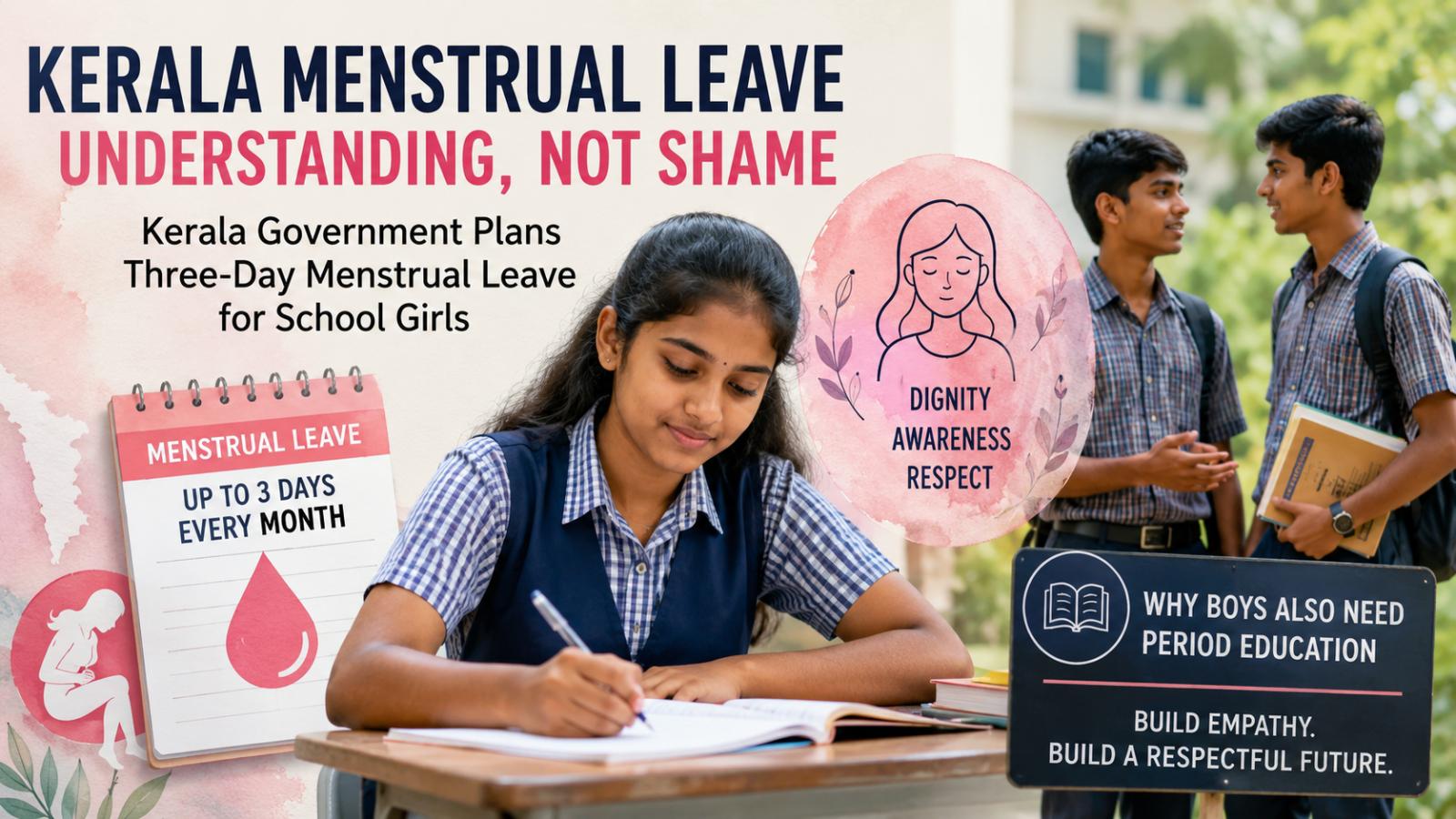
Kerala’s menstrual leave proposal has opened a wider discussion on dignity, school support and period education for both girls and boys.
The plan, announced in Thiruvananthapuram, India, on Friday, May 29, 2026, proposes up to three days of monthly menstrual leave for schoolgirls, along with weekend catch-up classes so students do not fall behind academically.
For readers looking for the full policy background, read our detailed report on Kerala Government Plans Three-Day Menstrual Leave for School Girls.
Kerala Menstrual Leave Proposal Focuses on Dignity
The proposal was included in the policy address of the new UDF government led by Chief Minister V.D. Satheesan and read in the Kerala Legislative Assembly by Governor Rajendra Vishwanath Arlekar.
The initiative is linked to Project Menstrual Dignity, which aims to make educational institutions and public spaces more supportive for girls and women. While the immediate focus is leave and academic support, the discussion has also raised a larger question: how should schools talk about menstruation?
The wider message behind the debate is also explored in our reel story, Kerala Menstrual Leave: Understanding, Not Shame, which focuses on awareness, dignity and empathy.
Optional Rest, Not Automatic Absence
Menstrual experiences are not the same for every student. Some girls may attend school without difficulty, while others may face cramps, weakness, heavy bleeding or discomfort.
That is why the strongest version of the policy would be optional and need-based. Girls who genuinely need rest should be able to ask for leave without embarrassment, while schools should handle the process with privacy, dignity and sensitivity.
Why Boys Also Need Period Education
The debate should not stop with girls taking leave. Boys also need age-appropriate menstrual health education so periods are not treated as a source of jokes, silence or shame.
When boys understand what menstruation is and how it can affect daily life, classrooms can become more respectful. That awareness can later shape attitudes in families, workplaces and public life.
Awareness Can Reduce Shame
Kerala’s proposal will be judged not only by how many days of leave are allowed, but also by how schools implement it. If handled carefully, menstrual leave can support girls without increasing stigma.
The message goes beyond attendance. Periods should be treated as a normal health process. Menstrual leave is about rest when needed, but it is also about building dignity, awareness and respect.