The Supreme Court on Thursday sharply criticized a public interest litigation (PIL) seeking a judicial probe into the April 22 terror attack in Pahalgam, Jammu & Kashmir, that claimed the lives of 26 people mostly civilians. The petition, filed by Fatesh Kumar Shahu, Mohammad Junaid, and Vicky Kumar, was met with firm resistance from the bench, which questioned the timing and intent behind the plea. Justice Surya Kant expressed strong disapproval, stating, “Is this the way you want to demoralize our forces? Since when did Supreme Court judges become experts in anti-terrorism investigations?” The court emphasized that filing such PILs without full consideration of national security implications could undermine public morale and the coordinated response of the armed forces and law enforcement.
The petitioner argued that the PIL was filed on behalf of Kashmiri students studying in other Indian states who feared retaliation following the brutal attack. However, the court noted that the PIL did not mention student safety as the primary concern. Justice NK Singh remarked, “This is not the time. This is the crucial hour when each citizen has joined hands... this is not acceptable to us.” The court allowed the petitioner to withdraw the plea, granting the liberty to approach the relevant High Court for student-related concerns. However, Solicitor General Tushar Mehta opposed this option, cautioning against any move that could distract from the national security focus currently in place.
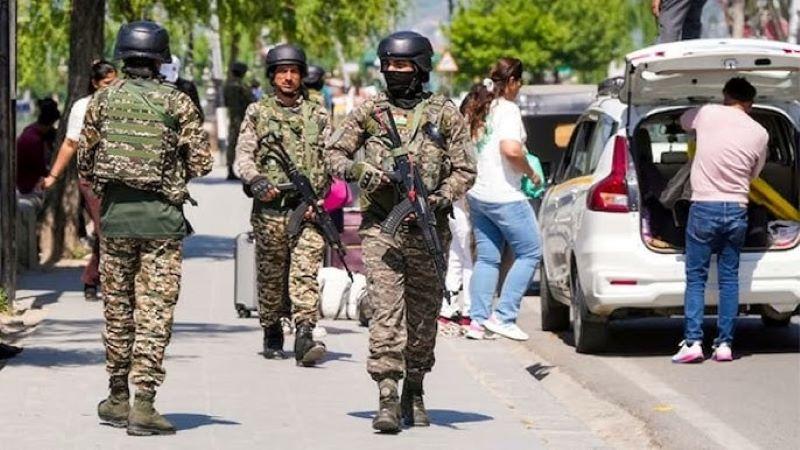
The attack in Pahalgam was one of the deadliest in recent years and has been claimed by The Resistance Front (TRF), a proxy of the banned Pakistan-based terror group Lashkar-e-Taiba. The coordinated strike killed 26 individuals, including a Nepali national. Eight days later, the gunmen remain at large despite an ongoing massive manhunt involving the Indian Army, local police, border security forces, and multiple intelligence agencies.
Sketches of the suspects have been released, and over 2,500 people have already been questioned. The National Investigation Agency (NIA) has taken over the case, identifying 20 Over Ground Workers (OGWs) suspected of aiding the attackers. Several of these individuals have been arrested, while others are still being tracked. Prime Minister Narendra Modi has issued a stern warning, stating that terrorism's “evil agenda” will never succeed. In high-level security meetings, he has reportedly given the Indian armed forces a “free hand” to determine the timing and method of India's response. The Prime Minister’s shift to English during a recent address underscored his intention to send a global message about India’s zero-tolerance stance on terror.
The Indian government has also ramped up its diplomatic offensive, directly blaming Pakistan for sponsoring and harboring terrorist groups. Sources told NDTV that a “terror trail” links Pakistan to recent attacks not just in Kashmir, but in cities like Moscow and London adding to the country’s status as “one of the world’s most dangerous states” in terms of exporting terrorism. Ceasefire violations have also escalated. For the seventh consecutive night, the Pakistani Army conducted unprovoked small arms firing across the Line of Control, raising fears of further escalation along the border.
In the wake of the attack, Jammu and Kashmir Chief Minister Omar Abdullah deployed state ministers to coordinate with governments across India to ensure the safety of Kashmiri students and residents. This proactive measure reflects the state’s acknowledgment of potential backlash and aims to maintain communal harmony amid rising national tensions. Meanwhile, distressing videos from the attack site showed local women pleading for help, underscoring the human toll of terrorism. The Indian public, security forces, and leadership appear unified in their call for justice.
As India prepares its next steps, the judiciary's clear stance on prioritizing national security highlights the gravity of the moment. While protecting civilian rights and ensuring the safety of vulnerable communities remain critical, the country is focused on holding the perpetrators of the Pahalgam massacre accountable.