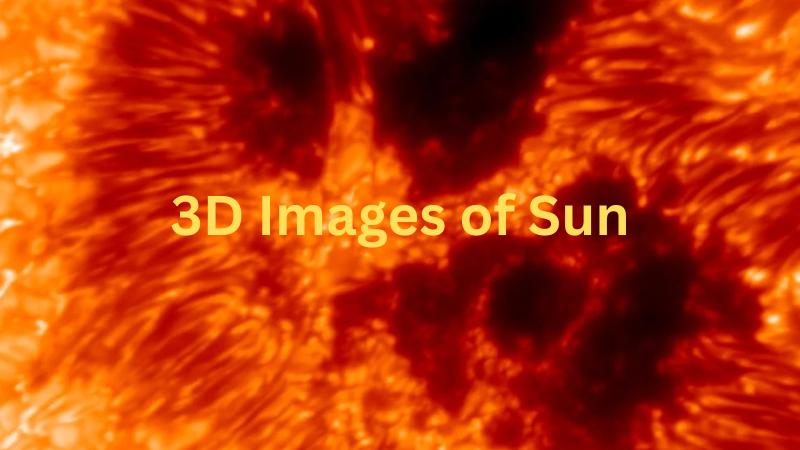
Detailed new images of the sun, taken in early December by the Inouye Solar Telescope, reveal complex sunspot activity during the current solar maximum, a phase in the sun's 11-year cycle when magnetic activity peaks. These dark sunspots mark regions where intense magnetic disturbances occur, often triggering solar flares and coronal mass ejections (CMEs)—massive eruptions of ionized gas, or plasma, from the sun's outer atmosphere. Such events can significantly impact Earth's electromagnetic environment, causing disruptions to power grids, communication systems, and satellite operations.
According to solar scientists, understanding these dynamic phenomena is critical. Friedrich Woeger, the instrument program scientist for the National Science Foundation’s Inouye Solar Telescope, explained that studying sunspots and the solar surface can help predict dangerous space weather. He referenced the Carrington Event of the 1800s, a solar storm so powerful it ignited fires in telegraph stations. He emphasized that knowing the physical causes behind such eruptions is vital to protect both modern technology and daily life on Earth.
The sun is currently in its most active phase, known as the solar maximum, during which the magnetic poles of the sun flip and sunspots become more prominent. This peak phase is expected to continue for several months. As the sun undergoes this energetic transformation, the Inouye Solar Telescope is intensifying its instrument testing, producing stunning images that help scientists explore the star’s behavior in unprecedented detail.
Heat from the sun's core rises to the surface in convective patterns similar to boiling soup, according to Mark Miesch, a research scientist at the Cooperative Institute for Research in Environmental Sciences. Though not part of the telescope project, he explains that sunspots appear when magnetic tangles block the upward flow of heat. These areas are darker and cooler than the surrounding solar surface, though still far hotter than any oven on Earth.
The sun’s surface has multiple layers, each with different densities and temperatures. To analyze these layers, researchers use the visible tunable filter, or VTF, which works like a radio tuner, isolating and analyzing one wavelength of light at a time. This approach contrasts with standard imaging, which collects light across many wavelengths all at once. The VTF, a type of imaging spectro-polarimeter, achieves this selectivity through an etalon—two glass plates separated by just microns. By adjusting the spacing between the plates, scientists can allow certain light wavelengths to pass while canceling others, similar to how noise-canceling headphones work with sound waves.
In only a few seconds, the VTF captures hundreds of images across different light filters and assembles them into a three-dimensional snapshot of the solar surface. These snapshots help scientists map temperature, velocity, pressure, and magnetic fields across different layers of the sun’s atmosphere, offering a new level of insight into how solar weather develops and evolves.
Senior optical engineer Dr. Stacey Sueoka described the experience of seeing the VTF's first spectral scans as surreal, noting that no other instrument on the telescope can achieve such multi-dimensional views. The VTF itself has taken over a decade to design and develop. Built by the Institute for Solar Physics in Germany, its components traveled across oceans to be carefully reassembled at the Inouye Solar Telescope atop Maui’s Haleakalā mountain, which rises over 10,000 feet above sea level.
The multi-story telescope complex, operated by the NSF's National Solar Observatory, will continue refining the instrument’s capabilities. Full operational readiness is expected by 2026. Dr. Matthias Schubert, a VTF project scientist, stated that the tool’s successful integration marks a critical milestone, calling the VTF the heart of the telescope, now finally installed in its permanent home.
This advanced solar imaging capability joins a global push by scientists to better understand our star. In addition to ground-based telescopes like Inouye, space missions such as the Solar Orbiter and the Parker Solar Probe are providing complementary views of solar activity. The Parker Probe, launched in 2020, made history as the first spacecraft to pass through the sun’s corona, directly measuring conditions in the solar atmosphere.
Together, these coordinated efforts aim to decode the physics of the sun’s behavior, improve space weather forecasting, and ultimately help shield our technology-reliant world from the potential hazards of solar storms. The data gathered over this solar maximum period could shape a new era of solar science, driven by powerful instruments like the VTF and the collaborative momentum behind solar observation missions worldwide.
According to solar scientists, understanding these dynamic phenomena is critical. Friedrich Woeger, the instrument program scientist for the National Science Foundation’s Inouye Solar Telescope, explained that studying sunspots and the solar surface can help predict dangerous space weather. He referenced the Carrington Event of the 1800s, a solar storm so powerful it ignited fires in telegraph stations. He emphasized that knowing the physical causes behind such eruptions is vital to protect both modern technology and daily life on Earth.
The sun is currently in its most active phase, known as the solar maximum, during which the magnetic poles of the sun flip and sunspots become more prominent. This peak phase is expected to continue for several months. As the sun undergoes this energetic transformation, the Inouye Solar Telescope is intensifying its instrument testing, producing stunning images that help scientists explore the star’s behavior in unprecedented detail.
Heat from the sun's core rises to the surface in convective patterns similar to boiling soup, according to Mark Miesch, a research scientist at the Cooperative Institute for Research in Environmental Sciences. Though not part of the telescope project, he explains that sunspots appear when magnetic tangles block the upward flow of heat. These areas are darker and cooler than the surrounding solar surface, though still far hotter than any oven on Earth.
The sun’s surface has multiple layers, each with different densities and temperatures. To analyze these layers, researchers use the visible tunable filter, or VTF, which works like a radio tuner, isolating and analyzing one wavelength of light at a time. This approach contrasts with standard imaging, which collects light across many wavelengths all at once. The VTF, a type of imaging spectro-polarimeter, achieves this selectivity through an etalon—two glass plates separated by just microns. By adjusting the spacing between the plates, scientists can allow certain light wavelengths to pass while canceling others, similar to how noise-canceling headphones work with sound waves.
In only a few seconds, the VTF captures hundreds of images across different light filters and assembles them into a three-dimensional snapshot of the solar surface. These snapshots help scientists map temperature, velocity, pressure, and magnetic fields across different layers of the sun’s atmosphere, offering a new level of insight into how solar weather develops and evolves.
Senior optical engineer Dr. Stacey Sueoka described the experience of seeing the VTF's first spectral scans as surreal, noting that no other instrument on the telescope can achieve such multi-dimensional views. The VTF itself has taken over a decade to design and develop. Built by the Institute for Solar Physics in Germany, its components traveled across oceans to be carefully reassembled at the Inouye Solar Telescope atop Maui’s Haleakalā mountain, which rises over 10,000 feet above sea level.
The multi-story telescope complex, operated by the NSF's National Solar Observatory, will continue refining the instrument’s capabilities. Full operational readiness is expected by 2026. Dr. Matthias Schubert, a VTF project scientist, stated that the tool’s successful integration marks a critical milestone, calling the VTF the heart of the telescope, now finally installed in its permanent home.
This advanced solar imaging capability joins a global push by scientists to better understand our star. In addition to ground-based telescopes like Inouye, space missions such as the Solar Orbiter and the Parker Solar Probe are providing complementary views of solar activity. The Parker Probe, launched in 2020, made history as the first spacecraft to pass through the sun’s corona, directly measuring conditions in the solar atmosphere.
Together, these coordinated efforts aim to decode the physics of the sun’s behavior, improve space weather forecasting, and ultimately help shield our technology-reliant world from the potential hazards of solar storms. The data gathered over this solar maximum period could shape a new era of solar science, driven by powerful instruments like the VTF and the collaborative momentum behind solar observation missions worldwide.