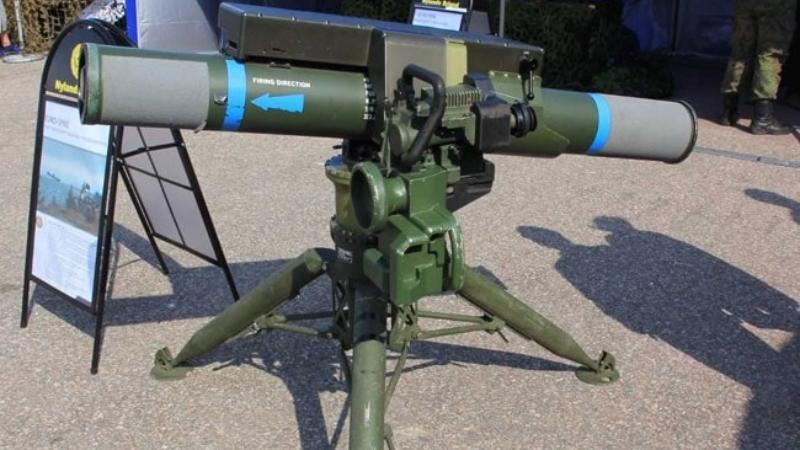
The Indian Army’s use of Anti-Tank Guided Missiles (ATGMs) to strike Pakistani military posts along the Line of Control (LoC) marks a significant turn in the ongoing conflict under Operation Sindoor. These missiles, known for their precision and destructive capability, were used to neutralize fortified enemy positions in response to Pakistani ceasefire violations and missile attacks. The offensive was part of a larger retaliation following the deadly Pahalgam terror attack, which killed 26 civilians in Jammu and Kashmir.
An Anti-Tank Guided Missile (ATGM) is a modern weapon system specifically designed to destroy armored targets, especially tanks and bunkers. Unlike unguided projectiles, ATGMs are capable of tracking and steering toward their targets with pinpoint accuracy. These missiles can be launched from various platforms including handheld launchers, vehicles, helicopters, and drones making them versatile and deployable in diverse combat scenarios. India’s strike across the LoC using ATGMs showcases their utility not just in anti-tank warfare but also in neutralizing enemy military posts, bunkers, and observation towers that are heavily protected or strategically positioned.
Most ATGMs function using a shaped charge warhead that concentrates explosive energy into a narrow stream, powerful enough to penetrate thick armor. Some advanced ATGMs are equipped with tandem warheads, designed to defeat tanks with explosive reactive armor (ERA). The first warhead activates the ERA, and the second penetrates the main armor underneath. Another tactical advantage is the top-attack mode. Many tanks have their strongest armor on the front and sides, while the top is relatively vulnerable. ATGMs in top-attack mode arc upward during flight and strike from above maximizing damage and effectiveness.
Today’s ATGMs often feature dual-mode seekers, which use both infrared and laser guidance to lock onto targets more reliably, even in low visibility conditions. Some systems also support “fire-and-forget” technology, allowing operators to relocate or hide immediately after launch.
The decision to use ATGMs against Pakistani posts likely stemmed from the need for high-precision strikes at long range, reducing risk to Indian soldiers while delivering maximum impact. The LoC, being rugged and heavily fortified, often sees entrenched positions that are difficult to neutralize through standard artillery. ATGMs offer the ability to strike from a safe distance, avoiding exposure to return fire. Their speed, stealth, and surgical accuracy make them ideal in rapid cross-border engagements like those seen under Operation Sindoor.
Tanks and military posts can be outfitted with several defensive systems against ATGMs. These include:
The use of ATGMs was part of a broader Indian counter-offensive. On the night between Tuesday and Wednesday, India launched aerial strikes deep into Pakistan and PoK targeting terror camps under Operation Sindoor. The strikes came days after the Pahalgam attack and marked one of the largest coordinated missile operations in recent years involving 24 missiles in just 25 minutes and resulting in the elimination of over 70 terrorists.
The Pakistani military responded with missile and drone attacks aimed at military bases in Jammu, Pathankot, and Udhampur, all of which were intercepted by Indian air defence systems. The Indian Air Force also successfully shot down a Pakistani F-16 and possibly two JF-17s, further escalating the conflict. Amid the intensifying situation, Indian security forces launched ATGM strikes on fortified Pakistani army positions along the LoC, delivering a powerful signal of deterrence and capability. These missile systems, used effectively, show India’s readiness to respond not only with air power but with high-precision tactical weapons.
As of now, over 130 countries globally employ ATGMs in various capacities, and their presence on the India-Pakistan border adds a critical layer to modern mountain and cross-border warfare dynamics. India's use of such strategic assets not only responds to current provocations but sets the tone for future deterrence. The message is clear: any act of aggression will be met with a technologically advanced and unflinching military response.
An Anti-Tank Guided Missile (ATGM) is a modern weapon system specifically designed to destroy armored targets, especially tanks and bunkers. Unlike unguided projectiles, ATGMs are capable of tracking and steering toward their targets with pinpoint accuracy. These missiles can be launched from various platforms including handheld launchers, vehicles, helicopters, and drones making them versatile and deployable in diverse combat scenarios. India’s strike across the LoC using ATGMs showcases their utility not just in anti-tank warfare but also in neutralizing enemy military posts, bunkers, and observation towers that are heavily protected or strategically positioned.
Most ATGMs function using a shaped charge warhead that concentrates explosive energy into a narrow stream, powerful enough to penetrate thick armor. Some advanced ATGMs are equipped with tandem warheads, designed to defeat tanks with explosive reactive armor (ERA). The first warhead activates the ERA, and the second penetrates the main armor underneath. Another tactical advantage is the top-attack mode. Many tanks have their strongest armor on the front and sides, while the top is relatively vulnerable. ATGMs in top-attack mode arc upward during flight and strike from above maximizing damage and effectiveness.
Today’s ATGMs often feature dual-mode seekers, which use both infrared and laser guidance to lock onto targets more reliably, even in low visibility conditions. Some systems also support “fire-and-forget” technology, allowing operators to relocate or hide immediately after launch.
The decision to use ATGMs against Pakistani posts likely stemmed from the need for high-precision strikes at long range, reducing risk to Indian soldiers while delivering maximum impact. The LoC, being rugged and heavily fortified, often sees entrenched positions that are difficult to neutralize through standard artillery. ATGMs offer the ability to strike from a safe distance, avoiding exposure to return fire. Their speed, stealth, and surgical accuracy make them ideal in rapid cross-border engagements like those seen under Operation Sindoor.
Tanks and military posts can be outfitted with several defensive systems against ATGMs. These include:
- Reactive Armor: Plates that explode outward to deflect the missile’s blast.
- Slat Armor: A cage-like frame that can disrupt a missile’s detonation.
- Active Protection Systems (APS): Like Israel’s Trophy system, these use radar to detect incoming missiles and launch countermeasures to destroy them mid-air.
- Signal Jamming and Decoys: Some tanks use electronic warfare to confuse or misguide the missile’s targeting.
- Smoke and Dust: Traditional but still effective methods to obscure the missile operator's line of sight, especially against older generation guided systems.
The use of ATGMs was part of a broader Indian counter-offensive. On the night between Tuesday and Wednesday, India launched aerial strikes deep into Pakistan and PoK targeting terror camps under Operation Sindoor. The strikes came days after the Pahalgam attack and marked one of the largest coordinated missile operations in recent years involving 24 missiles in just 25 minutes and resulting in the elimination of over 70 terrorists.
The Pakistani military responded with missile and drone attacks aimed at military bases in Jammu, Pathankot, and Udhampur, all of which were intercepted by Indian air defence systems. The Indian Air Force also successfully shot down a Pakistani F-16 and possibly two JF-17s, further escalating the conflict. Amid the intensifying situation, Indian security forces launched ATGM strikes on fortified Pakistani army positions along the LoC, delivering a powerful signal of deterrence and capability. These missile systems, used effectively, show India’s readiness to respond not only with air power but with high-precision tactical weapons.
As of now, over 130 countries globally employ ATGMs in various capacities, and their presence on the India-Pakistan border adds a critical layer to modern mountain and cross-border warfare dynamics. India's use of such strategic assets not only responds to current provocations but sets the tone for future deterrence. The message is clear: any act of aggression will be met with a technologically advanced and unflinching military response.