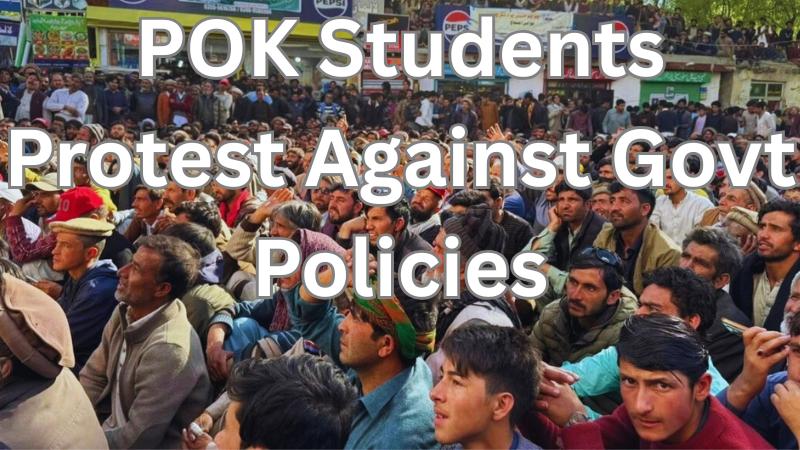
The streets of Pakistan-Occupied Kashmir (POK) are once again engulfed in protests, this time led by Gen Z students angered by rising tuition fees and a controversial digital evaluation system. What began as a small student-led protest over unfair exam results has evolved into a large-scale anti-government movement targeting the Shehbaz Sharif administration.
Demonstrations first erupted in Muzaffarabad, where students voiced outrage over the newly introduced e-marking system. The issue intensified when an unidentified gunman opened fire on protesters, injuring one and igniting public fury. Viral videos circulating on social media show the shooter acting in the presence of police officers, prompting questions about state complicity.
As tensions rose, protesters burned tyres, clashed with authorities, and accused the government of exploiting the education system. Many drew parallels to youth-led uprisings in Nepal and Bangladesh, where disillusionment with corruption and poor governance triggered political collapse.
Initially focused on academic grievances, the protests soon expanded to include complaints about poor infrastructure, healthcare shortages, and unemployment. The introduction of the e-marking system has been at the heart of the controversy, with students reporting widespread errors — including marks given for unattempted papers.
Students also condemned the high cost of paper rechecks, with fees reaching Rs 1,500 per subject, totaling Rs 10,500 for a full review. The outrage has now drawn support from the Joint Awami Action Committee (JAAC), the same group behind October’s violent unrest that left over a dozen civilians dead.
These developments reflect a pattern across South Asia: youth-led movements challenging entrenched political and military power. Observers note that POK’s unrest echoes similar Gen Z uprisings in Nepal, Bangladesh, and Sri Lanka, where frustration with economic stagnation and corruption led to the downfall of governments. The Sharif administration’s response remains uncertain, but with growing public anger and deepening distrust in state institutions, the situation in POK may signal a larger generational rebellion against Pakistan’s leadership.