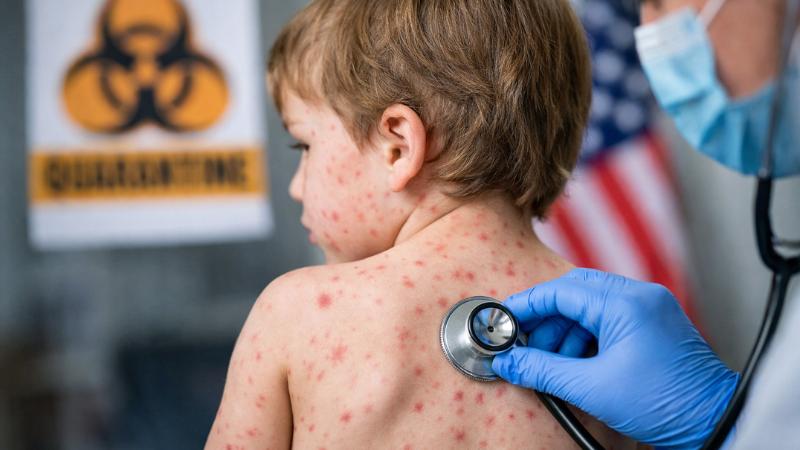
The Virginia Department of Health has confirmed the state’s second case of measles reported so far this year, prompting an investigation into potential exposure sites and renewed public health guidance for residents. Health officials said the case involves a preschool-aged child who recently traveled internationally with family members, a factor that continues to play a significant role in measles transmission within the United States.
According to the department, the child visited several locations where others may have been exposed to the highly contagious virus. Identified exposure sites include the Alexander T. Augusta Military Medical Center Emergency Department and Executive Medicine Suite at Fort Belvoir on Friday, Jan. 9, during two time periods: from 9:30 a.m. to 3 p.m., and again from 10 p.m. to midnight. Officials also reported potential exposure aboard Amtrak Northeast Regional Train 175, which traveled from Philadelphia’s William H. Gray III 30th Street Station to Washington Union Station between 9 p.m. and 11:30 p.m. on Wednesday, Jan. 7. The health department noted that additional exposure locations may be identified as the investigation continues.
Measles is one of the most contagious infectious diseases and spreads easily through the air when an infected person breathes, coughs, or sneezes. The virus can linger in the air for hours after an infected individual has left an area, increasing the risk of exposure for others. Health officials emphasize that people who are not immune are particularly vulnerable to infection.
Symptoms of measles typically develop in two stages. The first stage usually begins seven to 14 days after exposure and includes a high fever above 101 degrees, runny nose, watery or red eyes, and persistent cough. Several days later, a distinctive rash appears, starting on the face before spreading to the rest of the body. Individuals with measles are considered contagious from four days before the rash appears until four days after it has fully emerged.
The health department is urging anyone who may have been at the listed locations during the specified times to review their vaccination status and monitor their health closely. People who have received two doses of the measles, mumps, and rubella vaccine, or who were born before 1957, are generally considered protected. Those who are unsure of their immunization history are advised to contact their healthcare provider or request records through the state’s immunization record request system.
Officials warn that individuals who are not immune and were exposed may qualify for post-exposure preventive treatment, but such measures are only effective if administered within a limited time frame. Anyone potentially exposed should watch for symptoms for up to 21 days following the exposure period, with the most likely window for illness in this case estimated between January 16 and January 30.
Health authorities strongly advise anyone who develops symptoms consistent with measles to immediately isolate at home and contact a healthcare provider before seeking in-person medical care. Calling ahead allows medical facilities and local health departments to take appropriate precautions to protect other patients and staff. Residents with additional concerns or questions are encouraged to contact their local health department for further guidance as the investigation continues.