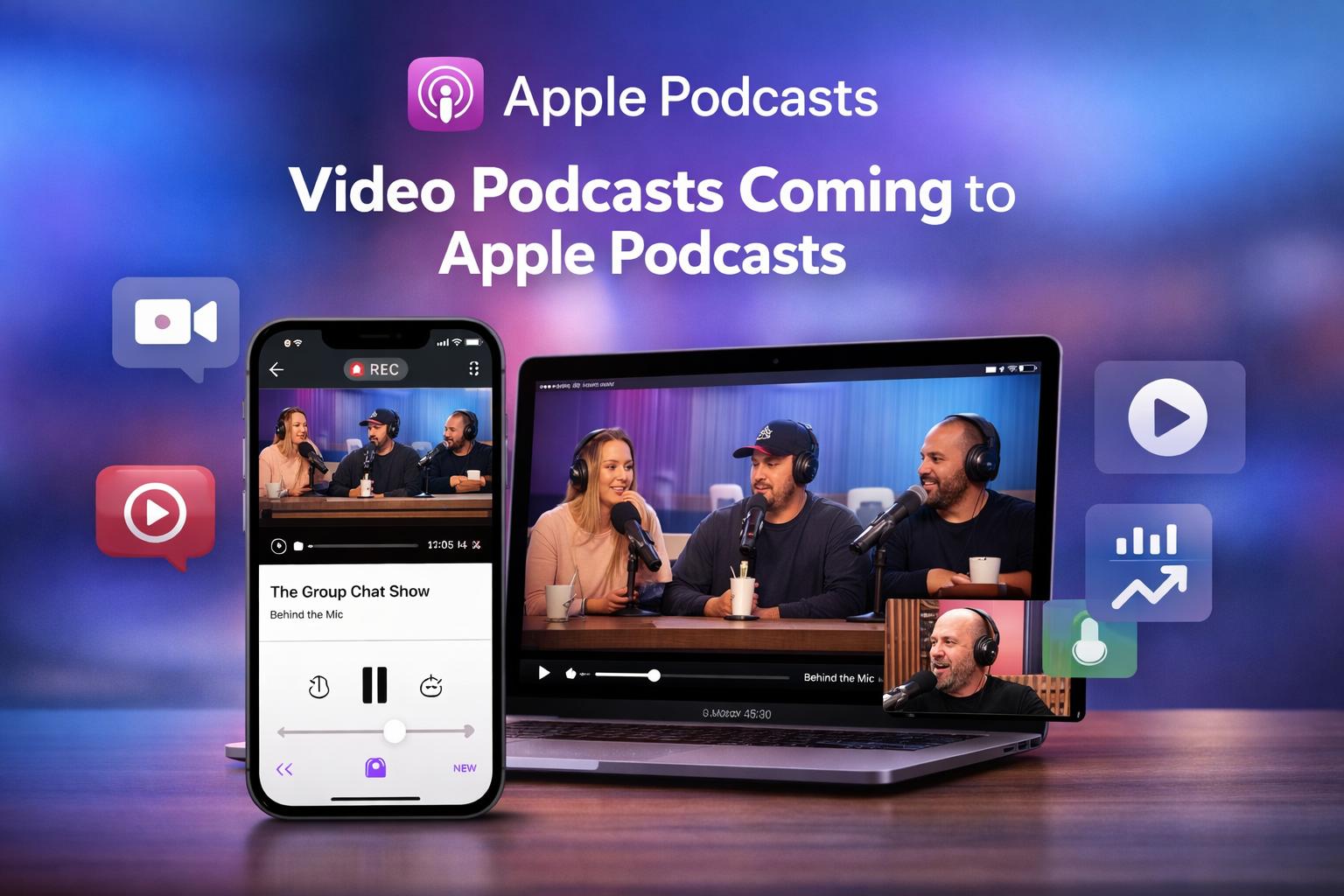
The company’s move comes amid strong growth in video podcast viewership. According to Edison Research, approximately 37 percent of individuals aged 12 and older now watch video podcasts each month, underscoring the rapid evolution of audience habits. With competitors increasingly prioritizing video formats, Apple’s latest update positions Apple Podcasts more competitively within the broader digital media landscape.
Eddy Cue, Apple’s senior vice president of Services, said the company has long played a central role in podcasting’s mainstream adoption. He noted that Apple helped popularize podcasts through iTunes two decades ago and later launched the dedicated Apple Podcasts app. Cue said the upcoming video podcast feature aims to give creators full control over how they present and monetize their shows while making it easier for audiences to either watch or listen within a single platform.
Under the new system, users will be able to seamlessly switch between audio and video playback within the same podcast feed. The update will also support picture-in-picture viewing and allow downloads of video episodes for offline access, features that reflect growing demand for flexible, mobile-friendly consumption.
Although Apple Podcasts has technically supported video through RSS feeds since 2005, those video versions were historically separated from audio feeds. The forthcoming update introduces support for HLS streaming, Apple’s HTTP Live Streaming protocol, which enables adaptive video playback and improved in-app controls. This integration is expected to simplify distribution for creators while enhancing playback quality for users.
The HLS implementation will also enable dynamic video ad insertion. Creators working with participating hosting providers and advertising networks will be able to place video advertisements, including host-read promotions, directly into episodes. Apple said it will not charge creators or hosting platforms for distributing content through the new system. However, the company will apply an impression-based fee to participating ad networks that deliver dynamic video ads via HLS.
Launch partners supporting HLS video include Acast, Amazon-owned ART19, Triton Digital’s Omny Studio, and SiriusXM. Their participation is expected to accelerate adoption among major podcast publishers and networks.
Apple’s announcement arrives as major platforms continue investing heavily in video podcasting. YouTube previously reported surpassing one billion monthly active viewers of podcast-related content, while Spotify has expanded its own video podcast offerings and disclosed significant payouts to podcasters. Netflix has also begun exploring the format through new partnerships and original programming initiatives.
While Apple does not separately disclose revenue from Apple Podcasts, its broader Services division, which includes subscriptions and digital content, generated approximately $30 billion in its most recent quarterly results. The company has also been investing in artificial intelligence capabilities, including its January acquisition of Israeli startup Q.ai, which has reportedly been developing audio-focused AI tools.
Industry observers view Apple’s latest move as a strategic effort to strengthen its position in the increasingly competitive podcast platform market. By integrating video podcast functionality directly into Apple Podcasts, the company is betting that a unified listening and viewing experience will attract both creators and audiences as the medium continues to evolve.