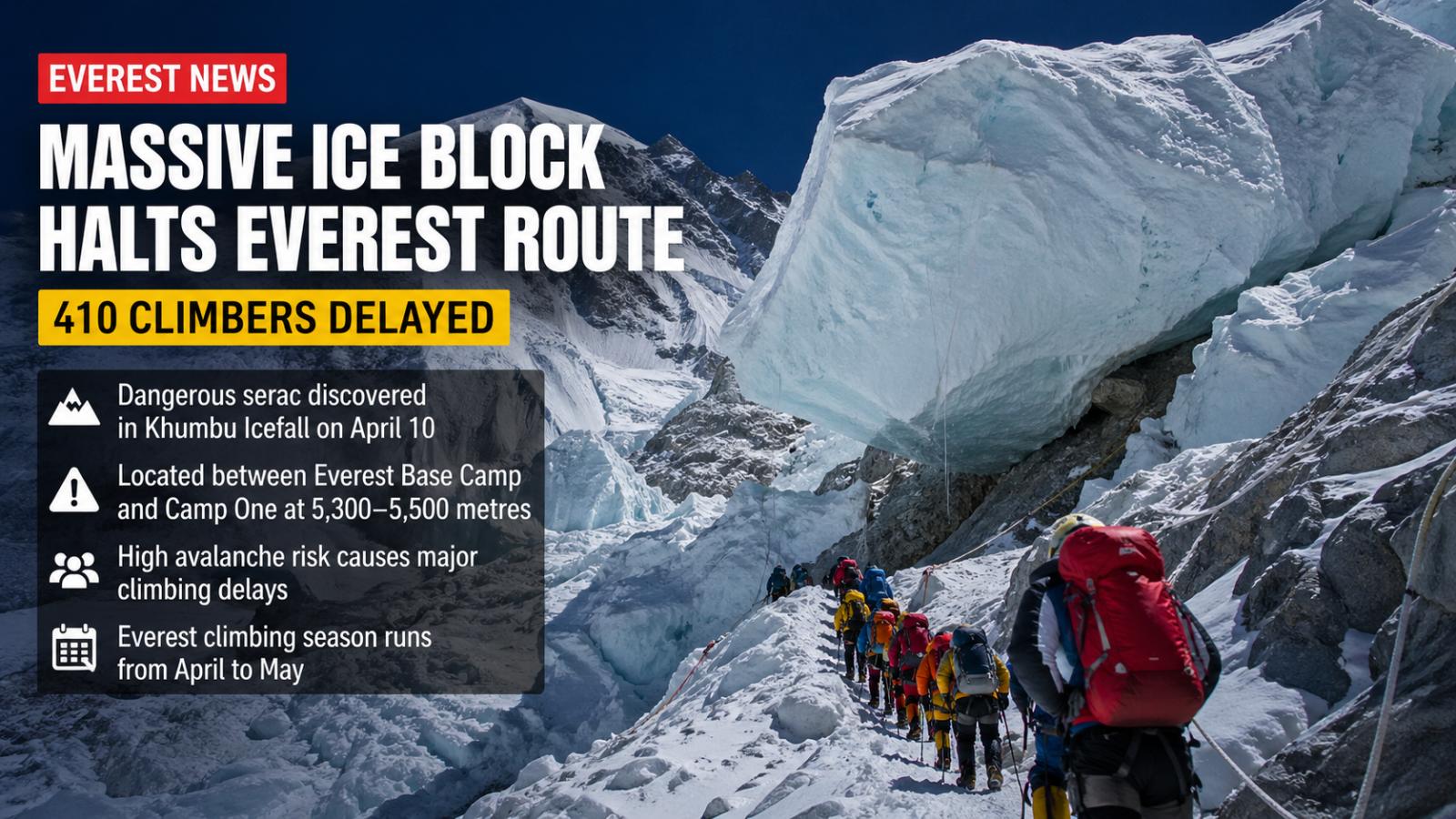
A massive ice block on the Mount Everest route has disrupted climbing operations, forcing around 410 climbers and Sherpas to delay their movements between camps. The obstruction, identified as a dangerous serac in the Khumbu Icefall, has raised serious safety concerns and halted acclimatisation rotations during a crucial phase of the Everest climbing season.
The ice block was first identified on April 10 by experienced Sherpas, who warned that the structure is highly unstable and could collapse without warning. Positioned along the southern route in Nepal, the serac hangs directly above a narrow passage between Everest Base Camp and Camp One, an area already known for its unpredictable and hazardous conditions.
The formation of this ice block is linked to the natural movement of the Khumbu Glacier. As the glacier slowly descends down the mountain, the rigid ice fractures and forms towering blocks. In this case, a giant section about 30 metres tall remains suspended over the climbing route. As the glacier continues to shift, the risk of further instability increases significantly, making the route unsafe for climbers.
The location of the serac adds to the danger. Situated at an altitude of approximately 5,300 to 5,500 metres, the Khumbu Icefall is often described as one of the most dangerous parts of the Everest climb. A sudden collapse could trigger a deadly avalanche, sending massive volumes of ice down the slope and putting lives at immediate risk.
This delay is critical because the Everest climbing season runs from April to May, offering only a short window of favorable weather. With expeditions already behind schedule, climbers now face the possibility of overcrowding, delays, or even cancellation if conditions do not improve. The disruption also impacts Nepal’s economy, where mountaineering remains a major source of income.
Expedition leaders have expressed concern about the growing uncertainty. With teams waiting at base camp, the situation has created a serious bottleneck in climbing operations. Until the route is declared safe, climbers have little choice but to remain on standby, highlighting the unpredictable risks of glacier movement and high-altitude climbing.