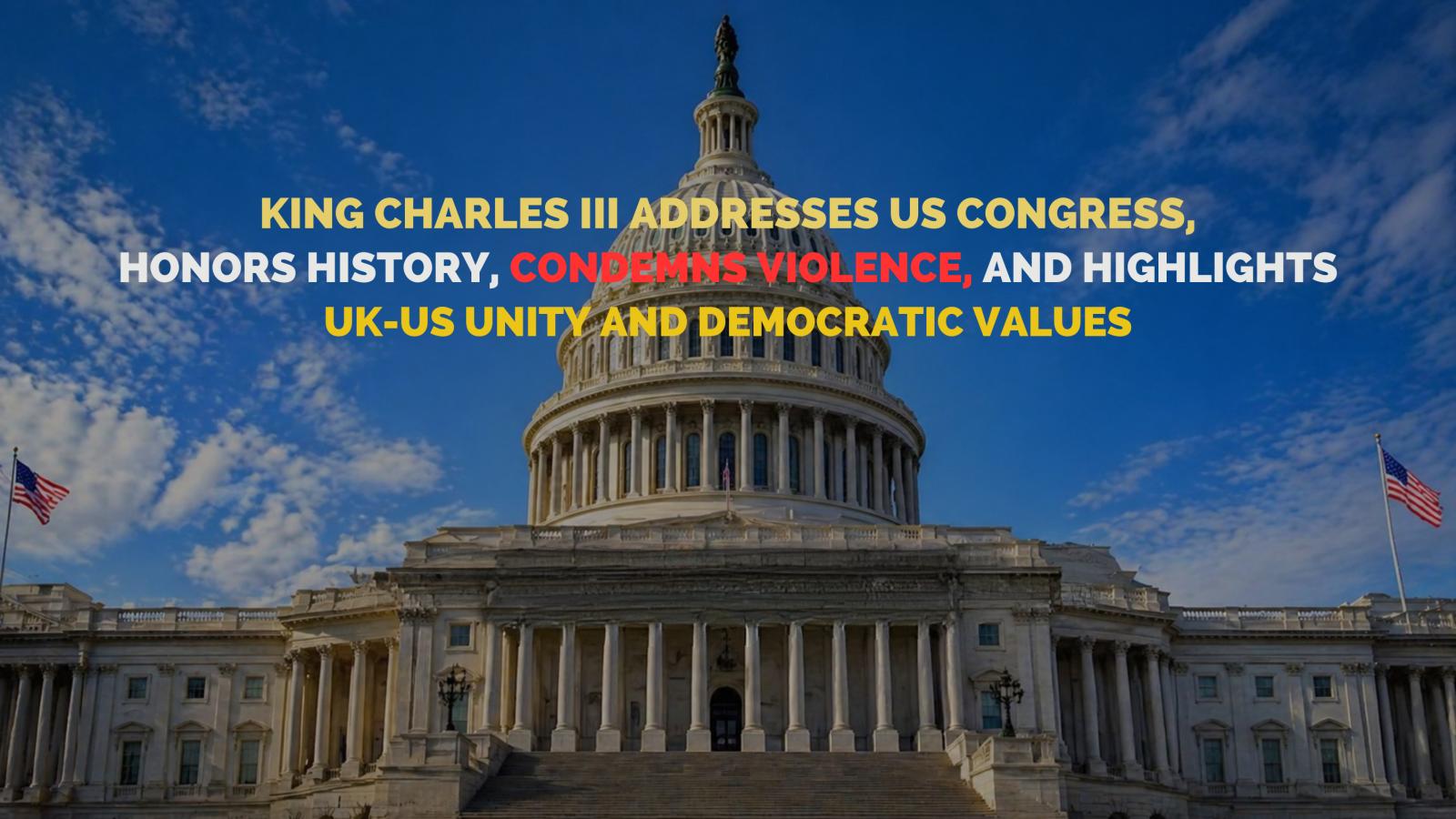
What did King Charles III say in Congress? He honored history and condemned violence— King Charles III opened his address to the United States Congress with a deeply personal tribute to his late mother, Queen Elizabeth II, recalling her historic 1991 speech delivered in the same chamber beneath the Statue of Freedom. Speaking with respect for the institution, he described Congress as a “citadel of democracy” representing the voices and rights of the American people, emphasizing the significance of the moment as a reflection of enduring friendship between the United Kingdom and the United States.
Tribute to legacy and democratic institutions
The King framed his remarks around continuity and shared values, noting the symbolic importance of returning to a chamber where his mother once stood. He praised American lawmakers for their role in safeguarding democratic principles and described the occasion as a meaningful opportunity to reaffirm mutual respect between the two nations. The speech underscored how historical connections continue to shape modern diplomatic relationships.
Condemnation of recent violence near Capitol
Addressing a recent violent incident near the congressional complex, the King spoke firmly against acts intended to destabilize leadership and spread fear. He emphasized that such violence would not succeed in undermining democratic institutions. Reaffirming solidarity, he highlighted a shared commitment between both nations to protect citizens and honor those who risk their lives in public service.
Shared history shaped by disagreement and cooperation
Reflecting on the complex origins of US-UK relations, the King referenced the founding ideals of the United States, including the principle of “no taxation without representation.” He acknowledged that while the two nations were born out of disagreement, those very differences helped establish enduring democratic values. He described the partnership as resilient, strengthened rather than weakened by its historical challenges.
Renewed commitment to global partnership
The King emphasized that despite occasional differences, both countries remain aligned in their broader goals. He described the United States and the United Kingdom as instinctively like-minded nations that collaborate not only for their own citizens but also for global stability and progress. Highlighting his longstanding engagement with the US, he noted that this marked his 20th visit to Washington, D.C., reinforcing the depth of diplomatic ties.
Historical reflections with a touch of humor
Adding a lighter tone, the King referenced the year 1776 through a literary lens, invoking Charles Dickens and humorously describing it as “A Tale of Two Georges,” referring to George Washington and King George III. His remark that he was not in the United States for any “rearguard action” drew laughter, blending historical reflection with contemporary goodwill.
Tribute to legacy and democratic institutions
The King framed his remarks around continuity and shared values, noting the symbolic importance of returning to a chamber where his mother once stood. He praised American lawmakers for their role in safeguarding democratic principles and described the occasion as a meaningful opportunity to reaffirm mutual respect between the two nations. The speech underscored how historical connections continue to shape modern diplomatic relationships.
Condemnation of recent violence near Capitol
Addressing a recent violent incident near the congressional complex, the King spoke firmly against acts intended to destabilize leadership and spread fear. He emphasized that such violence would not succeed in undermining democratic institutions. Reaffirming solidarity, he highlighted a shared commitment between both nations to protect citizens and honor those who risk their lives in public service.
Shared history shaped by disagreement and cooperation
Reflecting on the complex origins of US-UK relations, the King referenced the founding ideals of the United States, including the principle of “no taxation without representation.” He acknowledged that while the two nations were born out of disagreement, those very differences helped establish enduring democratic values. He described the partnership as resilient, strengthened rather than weakened by its historical challenges.
Renewed commitment to global partnership
The King emphasized that despite occasional differences, both countries remain aligned in their broader goals. He described the United States and the United Kingdom as instinctively like-minded nations that collaborate not only for their own citizens but also for global stability and progress. Highlighting his longstanding engagement with the US, he noted that this marked his 20th visit to Washington, D.C., reinforcing the depth of diplomatic ties.
Historical reflections with a touch of humor
Adding a lighter tone, the King referenced the year 1776 through a literary lens, invoking Charles Dickens and humorously describing it as “A Tale of Two Georges,” referring to George Washington and King George III. His remark that he was not in the United States for any “rearguard action” drew laughter, blending historical reflection with contemporary goodwill.