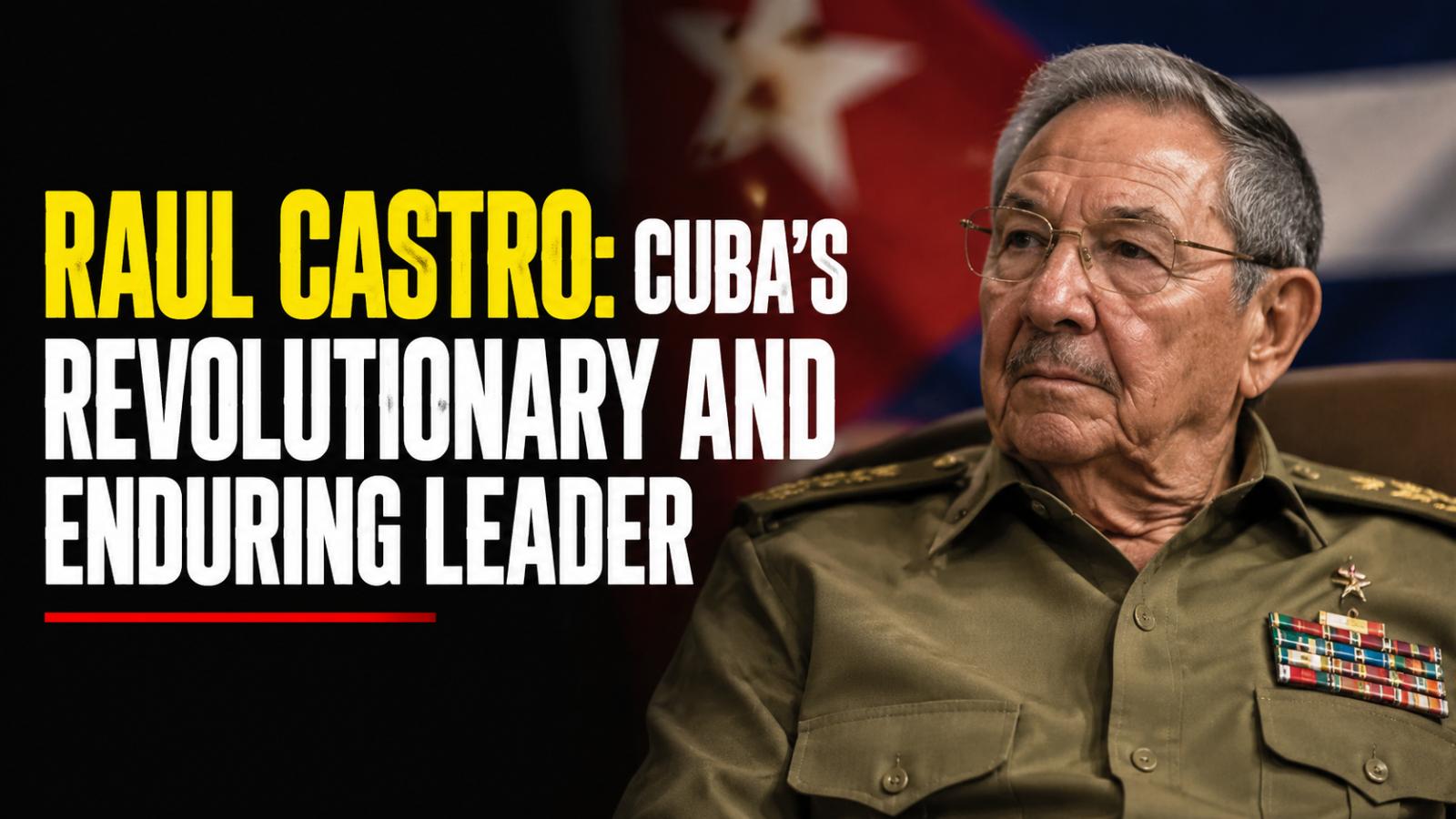
Raul Castro, born in 1931, is the younger brother of Fidel Castro and one of the most influential figures in modern Cuban history. As a key participant in the 1959 Cuban Revolution, he helped overthrow the US-backed dictator Fulgencio Batista, establishing a communist state. Today, at 94, Raul continues to shape Cuba’s politics, impacting government decisions, Communist Party direction, and economic responses amid ongoing challenges. His decades-long leadership spans military strategy, governance, and international relations.
The Revolutionary Who Shaped Cuba
Raul Castro joined Fidel in the armed struggle against Batista, emerging as a trusted commander. Following the revolution, he assumed a central role in Cuba’s military and political hierarchy, directing operations during the 1961 Bay of Pigs invasion and overseeing Cuban missions abroad, including in Africa. His authority over the armed forces and security institutions made him a decisive power in Cuba’s political system.
Political Rise After Fidel’s Illness
Raul’s influence expanded when Fidel fell seriously ill in 2006. Acting as president and formally assuming office in 2008, he maintained Cuba’s political stability after Fidel’s death in 2016. He introduced measured reforms while preserving the communist structure, balancing continuity with cautious modernization. Internationally, his legacy remains under scrutiny, with past actions, including the 1996 humanitarian flight incident, highlighting the depth of his military and political impact.
Recent Public Appearances and Continuing Influence
In May 2026, Raul appeared at Cuba’s International Workers’ Day celebrations. Despite visible signs of age, his presence reaffirmed his authority. Recently, he proposed delaying the Communist Party congress due to economic struggles, signaling that he still plays a key role in guiding Cuba’s political decisions. Raul Castro’s enduring leadership cements his place as a symbol of continuity and a defining figure in Cuba’s history.