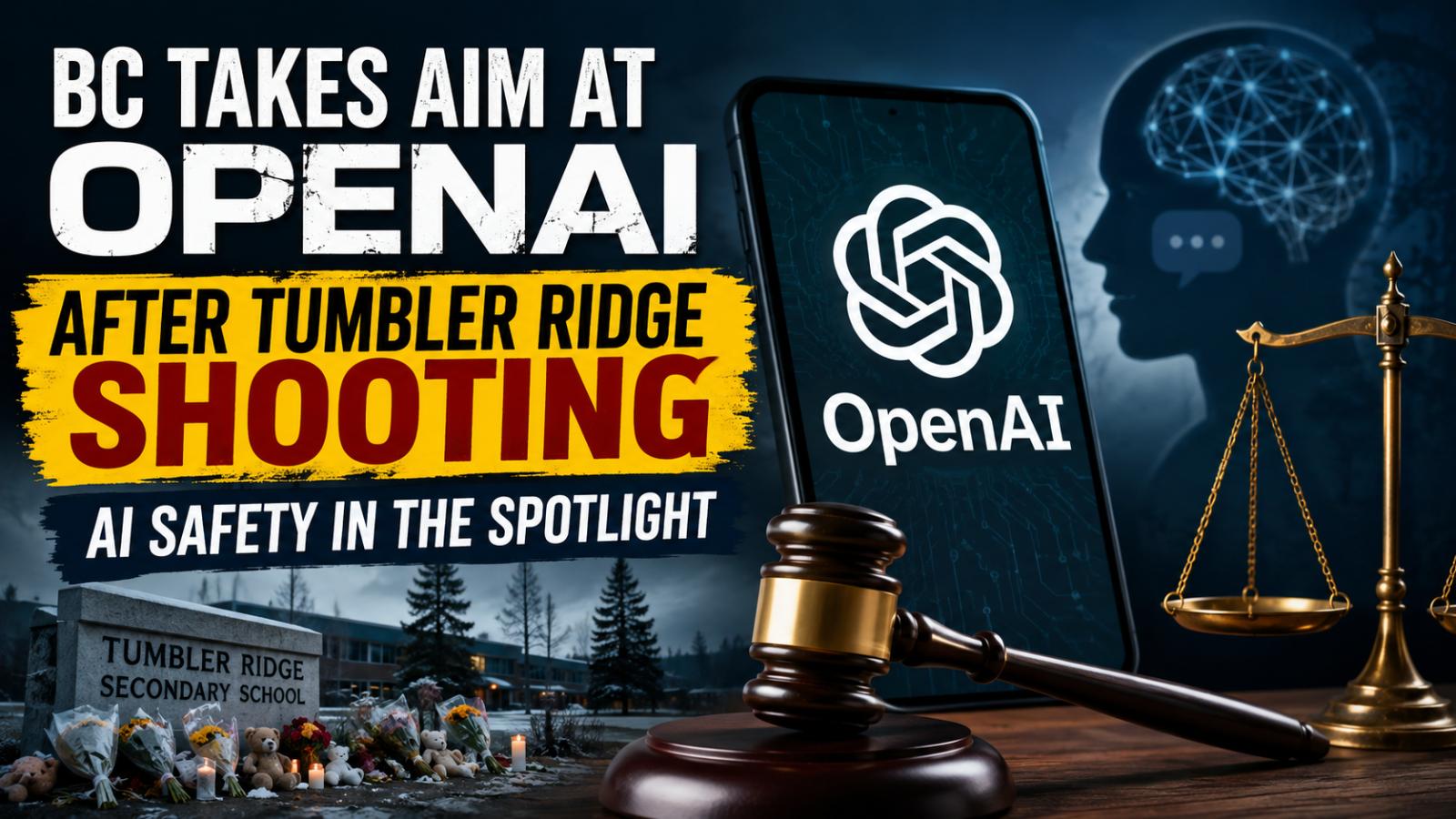
British Columbia’s move toward legal action against OpenAI has pushed the Tumbler Ridge shooting into a wider debate over artificial intelligence safety, corporate responsibility and public protection. The province has hired legal teams in B.C. and California as it examines whether the company can be held accountable for alleged warning signs connected to the attacker’s ChatGPT use before the February tragedy.
The case has drawn attention because it goes beyond one violent incident. It asks whether AI companies should have a legal duty to report dangerous online behavior when their systems detect possible threats involving violence or self-harm. That question could shape future AI regulation in Canada, the United States and other countries watching the rapid growth of generative AI tools.
What happened in Tumbler Ridge
The shooting took place in the small northern B.C. community of Tumbler Ridge, leaving eight people dead before the attacker died by suicide. Authorities identified the shooter as Jesse Van Rootselaar. The victims included family members, students and an educational assistant, leaving the community with deep grief and long-term trauma.
The attack also raised difficult questions about school security, online warning signs and whether technology platforms are prepared to deal with users who appear to discuss real-world violence. Families and officials are now looking closely at what was known before the shooting and whether any earlier intervention could have changed the outcome.
Why OpenAI is under scrutiny
Lawsuits filed by victims’ families allege that OpenAI had flagged troubling activity linked to the shooter months before the attack. The company had banned an account connected to Van Rootselaar in June 2025 for policy violations involving violent content, but law enforcement was not contacted at that time.
OpenAI has said the material did not clearly meet the threshold for an immediate police referral under its policies then. Critics argue that the company should have acted more aggressively, especially if internal teams believed the behavior showed signs of credible danger.
Apology and policy questions
OpenAI CEO Sam Altman later apologized to the Tumbler Ridge community, saying he was sorry law enforcement had not been alerted about the banned account. The company has said its safety rules have since been strengthened and that similar activity would now be handled differently.
Still, the apology has not ended the legal and public debate. For families, the issue is not only what OpenAI changed after the shooting, but whether its earlier decisions reflected a serious failure in AI safety oversight.
What the case could mean
British Columbia may seek damages tied to recovery costs, school rebuilding and community support. But proving legal responsibility will not be simple. The province and families would need to show a strong connection between OpenAI’s actions, or lack of action, and the tragedy that followed.
The case could become a major test of AI liability. If courts accept that AI companies have a duty to report certain threats, the decision may force the industry to build faster escalation systems, clearer police referral rules and stronger guardrails for violent prompts.