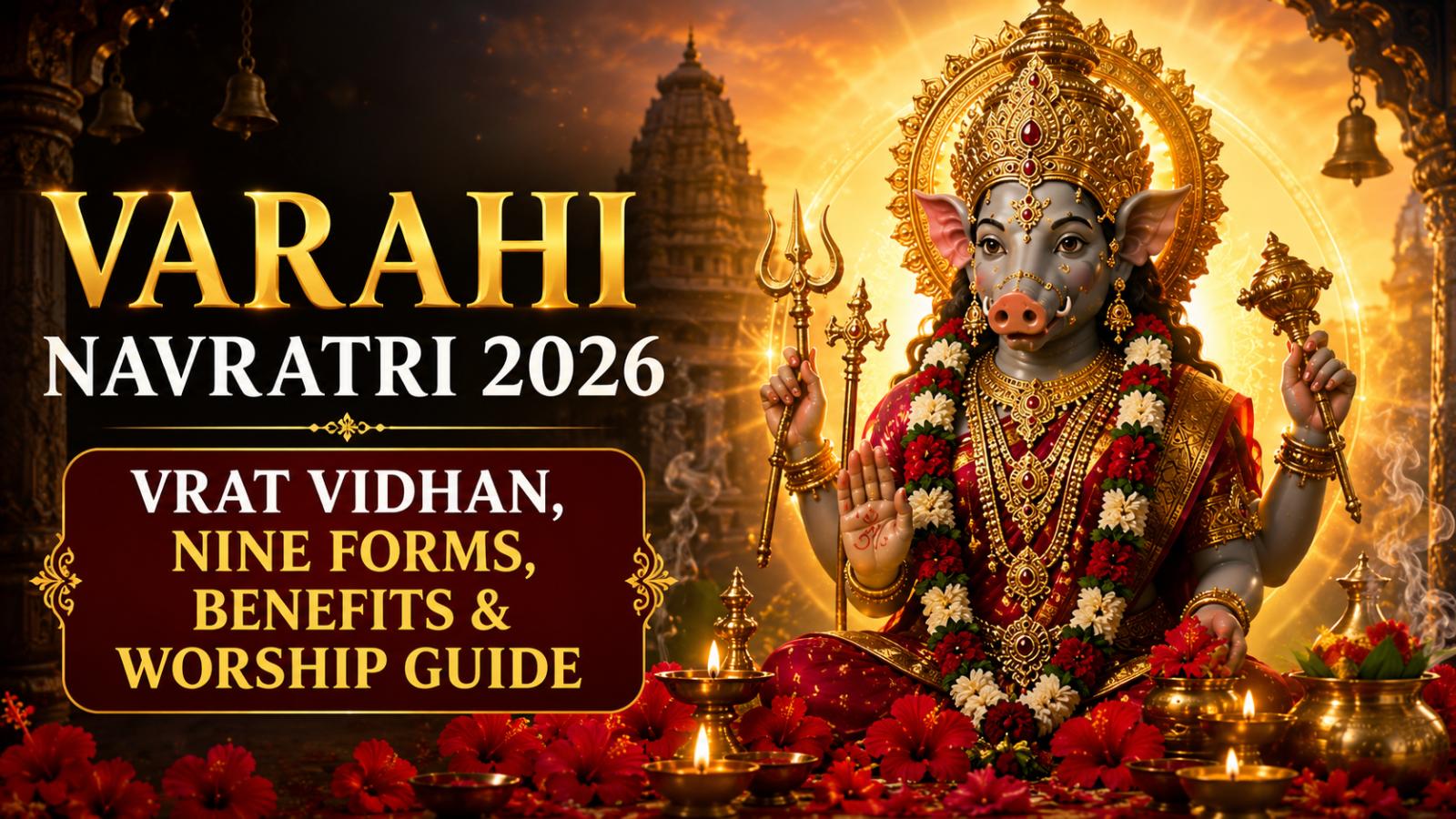
Varahi Navratri is a sacred period dedicated to Maa Varahi, the protective warrior form of Divine Shakti. This guide explains the 2026 dates, Varahi vrat vidhan, nine forms, fasting practices, Satvik food, mantra worship and traditionally believed benefits.
Varahi Navratri 2026 dates and significance
Varahi Navratri, also called Ashadha Gupt Navratri, begins on July 15, 2026. The main Navratri observance continues through July 22, while some calendars include July 23 for Navami completion or Parana. Devotees should follow their local Panchang or temple guidance because tithi timings can differ by location.
Maa Varahi is traditionally recognised as one of the Matrikas and is represented with a boar-faced form. Devotees worship her as a powerful manifestation of Shakti associated with courage, discipline, protection and victory over obstacles. Gupt means hidden or secret, referring to the inward and traditionally private nature of this period of spiritual practice.
Nine forms of Maa Varahi
Devotional traditions identify nine forms as Adi Varahi, Laghu Varahi, Swapna Varahi, Kirata Varahi, Panchami Varahi, Dandanatha Varahi, Ashwarudha Varahi, Maha Varahi and Unmatta Varahi. Names and worship methods may differ between regional and spiritual lineages.
Household devotees should avoid attempting advanced tantric rituals without guidance from a qualified Guru. Simple prayer, meditation, lamp lighting and respectful mantra chanting offer a practical way to observe Varahi Navratri at home.
Varahi vrat vidhan and fasting rules
Devotees usually begin the vrat after bathing, wearing clean clothes and taking a sincere Sankalpa. They clean the prayer space, light a cow-ghee lamp and offer red hibiscus flowers, kumkum, turmeric, sandalwood, fruits, incense and homemade prasadam before Maa Varahi.
Not everyone follows the same fasting method. Some devotees observe all nine days with Satvik food, while others take fruits, milk and coconut water or eat one simple meal daily. Common foods include sabudana, millet, dry fruits, sweet potatoes, pumpkin, bottle gourd and homemade kheer. Onion, garlic, meat, eggs, alcohol and intoxicants are generally avoided.
The vrat also encourages truthful speech, kindness, cleanliness, self-control and reduced anger. Some devotees voluntarily sleep on a simple floor mat and wake before sunrise. This is a personal discipline rather than a universal requirement, and health should always take priority.
Varahi mantra and traditionally believed benefits
Worship may begin with a prayer to Lord Ganesha, followed by a simple Maa Varahi mantra such as “Om Aim Hreem Shreem Varahi Devyai Namah.” Devotees commonly chant it 108 times with prayer beads, although beginners should focus on correct pronunciation and sincere devotion rather than high repetition.
Traditional belief associates Maa Varahi worship with courage, confidence, family harmony, prosperity, protection and progress in important goals. Some devotees also pray for help in purchasing land, constructing a home or completing delayed projects. These are faith-based beliefs, not guaranteed material outcomes.
Varahi Navratri ultimately centres on devotion, discipline and inner transformation. Whether a devotee fasts strictly or follows a simple Satvik routine, the observance should remain peaceful, responsible and suited to personal health and family tradition.