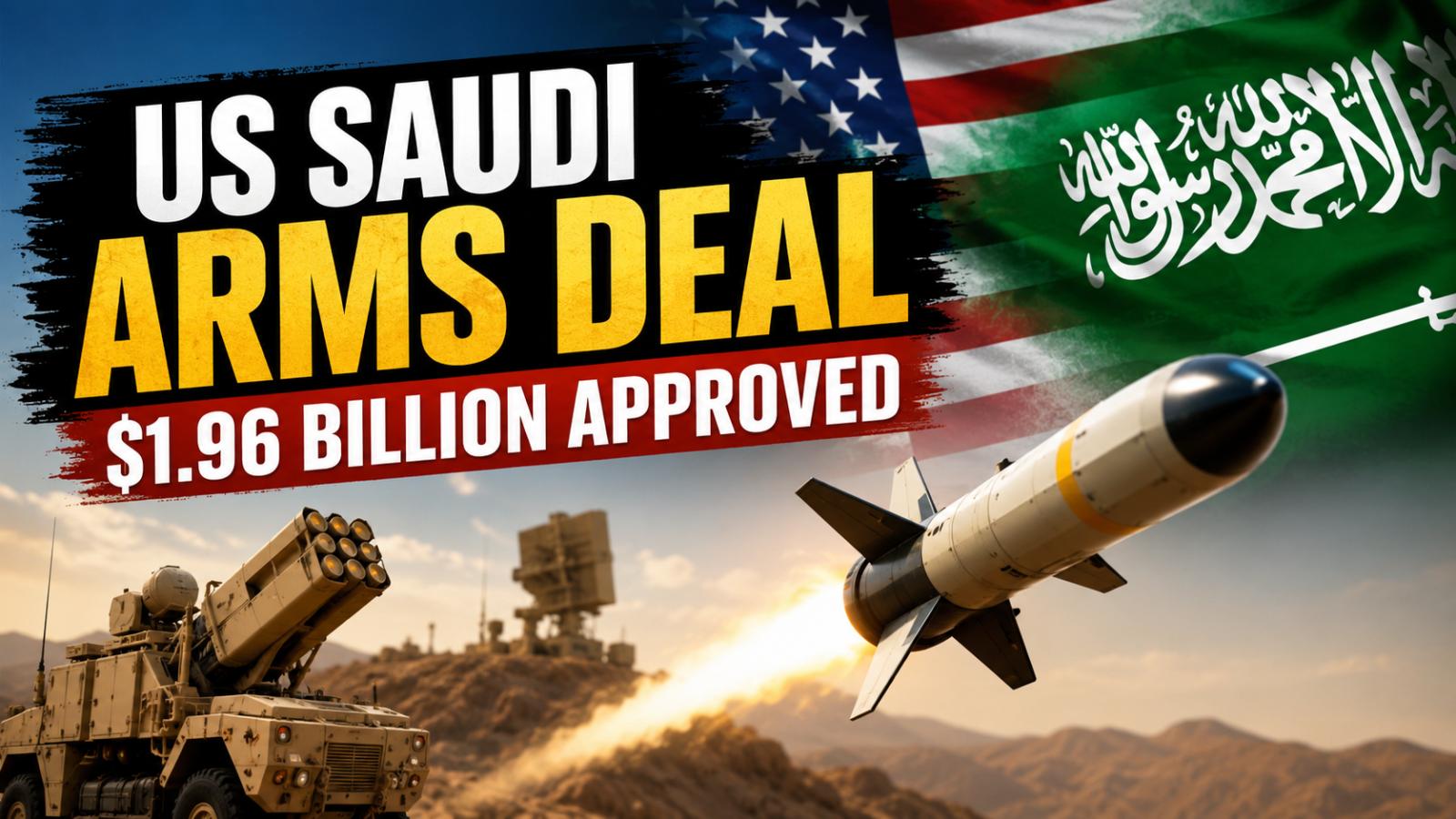
The United States has approved a potential $1.96 billion precision-weapons sale to Saudi Arabia as the kingdom faces renewed missile and drone threats from Yemen’s Houthi movement. The proposed package includes Advanced Precision Kill Weapon Systems designed to improve Saudi air defence and regional military coordination.
Saudi defence receives major US weapons boost
The US State Department approved the possible foreign military sale of Advanced Precision Kill Weapon Systems, warheads and associated equipment to Saudi Arabia. The estimated value of the proposed package is $1.96 billion, according to the department’s announcement reported on July 16, 2026.
Saudi Arabia has requested up to 20,000 APKWS units together with corresponding warheads, logistical assistance, technical support and related equipment. The transaction remains a proposed sale rather than a completed arms transfer. Its final value and equipment quantities could change during contract negotiations.
Washington said the US Saudi arms deal would support American foreign-policy and national-security objectives by improving the security of Saudi Arabia, which the United States designates as a major non-NATO ally. The department described the kingdom as an important contributor to political stability and economic activity in the Gulf.
APKWS supports precision targeting
APKWS technology converts standard unguided rockets into laser-guided precision weapons. The system is intended to strike relatively small targets more accurately while reducing the risk of unintended damage compared with larger conventional munitions.
The package could strengthen Saudi Arabia’s ability to respond to drones, lightly protected vehicles, launch sites and other short-range threats. It would also improve operational compatibility between Saudi forces, the United States, NATO members and regional partners.
BAE Systems will serve as the principal contractor. The company’s relevant operation is located in Nashua, New Hampshire, not Nashua, New Jersey, as stated in some versions of the report. Washington said the proposed transfer would not weaken US military readiness.
Houthi threat returns near Abha airport
The approval comes as fighting between Saudi-backed forces and Yemen’s Iran-aligned Houthis threatens to end years of reduced cross-border hostilities. On July 13, the Houthis launched missiles and drones towards Abha International Airport in southern Saudi Arabia after strikes damaged Sanaa International Airport.
Saudi forces reportedly intercepted the incoming missiles, and authorities reported no casualties. The Houthis said the operation answered an attack intended to stop an Iranian aircraft carrying a delegation from landing in Houthi-controlled Sanaa. Yemen’s internationally recognised government defended the airport operation as an effort to protect the country’s sovereignty.
Gulf security concerns drive defence spending
The renewed confrontation has increased concerns that Yemen could return to a broader war after an informal truce significantly reduced cross-border attacks from 2022. Further escalation could affect Saudi border regions, civilian aviation and commercial shipping through the Red Sea and Gulf of Aden.
The proposed precision-weapons sale signals continued US support for Saudi security while regional governments prepare for missile, drone and maritime threats. However, congressional review, final agreements and delivery schedules will determine when—and in what quantities—the weapons reach Saudi forces.