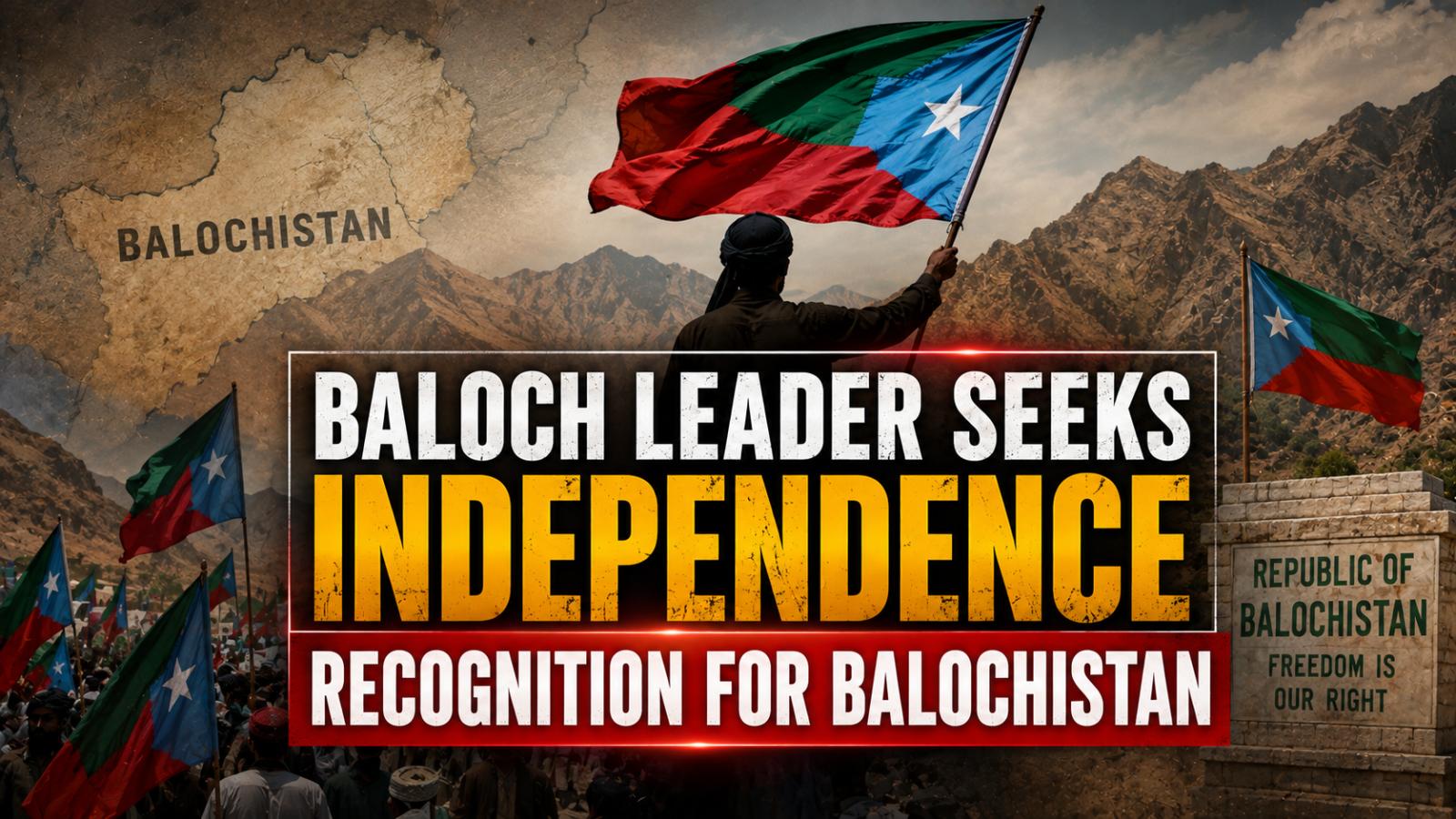
Baloch separatist leader Mir Yar Baloch has renewed his call for Balochistan independence recognition, asking governments and international organisations to treat the region as an independent country rather than a Pakistani province. His appeal came as supporters marked August 11 as “Balochistan Independence Day.”
Balochistan recognition campaign seeks international backing
In a statement shared on X, Mir Yar Baloch appealed to the international community to recognise what he calls the “Republic of Balochistan.” He argued that the movement has entered a new phase in which diplomatic and political recognition will become a central objective.
The appeal asked governments and institutions to stop describing Balochistan as a province of Pakistan. However, this remains the position of a separatist leader rather than a change in Balochistan's internationally recognised status. Pakistan continues to administer Balochistan as one of its provinces, and there is no indication that the self-proclaimed republic has received formal international recognition.
That distinction is essential when reporting the story. References to an independent “Republic of Balochistan” should therefore be attributed to Mir Yar Baloch or the separatist movement rather than presented as an established geopolitical fact.
UN appeal expands Baloch independence campaign
Mir Yar Baloch called on members of the United Nations, ASEAN, African Union, Organisation of Islamic Cooperation and European countries to support the independence campaign. His statement also thanked international media, researchers and think tanks that he said had helped draw attention to the Baloch issue.
The statement outlined ambitions for a future independent state with its own passports, currency, media, commercial institutions and diplomatic missions. It also said such a state would take responsibility for defence, foreign policy, economic affairs and international diplomacy.
These remain proposals advanced by the separatist movement, not institutions currently recognised internationally.
August 11 reflects disputed Kalat history
The August 11 observance is rooted in the complicated history of the Khanate of Kalat during the end of British rule in South Asia. Historical research records that Kalat declared independence in August 1947 before subsequently acceding to Pakistan in March 1948. Baloch nationalist movements have long disputed the circumstances surrounding that accession.
That history remains politically contested. Pakistani authorities regard Balochistan as an integral part of the country, while separatist movements argue that the events of 1947 and 1948 support their claim to sovereignty.
Baloch movement faces difficult recognition battle
Mir Yar Baloch's latest campaign attempts to move the issue from separatist activism toward international diplomacy. Supporters reportedly marked August 11 in different locations despite claims that communications restrictions had been imposed in parts of Balochistan. Claims about specific shutdowns and the scale of demonstrations require independent confirmation.
Formal international recognition, however, represents a far higher threshold than political advocacy. Governments would have to weigh Pakistan's territorial integrity, regional security, relations with Islamabad and the wider geopolitical consequences of recognising a separatist claim.
For that reason, the immediate significance of the August 11 campaign is not that Balochistan's international status has changed. It is that Mir Yar Baloch and his supporters are attempting to transform a long-running separatist movement into a more visible diplomatic recognition campaign. Whether any government responds formally will determine whether that strategy gains meaningful international traction.