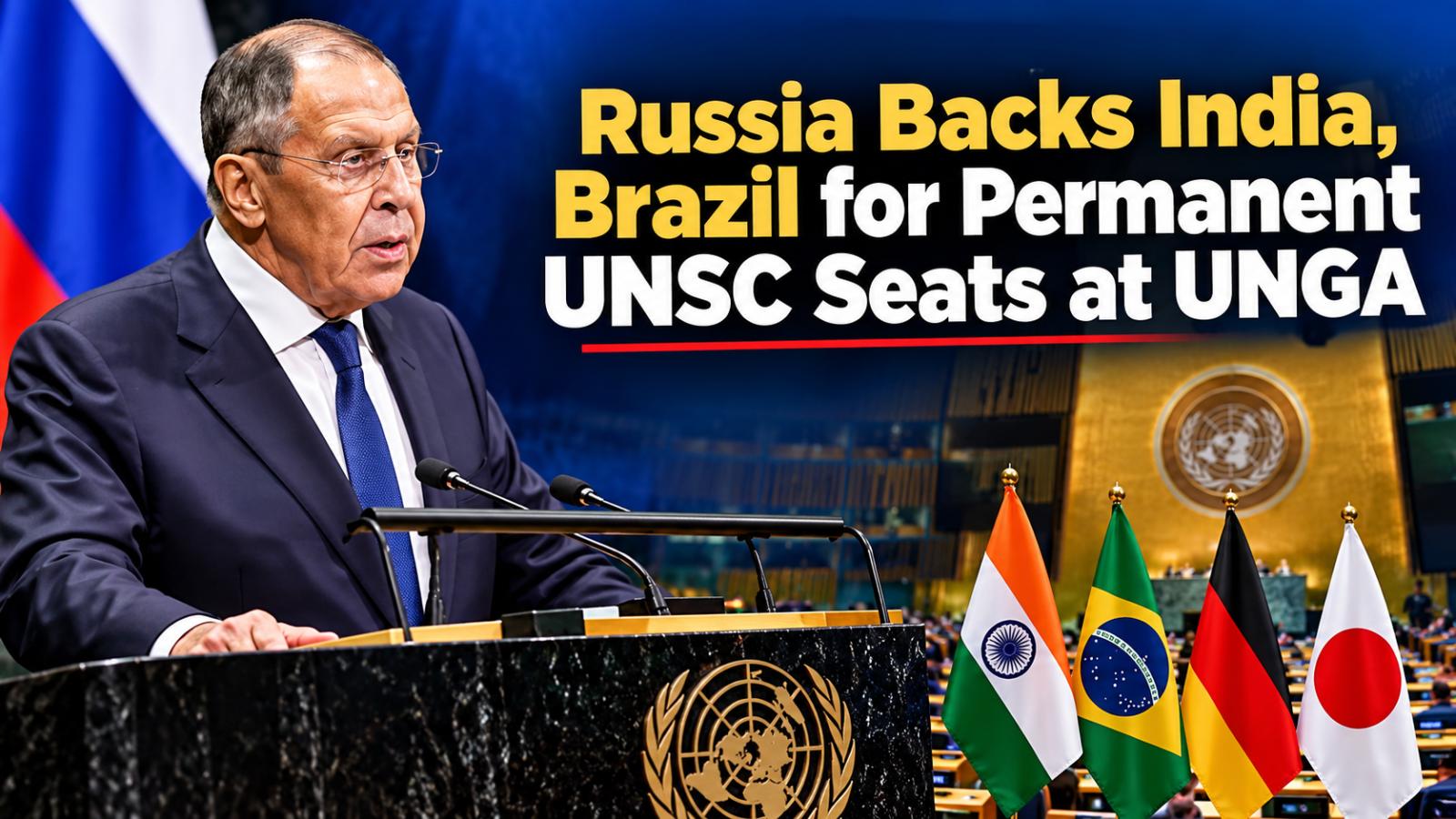
Russia backs India UNSC bid at UN General Assembly
Russia has renewed its support for India becoming a permanent member of the United Nations Security Council, with Foreign Minister Sergey Lavrov publicly backing the candidatures of India and Brazil during his address to the 81st UN General Assembly in New York.
Lavrov said Moscow wants any future expansion of the Security Council to increase representation from Asia, Africa and Latin America. He named India and Brazil as countries Russia supports for permanent membership, placing the issue of Global South representation at the centre of Moscow’s position on UN reform.
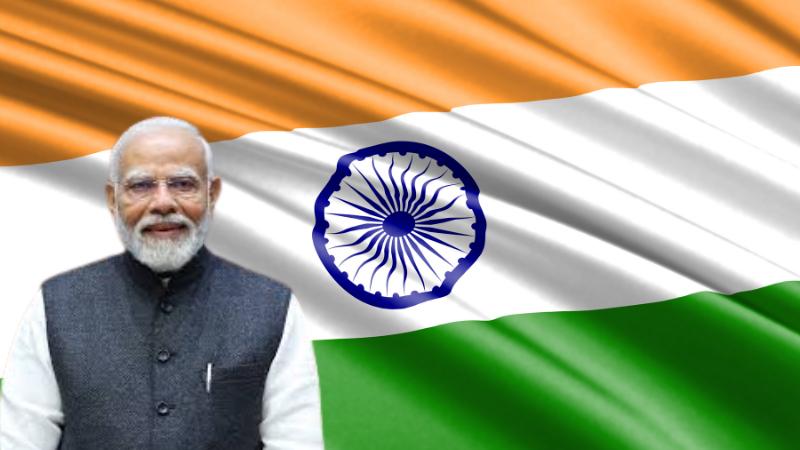
For India, the statement adds another public endorsement to its long-running campaign for a permanent seat on the Council. New Delhi has consistently argued that the structure of the Security Council should better reflect current geopolitical, demographic and economic realities.
The Council currently has 15 members. China, France, Russia, the United Kingdom and the United States hold permanent seats and veto powers, while the remaining 10 members are elected for two-year terms.
Russia has also made clear that while it supports expanding permanent membership, it wants the existing veto system to remain. Kremlin spokesperson Dmitry Peskov said on September 22 that permanent membership and veto rights remained important elements of the UN structure.
UNSC reform debate exposes G4 differences
Russia’s position also highlights a significant difference within the wider debate over Security Council reform. While Moscow supports permanent seats for India and Brazil, Lavrov opposed granting additional seats to Germany and Japan, arguing against increasing Western representation on the Council.
That stance differs from the position of the G4 grouping comprising India, Brazil, Germany and Japan. The four countries have worked together to push for expansion in both permanent and non-permanent categories and have supported one another’s bids for permanent membership. The G4 has argued that meaningful Security Council reform should better reflect present-day geopolitical realities.
Lavrov framed Russia’s approach around stronger representation for developing regions, particularly Asia, Africa and Latin America. Russia’s criticism of additional seats for Germany and Japan reflects Moscow’s own geopolitical position and is not shared by all UN members.
The broader reform debate has gained renewed attention at the 2026 UN General Assembly. UN Secretary-General António Guterres has also called for global institutions, including the Security Council, to be updated to reflect shifts in economic and geopolitical power.
Even with growing support for changes to the Council, reform remains difficult. Any amendment to the UN Charter requires approval from two-thirds of the General Assembly and ratification by two-thirds of UN member states, including all five existing permanent Security Council members.
Russia’s latest endorsement therefore strengthens diplomatic support for India’s permanent membership campaign but does not by itself change the Council’s structure. The final shape of any UNSC reform will depend on negotiations over new permanent seats, regional representation and the future role of veto powers.