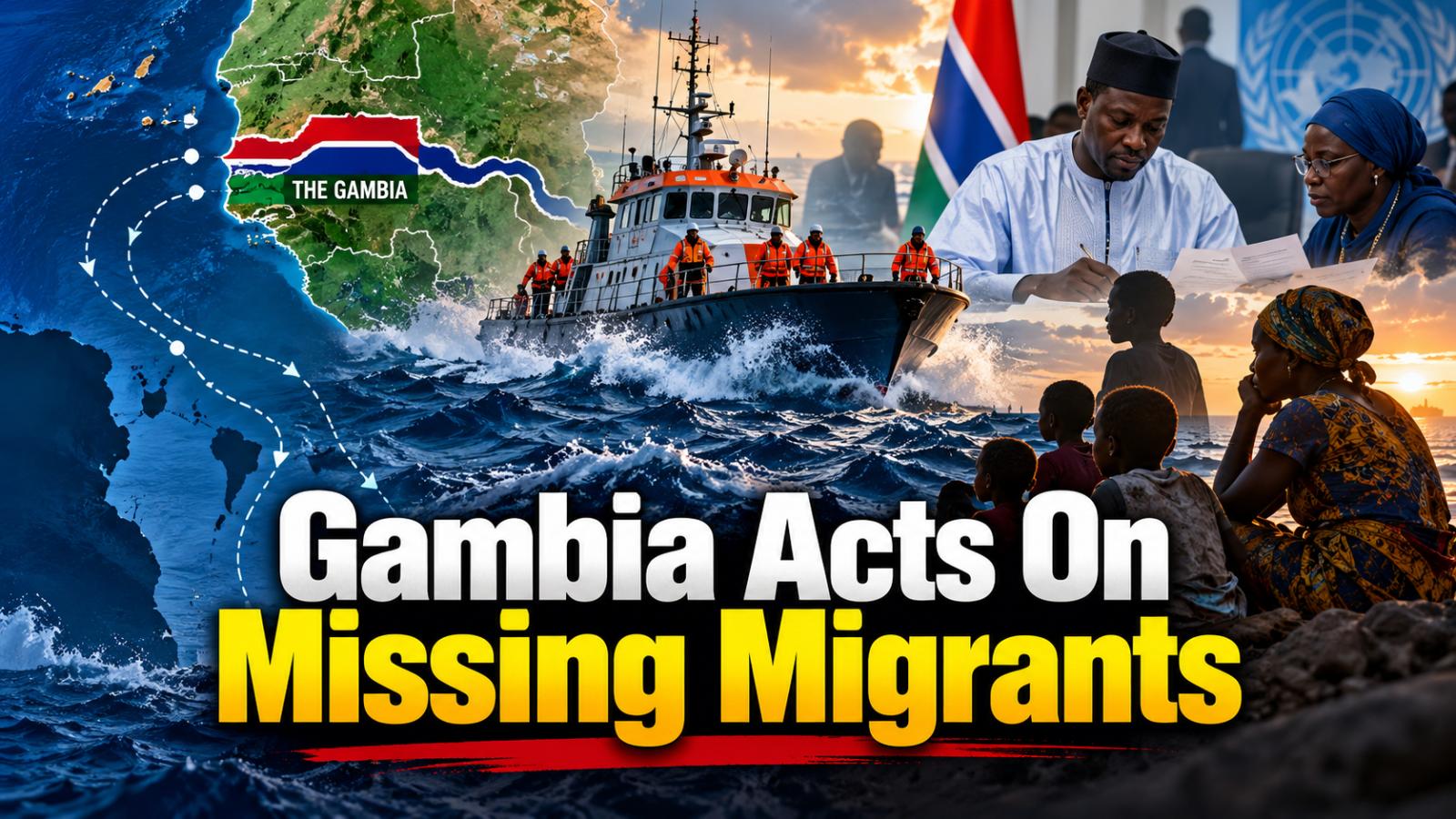
The Gambia missing migrants response is being strengthened through IOM training, the NTFMM and closer diplomatic coordination. The initiative focuses on the Atlantic route, migrant searches, family support and lessons from deadly maritime incidents such as the Jinack tragedy.
Gambia strengthens system to trace missing migrants and support families
The Gambia is stepping up efforts to prevent migrant deaths and disappearances while improving the way authorities search for missing people and communicate with families waiting for answers.
From September 30 to October 2, the International Organization for Migration and the Ministry of Foreign Affairs, International Cooperation and Gambians Abroad held a three-day training in Banjul involving members of the National Task Force on Missing Migrants and Gambian diplomatic officials serving along major migration routes.
The initiative comes as migration from The Gambia toward the Canary Islands continues to carry serious risks. IOM monitoring shows that the Gambian coastline has become an increasingly important departure point on the West African Atlantic Route, with more than 1,100 migrants recorded aboard eight departures during May and June 2026 alone.
IOM training
The training focused on practical measures to prevent disappearances, improve searches and identification, manage cases and strengthen assistance for relatives of missing migrants.
Officials also examined migration patterns, vulnerabilities and protection risks along routes connecting The Gambia with Mauritania, Morocco and onward destinations in Europe. The approach reflects a broader shift toward route-based cooperation rather than treating missing-migrant cases as isolated national incidents.
NTFMM coordination
The National Task Force on Missing Migrants is designed to bring government agencies and partners together under a single coordination structure. Rabat Process documentation identifies the task force as an interministerial body led by the Foreign Ministry and involving institutions such as justice authorities, police and humanitarian partners.
Strengthening this structure should make it easier to register cases, exchange information with diplomatic missions and ensure that families know which authority is responsible for following up on a missing relative.
Atlantic route
The West African Atlantic Route remains particularly dangerous because journeys toward the Canary Islands can cover long distances in overcrowded vessels exposed to difficult weather and mechanical failure.
IOM has monitored Gambian coastal departure areas since March 2025. Its data show continued irregular maritime movements through 2026, reinforcing the need for prevention, early warning and better information sharing among countries along the route.
Jinack tragedy
Recent maritime disasters have added urgency to the effort. One major incident involved a vessel that departed from Jinack on December 31, 2025 and capsized in the early hours of January 1, 2026.
International Federation of Red Cross and Red Crescent Societies reporting recorded 44 confirmed deaths, more than 100 people missing and 114 people rescued from the vessel. Those figures underline how quickly families can be left without clear information when boats disappear or sink far from shore.
Family support
The central goal of the Gambia missing migrants response is not only to collect statistics but to give families reliable information about the fate and whereabouts of relatives.
Better case management, diplomatic coordination and identification procedures can reduce the prolonged uncertainty experienced by families after a disappearance. The initiative also supports The Gambia's wider involvement in the Rabat Process and regional cooperation on missing migrants.
For authorities, the challenge is now implementation. Training can improve knowledge, but lasting progress will depend on consistent case records, cross-border information sharing, search capacity and sustained support for families long after individual maritime incidents disappear from public attention.