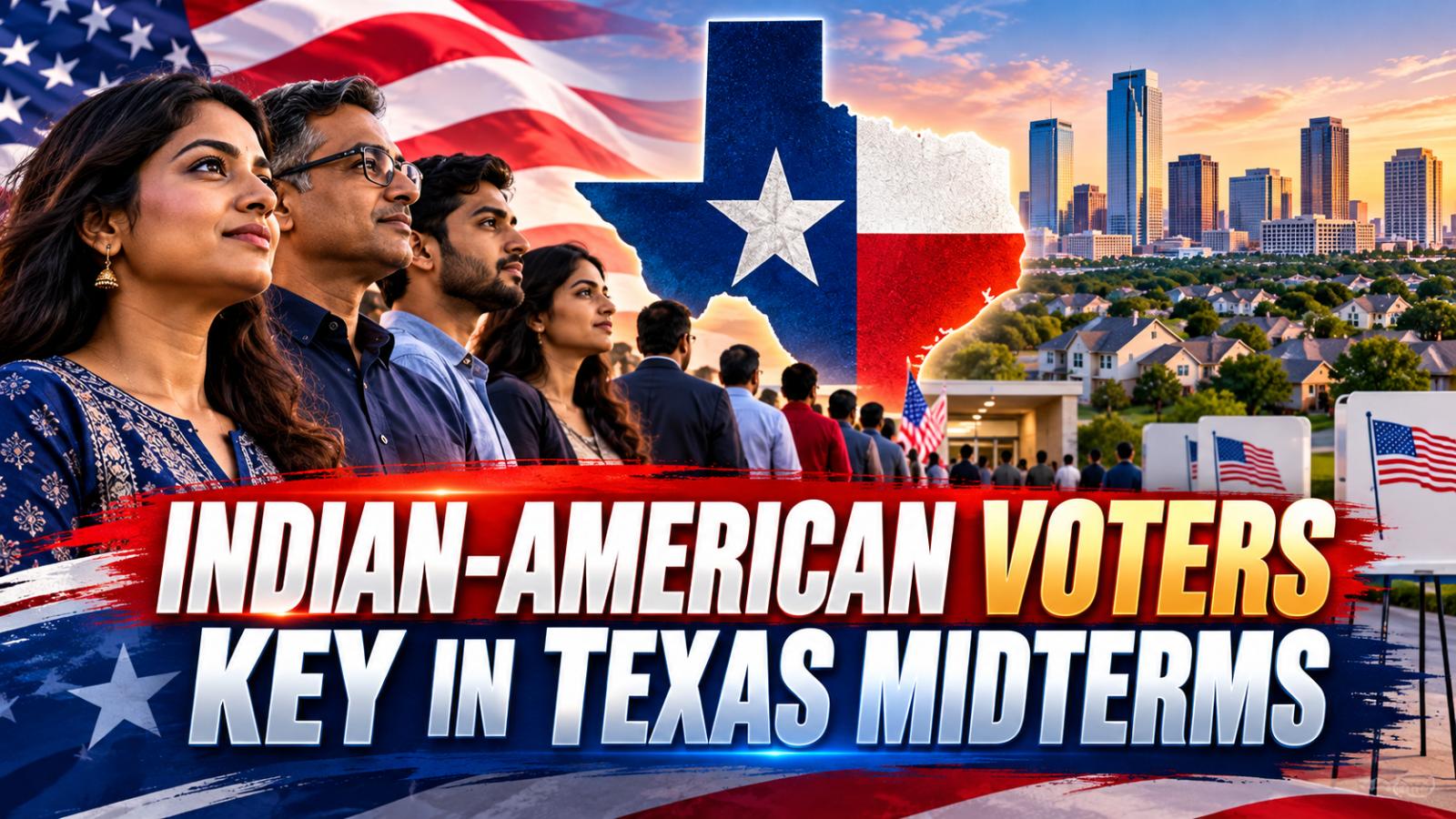
Indian-American voters could shape Texas midterms in key suburbs as Sugar Land, Plano and Irving become increasingly important in the November 3 elections. The growing suburban electorate could influence congressional, state legislative and local races, with affordability, education, immigration and public safety among the major concerns.
Sugar Land political battleground
Sugar Land, southwest of Houston, is home to a substantial Indian-American professional and business community and sits within one of Texas’ rapidly changing suburban regions. Population growth, demographic shifts and expanding residential communities have made the wider Houston suburbs increasingly important in election strategy.
Candidates competing in congressional and state races cannot rely only on traditional party bases. Voters in Sugar Land are weighing local concerns such as property taxes, school funding, transportation, healthcare access and housing affordability alongside national issues.
Plano and Irving voter influence
Plano and Irving play a similar role in the Dallas-Fort Worth political landscape. Both communities include Indian-American technology professionals, physicians, entrepreneurs and small-business owners whose economic and civic influence has grown alongside the region.
Even relatively small changes in turnout can matter in competitive suburban districts. That makes outreach in Plano and Irving important for candidates seeking support beyond traditional Republican or Democratic constituencies.
The November 3 election will test whether demographic change translates into measurable shifts at the ballot box.
Indian-American voter priorities
Indian-American voters in Texas should not be treated as a single political bloc. Their priorities vary by age, profession, immigration status, income and community.
For many families, inflation, grocery prices, housing costs, healthcare and education remain immediate concerns. Property taxes are particularly significant in fast-growing suburban areas where rising home values can increase household expenses.
Immigration also produces different political responses. Some voters focus on employment-based visas, green-card backlogs and legal immigration reform, while others place greater emphasis on border security, public safety and economic policy.
Democrats and Republicans compete
Democrats see an opportunity among college-educated and diverse suburban voters by focusing on healthcare, reproductive rights, public education and opposition to President Donald Trump’s policies.
Republicans, however, retain strong advantages across Texas and continue appealing to suburban voters through messages on taxes, business conditions, border enforcement, public safety and economic growth.
Neither party can assume that ethnicity alone determines political loyalty. Candidates who connect national arguments with local concerns may have a stronger chance of persuading undecided voters.
Turnout could decide close races
The political importance of Sugar Land, Plano and Irving ultimately comes down to turnout. Congressional races will draw national attention, but state legislative contests and local offices may also be influenced by participation from growing Indian-American communities.
The 2026 Texas midterms show how suburban politics is changing. Demographic growth can create new opportunities for both parties, but it does not guarantee victory.
As November 3 approaches, Indian-American voters could become particularly important where races are decided by narrow margins. Their choices will reflect a mix of economic pressures, local priorities and national politics rather than any single partisan identity.