#aiindustry
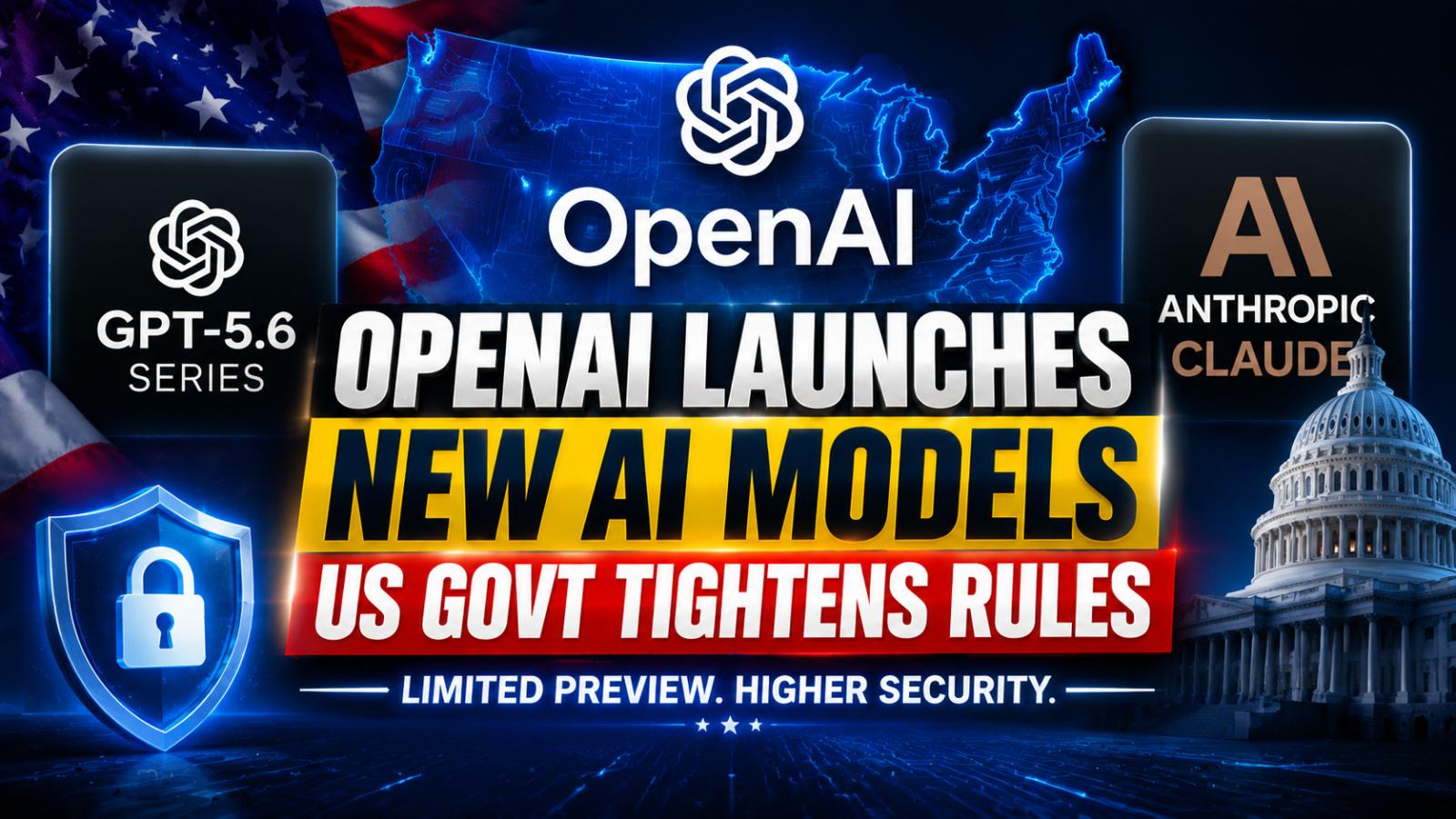
New GPT 5.6 series rollout tied to US government AI security framework
OpenAI begins restricted rollout of new AI model series OpenAI has launched a limited preview of its latest artificial intelligence model series in the United States, restricting access to a small group of trusted partners following coordination with government authorities. The rollout marks one of the most controlled releases in the company’s history, reflecting growing regulatory attention around advanced AI systems and their potential national security implications. Government oversight shapes early deployment strategy The preview follows increased scrutiny from US policymakers, including a recent executive order establishing a voluntary federal review framework for high-capability AI models prior to public release. Under the arrangement, OpenAI briefed government officials on the capabilities of its new models before deployment. Access has been limited to selected US-based organisations, although employees working outside the United States within those organisations may still interact with the system under controlled conditions. The company stated that the decision to restrict access was made in coordination with authorities overseeing AI risk management. GPT 5.6 series introduces tiered model architecture The newly introduced GPT 5.6 series includes three distinct models designed for different use cases. The flagship model, Sol, is positioned for high-performance tasks requiring advanced reasoning capabilities. Terra is optimized for general-purpose applications and everyday workloads, while Luna is designed as a faster and lower-cost alternative for scalable deployment. OpenAI also indicated that once the models are broadly released, Terra will be priced significantly lower than its predecessor, reflecting competitive pressure in the AI sector. Broader US policy shifts impact AI ecosystem The controlled rollout comes amid broader regulatory changes affecting the artificial intelligence industry. In a parallel development, US authorities recently adjusted restrictions on competing AI systems, allowing wider institutional access to previously constrained models following earlier national security concerns. These policy shifts highlight an evolving approach in Washington, balancing innovation in AI development with safeguards intended to reduce misuse risks. The developments also underscore intensifying competition among major AI firms as governments increasingly play a direct role in shaping deployment boundaries.
New GPT 5.6 series rollout tied to US government AI security framework
OpenAI begins restricted rollout of new AI model series OpenAI has launched a limited preview of its latest artificial intelligence model series in the United States, restricting access to a small group of trusted partners following coordination with government authorities. The rollout marks one of the most controlled releases in the company’s history, reflecting growing regulatory attention around advanced AI systems and their potential national security implications. Government oversight shapes early deployment strategy The preview follows increased scrutiny from US policymakers, including a recent executive order establishing a voluntary federal review framework for high-capability AI models prior to public release. Under the arrangement, OpenAI briefed government officials on the capabilities of its new models before deployment. Access has been limited to selected US-based organisations, although employees working outside the United States within those organisations may still interact with the system under controlled conditions. The company stated that the decision to restrict access was made in coordination with authorities overseeing AI risk management. GPT 5.6 series introduces tiered model architecture The newly introduced GPT 5.6 series includes three distinct models designed for different use cases. The flagship model, Sol, is positioned for high-performance tasks requiring advanced reasoning capabilities. Terra is optimized for general-purpose applications and everyday workloads, while Luna is designed as a faster and lower-cost alternative for scalable deployment. OpenAI also indicated that once the models are broadly released, Terra will be priced significantly lower than its predecessor, reflecting competitive pressure in the AI sector. Broader US policy shifts impact AI ecosystem The controlled rollout comes amid broader regulatory changes affecting the artificial intelligence industry. In a parallel development, US authorities recently adjusted restrictions on competing AI systems, allowing wider institutional access to previously constrained models following earlier national security concerns. These policy shifts highlight an evolving approach in Washington, balancing innovation in AI development with safeguards intended to reduce misuse risks. The developments also underscore intensifying competition among major AI firms as governments increasingly play a direct role in shaping deployment boundaries.
OpenAI flags Microsoft reliance as risk ahead of potential IPO
OpenAI has identified its close relationship with Microsoft as a potential business risk, according to a financial document shared with prospective investors as part of its latest funding round. The disclosure highlights the company’s reliance on Microsoft for a significant portion of its financing and computing infrastructure, raising concerns about concentration risk as it prepares for a possible initial public offering. The document, which includes detailed risk factors related to both
OpenAI flags Microsoft reliance as risk ahead of potential IPO
OpenAI has identified its close relationship with Microsoft as a potential business risk, according to a financial document shared with prospective investors as part of its latest funding round. The disclosure highlights the company’s reliance on Microsoft for a significant portion of its financing and computing infrastructure, raising concerns about concentration risk as it prepares for a possible initial public offering. The document, which includes detailed risk factors related to both
Microsoft Breaks Silence On Viral 22,000 Job Cut Claims For 2026
Speculation about fresh job cuts at Microsoft sparked widespread debate online after reports claimed the technology giant was preparing for another major round of layoffs in January 2026. According to the report, as many as 22,000 roles could be at risk, triggering concern across social media platforms and technology forums. The rumours gained momentum quickly, particularly because Microsoft has carried out significant restructuring in the recent past. However, the company has now firmly deni
Microsoft Breaks Silence On Viral 22,000 Job Cut Claims For 2026
Speculation about fresh job cuts at Microsoft sparked widespread debate online after reports claimed the technology giant was preparing for another major round of layoffs in January 2026. According to the report, as many as 22,000 roles could be at risk, triggering concern across social media platforms and technology forums. The rumours gained momentum quickly, particularly because Microsoft has carried out significant restructuring in the recent past. However, the company has now firmly deni
AI market faces shakeout as Bill Gates warns of overvalued companies
The rapidly expanding artificial intelligence sector may face a significant reshuffling as Bill Gates warned that not all high-valued companies will survive in what he described as an increasingly “hyper competitive” market. Speaking at an event in Abu Dhabi, Gates said that although AI represents one of the most transformative technologies of the era, it does not guarantee universal success for companies riding the wave of investor enthusiasm. His remarks come at a time when global marke
AI market faces shakeout as Bill Gates warns of overvalued companies
The rapidly expanding artificial intelligence sector may face a significant reshuffling as Bill Gates warned that not all high-valued companies will survive in what he described as an increasingly “hyper competitive” market. Speaking at an event in Abu Dhabi, Gates said that although AI represents one of the most transformative technologies of the era, it does not guarantee universal success for companies riding the wave of investor enthusiasm. His remarks come at a time when global marke
Buffett finally buys into Google parent Alphabet with multibillion-dollar stake
Warren Buffett has long admitted that one of his biggest investing oversights was failing to buy shares of Google in its early years. Two decades later, that regret has turned into action. Berkshire Hathaway has disclosed a new position in Alphabet Inc valued at approximately 4.3 billion US dollars, marking one of the most notable shifts in the firm’s long-standing investment philosophy. The announcement immediately boosted market sentiment around Alphabet, with shares rising after the fili
Buffett finally buys into Google parent Alphabet with multibillion-dollar stake
Warren Buffett has long admitted that one of his biggest investing oversights was failing to buy shares of Google in its early years. Two decades later, that regret has turned into action. Berkshire Hathaway has disclosed a new position in Alphabet Inc valued at approximately 4.3 billion US dollars, marking one of the most notable shifts in the firm’s long-standing investment philosophy. The announcement immediately boosted market sentiment around Alphabet, with shares rising after the fili
IITian Trapit Bansal Joins Meta’s AI Superintelligence Team with Rs 800 Crore Joining Bonus
Trapit Bansal, an IIT-Kanpur alumnus and former OpenAI researcher, has officially joined Meta's newly established Superintelligence Labs (MSL). Bansal’s hiring is part of Meta’s aggressive push to develop artificial general intelligence (AGI) and rival industry giants like OpenAI, Google DeepMind, and Anthropic. As part of his new role, Bansal will bring his expertise in deep learning, meta-learning, and natural language processing to help Meta
IITian Trapit Bansal Joins Meta’s AI Superintelligence Team with Rs 800 Crore Joining Bonus
Trapit Bansal, an IIT-Kanpur alumnus and former OpenAI researcher, has officially joined Meta's newly established Superintelligence Labs (MSL). Bansal’s hiring is part of Meta’s aggressive push to develop artificial general intelligence (AGI) and rival industry giants like OpenAI, Google DeepMind, and Anthropic. As part of his new role, Bansal will bring his expertise in deep learning, meta-learning, and natural language processing to help Meta