#aitalent
Why are AI firms hiring software executives? Talent shift accelerates enterprise push
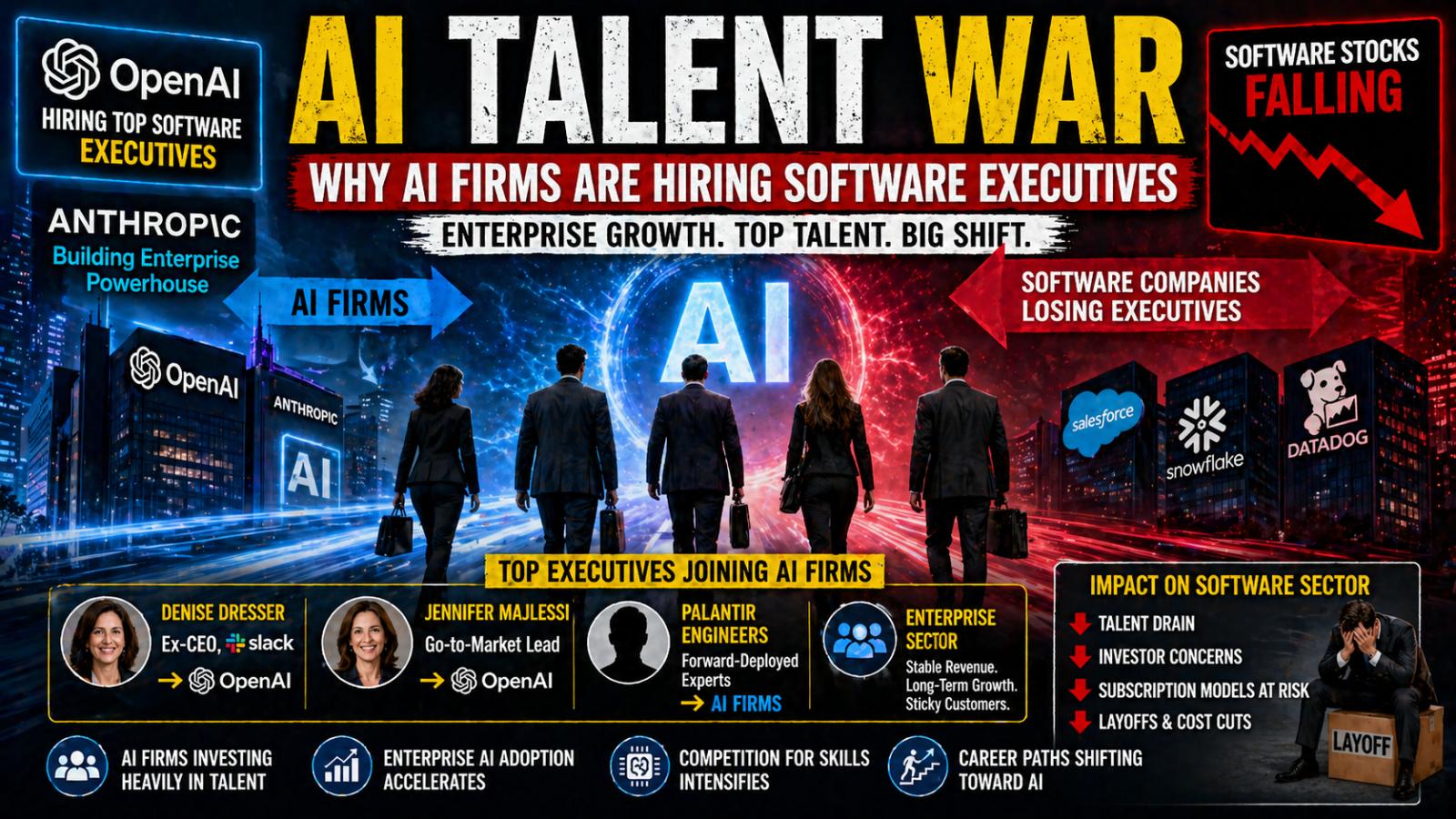
Why are AI firms hiring software executives? Talent shift accelerates enterprise push is becoming a defining question across the technology sector as artificial intelligence companies aggressively recruit senior leaders from traditional software firms, signaling a strategic shift toward enterprise growth and customer expansion. AI companies target enterprise expertise from software leaders Executives from companies including Salesforce, Snowflake, and Datadog have recently joined AI firms such as OpenAI and Anthropic, according to multiple industry sources. These hires are often driven by lucrative compensation packages and the ability to leverage long-standing corporate relationships in enterprise markets. Among the most prominent moves, Denise Dresser transitioned to OpenAI as chief revenue officer after previously serving as CEO of Slack under Salesforce. Jennifer Majlessi also joined OpenAI in a go-to-market leadership role, reflecting a broader trend of AI firms strengthening their sales and commercialization capabilities. Enterprise growth becomes central to AI business strategy The hiring surge highlights a shift in priorities for AI companies, where enterprise adoption is increasingly seen as a key revenue driver. Corporate clients tend to offer more stable, long-term contracts, making them a “sticky” and profitable segment. OpenAI has indicated that enterprise customers already account for roughly 40% of its business, with expectations to grow that share further. AI firms are also recruiting specialized talent such as forward-deployed engineers from Palantir Technologies, professionals known for implementing complex software solutions directly within client organizations. Software sector faces mounting pressure from AI disruption The talent migration comes at a challenging time for traditional software companies, which are already facing investor concerns about AI-driven disruption to subscription-based cloud models. Industry tracking funds have recorded significant declines, reflecting uncertainty about long-term competitiveness. At the same time, layoffs across major tech companies underscore a broader workforce transition. Firms like Oracle, Meta Platforms, and Microsoft have announced workforce reductions while reallocating resources toward AI initiatives. Workforce shifts reshape career paths in technology The evolving landscape is prompting professionals to reassess career trajectories, with many seeking roles aligned with AI innovation. However, integrating talent from traditional software firms into fast-paced AI environments can present challenges, particularly around culture and expectations for long working hours. Still, the movement of experienced executives into AI companies signals a broader structural shift in the tech industry, where enterprise-focused growth and advanced AI capabilities are rapidly redefining competitive dynamics.
Why are AI firms hiring software executives? Talent shift accelerates enterprise push
Why are AI firms hiring software executives? Talent shift accelerates enterprise push is becoming a defining question across the technology sector as artificial intelligence companies aggressively recruit senior leaders from traditional software firms, signaling a strategic shift toward enterprise growth and customer expansion. AI companies target enterprise expertise from software leaders Executives from companies including Salesforce, Snowflake, and Datadog have recently joined AI firms such as OpenAI and Anthropic, according to multiple industry sources. These hires are often driven by lucrative compensation packages and the ability to leverage long-standing corporate relationships in enterprise markets. Among the most prominent moves, Denise Dresser transitioned to OpenAI as chief revenue officer after previously serving as CEO of Slack under Salesforce. Jennifer Majlessi also joined OpenAI in a go-to-market leadership role, reflecting a broader trend of AI firms strengthening their sales and commercialization capabilities. Enterprise growth becomes central to AI business strategy The hiring surge highlights a shift in priorities for AI companies, where enterprise adoption is increasingly seen as a key revenue driver. Corporate clients tend to offer more stable, long-term contracts, making them a “sticky” and profitable segment. OpenAI has indicated that enterprise customers already account for roughly 40% of its business, with expectations to grow that share further. AI firms are also recruiting specialized talent such as forward-deployed engineers from Palantir Technologies, professionals known for implementing complex software solutions directly within client organizations. Software sector faces mounting pressure from AI disruption The talent migration comes at a challenging time for traditional software companies, which are already facing investor concerns about AI-driven disruption to subscription-based cloud models. Industry tracking funds have recorded significant declines, reflecting uncertainty about long-term competitiveness. At the same time, layoffs across major tech companies underscore a broader workforce transition. Firms like Oracle, Meta Platforms, and Microsoft have announced workforce reductions while reallocating resources toward AI initiatives. Workforce shifts reshape career paths in technology The evolving landscape is prompting professionals to reassess career trajectories, with many seeking roles aligned with AI innovation. However, integrating talent from traditional software firms into fast-paced AI environments can present challenges, particularly around culture and expectations for long working hours. Still, the movement of experienced executives into AI companies signals a broader structural shift in the tech industry, where enterprise-focused growth and advanced AI capabilities are rapidly redefining competitive dynamics.
Indian-Origin OpenAI CTO Srinivas Narayanan Resigns To Spend Time With Parents
Srinivas Narayanan, an Indian-origin technology leader and Chief Technology Officer of B2B Applications at OpenAI, has announced his decision to step down from his role after a significant three-year tenure. His departure marks the end of a transformative phase during which he played a key role in scaling some of the company’s most widely used products and platforms. Narayanan shared that he had informed the leadership team earlier this month and would officially leave by the end of next week. Reflecting on his journey, he described his time at OpenAI as an incredible experience, highlighting the rapid pace of innovation and the impact of the work done during this period. He expressed gratitude to key leaders including CEO Sam Altman and co-founder Greg Brockman for their support and leadership. The decision, according to Narayanan, is driven by personal priorities. He stated that he intends to travel to India to spend time with his ageing parents before making any decisions about his next professional move. His announcement reflects a growing trend among senior professionals prioritizing family and personal well-being alongside demanding corporate careers. During his tenure, Narayanan led engineering teams responsible for key offerings such as ChatGPT, enterprise APIs, and applied AI systems used globally. His work focused on bridging advanced research with real-world applications, helping scale products to millions of users worldwide. Before joining OpenAI, Narayanan built an extensive career in the tech industry. He is an alumnus of IIT Madras and holds a master’s degree from the University of Wisconsin-Madison. He began his professional journey at IBM’s Almaden Research Center and later spent over a decade at Meta, where he contributed to major platforms including Facebook Photos and advanced AI-driven systems. His exit represents a notable leadership change in the AI space, especially at a time when the industry continues to expand rapidly. While his next move remains undecided, his contributions to the evolution of applied artificial intelligence are expected to have a lasting impact.
Indian-Origin OpenAI CTO Srinivas Narayanan Resigns To Spend Time With Parents
Srinivas Narayanan, an Indian-origin technology leader and Chief Technology Officer of B2B Applications at OpenAI, has announced his decision to step down from his role after a significant three-year tenure. His departure marks the end of a transformative phase during which he played a key role in scaling some of the company’s most widely used products and platforms. Narayanan shared that he had informed the leadership team earlier this month and would officially leave by the end of next week. Reflecting on his journey, he described his time at OpenAI as an incredible experience, highlighting the rapid pace of innovation and the impact of the work done during this period. He expressed gratitude to key leaders including CEO Sam Altman and co-founder Greg Brockman for their support and leadership. The decision, according to Narayanan, is driven by personal priorities. He stated that he intends to travel to India to spend time with his ageing parents before making any decisions about his next professional move. His announcement reflects a growing trend among senior professionals prioritizing family and personal well-being alongside demanding corporate careers. During his tenure, Narayanan led engineering teams responsible for key offerings such as ChatGPT, enterprise APIs, and applied AI systems used globally. His work focused on bridging advanced research with real-world applications, helping scale products to millions of users worldwide. Before joining OpenAI, Narayanan built an extensive career in the tech industry. He is an alumnus of IIT Madras and holds a master’s degree from the University of Wisconsin-Madison. He began his professional journey at IBM’s Almaden Research Center and later spent over a decade at Meta, where he contributed to major platforms including Facebook Photos and advanced AI-driven systems. His exit represents a notable leadership change in the AI space, especially at a time when the industry continues to expand rapidly. While his next move remains undecided, his contributions to the evolution of applied artificial intelligence are expected to have a lasting impact.
Meta Offers Rs 1,600 Crore to Ex-Apple AI Head to Lead Superintelligence Lab
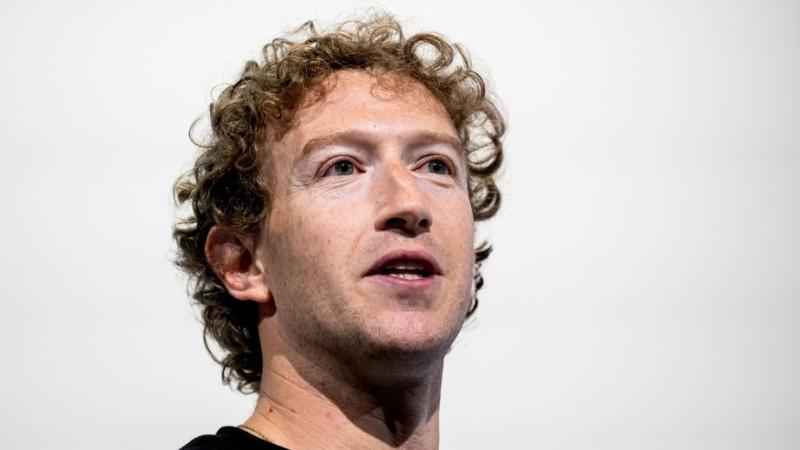
In an unprecedented move in Silicon Valley, Meta CEO Mark Zuckerberg is offering jaw-dropping compensation packages, reportedly ranging from Rs 800 crore to Rs 1,600 crore, to recruit top AI researchers for its newly launched Superintelligence Lab (MSL). These offers are aimed at attracting the world’s best talent from firms like Apple, OpenAI, Google DeepMind, and Anthropic. Among the standout packages is the rumoured Rs 1,600 crore ($200 million) offer
Meta Offers Rs 1,600 Crore to Ex-Apple AI Head to Lead Superintelligence Lab
In an unprecedented move in Silicon Valley, Meta CEO Mark Zuckerberg is offering jaw-dropping compensation packages, reportedly ranging from Rs 800 crore to Rs 1,600 crore, to recruit top AI researchers for its newly launched Superintelligence Lab (MSL). These offers are aimed at attracting the world’s best talent from firms like Apple, OpenAI, Google DeepMind, and Anthropic. Among the standout packages is the rumoured Rs 1,600 crore ($200 million) offer
Meta’s $100M AI Talent Push: Key Insights for Aspiring AI Leaders
Meta is making a significant move in the AI sector by pouring up to $100 million into hiring top AI talent from companies like OpenAI, DeepMind, and Anthropic. This initiative is part of the launch of Meta’s Superintelligence Labs, which is looking to strengthen its AI capabilities by recruiting some of the brightest minds in the field. The AI experts hired by Meta bring with them a wealth of knowledge, expertise, and leadership experience in machine lea
Meta’s $100M AI Talent Push: Key Insights for Aspiring AI Leaders
Meta is making a significant move in the AI sector by pouring up to $100 million into hiring top AI talent from companies like OpenAI, DeepMind, and Anthropic. This initiative is part of the launch of Meta’s Superintelligence Labs, which is looking to strengthen its AI capabilities by recruiting some of the brightest minds in the field. The AI experts hired by Meta bring with them a wealth of knowledge, expertise, and leadership experience in machine lea