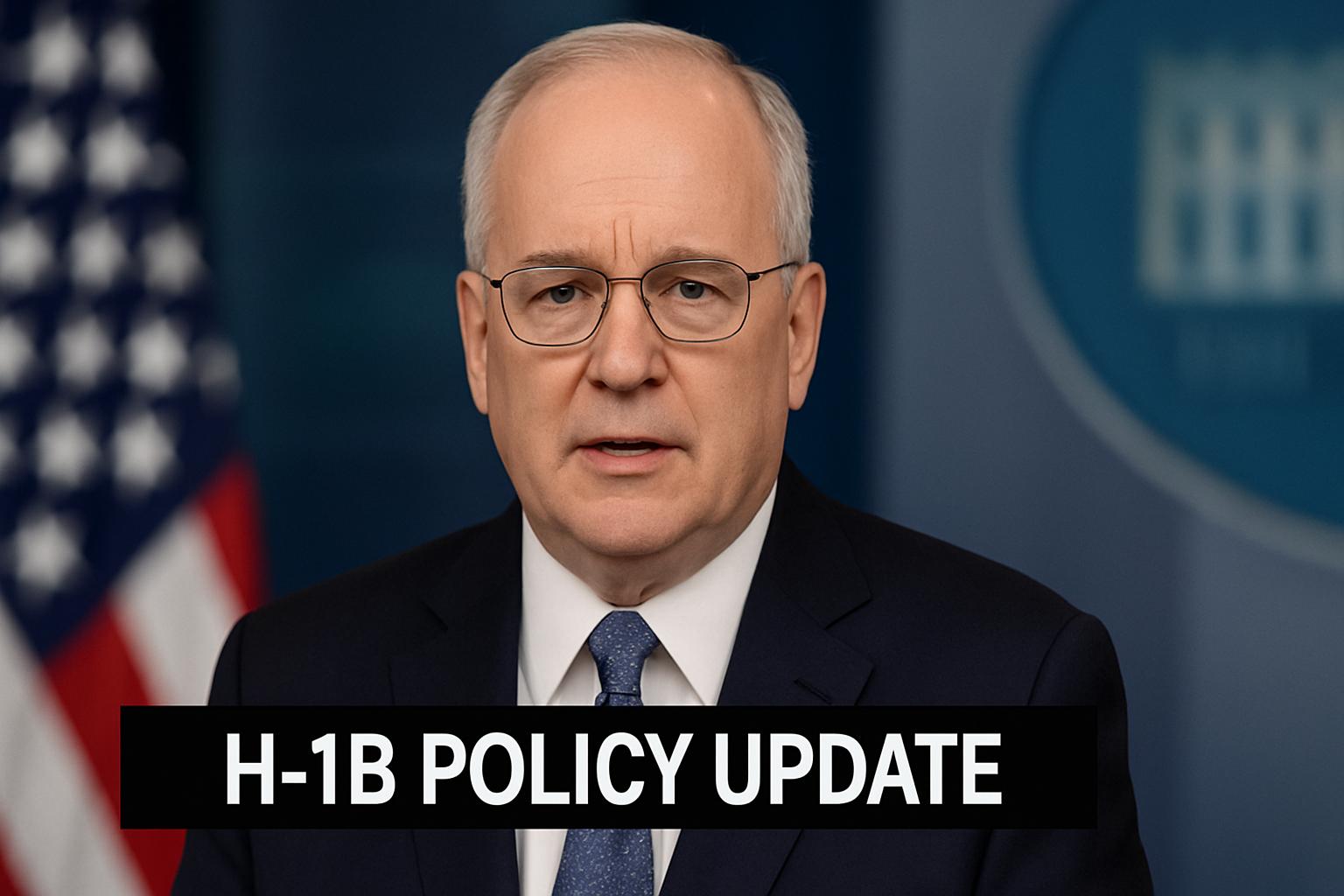
Treasury Secretary Scott Bessent has outlined the administration’s new approach to the H-1B visa programme, describing it as a targeted effort to bring in temporary foreign specialists who will train American workers rather than replace them. His remarks came during a televised interview in which he emphasised that the policy is intended to support the rebuilding of domestic manufacturing, shipbuilding capability, and semiconductor production after years of industrial decline.
Bessent said the redesigned system is centred on the idea of “knowledge transfer,” where overseas experts are invited to the United States for a limited period to help restore technical capacity in critical sectors. According to him, the administration views this model as essential to equipping American workers with advanced skills that have diminished as supply chains and production moved abroad. He explained that the visa structure is meant to ensure that expertise flows into the country long enough for domestic workers to learn the required competencies before the foreign specialists return home.
Addressing recurring concerns that increased reliance on foreign talent could displace American employees, Bessent maintained that the policy does not threaten domestic job opportunities. Instead, he argued that the United States currently lacks specialized talent in areas that have not been active on American soil for many years. He noted that industries such as shipbuilding and semiconductor fabrication require highly technical knowledge, which is more readily available in countries that have continued to develop those sectors. In his view, bringing in experts to train Americans is necessary for rebuilding industrial strength, not a means of outsourcing jobs.
The comments followed President Donald Trump’s recent statements explaining that the country needs temporary foreign experts to accelerate the transfer of technical skills. The president said the United States does not currently have enough workers with the precision training required for advanced manufacturing, adding that it would be unrealistic to expect individuals without experience to instantly take on tasks such as missile production or microchip engineering. Both Trump and Bessent described the policy as a practical step toward reducing long-term dependence on imports by cultivating a stronger domestic workforce.
Bessent also discussed broader elements of the administration’s economic agenda, including ongoing talks about a potential USD 2,000 tariff rebate for families earning less than USD 100,000 annually. He said the proposal is part of an effort to ensure that households directly benefit from trade policies designed to strengthen national competitiveness. The rebate, he added, is one component of the administration’s push to align the interests of Wall Street and Main Street, a vision he referred to as “Parallel Prosperity.”
Looking ahead, the Treasury secretary predicted that 2026 could become a milestone year for the United States economy if the administration’s policy framework succeeds in restoring industrial capacity and stabilizing financial markets. He emphasized the importance of maintaining a deep and liquid Treasury market, suggesting that economic growth will depend on strong foundations that support both investment and employment. Throughout the interview, Bessent portrayed the H-1B reform as a crucial part of that broader plan, arguing that rebuilding the nation’s industrial base requires a temporary infusion of global expertise to ensure Americans can take full ownership of high-skilled jobs in the future.
Treasury Secretary Scott Bessent has outlined the administration’s new approach to the H-1B visa programme, describing it as a targeted effort to bring in temporary foreign specialists who will train American workers rather than replace them. His remarks came during a televised interview in which he emphasised that the policy is intended to support the rebuilding of domestic manufacturing, shipbuilding capability, and semiconductor production after years of industrial decline.
Bessent said the redesigned system is centred on the idea of “knowledge transfer,” where overseas experts are invited to the United States for a limited period to help restore technical capacity in critical sectors. According to him, the administration views this model as essential to equipping American workers with advanced skills that have diminished as supply chains and production moved abroad. He explained that the visa structure is meant to ensure that expertise flows into the country long enough for domestic workers to learn the required competencies before the foreign specialists return home.
Addressing recurring concerns that increased reliance on foreign talent could displace American employees, Bessent maintained that the policy does not threaten domestic job opportunities. Instead, he argued that the United States currently lacks specialized talent in areas that have not been active on American soil for many years. He noted that industries such as shipbuilding and semiconductor fabrication require highly technical knowledge, which is more readily available in countries that have continued to develop those sectors. In his view, bringing in experts to train Americans is necessary for rebuilding industrial strength, not a means of outsourcing jobs.
The comments followed President Donald Trump’s recent statements explaining that the country needs temporary foreign experts to accelerate the transfer of technical skills. The president said the United States does not currently have enough workers with the precision training required for advanced manufacturing, adding that it would be unrealistic to expect individuals without experience to instantly take on tasks such as missile production or microchip engineering. Both Trump and Bessent described the policy as a practical step toward reducing long-term dependence on imports by cultivating a stronger domestic workforce.
Bessent also discussed broader elements of the administration’s economic agenda, including ongoing talks about a potential USD 2,000 tariff rebate for families earning less than USD 100,000 annually. He said the proposal is part of an effort to ensure that households directly benefit from trade policies designed to strengthen national competitiveness. The rebate, he added, is one component of the administration’s push to align the interests of Wall Street and Main Street, a vision he referred to as “Parallel Prosperity.”
Looking ahead, the Treasury secretary predicted that 2026 could become a milestone year for the United States economy if the administration’s policy framework succeeds in restoring industrial capacity and stabilizing financial markets. He emphasized the importance of maintaining a deep and liquid Treasury market, suggesting that economic growth will depend on strong foundations that support both investment and employment. Throughout the interview, Bessent portrayed the H-1B reform as a crucial part of that broader plan, arguing that rebuilding the nation’s industrial base requires a temporary infusion of global expertise to ensure Americans can take full ownership of high-skilled jobs in the future.
The Trump administration has moved to overhaul the H-1B visa program, proposing to eliminate the long-standing lottery system in favor of a wage-based selection model. The Department of Homeland Security announced that the new rules would prioritize higher-paid and higher-skilled workers, significantly altering how foreign talent enters the United States.
Under the proposal, applicants would be weighted based on the
The Trump administration has moved to overhaul the H-1B visa program, proposing to eliminate the long-standing lottery system in favor of a wage-based selection model. The Department of Homeland Security announced that the new rules would prioritize higher-paid and higher-skilled workers, significantly altering how foreign talent enters the United States.
Under the proposal, applicants would be weighted based on the
Labor Day Weekend in 2025 falls from Saturday, August 30, through Monday, September 1, marking the unofficial end of summer in the United States. The holiday is celebrated annually on the first Monday in September, offering a three-day weekend that provides a break before the regular routines of work and school resume. This weekend is not only a time for relaxation but also an opportunity to reflect on the importance of American workers and their contributions to
Labor Day Weekend in 2025 falls from Saturday, August 30, through Monday, September 1, marking the unofficial end of summer in the United States. The holiday is celebrated annually on the first Monday in September, offering a three-day weekend that provides a break before the regular routines of work and school resume. This weekend is not only a time for relaxation but also an opportunity to reflect on the importance of American workers and their contributions to