

















#bangladeshprotests
Sheikh Hasina Accuses Yunus Government of Turning Bangladesh Into a Blood-Soaked Landscape
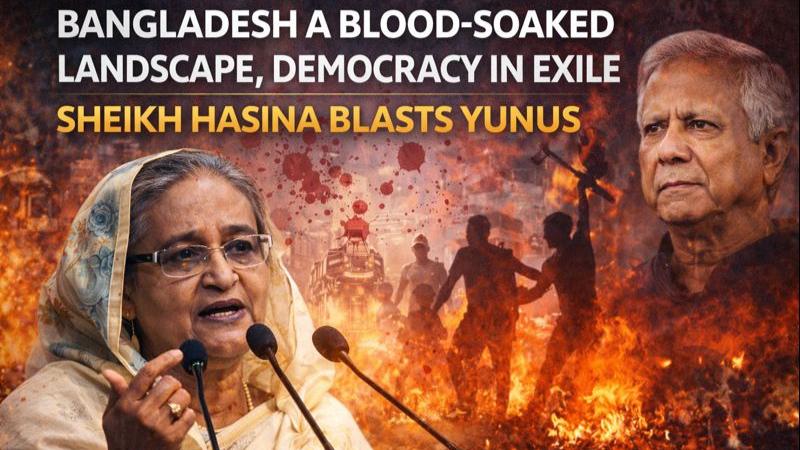
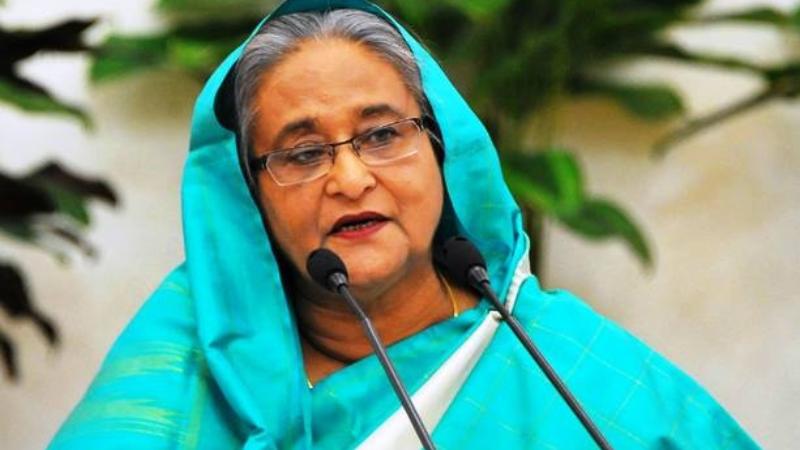
Sheikh Hasina, the former Prime Minister of Bangladesh, has launched a scathing attack on the interim administration led by Nobel laureate Muhammad Yunus, accusing it of plunging the country into "murderous anarchy." In an audio message played at an interactive session organized by the Foreign Correspondents' Club of South Asia, Hasina described the state of Bangladesh as a "blood-soaked landscape" where democracy is now "in exile." She painted a grim picture of the country, once known for its peace and prosperity, now grappling with extreme violence, fear, and destruction. Hasina, who was ousted from power in August 2024 following violent protests and is currently living in exile in India, blamed Yunus and his government for the worsening situation in Bangladesh. She accused Yunus of taking power through a conspiracy, which led to widespread violence, torture, and the unchecked assault on religious minorities, particularly Hindus. The former Prime Minister also criticized Yunus’ government for suppressing freedoms, claiming that the country had become a "vast prison and execution grounds" under the interim administration. As Bangladesh heads toward the general elections in February 2026, Hasina warned of a "legitimacy crisis" if her party, the Awami League, remains banned from contesting. She claimed that law and order had completely collapsed under Yunus’ rule, and the country was in a state of political crisis. Despite Yunus’ promises to restore stability and oversee elections, critics, including Hasina's supporters, allege that the interim government's actions have undermined democratic processes and raised serious concerns over the credibility of the upcoming polls. With deepening political divisions and rising tensions, Hasina’s remarks underscore the challenges Bangladesh faces as it navigates a crucial period in its political history. Her comments on the nation’s future raise significant questions about whether the transition will bring about stability or prolong the ongoing crisis.
Sheikh Hasina Accuses Yunus Government of Turning Bangladesh Into a Blood-Soaked Landscape
Sheikh Hasina, the former Prime Minister of Bangladesh, has launched a scathing attack on the interim administration led by Nobel laureate Muhammad Yunus, accusing it of plunging the country into "murderous anarchy." In an audio message played at an interactive session organized by the Foreign Correspondents' Club of South Asia, Hasina described the state of Bangladesh as a "blood-soaked landscape" where democracy is now "in exile." She painted a grim picture of the country, once known for its peace and prosperity, now grappling with extreme violence, fear, and destruction. Hasina, who was ousted from power in August 2024 following violent protests and is currently living in exile in India, blamed Yunus and his government for the worsening situation in Bangladesh. She accused Yunus of taking power through a conspiracy, which led to widespread violence, torture, and the unchecked assault on religious minorities, particularly Hindus. The former Prime Minister also criticized Yunus’ government for suppressing freedoms, claiming that the country had become a "vast prison and execution grounds" under the interim administration. As Bangladesh heads toward the general elections in February 2026, Hasina warned of a "legitimacy crisis" if her party, the Awami League, remains banned from contesting. She claimed that law and order had completely collapsed under Yunus’ rule, and the country was in a state of political crisis. Despite Yunus’ promises to restore stability and oversee elections, critics, including Hasina's supporters, allege that the interim government's actions have undermined democratic processes and raised serious concerns over the credibility of the upcoming polls. With deepening political divisions and rising tensions, Hasina’s remarks underscore the challenges Bangladesh faces as it navigates a crucial period in its political history. Her comments on the nation’s future raise significant questions about whether the transition will bring about stability or prolong the ongoing crisis.
Indian Supreme Court Cites Nepal and Bangladesh Protests to Praise Constitution
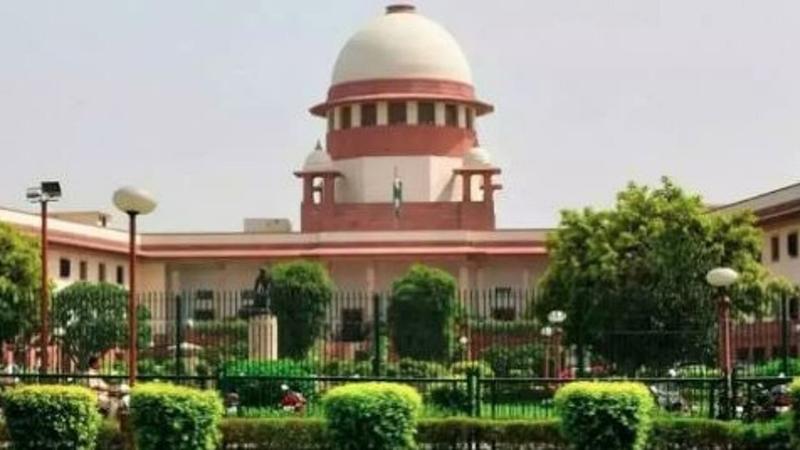
The Supreme Court of India highlighted the resilience of the Indian Constitution on Wednesday by drawing comparisons with the ongoing turmoil in neighboring Nepal and Bangladesh. During a hearing of the presidential reference case, a bench headed by Chief Justice of India BR Gavai and Justice Vikram Nath pointed to violent protests shaking both countries. CJI Gavai remarked, “We are proud of our Constitution, see
Indian Supreme Court Cites Nepal and Bangladesh Protests to Praise Constitution
The Supreme Court of India highlighted the resilience of the Indian Constitution on Wednesday by drawing comparisons with the ongoing turmoil in neighboring Nepal and Bangladesh. During a hearing of the presidential reference case, a bench headed by Chief Justice of India BR Gavai and Justice Vikram Nath pointed to violent protests shaking both countries. CJI Gavai remarked, “We are proud of our Constitution, see
Leaked Audio Reveals Sheikh Hasina Ordered Brutal Crackdown on Protesters
A leaked audio recording has revealed that Bangladesh’s former Prime Minister, Sheikh Hasina, allegedly authorized the brutal crackdown on student protesters in 2024. The recording, captures Hasina’s conversation with a senior government official in which she directs security forces to use "lethal weapons" and to "shoot wherever they find them," referring to the protesters. The conversation took place on July 18, 2024, whi
Leaked Audio Reveals Sheikh Hasina Ordered Brutal Crackdown on Protesters
A leaked audio recording has revealed that Bangladesh’s former Prime Minister, Sheikh Hasina, allegedly authorized the brutal crackdown on student protesters in 2024. The recording, captures Hasina’s conversation with a senior government official in which she directs security forces to use "lethal weapons" and to "shoot wherever they find them," referring to the protesters. The conversation took place on July 18, 2024, whi


