


















#britishempire
Zohran Mamdani Calls for Kohinoor Diamond Return Ahead of Royal Visit
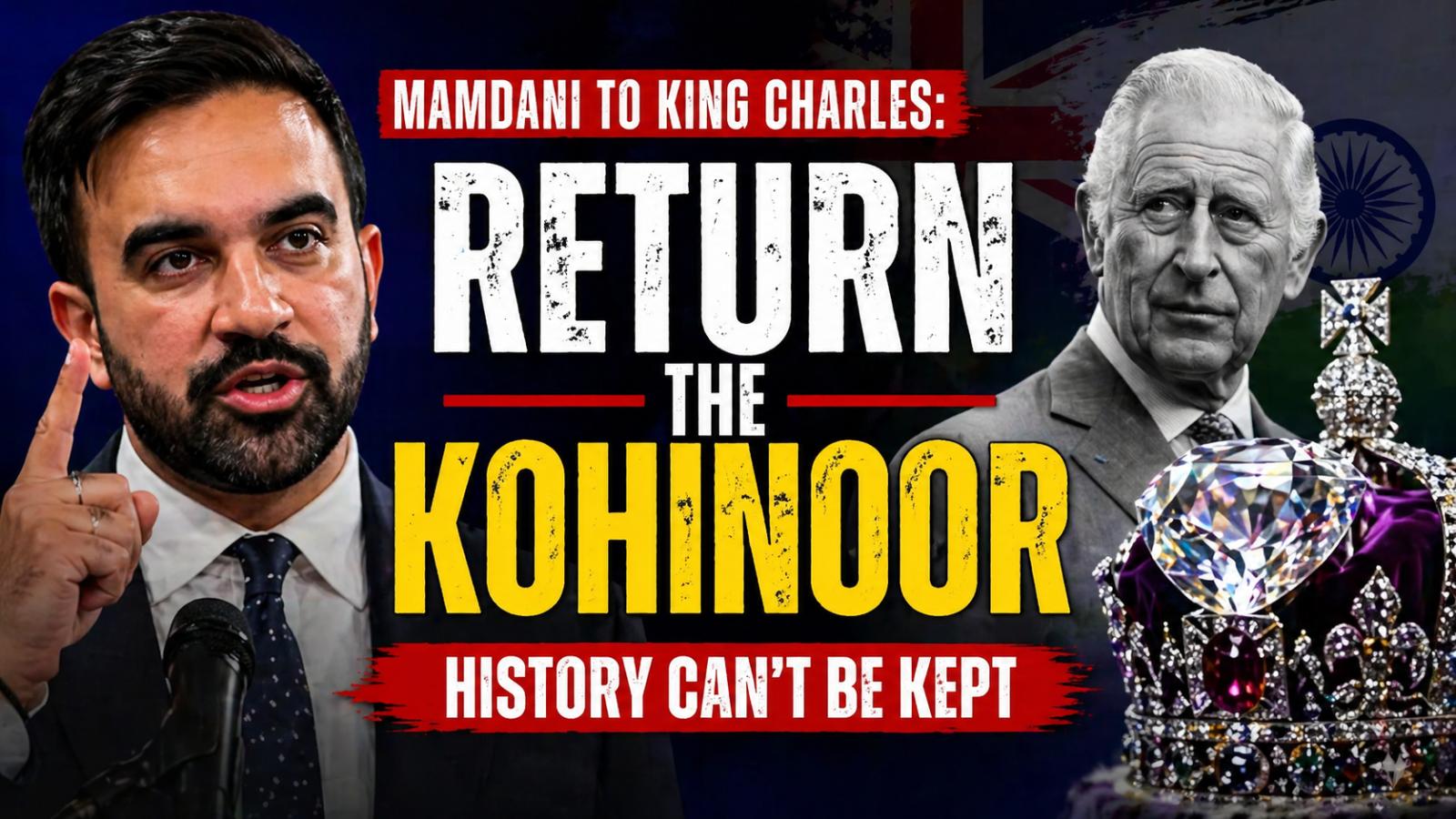
Zohran Mamdani has renewed debate over colonial history by suggesting that any future meeting with King Charles III should include a discussion about the return of the Kohinoor diamond. Speaking at a press conference in New York, Mamdani said he would encourage the British monarch to consider returning the historic gemstone, widely regarded in India as a symbol of colonial-era exploitation. His remarks come ahead of King Charles and Queen Camilla’s planned visit to the One World Trade Center to mark the 25th anniversary of the September 11 attacks, an event Mamdani is expected to attend. The Kohinoor diamond, originally mined in southern India, passed through several South Asian empires before being taken by the British East India Company in 1849 after the Second Anglo-Sikh War. It was formally transferred under the Treaty of Lahore, signed by Maharaja Duleep Singh, and later became part of the British Crown Jewels. Today, the 105.6-carat diamond remains displayed in the Tower of London, continuing to draw attention as a contested artifact. Mamdani’s comments place the issue within a broader international movement seeking the return of cultural heritage objects held in Western institutions. Similar demands have been made by Greece for the Elgin Marbles and by Nigeria for the Benin Bronzes. While British authorities maintain the Kohinoor was acquired legally, critics argue the agreement occurred under coercive conditions. By raising the issue in a diplomatic context, Mamdani has shifted the conversation beyond ceremony, highlighting ongoing questions of historical accountability and the legacy of empire.
Zohran Mamdani Calls for Kohinoor Diamond Return Ahead of Royal Visit
Zohran Mamdani has renewed debate over colonial history by suggesting that any future meeting with King Charles III should include a discussion about the return of the Kohinoor diamond. Speaking at a press conference in New York, Mamdani said he would encourage the British monarch to consider returning the historic gemstone, widely regarded in India as a symbol of colonial-era exploitation. His remarks come ahead of King Charles and Queen Camilla’s planned visit to the One World Trade Center to mark the 25th anniversary of the September 11 attacks, an event Mamdani is expected to attend. The Kohinoor diamond, originally mined in southern India, passed through several South Asian empires before being taken by the British East India Company in 1849 after the Second Anglo-Sikh War. It was formally transferred under the Treaty of Lahore, signed by Maharaja Duleep Singh, and later became part of the British Crown Jewels. Today, the 105.6-carat diamond remains displayed in the Tower of London, continuing to draw attention as a contested artifact. Mamdani’s comments place the issue within a broader international movement seeking the return of cultural heritage objects held in Western institutions. Similar demands have been made by Greece for the Elgin Marbles and by Nigeria for the Benin Bronzes. While British authorities maintain the Kohinoor was acquired legally, critics argue the agreement occurred under coercive conditions. By raising the issue in a diplomatic context, Mamdani has shifted the conversation beyond ceremony, highlighting ongoing questions of historical accountability and the legacy of empire.
The shortest war in history lasted just 38 minutes in 1896
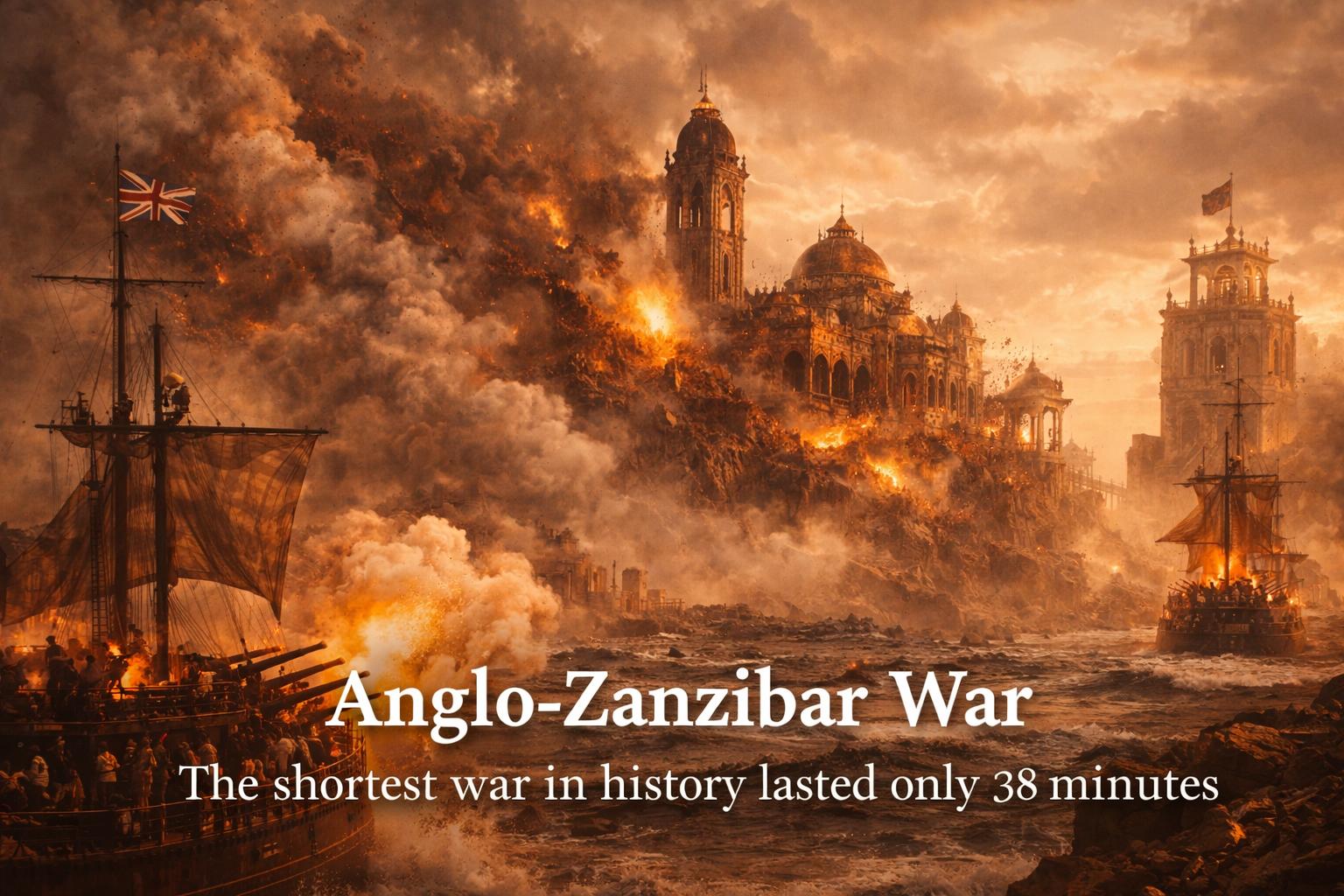
The Anglo-Zanzibar War, widely recognized as the shortest war in recorded history, unfolded on Wednesday, August 27, 1896, in the East African island territory of Zanzibar. The conflict, which lasted between 38 and 45 minutes, involved forces of the British Empire and the Sultanate of Zanzibar, highlighting the stark imbalance of power during the colonial era. The confrontation began following the death of Sultan Hamad bin Thuwaini, after which his successor, Sultan Khalid bin Bargh
The shortest war in history lasted just 38 minutes in 1896
The Anglo-Zanzibar War, widely recognized as the shortest war in recorded history, unfolded on Wednesday, August 27, 1896, in the East African island territory of Zanzibar. The conflict, which lasted between 38 and 45 minutes, involved forces of the British Empire and the Sultanate of Zanzibar, highlighting the stark imbalance of power during the colonial era. The confrontation began following the death of Sultan Hamad bin Thuwaini, after which his successor, Sultan Khalid bin Bargh
Indian Textiles and Tariffs: The Hidden Fuel Behind America’s Independence Struggle
As the United States celebrates its 249th Independence Day, it’s not only a time for fireworks and patriotic festivities, but also a chance to reflect on the global web of events that shaped the birth of the most powerful modern democracy. While the American Revolutionary War is often remembered as a fight led by George Washington against British colonialism, few remember how the economic and geopolitical struggles of another region—India—played an indirect
Indian Textiles and Tariffs: The Hidden Fuel Behind America’s Independence Struggle
As the United States celebrates its 249th Independence Day, it’s not only a time for fireworks and patriotic festivities, but also a chance to reflect on the global web of events that shaped the birth of the most powerful modern democracy. While the American Revolutionary War is often remembered as a fight led by George Washington against British colonialism, few remember how the economic and geopolitical struggles of another region—India—played an indirect


