#chicagoo
Chicago to New York flight diverted, passengers evacuated in Pittsburgh
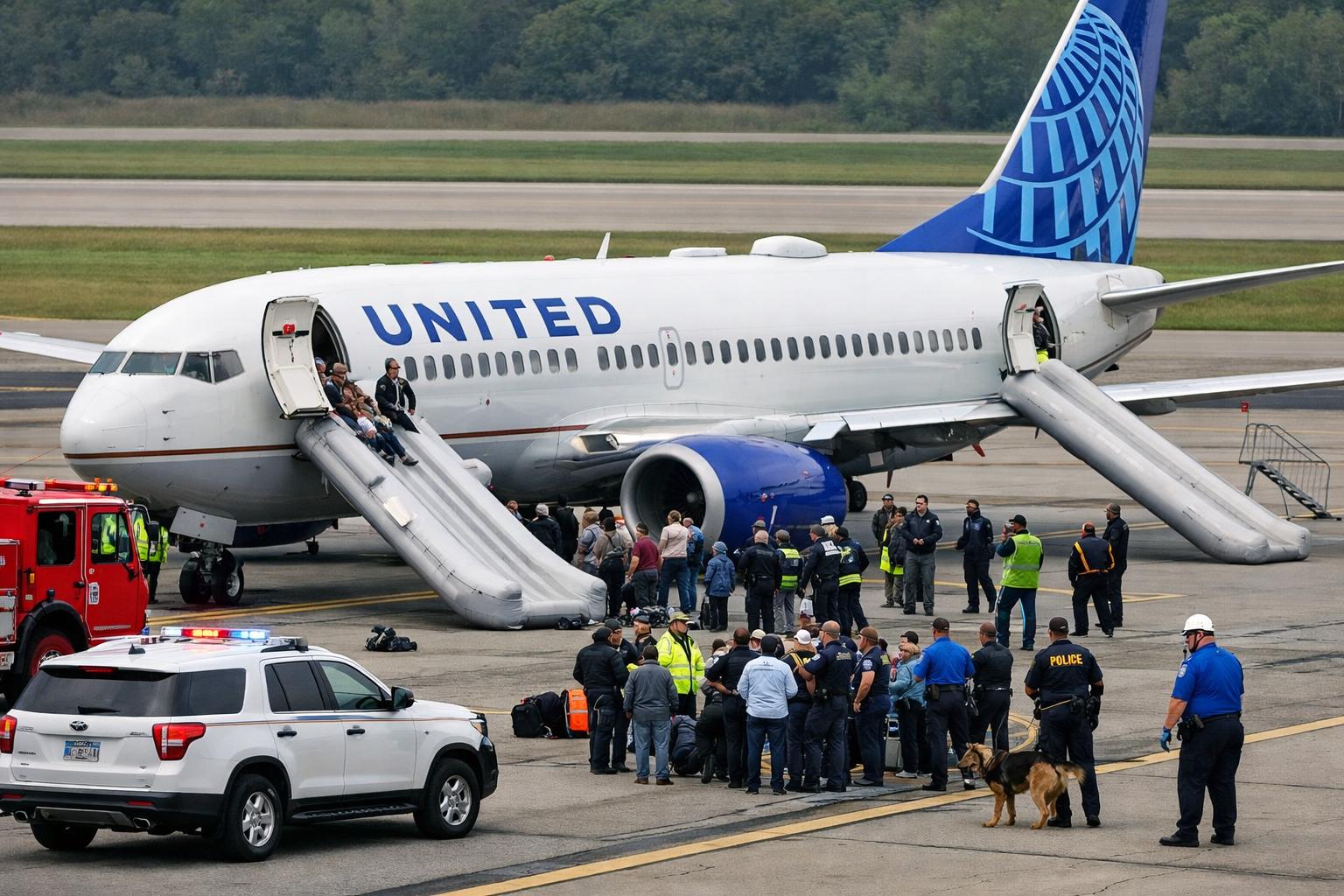
A United Airlines flight traveling from Chicago to New York was diverted to Pittsburgh, Pennsylvania, following a reported security concern, prompting an emergency evacuation upon landing. The incident occurred on Saturday morning, though officials have not specified an exact time. According to United Airlines, Flight 2092 departed from Chicago O’Hare International Airport en route to LaGuardia Airport in New York when the crew received reports of a potential security issue. As a precaution, the aircraft was redirected to Pittsburgh International Airport, where it landed safely. Once on the ground, all passengers and crew members were evacuated using emergency slides on the tarmac. Authorities confirmed that none of the 159 passengers or six crew members onboard sustained injuries during the evacuation process. Emergency responders, including specialized units and bomb-detection teams, were deployed to assess the situation upon the aircraft’s arrival. Law enforcement officials from Allegheny County assisted in securing the scene and supporting the ongoing investigation. However, authorities have not disclosed specific details regarding the nature of the security concern that led to the diversion. The aircraft remained on the tarmac as officials conducted a thorough inspection. The airline stated it is cooperating fully with law enforcement and aviation authorities as they continue to investigate the incident. The diversion highlights standard aviation safety protocols, which prioritize passenger and crew security in response to any potential onboard threat. Further updates are expected as officials complete their review of the situation.
Chicago to New York flight diverted, passengers evacuated in Pittsburgh
A United Airlines flight traveling from Chicago to New York was diverted to Pittsburgh, Pennsylvania, following a reported security concern, prompting an emergency evacuation upon landing. The incident occurred on Saturday morning, though officials have not specified an exact time. According to United Airlines, Flight 2092 departed from Chicago O’Hare International Airport en route to LaGuardia Airport in New York when the crew received reports of a potential security issue. As a precaution, the aircraft was redirected to Pittsburgh International Airport, where it landed safely. Once on the ground, all passengers and crew members were evacuated using emergency slides on the tarmac. Authorities confirmed that none of the 159 passengers or six crew members onboard sustained injuries during the evacuation process. Emergency responders, including specialized units and bomb-detection teams, were deployed to assess the situation upon the aircraft’s arrival. Law enforcement officials from Allegheny County assisted in securing the scene and supporting the ongoing investigation. However, authorities have not disclosed specific details regarding the nature of the security concern that led to the diversion. The aircraft remained on the tarmac as officials conducted a thorough inspection. The airline stated it is cooperating fully with law enforcement and aviation authorities as they continue to investigate the incident. The diversion highlights standard aviation safety protocols, which prioritize passenger and crew security in response to any potential onboard threat. Further updates are expected as officials complete their review of the situation.
O'Hare Airport faces widespread delays after burst pipe disrupts air traffic control
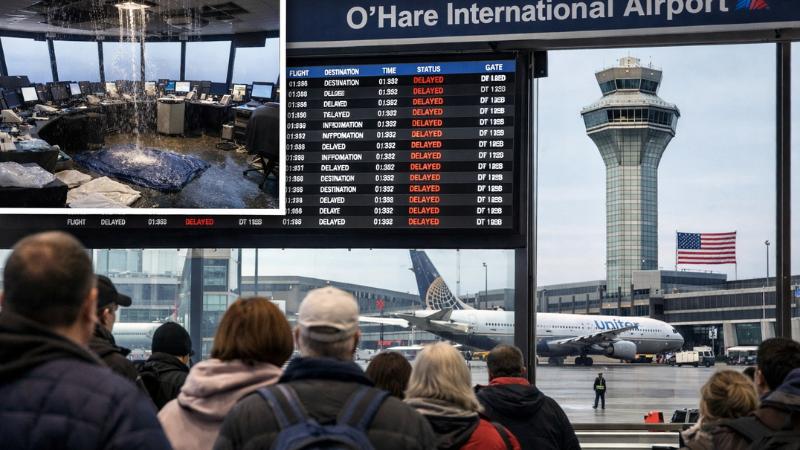
Operations at Chicago’s O’Hare International Airport were significantly disrupted Tuesday after a burst water pipe forced the evacuation of the airport’s primary air traffic control tower, triggering a prolonged ground delay program and affecting hundreds of flights throughout the day. Federal aviation officials confirmed the incident occurred during the early morning hours and continued to impact air traffic well into the evening. The situation began at approximately 1:10 a.m. when a water pipe failed inside the main air traffic control tower. The incident prompted the immediate evacuation of air traffic controllers working in the facility as a safety precaution. Controllers were temporarily relocated to the airport’s south control tower, where they resumed operations under adjusted procedures to maintain essential flight management functions. Shortly after the evacuation, the Federal Aviation Administration implemented a ground delay program for O’Hare. The measure was designed to manage air traffic flow while staffing and operational capacity were reduced. As of mid-morning, the FAA indicated that the ground delay program remained in effect and was expected to continue for much of the day, with projected delays extending into the evening hours. Flight tracking data showed widespread disruption across the airport, one of the busiest aviation hubs in the United States. More than 400 flights were reported delayed by Tuesday morning, with many experiencing wait times exceeding 45 minutes. The delays affected both arriving and departing flights, creating a ripple effect across domestic and international travel schedules. FAA officials confirmed that the main air traffic control tower remained closed as crews assessed the extent of the damage caused by the water intrusion. The full impact on equipment and infrastructure had not yet been determined, and officials said it was too early to estimate when normal operations would be fully restored. An investigation was launched to determine the cause of the pipe failure and to evaluate any structural or maintenance issues that may have contributed to the incident. Airport authorities worked alongside federal officials to manage passenger flow and minimize congestion within terminals. Travelers were advised to check directly with airlines for updated flight information and to allow extra time when traveling to or from the airport. Airlines adjusted schedules and staffing as they worked to accommodate delayed passengers and reposition aircraft. Despite the disruption, officials emphasized that safety remained the top priority and that the relocation of controllers allowed critical air traffic services to continue. The incident underscored the complexity of airport operations and the cascading impact that infrastructure issues can have on air travel, particularly at major hubs such as O’Hare. As repair efforts and inspections continued, officials said updates would be provided as more information became available. The FAA noted that restoring full capacity would depend on the outcome of the damage assessment and the completion of necessary repairs, while reiterating its commitment to maintaining safe and efficient air travel operations.
O'Hare Airport faces widespread delays after burst pipe disrupts air traffic control
Operations at Chicago’s O’Hare International Airport were significantly disrupted Tuesday after a burst water pipe forced the evacuation of the airport’s primary air traffic control tower, triggering a prolonged ground delay program and affecting hundreds of flights throughout the day. Federal aviation officials confirmed the incident occurred during the early morning hours and continued to impact air traffic well into the evening. The situation began at approximately 1:10 a.m. when a water pipe failed inside the main air traffic control tower. The incident prompted the immediate evacuation of air traffic controllers working in the facility as a safety precaution. Controllers were temporarily relocated to the airport’s south control tower, where they resumed operations under adjusted procedures to maintain essential flight management functions. Shortly after the evacuation, the Federal Aviation Administration implemented a ground delay program for O’Hare. The measure was designed to manage air traffic flow while staffing and operational capacity were reduced. As of mid-morning, the FAA indicated that the ground delay program remained in effect and was expected to continue for much of the day, with projected delays extending into the evening hours. Flight tracking data showed widespread disruption across the airport, one of the busiest aviation hubs in the United States. More than 400 flights were reported delayed by Tuesday morning, with many experiencing wait times exceeding 45 minutes. The delays affected both arriving and departing flights, creating a ripple effect across domestic and international travel schedules. FAA officials confirmed that the main air traffic control tower remained closed as crews assessed the extent of the damage caused by the water intrusion. The full impact on equipment and infrastructure had not yet been determined, and officials said it was too early to estimate when normal operations would be fully restored. An investigation was launched to determine the cause of the pipe failure and to evaluate any structural or maintenance issues that may have contributed to the incident. Airport authorities worked alongside federal officials to manage passenger flow and minimize congestion within terminals. Travelers were advised to check directly with airlines for updated flight information and to allow extra time when traveling to or from the airport. Airlines adjusted schedules and staffing as they worked to accommodate delayed passengers and reposition aircraft. Despite the disruption, officials emphasized that safety remained the top priority and that the relocation of controllers allowed critical air traffic services to continue. The incident underscored the complexity of airport operations and the cascading impact that infrastructure issues can have on air travel, particularly at major hubs such as O’Hare. As repair efforts and inspections continued, officials said updates would be provided as more information became available. The FAA noted that restoring full capacity would depend on the outcome of the damage assessment and the completion of necessary repairs, while reiterating its commitment to maintaining safe and efficient air travel operations.
O’Hare and Midway face flight cuts as FAA battles impact of record shutdown
The Federal Aviation Administration (FAA) has announced significant flight reductions across 40 major U.S. airports, including Chicago’s O’Hare and Midway, beginning Friday. The move comes as the agency struggles to maintain safety standards during what has become the longest government shutdown in American history, now stretching into its 37th day. U.S. Transportation Secretary Sean Duffy warned earlier this week that the continued shutdown could cause “mass chaos, cancellati
O’Hare and Midway face flight cuts as FAA battles impact of record shutdown
The Federal Aviation Administration (FAA) has announced significant flight reductions across 40 major U.S. airports, including Chicago’s O’Hare and Midway, beginning Friday. The move comes as the agency struggles to maintain safety standards during what has become the longest government shutdown in American history, now stretching into its 37th day. U.S. Transportation Secretary Sean Duffy warned earlier this week that the continued shutdown could cause “mass chaos, cancellati
Chicago immigration enforcement intensifies as protests grow
Immigration enforcement in Chicago intensified this week as federal authorities increased their presence in the city, patrol boats were deployed along the Chicago River, and the arrest of a local tamale vendor sparked protests and community concern. The surge in enforcement has drawn attention from residents and advocacy groups, raising questions about the impact on immigrant communities. Federal authorities have described their ongoing effort as "Operation at Large," wh
Chicago immigration enforcement intensifies as protests grow
Immigration enforcement in Chicago intensified this week as federal authorities increased their presence in the city, patrol boats were deployed along the Chicago River, and the arrest of a local tamale vendor sparked protests and community concern. The surge in enforcement has drawn attention from residents and advocacy groups, raising questions about the impact on immigrant communities. Federal authorities have described their ongoing effort as "Operation at Large," wh