




















#classicalmusic
UK Opens 1,800 Visa Spots for Indian Chefs, Musicians and Yoga Teachers
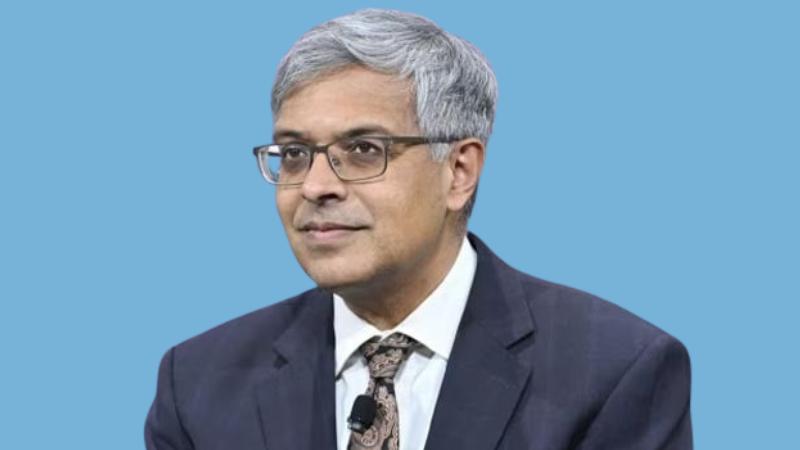
The UK will open a combined 1,800 annual visa places for Indian traditional chefs, classical musicians and yoga instructors when the UK–India trade agreement takes effect on Wednesday, July 15, 2026. The allocation falls under the Global Business Mobility–Service Supplier route. It is one shared cap covering all three occupations, not 1,800 places for each profession. The annual allocation is measured from January 1 through December 31.
UK Opens 1,800 Visa Spots for Indian Chefs, Musicians and Yoga Teachers
The UK will open a combined 1,800 annual visa places for Indian traditional chefs, classical musicians and yoga instructors when the UK–India trade agreement takes effect on Wednesday, July 15, 2026. The allocation falls under the Global Business Mobility–Service Supplier route. It is one shared cap covering all three occupations, not 1,800 places for each profession. The annual allocation is measured from January 1 through December 31.
How did Western music begin in Athens? It started with mathematics and philosophy
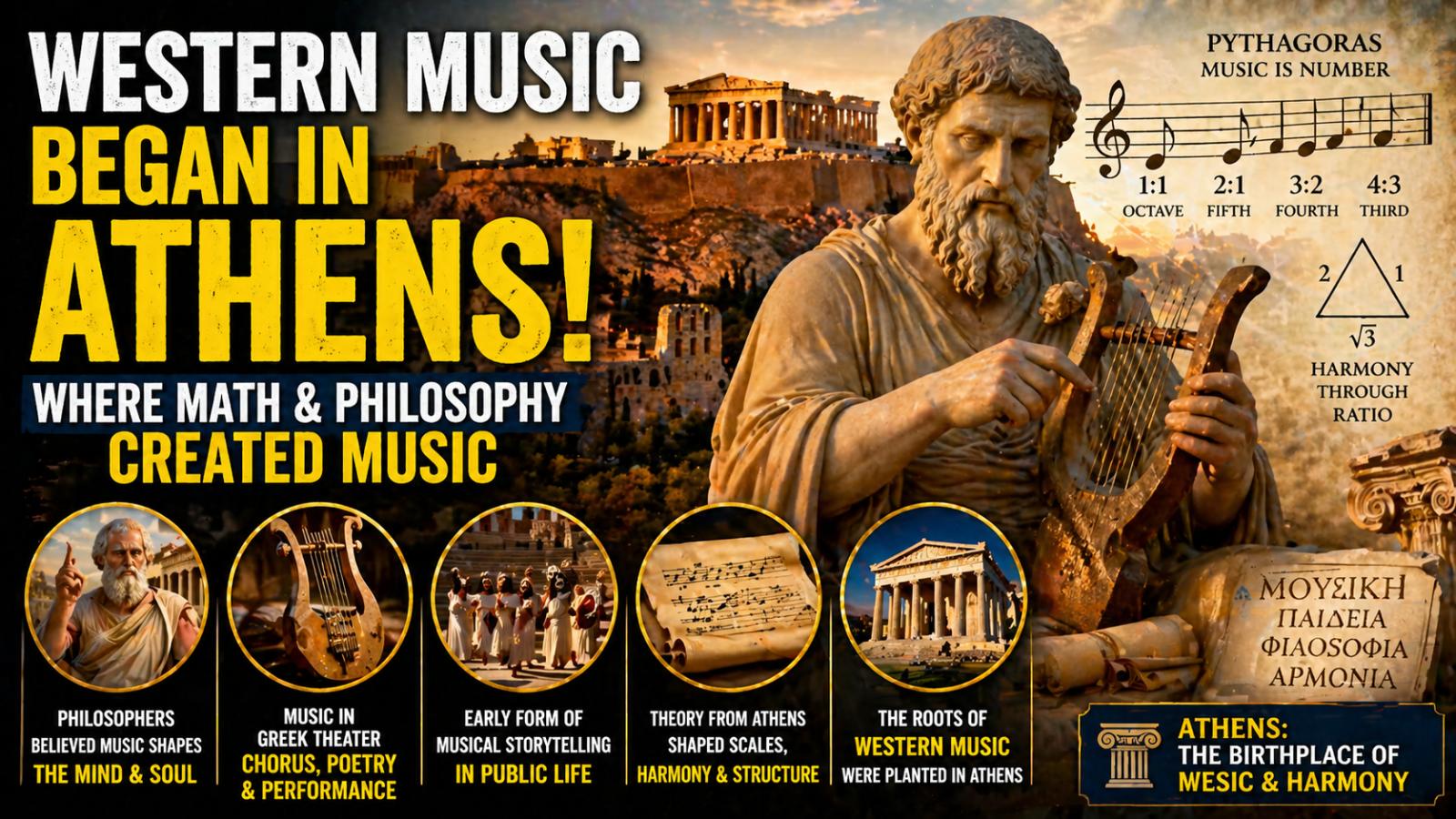
Western music traces back to ancient Athens, where philosophy and mathematics defined sound and structure. In this early period, music was not merely entertainment but an intellectual discipline deeply connected to science and education. The ideas developed in Athens would later influence the foundations of Western music, shaping how sound is understood and organized. Mathematical foundations of musical sound Ancient Greek thinkers explored the relationship between numbers and sound, establishing principles that continue to influence music theory. Pythagoras, a key figure in this development, discovered that harmonious tones could be produced through simple mathematical ratios. By observing vibrating strings, he demonstrated that pitch changes were directly related to numerical relationships, laying the groundwork for structured scales and harmony. Music as part of education and philosophy In Athens, music was considered essential to intellectual and moral development. Philosophers such as Plato argued that music could influence human behavior, emotions, and character. As a result, music education became an integral part of learning, reinforcing the idea that sound had both scientific and psychological significance. Performance traditions in Greek theater Music also played a central role in public life, particularly in theatrical performances. Greek dramas incorporated choruses that combined singing, poetry, and movement to convey stories. These performances represented one of the earliest forms of organized musical storytelling, demonstrating how music functioned as both an artistic and communal experience. Lasting influence on Western musical systems Although ancient Greek compositions have not survived in their original form, the theoretical framework developed in Athens continues to shape Western music. Concepts such as scales, harmony, and structured composition evolved from these early discoveries. The emphasis on mathematical order and philosophical meaning established a foundation that later cultures expanded upon. The legacy of Athens highlights how music evolved from a study of numbers and ideas into a complex artistic system. This transition marks the beginning of a tradition that continues to influence modern music across the world.
How did Western music begin in Athens? It started with mathematics and philosophy
Western music traces back to ancient Athens, where philosophy and mathematics defined sound and structure. In this early period, music was not merely entertainment but an intellectual discipline deeply connected to science and education. The ideas developed in Athens would later influence the foundations of Western music, shaping how sound is understood and organized. Mathematical foundations of musical sound Ancient Greek thinkers explored the relationship between numbers and sound, establishing principles that continue to influence music theory. Pythagoras, a key figure in this development, discovered that harmonious tones could be produced through simple mathematical ratios. By observing vibrating strings, he demonstrated that pitch changes were directly related to numerical relationships, laying the groundwork for structured scales and harmony. Music as part of education and philosophy In Athens, music was considered essential to intellectual and moral development. Philosophers such as Plato argued that music could influence human behavior, emotions, and character. As a result, music education became an integral part of learning, reinforcing the idea that sound had both scientific and psychological significance. Performance traditions in Greek theater Music also played a central role in public life, particularly in theatrical performances. Greek dramas incorporated choruses that combined singing, poetry, and movement to convey stories. These performances represented one of the earliest forms of organized musical storytelling, demonstrating how music functioned as both an artistic and communal experience. Lasting influence on Western musical systems Although ancient Greek compositions have not survived in their original form, the theoretical framework developed in Athens continues to shape Western music. Concepts such as scales, harmony, and structured composition evolved from these early discoveries. The emphasis on mathematical order and philosophical meaning established a foundation that later cultures expanded upon. The legacy of Athens highlights how music evolved from a study of numbers and ideas into a complex artistic system. This transition marks the beginning of a tradition that continues to influence modern music across the world.
National Symphony Orchestra Labor Day Concert Returns To Us Capitol This Sunday
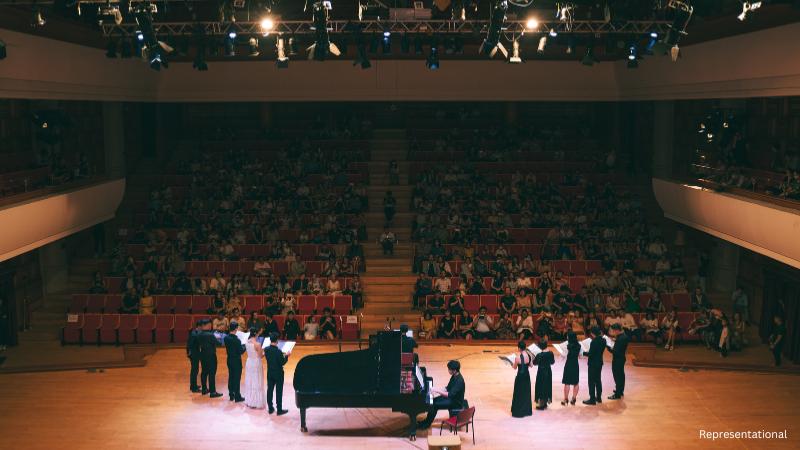
The National Symphony Orchestra will celebrate Labor Day with its annual free concert on the West Front of the United States Capitol in Washington, DC. The event takes place on Sunday evening at 8 p.m., with gates opening to the public at 3 p.m. This long-standing tradition is one of the city’s most anticipated cultural gatherings, offering residents and visitors the chance to enjoy world-class music in a historic outdoor setting. The concert is free of ch
National Symphony Orchestra Labor Day Concert Returns To Us Capitol This Sunday
The National Symphony Orchestra will celebrate Labor Day with its annual free concert on the West Front of the United States Capitol in Washington, DC. The event takes place on Sunday evening at 8 p.m., with gates opening to the public at 3 p.m. This long-standing tradition is one of the city’s most anticipated cultural gatherings, offering residents and visitors the chance to enjoy world-class music in a historic outdoor setting. The concert is free of ch
Legendary Pianist Alfred Brendel Dies at 94 in London
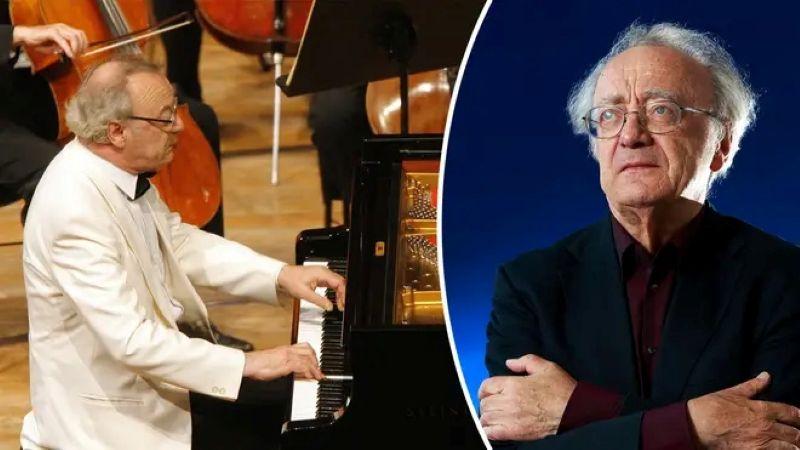
Alfred Brendel, the Austrian pianist widely regarded as one of the greatest classical musicians of the 20th century, passed away peacefully at his home in London on Tuesday at the age of 94. His spokesman, Thomas Hull, confirmed the news, stating Brendel died surrounded by loved ones. Known for his intellectual depth and profound interpretations of Beethoven’s works, Brendel's distinguished career spanned more than six decades.
Legendary Pianist Alfred Brendel Dies at 94 in London
Alfred Brendel, the Austrian pianist widely regarded as one of the greatest classical musicians of the 20th century, passed away peacefully at his home in London on Tuesday at the age of 94. His spokesman, Thomas Hull, confirmed the news, stating Brendel died surrounded by loved ones. Known for his intellectual depth and profound interpretations of Beethoven’s works, Brendel's distinguished career spanned more than six decades.


