#climatecrisis
Europe omega block heatwave drives deadly temperature surge
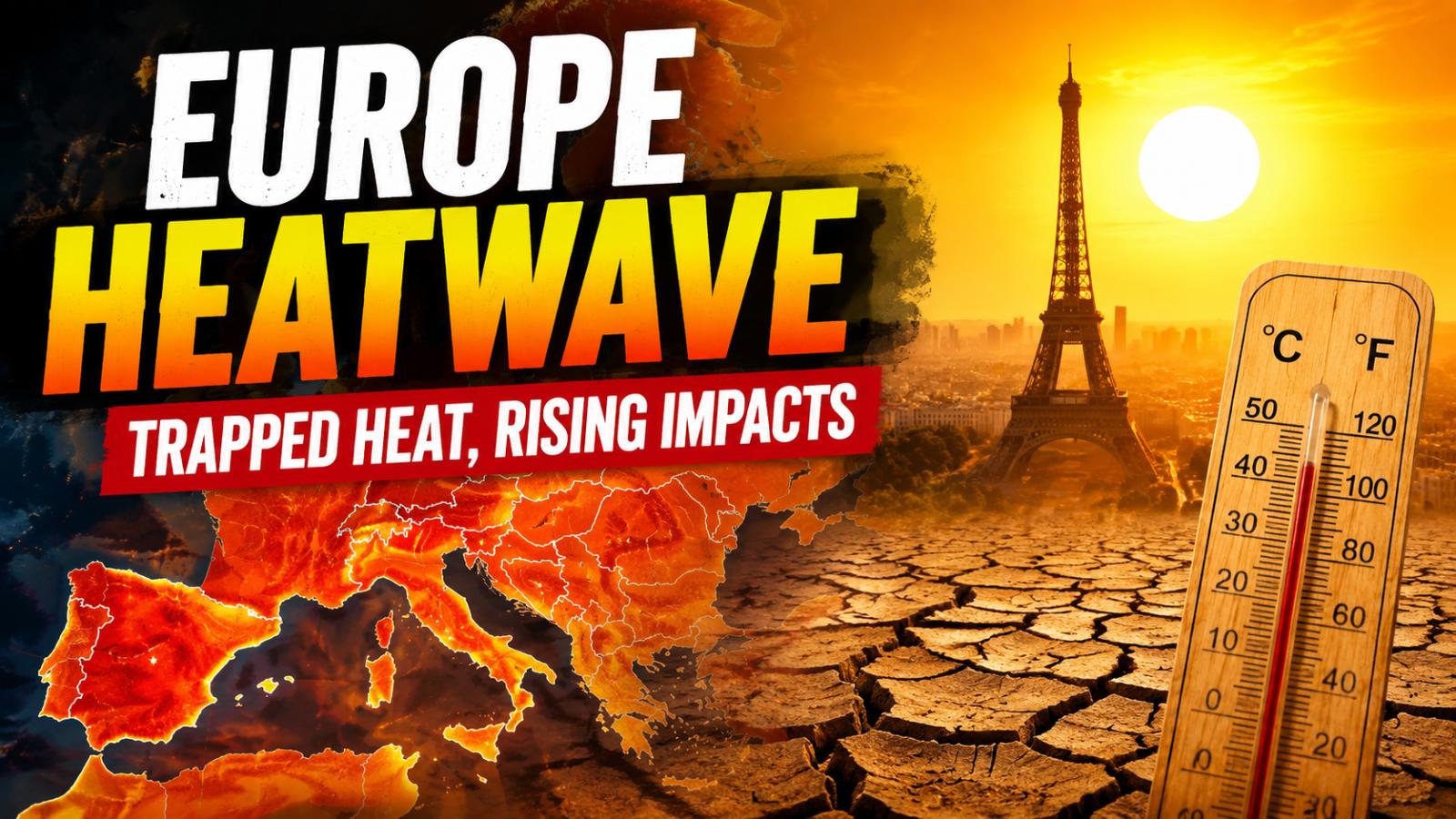
Europe is currently experiencing a severe heatwave driven by a trapped atmospheric system known as an omega block. This Europe omega block heatwave is preventing normal weather movement, locking hot air over large parts of the continent for days. As a result, temperatures are rising sharply, affecting daily life, health systems, and infrastructure across multiple countries. What is driving this extreme heat The main reason behind the heat buildup is a stalled jet stream pattern. In this pattern, high pressure sits over Europe in a shape that blocks cooler air from entering. Instead of changing weather systems, the same hot air remains in place and continues to intensify under strong summer sunlight. This creates repeated days of extreme heat rather than short-term spikes. Nights also remain warm, giving the human body little time to recover from daytime heat exposure. Countries facing the strongest impact The heatwave is affecting a wide region including France, Germany, Italy, Spain, Switzerland, the United Kingdom, Poland, Czechia, Hungary, and parts of the Balkans. Several areas in Central and Eastern Europe have recorded temperatures above 40°C, with some locations reaching historic highs. The heat is spreading gradually eastward as the trapped system shifts across the continent. Why some regions are more exposed Southern Europe is directly exposed to hot air moving from North Africa and the Mediterranean. Countries such as Spain, Italy, and France experience intense surface heating due to prolonged sunlight and dry conditions. In Central and Eastern Europe, countries like Germany, Poland, Czechia, and Hungary face heat accumulation over landlocked regions, where hot air remains trapped for longer periods. Impact on health and daily life Health systems are under growing pressure as heat-related illnesses increase. Conditions such as dehydration, heatstroke, and cardiovascular stress are rising, particularly among older adults, outdoor workers, and people without cooling access. Reports from multiple regions indicate excess deaths above normal levels during the heatwave period, highlighting the seriousness of prolonged exposure to extreme temperatures. Transport systems are also affected. Railway lines expand under heat, causing delays, while road surfaces soften and become unstable. Energy demand increases as cooling systems are used more widely, putting pressure on national grids. Agriculture is also suffering due to dry soil conditions, reduced crop yields, and falling river levels. In some regions, water availability is becoming a growing concern for both farming and urban supply. Public response and risk outlook Authorities across Europe are advising people to stay hydrated, avoid outdoor activity during peak heat hours, and check on vulnerable individuals. Hospitals remain alert as heat-related admissions continue to rise. Experts warn that the full impact of this heatwave may take time to appear, as excess mortality data is still being compiled. The situation highlights how extreme weather patterns are becoming more persistent and widespread, with the omega block heatwave showing how atmospheric conditions can directly affect health, infrastructure, and daily life across Europe.
Europe omega block heatwave drives deadly temperature surge
Europe is currently experiencing a severe heatwave driven by a trapped atmospheric system known as an omega block. This Europe omega block heatwave is preventing normal weather movement, locking hot air over large parts of the continent for days. As a result, temperatures are rising sharply, affecting daily life, health systems, and infrastructure across multiple countries. What is driving this extreme heat The main reason behind the heat buildup is a stalled jet stream pattern. In this pattern, high pressure sits over Europe in a shape that blocks cooler air from entering. Instead of changing weather systems, the same hot air remains in place and continues to intensify under strong summer sunlight. This creates repeated days of extreme heat rather than short-term spikes. Nights also remain warm, giving the human body little time to recover from daytime heat exposure. Countries facing the strongest impact The heatwave is affecting a wide region including France, Germany, Italy, Spain, Switzerland, the United Kingdom, Poland, Czechia, Hungary, and parts of the Balkans. Several areas in Central and Eastern Europe have recorded temperatures above 40°C, with some locations reaching historic highs. The heat is spreading gradually eastward as the trapped system shifts across the continent. Why some regions are more exposed Southern Europe is directly exposed to hot air moving from North Africa and the Mediterranean. Countries such as Spain, Italy, and France experience intense surface heating due to prolonged sunlight and dry conditions. In Central and Eastern Europe, countries like Germany, Poland, Czechia, and Hungary face heat accumulation over landlocked regions, where hot air remains trapped for longer periods. Impact on health and daily life Health systems are under growing pressure as heat-related illnesses increase. Conditions such as dehydration, heatstroke, and cardiovascular stress are rising, particularly among older adults, outdoor workers, and people without cooling access. Reports from multiple regions indicate excess deaths above normal levels during the heatwave period, highlighting the seriousness of prolonged exposure to extreme temperatures. Transport systems are also affected. Railway lines expand under heat, causing delays, while road surfaces soften and become unstable. Energy demand increases as cooling systems are used more widely, putting pressure on national grids. Agriculture is also suffering due to dry soil conditions, reduced crop yields, and falling river levels. In some regions, water availability is becoming a growing concern for both farming and urban supply. Public response and risk outlook Authorities across Europe are advising people to stay hydrated, avoid outdoor activity during peak heat hours, and check on vulnerable individuals. Hospitals remain alert as heat-related admissions continue to rise. Experts warn that the full impact of this heatwave may take time to appear, as excess mortality data is still being compiled. The situation highlights how extreme weather patterns are becoming more persistent and widespread, with the omega block heatwave showing how atmospheric conditions can directly affect health, infrastructure, and daily life across Europe.
Europe heatwave intensifies as blocking system traps hot air
A strong and slow-moving atmospheric pattern is keeping large parts of Europe locked under unusually hot and dry conditions. The system is preventing cooler Atlantic air from entering the region, allowing heat to build up day after day. As a result, temperatures are climbing far above seasonal averages across Western and Central Europe, with multiple countries reporting prolonged heat stress rather than short heat spikes.
Europe heatwave intensifies as blocking system traps hot air
A strong and slow-moving atmospheric pattern is keeping large parts of Europe locked under unusually hot and dry conditions. The system is preventing cooler Atlantic air from entering the region, allowing heat to build up day after day. As a result, temperatures are climbing far above seasonal averages across Western and Central Europe, with multiple countries reporting prolonged heat stress rather than short heat spikes.
Rare snowfall in Saudi deserts sends climate warning signal India cannot ignore
Snowfall in Saudi Arabia is an exceptionally rare event, but what unfolded this winter across parts of the kingdom’s northern desert regions has raised global concern. Areas such as Tabuk and nearby mountainous zones witnessed temperatures plunge below normal, desert hills coated in snow, and official weather alerts issued for conditions usually associated with colder climates. While the visuals of camels walking across snow-covered sands captured global attention, the deeper message behind
Rare snowfall in Saudi deserts sends climate warning signal India cannot ignore
Snowfall in Saudi Arabia is an exceptionally rare event, but what unfolded this winter across parts of the kingdom’s northern desert regions has raised global concern. Areas such as Tabuk and nearby mountainous zones witnessed temperatures plunge below normal, desert hills coated in snow, and official weather alerts issued for conditions usually associated with colder climates. While the visuals of camels walking across snow-covered sands captured global attention, the deeper message behind
Fire at Cop30 venue in Brazil forces evacuation and halts key climate negotiations
A significant disruption occurred at the Cop30 climate summit in Brazil on Thursday when a fire broke out inside the primary venue in Belém, forcing an immediate evacuation and halting the ongoing negotiations. The incident unfolded as delegates were preparing for a series of high-stakes discussions aimed at advancing global climate action and strengthening cooperation among countries to address the accelerating climate crisis. Authorities confirmed that the blaze ignited in a pavilion secti
Fire at Cop30 venue in Brazil forces evacuation and halts key climate negotiations
A significant disruption occurred at the Cop30 climate summit in Brazil on Thursday when a fire broke out inside the primary venue in Belém, forcing an immediate evacuation and halting the ongoing negotiations. The incident unfolded as delegates were preparing for a series of high-stakes discussions aimed at advancing global climate action and strengthening cooperation among countries to address the accelerating climate crisis. Authorities confirmed that the blaze ignited in a pavilion secti
5 Million Years of Boiling Earth: New Study Reveals Climate Crisis After Mass Extinction
A groundbreaking new study has uncovered a crucial piece of Earth’s ancient climate puzzle, shedding light on one of the most significant climate disasters in history: the Permian–Triassic Mass Extinction, or the "Great Dying." Occurring around 252 million years ago, this event wiped out nearly 90% of life on Earth, leaving scientists to wonder why the planet remained in extreme heat for millions of years afterward, even after the volcani
5 Million Years of Boiling Earth: New Study Reveals Climate Crisis After Mass Extinction
A groundbreaking new study has uncovered a crucial piece of Earth’s ancient climate puzzle, shedding light on one of the most significant climate disasters in history: the Permian–Triassic Mass Extinction, or the "Great Dying." Occurring around 252 million years ago, this event wiped out nearly 90% of life on Earth, leaving scientists to wonder why the planet remained in extreme heat for millions of years afterward, even after the volcani