#crudeoilprices
Fuel Prices Hiked For Fourth Time In 10 Days; Metro Rates Here
Petrol and diesel prices were increased again on Monday, May 25, 2026, marking the fourth fuel price hike in less than two weeks. Petrol has become costlier by Rs 2.61 per litre, while diesel has gone up by Rs 2.71 per litre. The new rates came into effect immediately across the country. According to current reports, Delhi’s petrol price has crossed Rs 100 per litre, while diesel prices in several major cities are now close to the Rs 100 mark. Reuters reported that India’s state-owned fue
Fuel Prices Hiked For Fourth Time In 10 Days; Metro Rates Here
Petrol and diesel prices were increased again on Monday, May 25, 2026, marking the fourth fuel price hike in less than two weeks. Petrol has become costlier by Rs 2.61 per litre, while diesel has gone up by Rs 2.71 per litre. The new rates came into effect immediately across the country. According to current reports, Delhi’s petrol price has crossed Rs 100 per litre, while diesel prices in several major cities are now close to the Rs 100 mark. Reuters reported that India’s state-owned fue
India economy faces slowdown risks amid rising crude oil prices
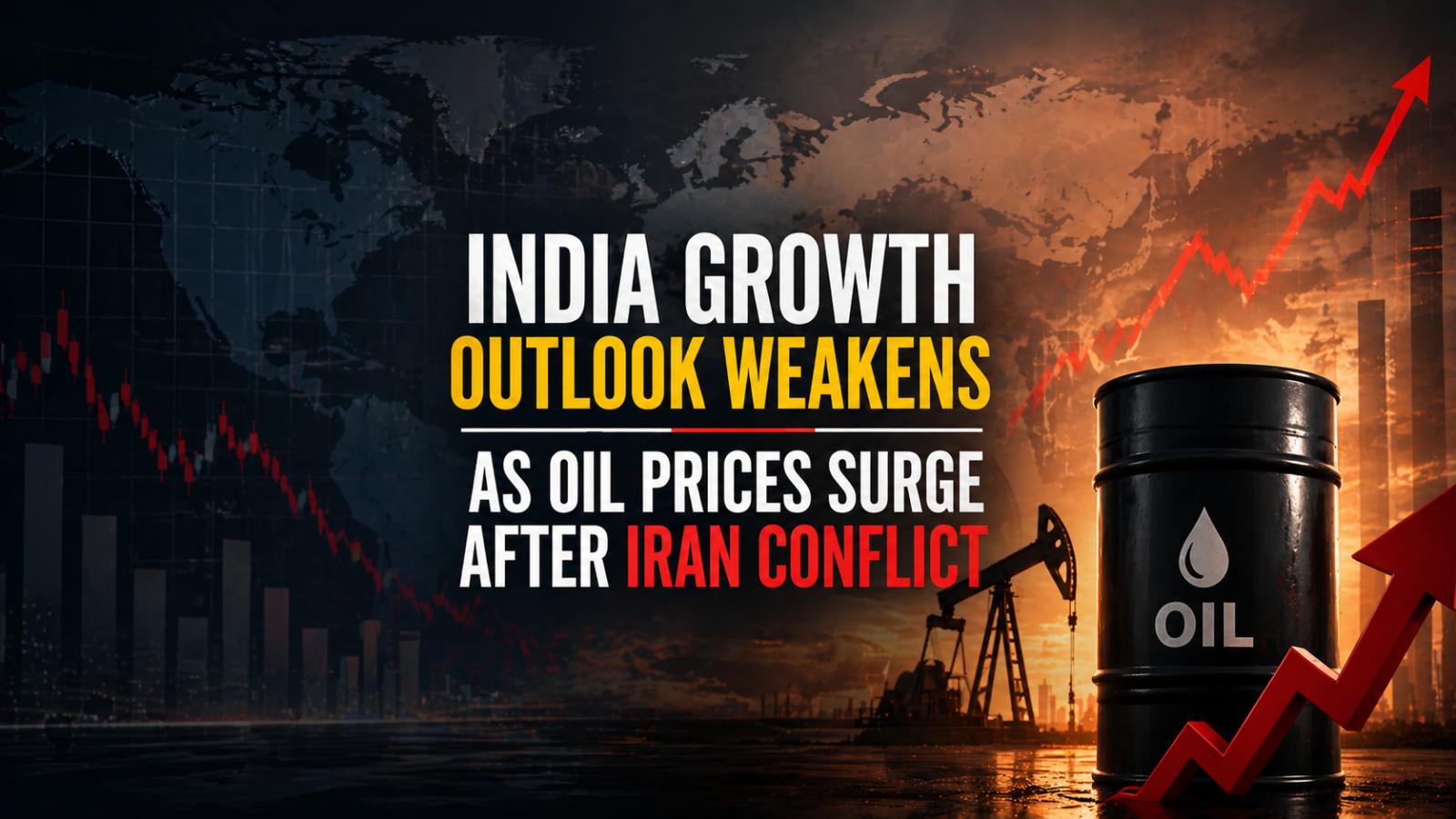
India growth slowdown: oil price surge impacts economy India growth slowdown has become a major concern after crude oil prices crossed $100 per barrel following tensions linked to the Iran conflict. The sharp increase in energy costs is already affecting corporate earnings and is expected to impact the FY27 outlook, according to analysts tracking the India economy slowdown. The rising oil price surge is not seen as a short-term issue. Higher crude oil prices are likely to continue putting pressure on multiple sectors including consumer, auto, and financial industries. JP Morgan has warned that supply disruptions and elevated energy costs India could persist for months, even after a ceasefire, delaying full normalization. The firm has reduced its FY27 earnings forecast by 2–10 percent across major sectors, highlighting the growing risks to corporate earnings India. Experts point out that the impact will be visible in different ways. Companies may face margin compression, reduced demand, and operational challenges, while consumers may experience the effects through higher prices and inflation India. These combined factors are expected to slow overall economic momentum. Market estimates show that Nifty EPS growth could drop sharply from earlier expectations of around 15 percent to nearly 7–8 percent if crude oil prices remain high. Key industries such as automobiles, oil and gas, and airlines are likely to be the most affected due to their heavy dependence on fuel. Despite these pressures, India Inc revenue growth remains stable, but the growth pattern is shifting from volume-driven to price-led expansion. This means companies are increasing prices to maintain revenues, a strategy that may not be sustainable if inflation continues to rise. West Asia continues to play a crucial role in India’s economy. The region accounts for a significant share of exports and remittances, making India highly sensitive to disruptions in West Asia trade and income flows. Any prolonged instability could further deepen the India growth slowdown. Investor sentiment has also weakened amid global uncertainty. Foreign portfolio investors have turned net sellers, with total FPI outflows reaching nearly ₹1.68 trillion since early 2026, reflecting concerns over geopolitical risks and economic stability.
India economy faces slowdown risks amid rising crude oil prices
India growth slowdown: oil price surge impacts economy India growth slowdown has become a major concern after crude oil prices crossed $100 per barrel following tensions linked to the Iran conflict. The sharp increase in energy costs is already affecting corporate earnings and is expected to impact the FY27 outlook, according to analysts tracking the India economy slowdown. The rising oil price surge is not seen as a short-term issue. Higher crude oil prices are likely to continue putting pressure on multiple sectors including consumer, auto, and financial industries. JP Morgan has warned that supply disruptions and elevated energy costs India could persist for months, even after a ceasefire, delaying full normalization. The firm has reduced its FY27 earnings forecast by 2–10 percent across major sectors, highlighting the growing risks to corporate earnings India. Experts point out that the impact will be visible in different ways. Companies may face margin compression, reduced demand, and operational challenges, while consumers may experience the effects through higher prices and inflation India. These combined factors are expected to slow overall economic momentum. Market estimates show that Nifty EPS growth could drop sharply from earlier expectations of around 15 percent to nearly 7–8 percent if crude oil prices remain high. Key industries such as automobiles, oil and gas, and airlines are likely to be the most affected due to their heavy dependence on fuel. Despite these pressures, India Inc revenue growth remains stable, but the growth pattern is shifting from volume-driven to price-led expansion. This means companies are increasing prices to maintain revenues, a strategy that may not be sustainable if inflation continues to rise. West Asia continues to play a crucial role in India’s economy. The region accounts for a significant share of exports and remittances, making India highly sensitive to disruptions in West Asia trade and income flows. Any prolonged instability could further deepen the India growth slowdown. Investor sentiment has also weakened amid global uncertainty. Foreign portfolio investors have turned net sellers, with total FPI outflows reaching nearly ₹1.68 trillion since early 2026, reflecting concerns over geopolitical risks and economic stability.
Oil prices jump over 4% as U.S.-Iran tensions escalate
Oil prices climbed sharply on Wednesday, rising more than 4% as investors reacted to escalating tensions between the United States and Iran following the latest round of nuclear negotiations. Market sentiment shifted after U.S. Vice President JD Vance indicated that Tehran had failed to address key American demands and warned that military options remain under consideration. U.S. West Texas Intermediate crude settled up $2.86, or 4.59%, at $65.19 per barrel, while global benchmark B
Oil prices jump over 4% as U.S.-Iran tensions escalate
Oil prices climbed sharply on Wednesday, rising more than 4% as investors reacted to escalating tensions between the United States and Iran following the latest round of nuclear negotiations. Market sentiment shifted after U.S. Vice President JD Vance indicated that Tehran had failed to address key American demands and warned that military options remain under consideration. U.S. West Texas Intermediate crude settled up $2.86, or 4.59%, at $65.19 per barrel, while global benchmark B
Brent Crude Falls Below $70 After Ceasefire; Indian Oil Stocks Show Mixed Market Response
Oil sector stocks in India saw notable gains today, largely driven by major geopolitical developments. A ceasefire between Iran and Israel led to a sudden shift in oilarket sentiment, reversing a recent upward trend in crude prices. The announcement resulted in a noticeable decline in global oil benchmarks, which had been elevated due to the prior escalation of tensions. Brent crude, which had surged earlier in the week to a peak of $81.40 per barrel, dropped sharply following the
Brent Crude Falls Below $70 After Ceasefire; Indian Oil Stocks Show Mixed Market Response
Oil sector stocks in India saw notable gains today, largely driven by major geopolitical developments. A ceasefire between Iran and Israel led to a sudden shift in oilarket sentiment, reversing a recent upward trend in crude prices. The announcement resulted in a noticeable decline in global oil benchmarks, which had been elevated due to the prior escalation of tensions. Brent crude, which had surged earlier in the week to a peak of $81.40 per barrel, dropped sharply following the