



















#digitallearning
AP Govt Sends Teachers to Singapore for Training After Student Tours Initiative
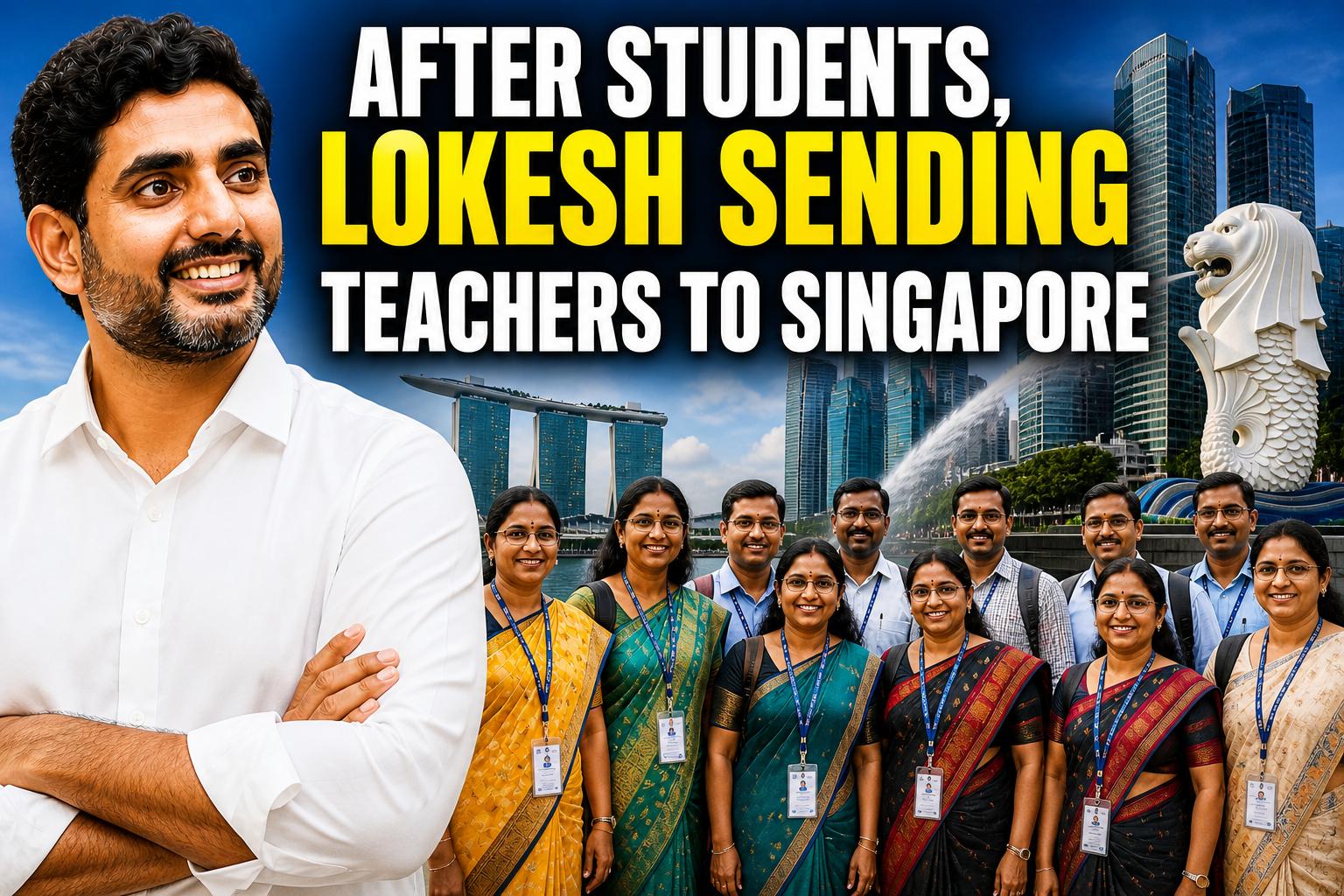
Andhra Pradesh’s education system is undergoing a noticeable shift under the leadership of Nara Lokesh, with the government now focusing not just on students but also on strengthening teachers. In a new initiative, the state has selected 37 high-performing teachers from government schools and is sending them to Singapore for a one-week intensive training program aimed at upgrading teaching standards. Until recently, the government’s reforms were largely centered around students, including exposure visits and learning enhancement programs. One such initiative involved taking students from government schools to New Delhi, where they explored science institutions and gained practical learning experiences beyond textbooks. Now, the attention has shifted toward teachers, recognizing that improving teaching quality directly impacts student outcomes. The selected educators will observe and learn advanced teaching practices widely adopted in Singapore, including digital learning systems, smart classroom integration, project-based teaching models, and modern evaluation techniques. These methods are known for making learning more interactive and effective. The expectation is straightforward but ambitious. After completing their training, these teachers will return and implement what they have learned across government schools in Andhra Pradesh. The goal is not just incremental improvement but a broader transformation in how education is delivered. However, the real test lies in execution. Sending 37 teachers abroad makes for a good headline, but unless there is a structured plan to scale these learnings across thousands of schools, the impact could remain limited. If the government ensures proper follow-up, training replication, and accountability, this initiative could genuinely improve classroom standards. Otherwise, it risks becoming another isolated reform without long-term effect. This move signals a more balanced approach to education reform—one that acknowledges that strong teachers are just as critical as motivated students in building a future-ready education system.
AP Govt Sends Teachers to Singapore for Training After Student Tours Initiative
Andhra Pradesh’s education system is undergoing a noticeable shift under the leadership of Nara Lokesh, with the government now focusing not just on students but also on strengthening teachers. In a new initiative, the state has selected 37 high-performing teachers from government schools and is sending them to Singapore for a one-week intensive training program aimed at upgrading teaching standards. Until recently, the government’s reforms were largely centered around students, including exposure visits and learning enhancement programs. One such initiative involved taking students from government schools to New Delhi, where they explored science institutions and gained practical learning experiences beyond textbooks. Now, the attention has shifted toward teachers, recognizing that improving teaching quality directly impacts student outcomes. The selected educators will observe and learn advanced teaching practices widely adopted in Singapore, including digital learning systems, smart classroom integration, project-based teaching models, and modern evaluation techniques. These methods are known for making learning more interactive and effective. The expectation is straightforward but ambitious. After completing their training, these teachers will return and implement what they have learned across government schools in Andhra Pradesh. The goal is not just incremental improvement but a broader transformation in how education is delivered. However, the real test lies in execution. Sending 37 teachers abroad makes for a good headline, but unless there is a structured plan to scale these learnings across thousands of schools, the impact could remain limited. If the government ensures proper follow-up, training replication, and accountability, this initiative could genuinely improve classroom standards. Otherwise, it risks becoming another isolated reform without long-term effect. This move signals a more balanced approach to education reform—one that acknowledges that strong teachers are just as critical as motivated students in building a future-ready education system.
CBSE Expands Curriculum With Early AI Education From Class 3
The Central Board of Secondary Education (CBSE) has taken a significant step towards modernizing India’s education system by introducing artificial intelligence learning for students starting from Class 3. This move reflects the growing importance of digital literacy and emerging technologies in shaping the future workforce. By incorporating AI concepts at an early stage, CBSE aims to ensure that students are not just consumers of technology but also understand its fundamentals and applications. The initiative is part of a broader effort to align school education with global technological trends and prepare students for a rapidly evolving digital world. Under this new curriculum, young learners will be introduced to basic concepts of artificial intelligence through interactive and activity-based learning methods. Instead of complex coding, the focus will be on developing logical thinking, problem-solving skills, and an understanding of how AI impacts everyday life. Students will engage in simple exercises, games, and real-life examples to grasp how machines can learn and make decisions. This foundational approach ensures that children build curiosity and confidence in technology without feeling overwhelmed. Curriculum Focus and Implementation The AI curriculum for primary classes is designed to be age-appropriate and engaging. CBSE has collaborated with education experts and technology partners to create content that is both informative and easy to understand. Teachers will also receive specialized training to effectively deliver AI-related lessons in classrooms. The board plans to integrate AI topics with existing subjects, making learning more interdisciplinary and practical. This approach will help students connect theoretical knowledge with real-world applications, enhancing their overall learning experience. Impact on Students and Future Education Introducing AI learning at an early stage is expected to have a long-term impact on students’ academic and career paths. As industries increasingly rely on automation and data-driven technologies, early exposure to AI will give students a competitive edge. It will also encourage innovation and creativity among young minds, enabling them to think beyond traditional career options. Parents and educators have largely welcomed this move, seeing it as a progressive step toward building a tech-savvy generation. With this initiative, CBSE reinforces its commitment to evolving education standards and preparing students for the challenges of the future. The inclusion of artificial intelligence in the curriculum marks a shift from rote learning to skill-based education, ensuring that students are better equipped to navigate and contribute to a technology-driven world.
CBSE Expands Curriculum With Early AI Education From Class 3
The Central Board of Secondary Education (CBSE) has taken a significant step towards modernizing India’s education system by introducing artificial intelligence learning for students starting from Class 3. This move reflects the growing importance of digital literacy and emerging technologies in shaping the future workforce. By incorporating AI concepts at an early stage, CBSE aims to ensure that students are not just consumers of technology but also understand its fundamentals and applications. The initiative is part of a broader effort to align school education with global technological trends and prepare students for a rapidly evolving digital world. Under this new curriculum, young learners will be introduced to basic concepts of artificial intelligence through interactive and activity-based learning methods. Instead of complex coding, the focus will be on developing logical thinking, problem-solving skills, and an understanding of how AI impacts everyday life. Students will engage in simple exercises, games, and real-life examples to grasp how machines can learn and make decisions. This foundational approach ensures that children build curiosity and confidence in technology without feeling overwhelmed. Curriculum Focus and Implementation The AI curriculum for primary classes is designed to be age-appropriate and engaging. CBSE has collaborated with education experts and technology partners to create content that is both informative and easy to understand. Teachers will also receive specialized training to effectively deliver AI-related lessons in classrooms. The board plans to integrate AI topics with existing subjects, making learning more interdisciplinary and practical. This approach will help students connect theoretical knowledge with real-world applications, enhancing their overall learning experience. Impact on Students and Future Education Introducing AI learning at an early stage is expected to have a long-term impact on students’ academic and career paths. As industries increasingly rely on automation and data-driven technologies, early exposure to AI will give students a competitive edge. It will also encourage innovation and creativity among young minds, enabling them to think beyond traditional career options. Parents and educators have largely welcomed this move, seeing it as a progressive step toward building a tech-savvy generation. With this initiative, CBSE reinforces its commitment to evolving education standards and preparing students for the challenges of the future. The inclusion of artificial intelligence in the curriculum marks a shift from rote learning to skill-based education, ensuring that students are better equipped to navigate and contribute to a technology-driven world.


