




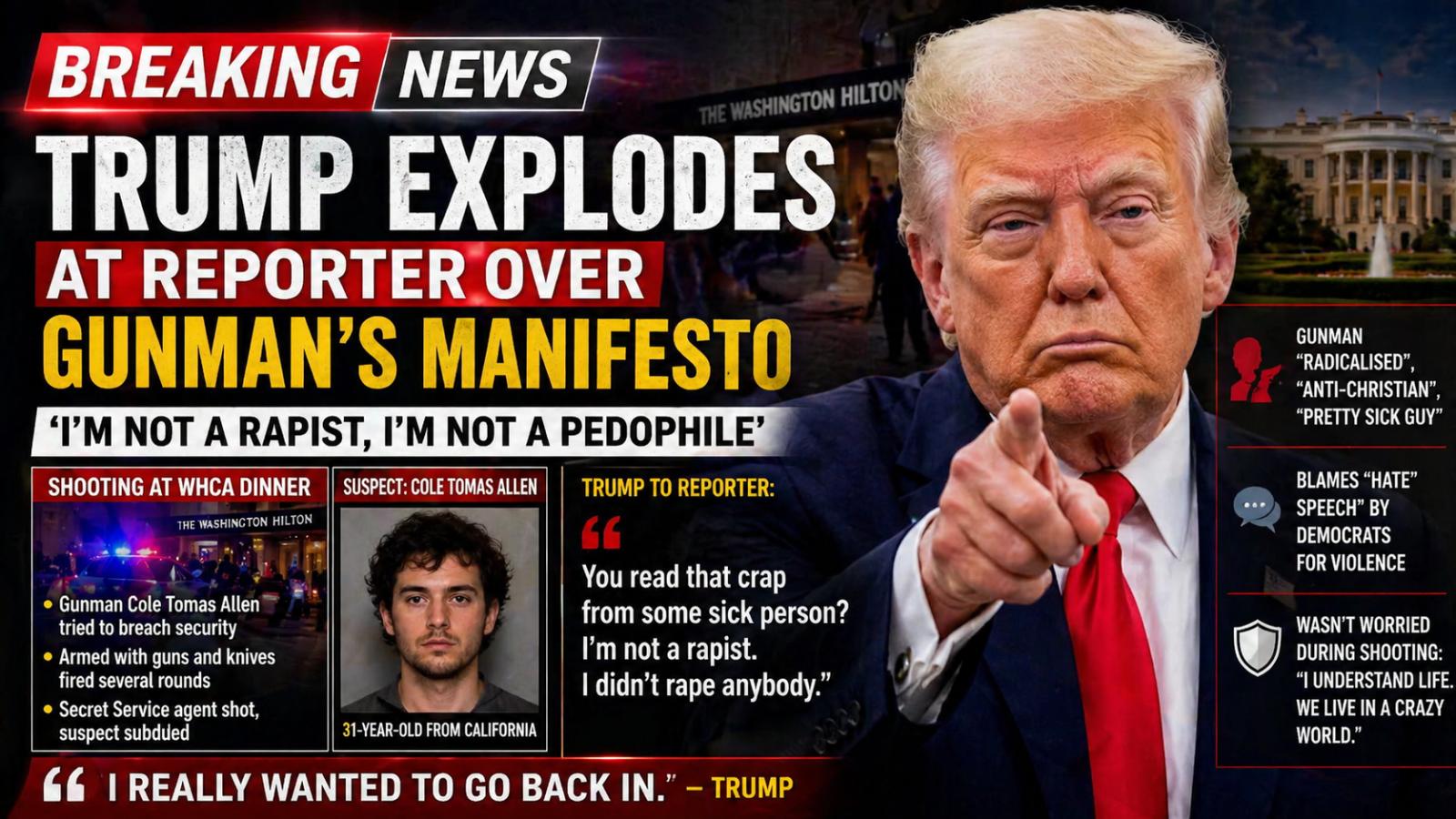
Trump Reacts Strongly to Gunman’s Manifesto in Post-Shooting Interview
President Donald Trump responded strongly during an interview following the recent shooting incident at the White House Correspondents’ Dinner, pushing back against references to a manifesto allegedly written by the suspect. The confrontation occurred when a journalist cited language from the document during a discussion about the attack and its possible motives. The suspect, identified
Trump Reacts Strongly to Gunman’s Manifesto in Post-Shooting Interview
President Donald Trump responded strongly during an interview following the recent shooting incident at the White House Correspondents’ Dinner, pushing back against references to a manifesto allegedly written by the suspect. The confrontation occurred when a journalist cited language from the document during a discussion about the attack and its possible motives. The suspect, identified
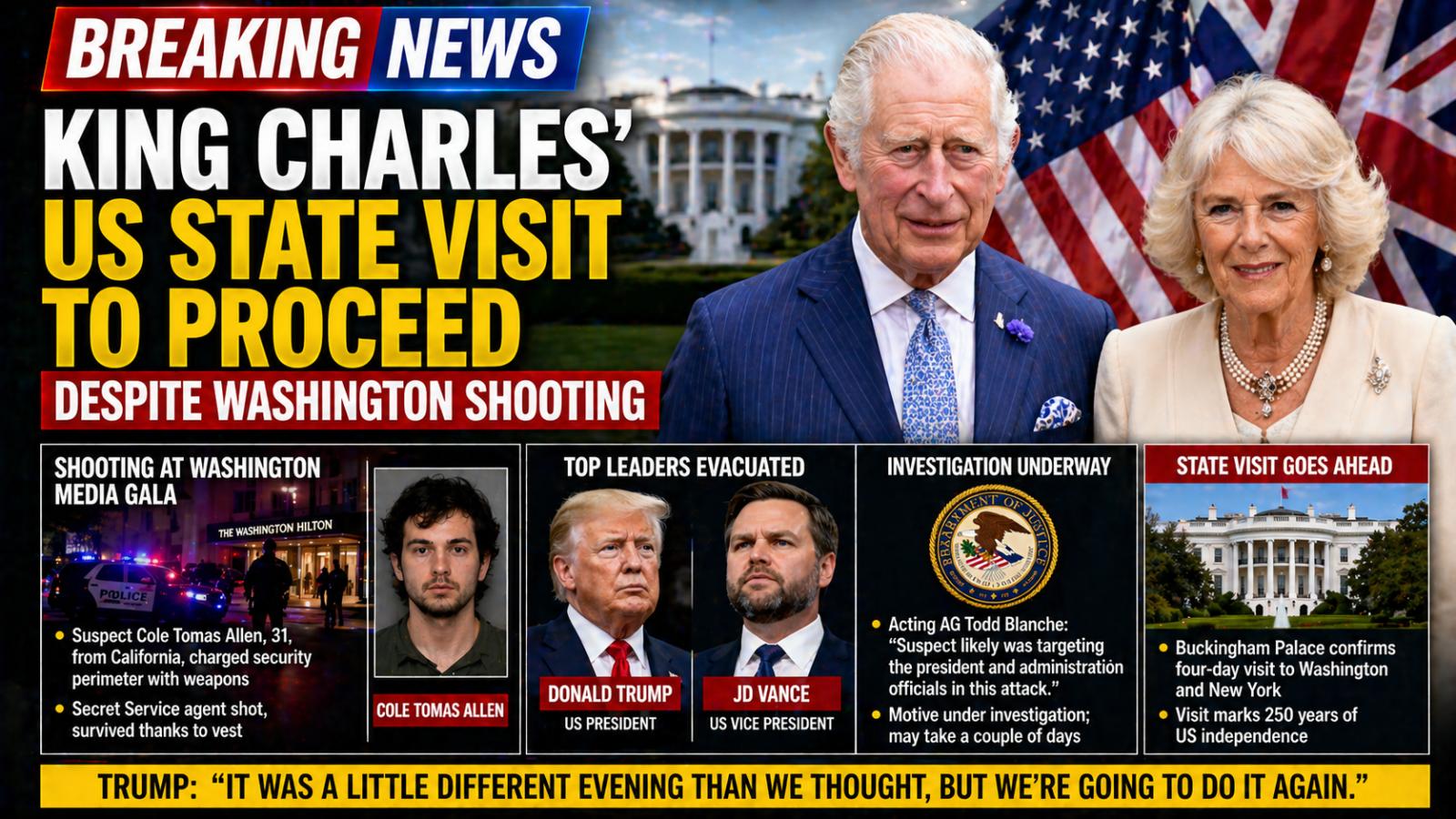
Royal Visit of King Charles Continues as US Investigates Washington Gala Shooting
King Charles III and Queen Camilla will proceed with their planned state visit to the United States running from April 27 to April 30, 2026, Buckingham Palace confirmed, despite a recent shooting incident in Washington, D.C. The announcement followed consultations between officials in both countries and was made on the advice of the British government. The four-day visit is intended to highlight longstanding ties between the United Kingdom and the United States, coinciding with America’s 250th year of independence. The royal itinerary includes stops in Washington and New York, with events aimed at strengthening diplomatic and cultural relations. The confirmation comes after a security incident at a high-profile media dinner held at the Washington Hilton. Authorities said a suspect, identified as Cole Tomas Allen, attempted to breach a secured screening area while carrying multiple weapons. Law enforcement officials reported that he approached the magnetometer checkpoint armed with a shotgun, a handgun, and knives before being stopped. During the confrontation, a Secret Service agent was shot but survived due to protective gear. Senior officials, including President Donald Trump and Vice President JD Vance, were safely evacuated from the venue as a precaution. Investigators are continuing to review evidence collected at the scene, including written materials, to determine the suspect’s motive. Acting Attorney General Todd Blanche indicated that the attacker may have intended to target high-level officials, though the investigation remains ongoing. Speaking after the incident, Trump described the attacker as a troubled individual and noted that the disrupted event would be rescheduled. Despite the security concerns, both governments have indicated that preparations for the royal visit will continue as planned, with heightened attention to safety measures.
Royal Visit of King Charles Continues as US Investigates Washington Gala Shooting
King Charles III and Queen Camilla will proceed with their planned state visit to the United States running from April 27 to April 30, 2026, Buckingham Palace confirmed, despite a recent shooting incident in Washington, D.C. The announcement followed consultations between officials in both countries and was made on the advice of the British government. The four-day visit is intended to highlight longstanding ties between the United Kingdom and the United States, coinciding with America’s 250th year of independence. The royal itinerary includes stops in Washington and New York, with events aimed at strengthening diplomatic and cultural relations. The confirmation comes after a security incident at a high-profile media dinner held at the Washington Hilton. Authorities said a suspect, identified as Cole Tomas Allen, attempted to breach a secured screening area while carrying multiple weapons. Law enforcement officials reported that he approached the magnetometer checkpoint armed with a shotgun, a handgun, and knives before being stopped. During the confrontation, a Secret Service agent was shot but survived due to protective gear. Senior officials, including President Donald Trump and Vice President JD Vance, were safely evacuated from the venue as a precaution. Investigators are continuing to review evidence collected at the scene, including written materials, to determine the suspect’s motive. Acting Attorney General Todd Blanche indicated that the attacker may have intended to target high-level officials, though the investigation remains ongoing. Speaking after the incident, Trump described the attacker as a troubled individual and noted that the disrupted event would be rescheduled. Despite the security concerns, both governments have indicated that preparations for the royal visit will continue as planned, with heightened attention to safety measures.
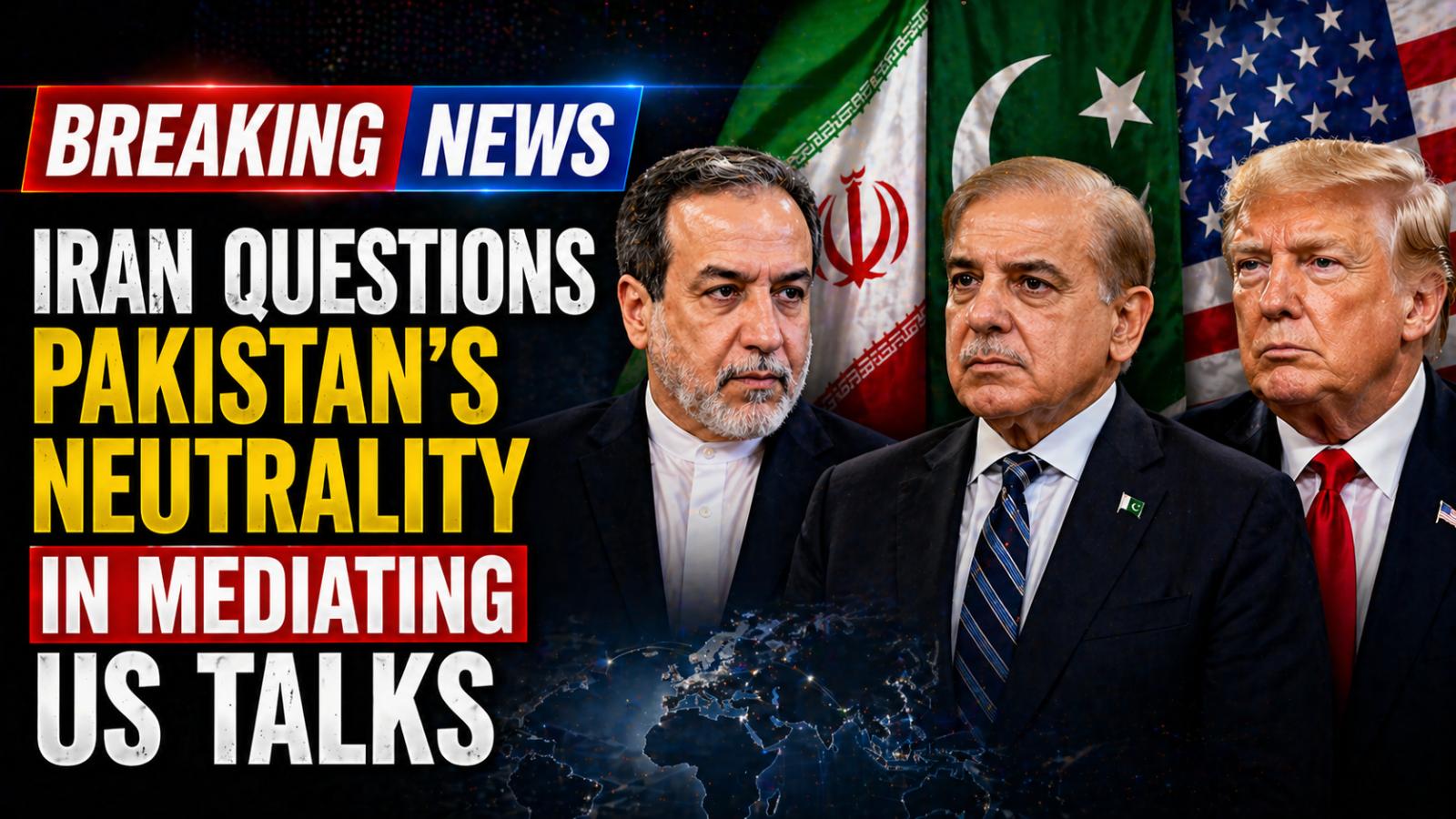
Tehran Raises Doubts Over Pakistan Role in US-Iran Negotiations
Iran has raised concerns about Pakistan’s role as a mediator in ongoing diplomatic efforts with the United States, with officials questioning Islamabad’s neutrality. Ebrahim Rezaei, spokesperson for Iran’s National Security and Foreign Policy Commission, said Pakistan lacks the credibility required to act as an impartial intermediary in sensitive negotiations. Rezaei argued that Paki
Tehran Raises Doubts Over Pakistan Role in US-Iran Negotiations
Iran has raised concerns about Pakistan’s role as a mediator in ongoing diplomatic efforts with the United States, with officials questioning Islamabad’s neutrality. Ebrahim Rezaei, spokesperson for Iran’s National Security and Foreign Policy Commission, said Pakistan lacks the credibility required to act as an impartial intermediary in sensitive negotiations. Rezaei argued that Paki
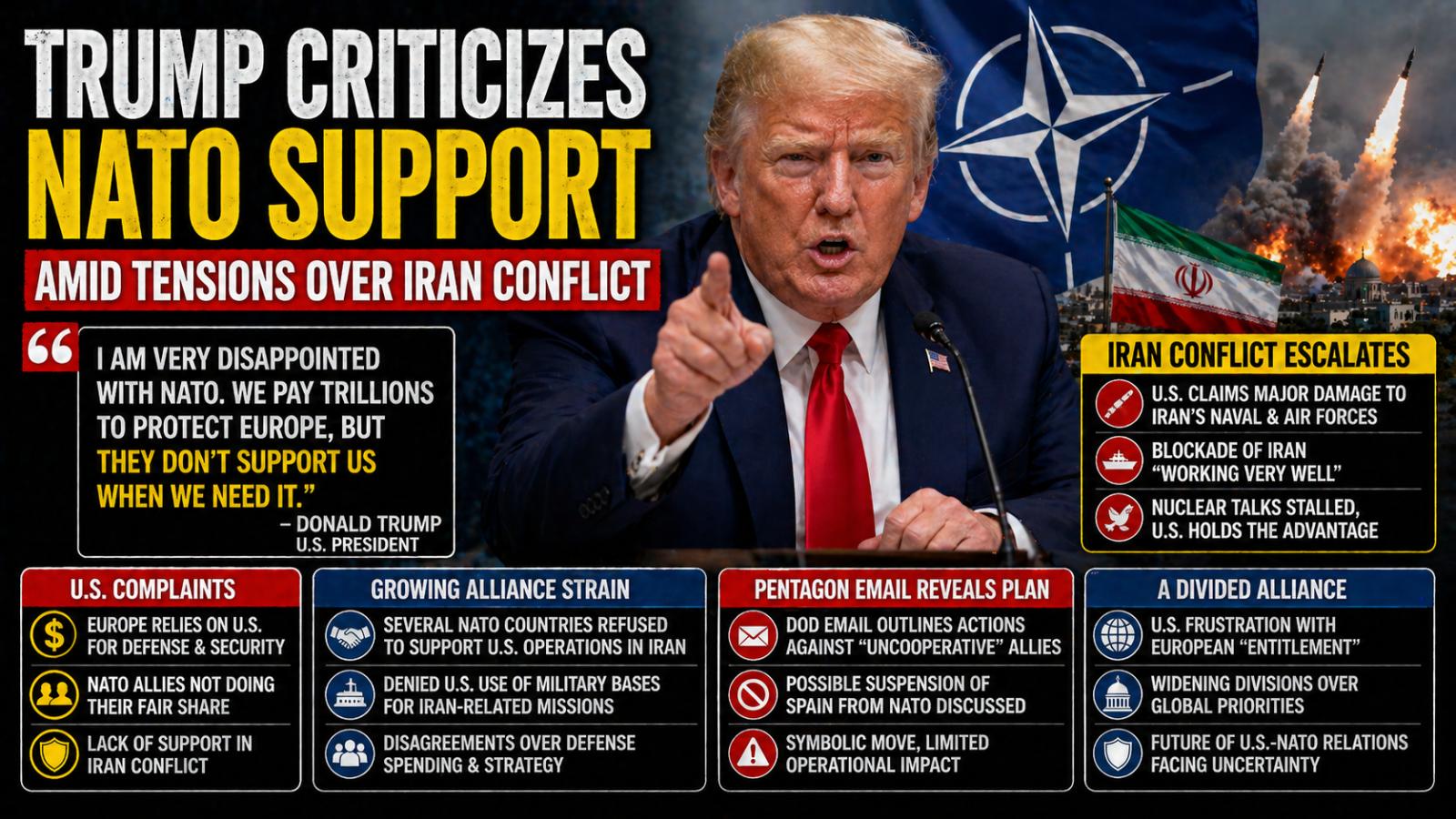
Trump criticizes NATO support amid tensions over Iran conflict
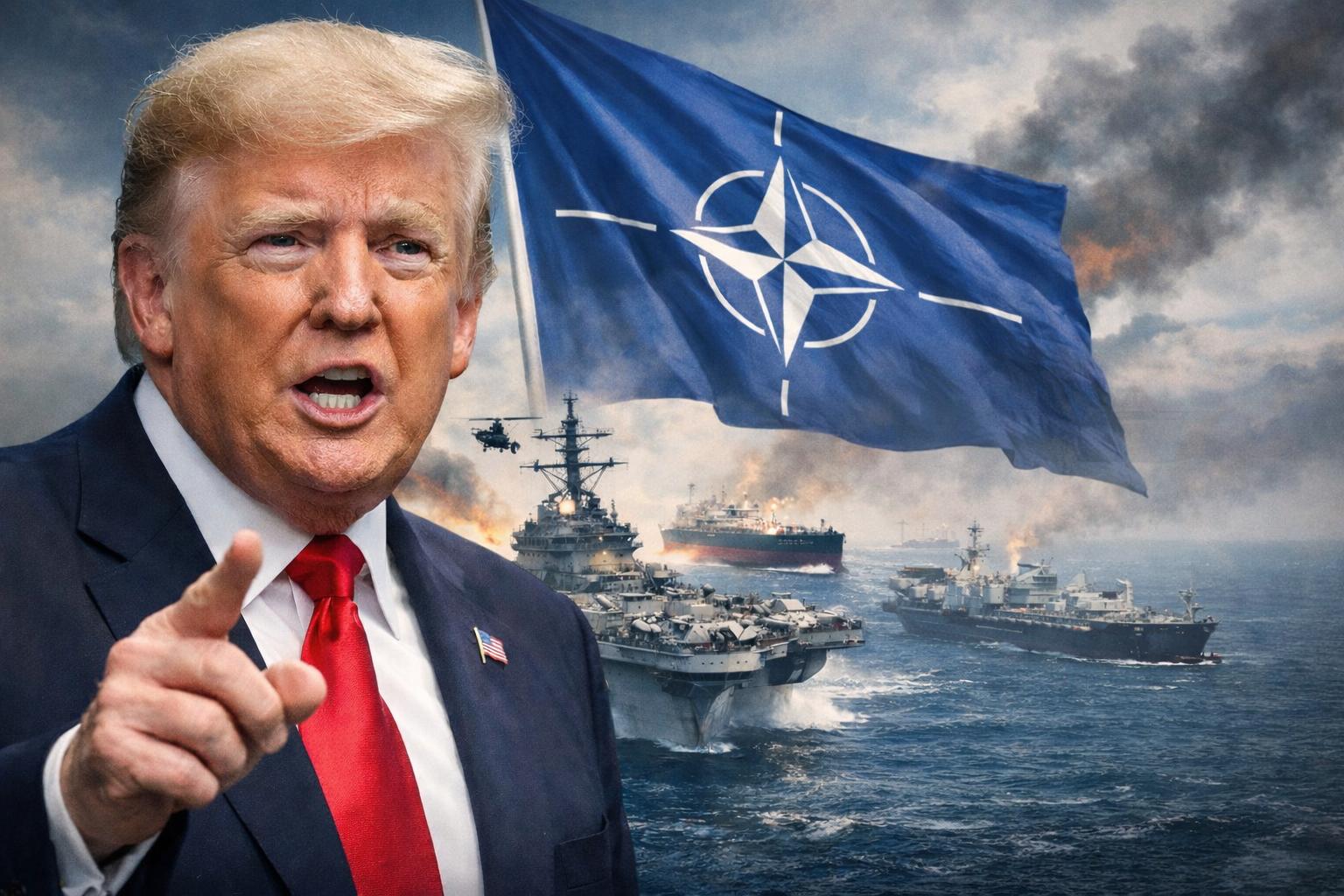
Trump criticized NATO for lack of support during the Iran conflict, highlighting growing US-alliance tensions and potential policy consequences for member states. A growing rift between the United States and NATO allies intensified after President Donald Trump voiced disappointment over support during the Iran conflict and broader security concerns. Amid escalating tensions between the United States and its allies, Donald Trump said on Sunday April 26, 2026 that he was “very disappointed” with NATO, accusing the alliance of failing to support Washington during a critical period. His remarks followed heightened security concerns earlier that day at the White House Correspondents’ Dinner. In an interview with Fox News, Trump emphasized the scale of US financial contributions to NATO, arguing that the alliance depends heavily on American resources. He said the United States has invested trillions of dollars to protect Europe from threats such as Russia and suggested that NATO members have not reciprocated adequately. The comments come as the Trump administration faces frustration with Western allies over their reluctance to back US actions in the ongoing Iran conflict. During the same interview, Trump shifted focus to Iran, asserting that the United States holds a strategic advantage despite stalled negotiations. He claimed US forces had significantly weakened Iran’s naval and air capabilities and described a blockade as highly effective. Tensions with NATO have been building since Trump returned to office, particularly as he has pushed member nations to increase defense spending. Disagreements intensified after several NATO countries declined to support US military operations in Iran or allow the use of their bases. The strain deepened further after a controversial email from the United States Department of Defense outlined potential actions against NATO allies perceived as unsupportive. Among the measures discussed was the possible suspension of Spain from NATO, a move officials indicated would carry symbolic significance but limited operational impact. Officials said the communication reflected growing frustration within the US government, describing what it characterized as a sense of entitlement among European partners. The developments underscore widening divisions within the alliance as geopolitical and military priorities diverge.
Trump criticizes NATO support amid tensions over Iran conflict
Trump criticized NATO for lack of support during the Iran conflict, highlighting growing US-alliance tensions and potential policy consequences for member states. A growing rift between the United States and NATO allies intensified after President Donald Trump voiced disappointment over support during the Iran conflict and broader security concerns. Amid escalating tensions between the United States and its allies, Donald Trump said on Sunday April 26, 2026 that he was “very disappointed” with NATO, accusing the alliance of failing to support Washington during a critical period. His remarks followed heightened security concerns earlier that day at the White House Correspondents’ Dinner. In an interview with Fox News, Trump emphasized the scale of US financial contributions to NATO, arguing that the alliance depends heavily on American resources. He said the United States has invested trillions of dollars to protect Europe from threats such as Russia and suggested that NATO members have not reciprocated adequately. The comments come as the Trump administration faces frustration with Western allies over their reluctance to back US actions in the ongoing Iran conflict. During the same interview, Trump shifted focus to Iran, asserting that the United States holds a strategic advantage despite stalled negotiations. He claimed US forces had significantly weakened Iran’s naval and air capabilities and described a blockade as highly effective. Tensions with NATO have been building since Trump returned to office, particularly as he has pushed member nations to increase defense spending. Disagreements intensified after several NATO countries declined to support US military operations in Iran or allow the use of their bases. The strain deepened further after a controversial email from the United States Department of Defense outlined potential actions against NATO allies perceived as unsupportive. Among the measures discussed was the possible suspension of Spain from NATO, a move officials indicated would carry symbolic significance but limited operational impact. Officials said the communication reflected growing frustration within the US government, describing what it characterized as a sense of entitlement among European partners. The developments underscore widening divisions within the alliance as geopolitical and military priorities diverge.
Trump Cites Shooting to Push $400M White House Ballroom Plan
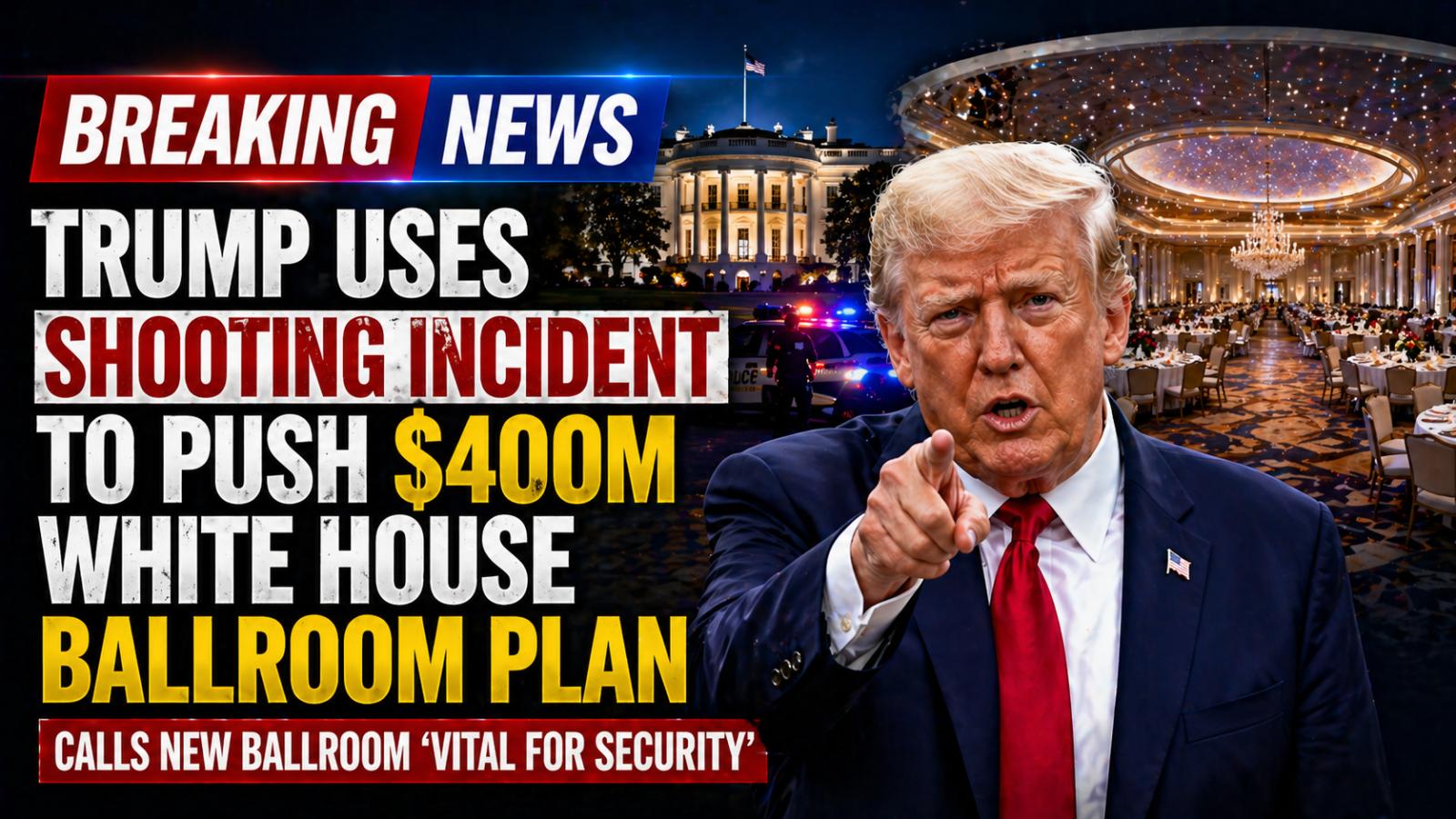
President Donald Trump has pointed to the recent shooting incident at the White House Correspondents’ Dinner as justification for his proposed $400 million ballroom project at the White House, describing it as essential for national security. In a statement shared on social media, Trump argued that the event underscored longstanding concerns about the safety of large gatherings involving senior government officials. According to the president, past administrations have recognized the need for a secure, large-scale event space within the White House complex. He claimed that the proposed ballroom would address vulnerabilities exposed by the recent incident, stating that such an event might have been prevented with enhanced security infrastructure. The project, however, remains under legal scrutiny, with ongoing challenges delaying its progress. The proposal outlines a 22,000-square-foot facility designed to host major events, alongside a reinforced structure featuring advanced security elements. Plans reportedly include a fortified roof, blast-resistant materials, and an expansion of the existing Presidential Emergency Operations Center beneath the site. The administration has described the project as a strategic investment in long-term security. The shooting incident that prompted renewed attention to the plan occurred during a high-profile event attended by government officials. Security personnel responded quickly, escorting attendees, including the president and senior leaders, to safety. Authorities later confirmed that the suspect, identified as Cole Tomas Allen, acted alone and was taken into custody at the scene. Investigators continue to examine the motive behind the attack, noting that the suspect had no prior criminal record. While officials have not confirmed specific details about intent, the case remains under active review. The incident has reignited debate over security measures at major political events, even as questions persist about the timing and feasibility of the proposed ballroom project.
Trump Cites Shooting to Push $400M White House Ballroom Plan
President Donald Trump has pointed to the recent shooting incident at the White House Correspondents’ Dinner as justification for his proposed $400 million ballroom project at the White House, describing it as essential for national security. In a statement shared on social media, Trump argued that the event underscored longstanding concerns about the safety of large gatherings involving senior government officials. According to the president, past administrations have recognized the need for a secure, large-scale event space within the White House complex. He claimed that the proposed ballroom would address vulnerabilities exposed by the recent incident, stating that such an event might have been prevented with enhanced security infrastructure. The project, however, remains under legal scrutiny, with ongoing challenges delaying its progress. The proposal outlines a 22,000-square-foot facility designed to host major events, alongside a reinforced structure featuring advanced security elements. Plans reportedly include a fortified roof, blast-resistant materials, and an expansion of the existing Presidential Emergency Operations Center beneath the site. The administration has described the project as a strategic investment in long-term security. The shooting incident that prompted renewed attention to the plan occurred during a high-profile event attended by government officials. Security personnel responded quickly, escorting attendees, including the president and senior leaders, to safety. Authorities later confirmed that the suspect, identified as Cole Tomas Allen, acted alone and was taken into custody at the scene. Investigators continue to examine the motive behind the attack, noting that the suspect had no prior criminal record. While officials have not confirmed specific details about intent, the case remains under active review. The incident has reignited debate over security measures at major political events, even as questions persist about the timing and feasibility of the proposed ballroom project.
Trump Safe After Shooting Scare at WHCA Dinner, Suspect Arrested
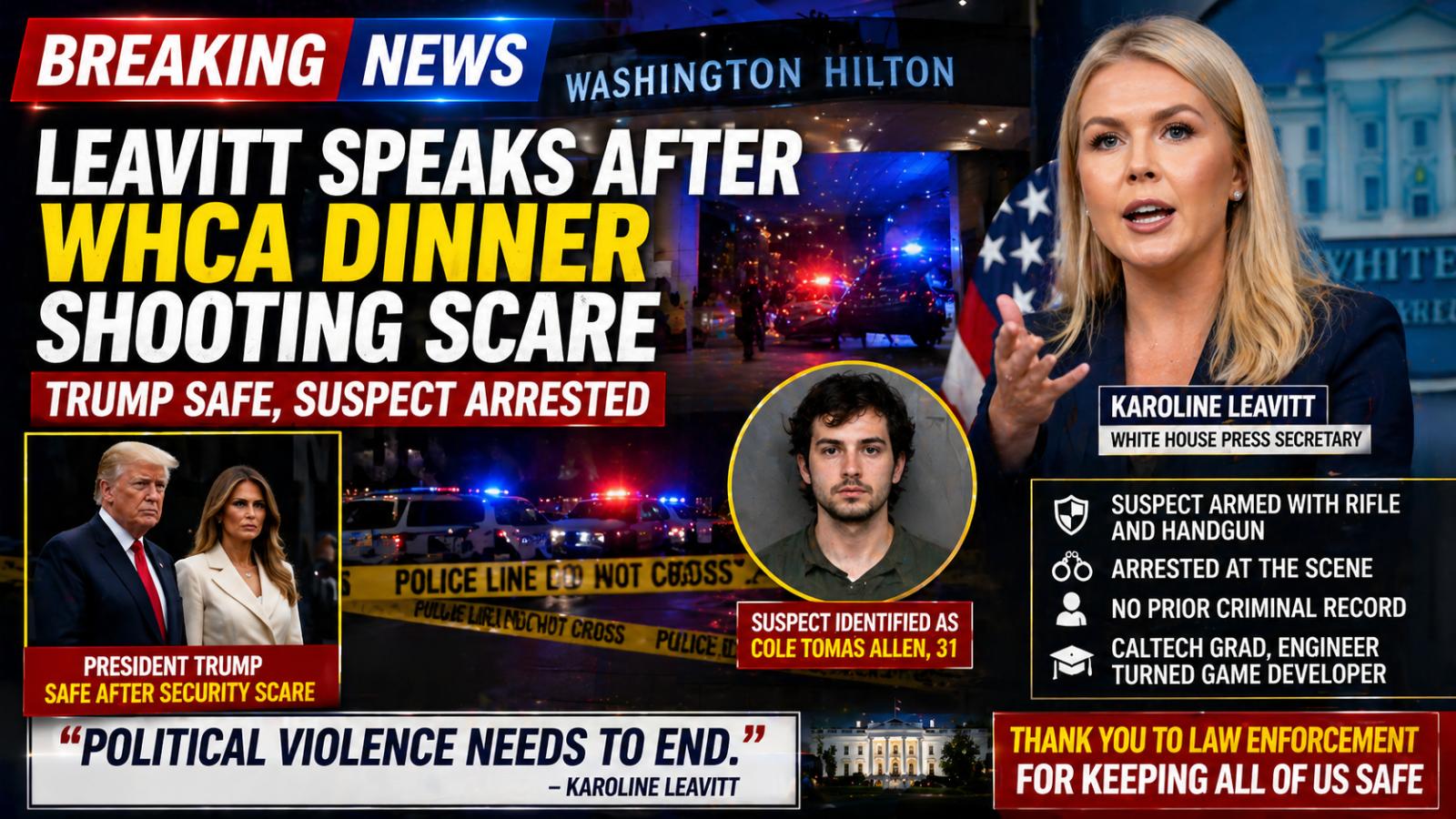
White House Press Secretary Karoline Leavitt addressed the shooting incident that disrupted the White House Correspondents’ Association dinner in Washington, D.C., describing the situation as a serious act of political violence. The event, held at the Washington Hilton, was intended to be a lighthearted evening featuring remarks from President Donald Trump, but quickly turned into a security emergency. In a statement shared on social media, Leavitt said the gathering was interrupted by an individual who attempted to target the president and others in attendance. She noted that she was backstage with the president and the First Lady when Secret Service agents swiftly moved them to safety. According to her account, Trump remained composed throughout the situation and later emphasized the need to end political violence in the country. Leavitt also expressed gratitude toward law enforcement officials, highlighting the actions of a Secret Service agent who was injured while responding to the threat. The agent reportedly sustained a gunshot wound but continued efforts to neutralize the suspect. Authorities have not released additional medical details regarding the agent’s condition. The suspect, identified as Cole Tomas Allen, a 31-year-old from Torrance, California, was taken into custody at the scene. Officials confirmed that he was armed with both a rifle and a handgun at the time of arrest. Records indicate that he had legally purchased firearms in recent years and had no prior criminal record or known history of law enforcement concerns. Investigators reported that Allen had an academic background from the California Institute of Technology and previously worked as a mechanical engineer before transitioning into independent video game development. He was also engaged in part-time teaching for students preparing for college admissions. Authorities continue to investigate the motive behind the attack while maintaining heightened security measures.
Trump Safe After Shooting Scare at WHCA Dinner, Suspect Arrested
White House Press Secretary Karoline Leavitt addressed the shooting incident that disrupted the White House Correspondents’ Association dinner in Washington, D.C., describing the situation as a serious act of political violence. The event, held at the Washington Hilton, was intended to be a lighthearted evening featuring remarks from President Donald Trump, but quickly turned into a security emergency. In a statement shared on social media, Leavitt said the gathering was interrupted by an individual who attempted to target the president and others in attendance. She noted that she was backstage with the president and the First Lady when Secret Service agents swiftly moved them to safety. According to her account, Trump remained composed throughout the situation and later emphasized the need to end political violence in the country. Leavitt also expressed gratitude toward law enforcement officials, highlighting the actions of a Secret Service agent who was injured while responding to the threat. The agent reportedly sustained a gunshot wound but continued efforts to neutralize the suspect. Authorities have not released additional medical details regarding the agent’s condition. The suspect, identified as Cole Tomas Allen, a 31-year-old from Torrance, California, was taken into custody at the scene. Officials confirmed that he was armed with both a rifle and a handgun at the time of arrest. Records indicate that he had legally purchased firearms in recent years and had no prior criminal record or known history of law enforcement concerns. Investigators reported that Allen had an academic background from the California Institute of Technology and previously worked as a mechanical engineer before transitioning into independent video game development. He was also engaged in part-time teaching for students preparing for college admissions. Authorities continue to investigate the motive behind the attack while maintaining heightened security measures.
World leaders denounce shooting targeting Trump, stress rejection of violence
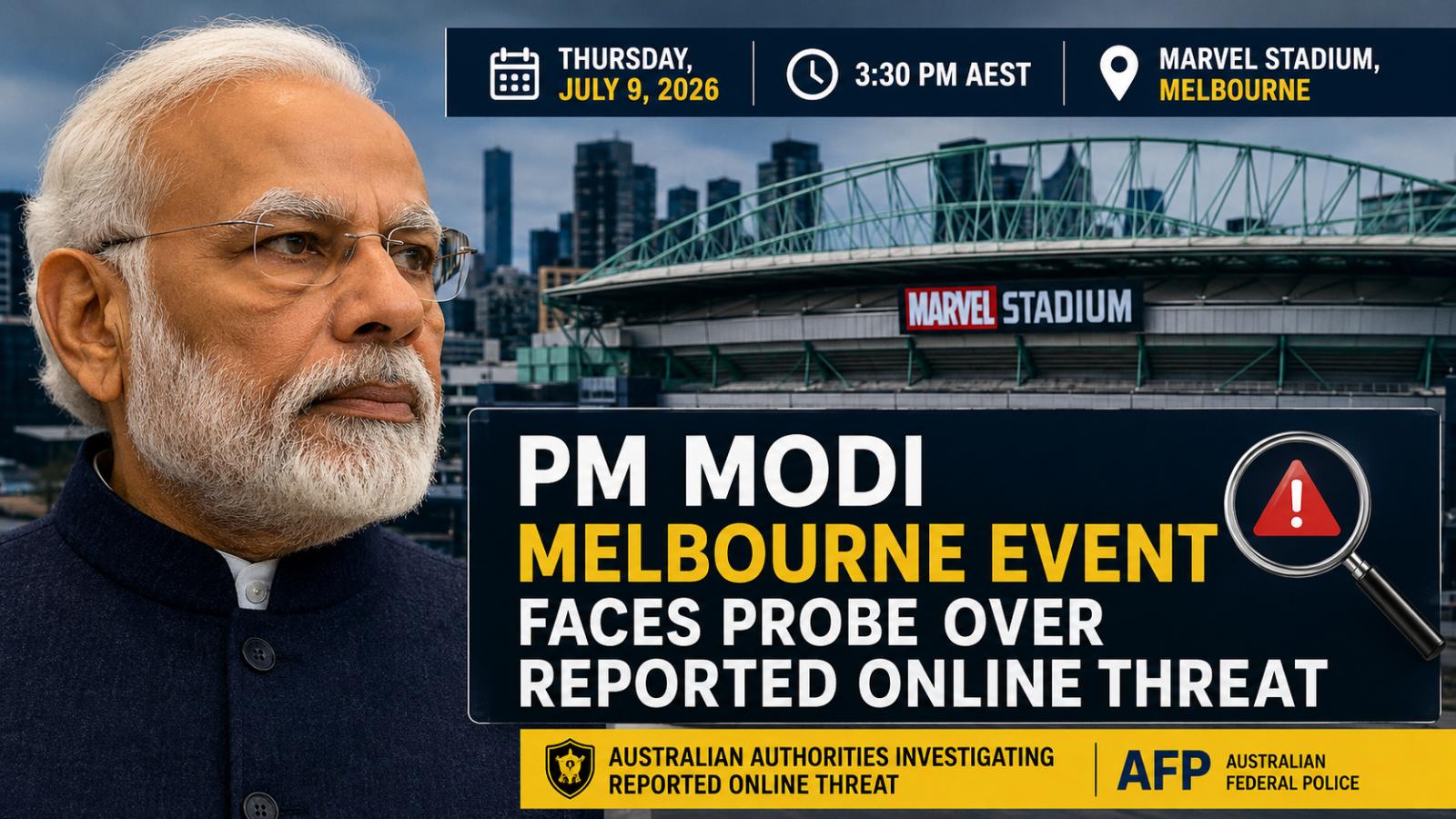
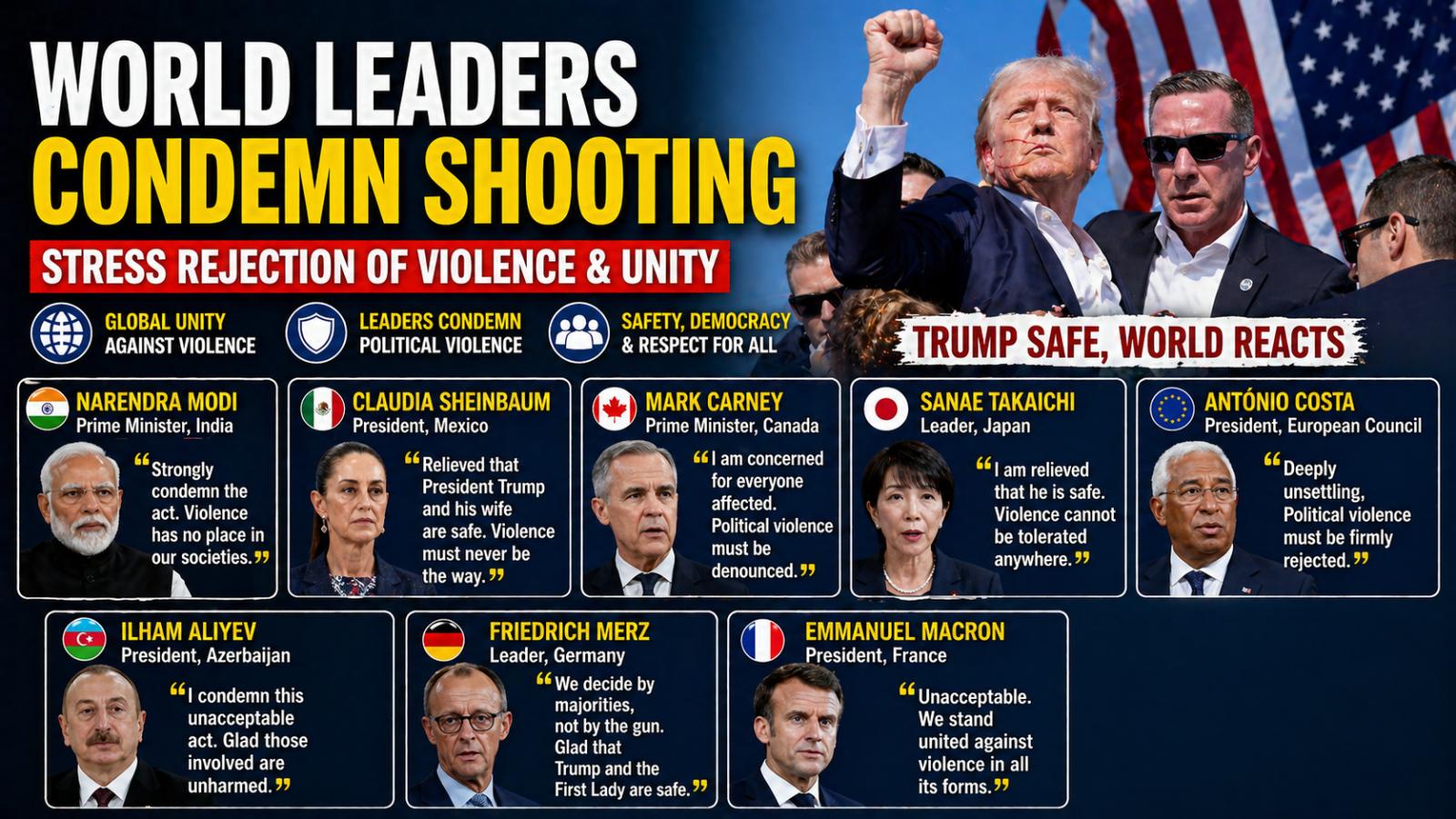
Global leaders condemn shooting incident involving President Trump as a wave of international reactions underscored a shared rejection of political violence and relief that the former U.S. president and other attendees were unharmed. The incident prompted swift responses from leaders across continents, reflecting concern over rising threats to public figures and democratic processes. Narendra Modi Indian Prime Minister
World leaders denounce shooting targeting Trump, stress rejection of violence
Global leaders condemn shooting incident involving President Trump as a wave of international reactions underscored a shared rejection of political violence and relief that the former U.S. president and other attendees were unharmed. The incident prompted swift responses from leaders across continents, reflecting concern over rising threats to public figures and democratic processes. Narendra Modi Indian Prime Minister
Narendra Modi Reacts to Washington DC Incident: Trump, Melania, JD Vance Safe
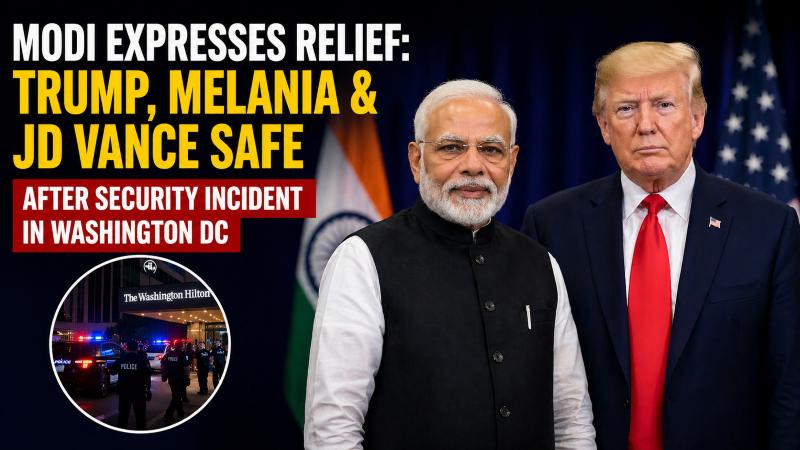
Prime Minister Narendra Modi expressed relief that Donald Trump, Melania Trump, and
Narendra Modi Reacts to Washington DC Incident: Trump, Melania, JD Vance Safe
Prime Minister Narendra Modi expressed relief that Donald Trump, Melania Trump, and
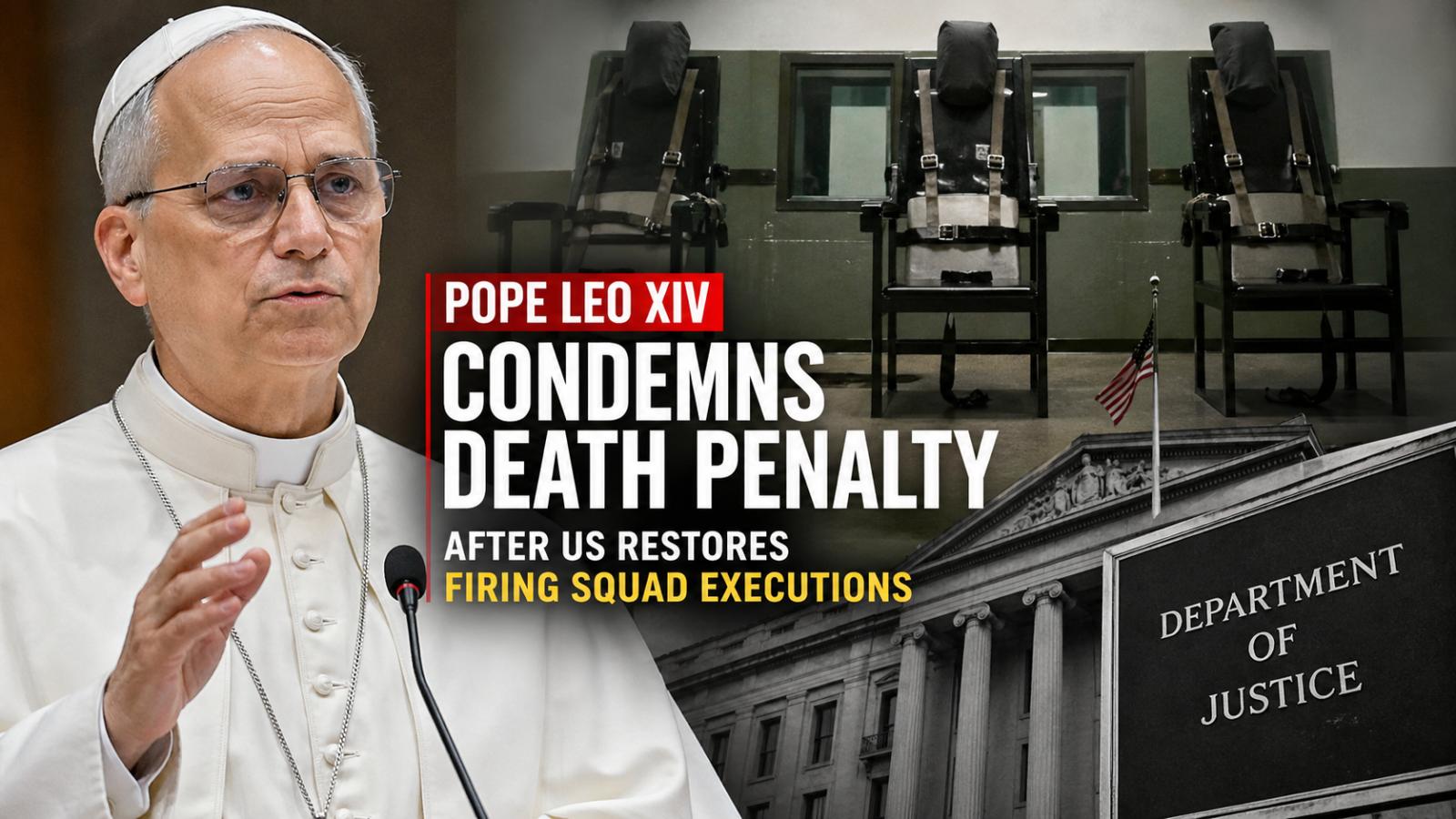
Pope Leo XIV condemns death penalty as US restores firing squad executions
Hours after the US Justice Department announced the lifting of the federal moratorium on capital punishment and the reinstatement of firing squad executions, Pope Leo XIV issued a strongly worded message condemning the death penalty. Delivered through a video address to DePaul University in Chicago, the Pope’s remarks coincided with the 15th anniversary of Illinois abolishing capital punishment, underscoring the significance of the moment. In his message, Pope Leo XIV emphasized t
Pope Leo XIV condemns death penalty as US restores firing squad executions
Hours after the US Justice Department announced the lifting of the federal moratorium on capital punishment and the reinstatement of firing squad executions, Pope Leo XIV issued a strongly worded message condemning the death penalty. Delivered through a video address to DePaul University in Chicago, the Pope’s remarks coincided with the 15th anniversary of Illinois abolishing capital punishment, underscoring the significance of the moment. In his message, Pope Leo XIV emphasized t
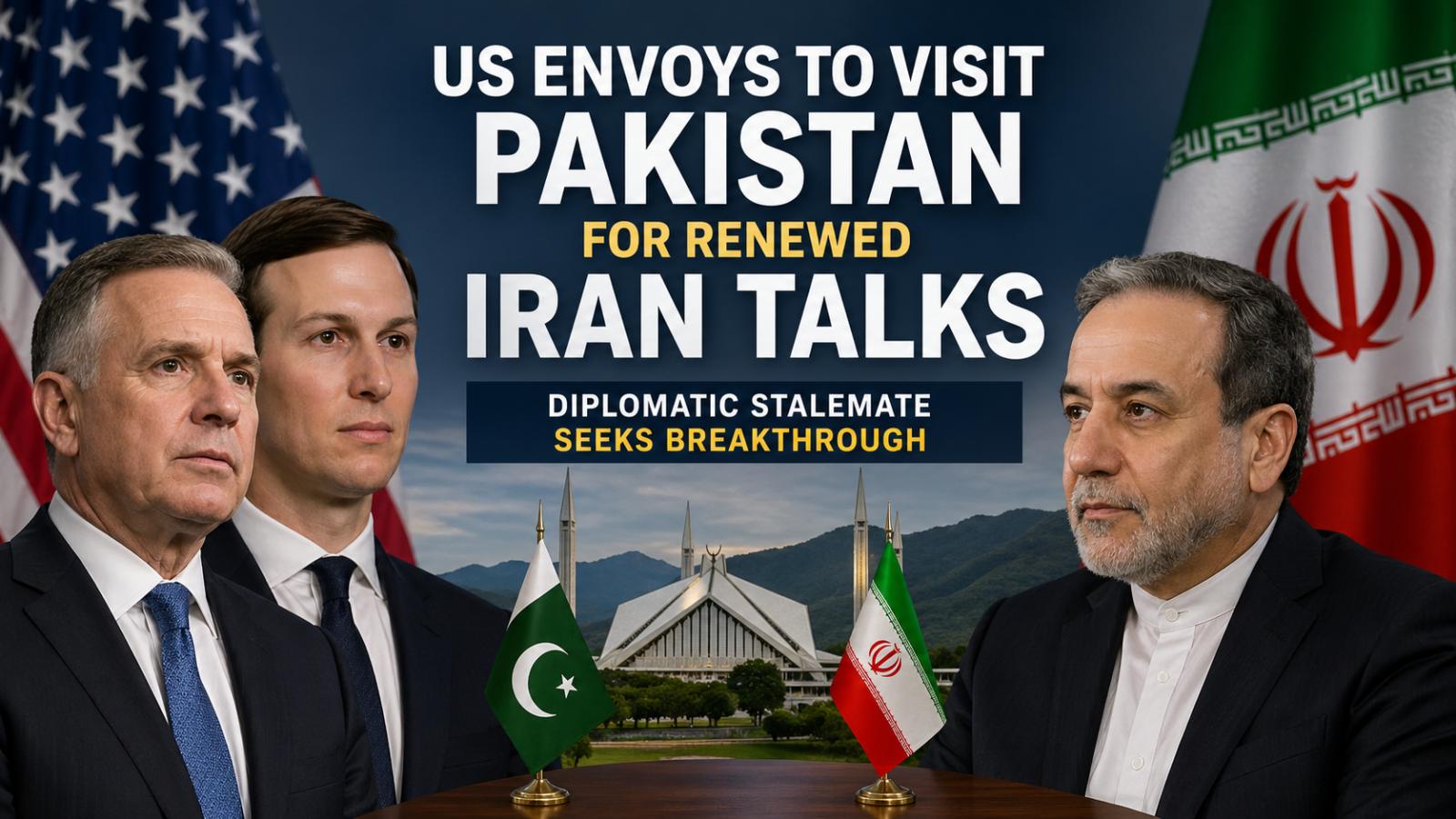
US envoys to visit Pakistan for renewed Iran talks amid ongoing tensions
After several days of diplomatic deadlock, the United States has confirmed that senior envoys Steve Witkoff and Jared Kushner will travel to Pakistan for a fresh round of negotiations with Iran, signaling a renewed effort to address escalating tensions between the two nations. The visit is scheduled for Saturday and follows Iran’s request for direct, in-person discussions. White House Press Secretary Karoline Leavitt stated that the move comes after Iran reached out for dialogue, aligning with earlier calls from US leadership to reopen communication channels. She emphasized that the envoys will assess the situation on the ground and report back to President Donald Trump and Vice President JD Vance, while additional officials remain on standby if required. The upcoming talks mark the second round of discussions in Pakistan, following initial meetings held earlier this month. However, notable figures such as Vice President Vance and Iranian parliamentary leader Mohammad Bagher Ghalibaf, who were involved previously, will not participate in this phase. Their absence highlights a shift in the structure of the negotiations. Iran’s Foreign Minister Abbas Araghchi recently announced a regional diplomatic tour that includes Pakistan, Oman, and Russia. His stated objective is to strengthen coordination with key partners on bilateral and regional issues, underlining Iran’s strategic engagement with neighboring countries during a period of heightened geopolitical tension. What are the main sticking points in the talks? The primary disagreements revolve around Iran’s nuclear program and control over the Strait of Hormuz. Iran has insisted it will not proceed with negotiations unless the United States lifts its blockade in the strategic waterway. In contrast, the US is demanding verifiable guarantees that Iran will halt its nuclear ambitions and ease its own restrictions in the region. At a recent Pentagon briefing, US Defense Secretary Pete Hegseth reiterated that the United States is not under pressure to finalize an agreement quickly. He indicated that Washington is prepared for prolonged negotiations, while also stressing that Iran has an opportunity to secure a favorable and pragmatic deal if it chooses to engage constructively. The renewed diplomatic effort in Pakistan reflects a cautious but significant step toward resolving one of the most critical international disputes, with both sides maintaining firm positions as negotiations resume.
US envoys to visit Pakistan for renewed Iran talks amid ongoing tensions
After several days of diplomatic deadlock, the United States has confirmed that senior envoys Steve Witkoff and Jared Kushner will travel to Pakistan for a fresh round of negotiations with Iran, signaling a renewed effort to address escalating tensions between the two nations. The visit is scheduled for Saturday and follows Iran’s request for direct, in-person discussions. White House Press Secretary Karoline Leavitt stated that the move comes after Iran reached out for dialogue, aligning with earlier calls from US leadership to reopen communication channels. She emphasized that the envoys will assess the situation on the ground and report back to President Donald Trump and Vice President JD Vance, while additional officials remain on standby if required. The upcoming talks mark the second round of discussions in Pakistan, following initial meetings held earlier this month. However, notable figures such as Vice President Vance and Iranian parliamentary leader Mohammad Bagher Ghalibaf, who were involved previously, will not participate in this phase. Their absence highlights a shift in the structure of the negotiations. Iran’s Foreign Minister Abbas Araghchi recently announced a regional diplomatic tour that includes Pakistan, Oman, and Russia. His stated objective is to strengthen coordination with key partners on bilateral and regional issues, underlining Iran’s strategic engagement with neighboring countries during a period of heightened geopolitical tension. What are the main sticking points in the talks? The primary disagreements revolve around Iran’s nuclear program and control over the Strait of Hormuz. Iran has insisted it will not proceed with negotiations unless the United States lifts its blockade in the strategic waterway. In contrast, the US is demanding verifiable guarantees that Iran will halt its nuclear ambitions and ease its own restrictions in the region. At a recent Pentagon briefing, US Defense Secretary Pete Hegseth reiterated that the United States is not under pressure to finalize an agreement quickly. He indicated that Washington is prepared for prolonged negotiations, while also stressing that Iran has an opportunity to secure a favorable and pragmatic deal if it chooses to engage constructively. The renewed diplomatic effort in Pakistan reflects a cautious but significant step toward resolving one of the most critical international disputes, with both sides maintaining firm positions as negotiations resume.
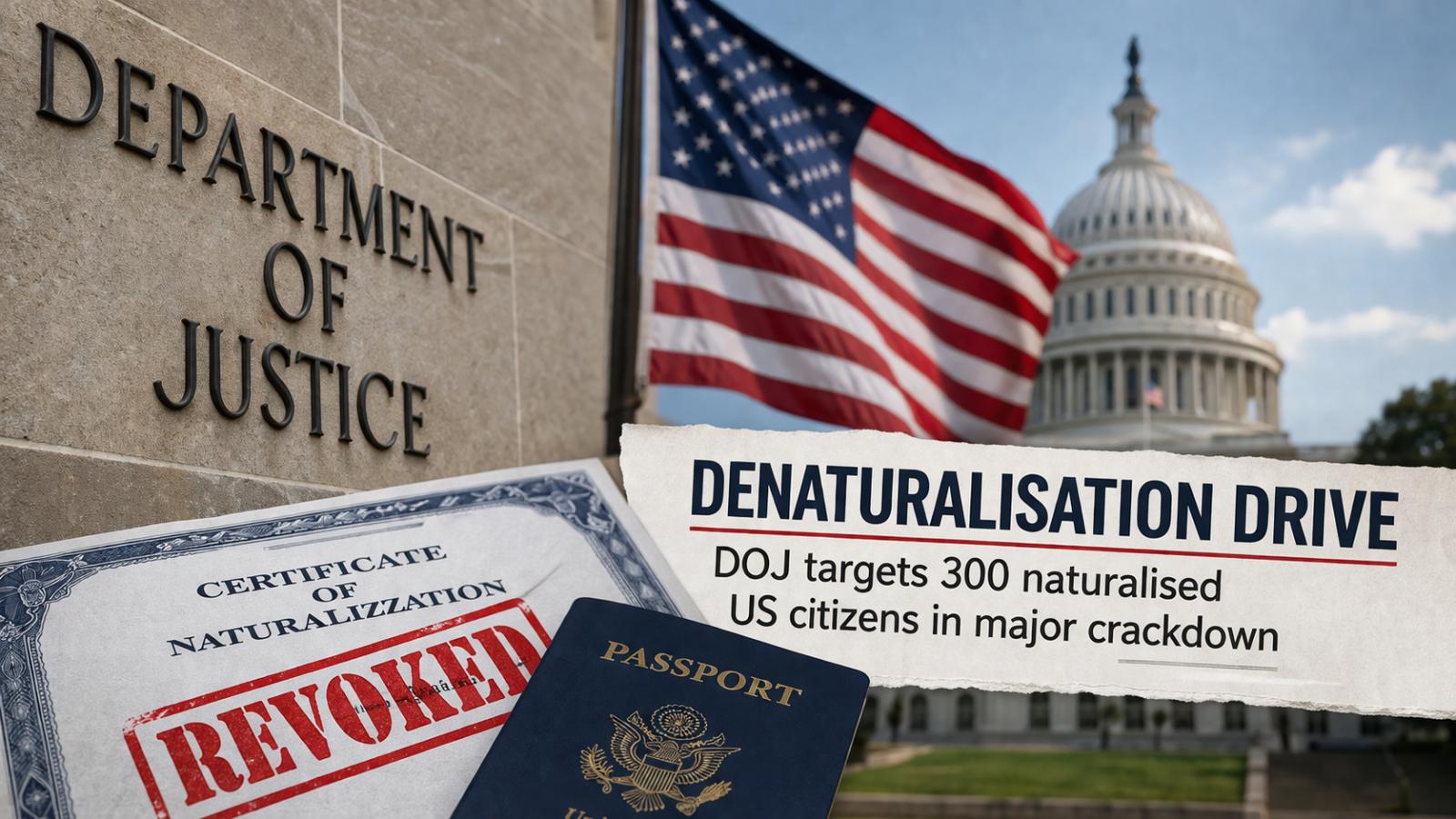
Trump administration accelerates denaturalisation cases across the US
The United States Justice Department is currently pursuing at least 300 foreign-born American citizens as part of an intensified denaturalisation effort, marking what officials describe as the largest such initiative in the country’s history. The legal process, which allows authorities to revoke citizenship obtained through fraud or concealment, has traditionally been used sparingly but is now being applied on an unprecedented scale. A senior offi
Trump administration accelerates denaturalisation cases across the US
The United States Justice Department is currently pursuing at least 300 foreign-born American citizens as part of an intensified denaturalisation effort, marking what officials describe as the largest such initiative in the country’s history. The legal process, which allows authorities to revoke citizenship obtained through fraud or concealment, has traditionally been used sparingly but is now being applied on an unprecedented scale. A senior offi
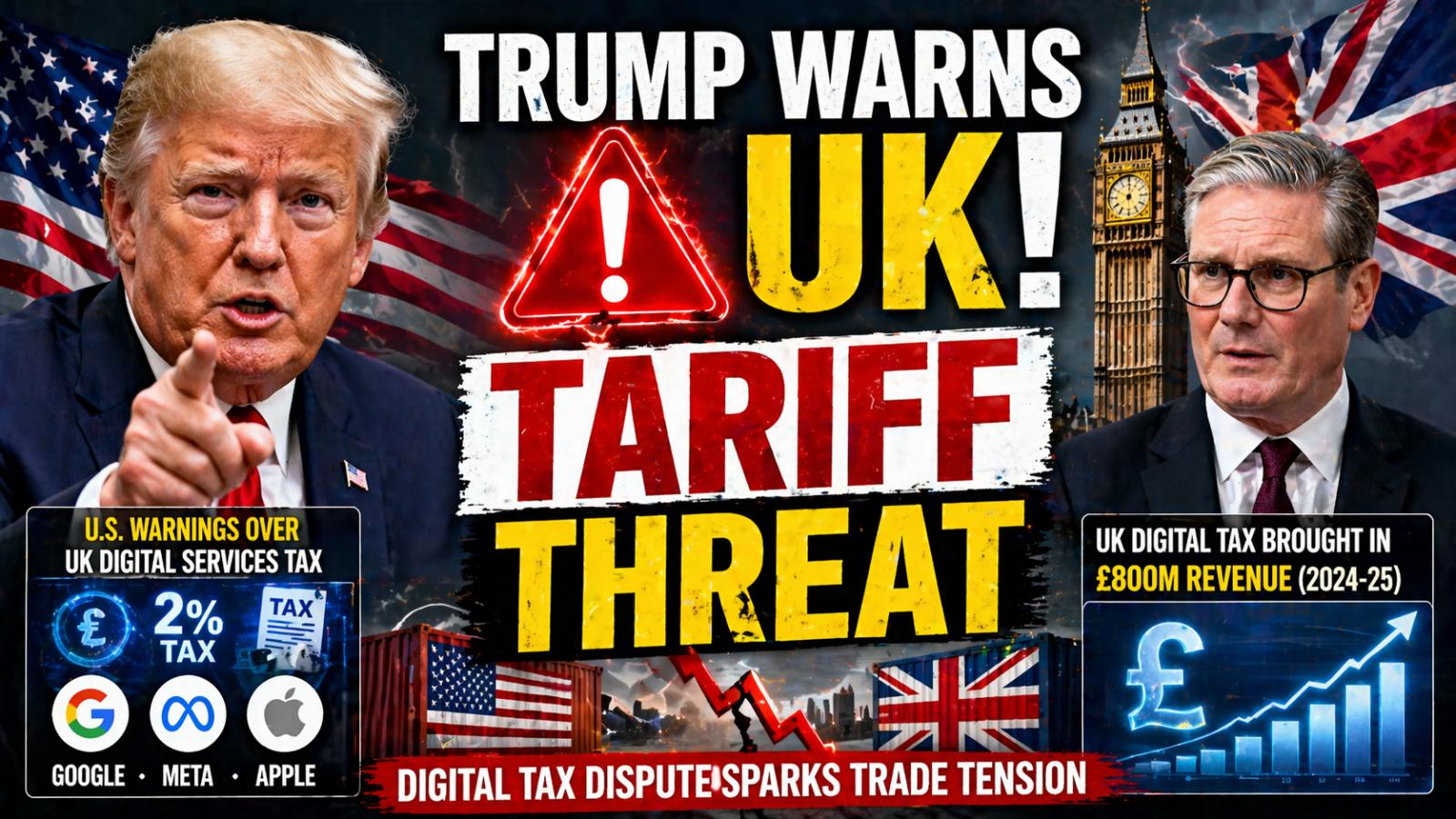
Why did Donald Trump warn the U.K. about tariffs? He cites digital tax concerns
Why did Donald Trump warn the U.K. about tariffs? He cites digital tax concerns — U.S. President Donald Trump issued a strong warning to the United Kingdom, signaling potential tariffs if Britain does not eliminate its digital services tax targeting major American technology firms. Speaking from the Oval Office on Thursday, Trump criticized the policy as an unfair attempt to profit from U.S. companies operating abroad. The digital services tax, introduced by the
Why did Donald Trump warn the U.K. about tariffs? He cites digital tax concerns
Why did Donald Trump warn the U.K. about tariffs? He cites digital tax concerns — U.S. President Donald Trump issued a strong warning to the United Kingdom, signaling potential tariffs if Britain does not eliminate its digital services tax targeting major American technology firms. Speaking from the Oval Office on Thursday, Trump criticized the policy as an unfair attempt to profit from U.S. companies operating abroad. The digital services tax, introduced by the
Netanyahu accuses Hezbollah of sabotaging Israel-Lebanon peace efforts
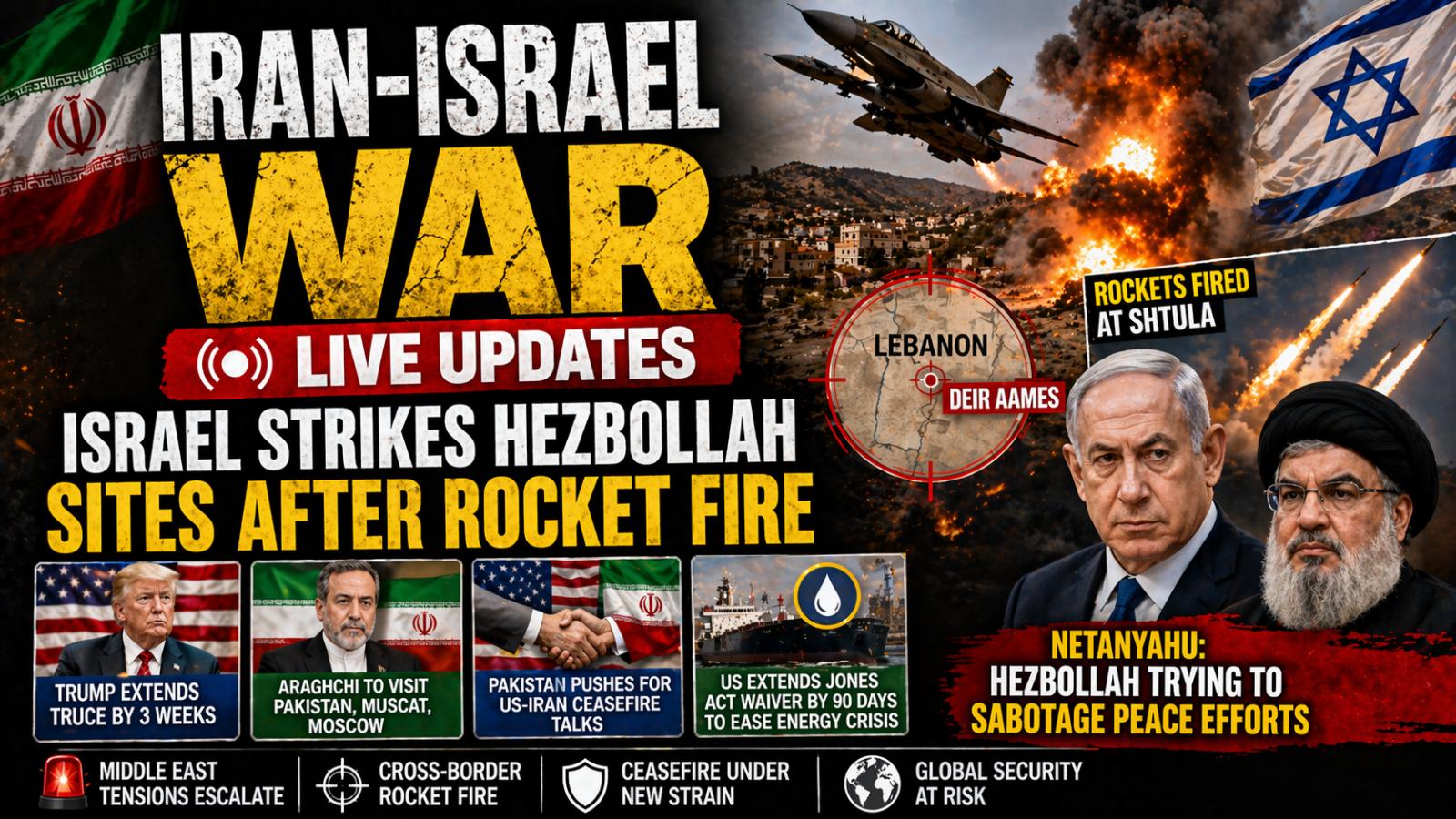
Israel strikes Hezbollah targets after rocket fire from Lebanon as tensions persist despite a truce extension, while diplomatic efforts and US energy measures reflect widening regional impact. Iran-Israel war live updates: Israel strikes Hezbollah sites after rocket fire as regional tensions escalated on Friday, April 24, 2026, with the Israeli military confirming strikes on Hezbollah-linked locations in southern Lebanon following cross-border rocket launches. The Israeli military stated that it targeted sites near the town of Deir Aames after rockets were fired toward the Israeli town of Shtula a day earlier. Deir Aames lies outside the designated border buffer zone that Israeli forces have continued to occupy even after a 10-day ceasefire agreement implemented the previous week. Earlier on Friday, April 24, 2026, the military issued evacuation warnings urging residents to leave the area before the strikes. The renewed hostilities come despite diplomatic efforts to maintain calm. U.S. President Donald Trump announced on Thursday, April 23, 2026, a three-week extension of the Israel-Hezbollah truce. However, both sides have continued intermittent exchanges of fire, raising concerns about the durability of the ceasefire. Israeli Prime Minister Benjamin Netanyahu accused Hezbollah of undermining peace efforts, stating on Friday, April 24, 2026, that the group was attempting to “sabotage” negotiations aimed at reaching a long-term agreement between Israel and Lebanon. His remarks marked his first public comments following the truce extension. Meanwhile, diplomatic activity continued across the region. Iranian Foreign Minister Abbas Araghchi said his upcoming visits to Islamabad, Muscat, and Moscow are intended to coordinate with regional partners and discuss evolving developments. While he did not directly address potential talks with the United States, officials in Pakistan have recently intensified efforts to facilitate renewed ceasefire negotiations between Washington and Tehran. In Washington, the White House announced an extension of a waiver to the Jones Act by 90 days on Friday, April 24, 2026. The measure is designed to ease domestic energy supply pressures amid disruptions linked to the broader West Asia conflict. Officials said the extension would help maintain the flow of oil and natural gas within the United States by allowing greater flexibility in maritime transport. The combination of military actions, diplomatic outreach, and economic measures underscores the widening impact of the conflict, with regional instability continuing to influence global security and energy markets.
Netanyahu accuses Hezbollah of sabotaging Israel-Lebanon peace efforts
Israel strikes Hezbollah targets after rocket fire from Lebanon as tensions persist despite a truce extension, while diplomatic efforts and US energy measures reflect widening regional impact. Iran-Israel war live updates: Israel strikes Hezbollah sites after rocket fire as regional tensions escalated on Friday, April 24, 2026, with the Israeli military confirming strikes on Hezbollah-linked locations in southern Lebanon following cross-border rocket launches. The Israeli military stated that it targeted sites near the town of Deir Aames after rockets were fired toward the Israeli town of Shtula a day earlier. Deir Aames lies outside the designated border buffer zone that Israeli forces have continued to occupy even after a 10-day ceasefire agreement implemented the previous week. Earlier on Friday, April 24, 2026, the military issued evacuation warnings urging residents to leave the area before the strikes. The renewed hostilities come despite diplomatic efforts to maintain calm. U.S. President Donald Trump announced on Thursday, April 23, 2026, a three-week extension of the Israel-Hezbollah truce. However, both sides have continued intermittent exchanges of fire, raising concerns about the durability of the ceasefire. Israeli Prime Minister Benjamin Netanyahu accused Hezbollah of undermining peace efforts, stating on Friday, April 24, 2026, that the group was attempting to “sabotage” negotiations aimed at reaching a long-term agreement between Israel and Lebanon. His remarks marked his first public comments following the truce extension. Meanwhile, diplomatic activity continued across the region. Iranian Foreign Minister Abbas Araghchi said his upcoming visits to Islamabad, Muscat, and Moscow are intended to coordinate with regional partners and discuss evolving developments. While he did not directly address potential talks with the United States, officials in Pakistan have recently intensified efforts to facilitate renewed ceasefire negotiations between Washington and Tehran. In Washington, the White House announced an extension of a waiver to the Jones Act by 90 days on Friday, April 24, 2026. The measure is designed to ease domestic energy supply pressures amid disruptions linked to the broader West Asia conflict. Officials said the extension would help maintain the flow of oil and natural gas within the United States by allowing greater flexibility in maritime transport. The combination of military actions, diplomatic outreach, and economic measures underscores the widening impact of the conflict, with regional instability continuing to influence global security and energy markets.
Why did Ali Shirazi demand an apology from Donald Trump? Iran seeks accountability after Khamenei killing
Escalating diplomatic tensions after Tehran strike Why did Ali Shirazi demand an apology from Donald Trump? Iran seeks accountability after Khamenei killing, as senior Iranian cleric Ali Shirazi called on U.S. President Donald Trump to publicly acknowledge wrongdoing following t
Why did Ali Shirazi demand an apology from Donald Trump? Iran seeks accountability after Khamenei killing
Escalating diplomatic tensions after Tehran strike Why did Ali Shirazi demand an apology from Donald Trump? Iran seeks accountability after Khamenei killing, as senior Iranian cleric Ali Shirazi called on U.S. President Donald Trump to publicly acknowledge wrongdoing following t
Khamenei Praises National Cohesion Amid Rising US-Iran Tensions
Mojtaba Khamenei has emphasized national unity in Iran, stating that collective cohesion among citizens has strengthened the country’s position amid ongoing tensions with the United States. In a public message, he described unity as a decisive factor in countering external pressure, urging continued commitment to national solidarity. Khamenei’s remarks come as
Khamenei Praises National Cohesion Amid Rising US-Iran Tensions
Mojtaba Khamenei has emphasized national unity in Iran, stating that collective cohesion among citizens has strengthened the country’s position amid ongoing tensions with the United States. In a public message, he described unity as a decisive factor in countering external pressure, urging continued commitment to national solidarity. Khamenei’s remarks come as
US President Says No Plans for Nuclear Strike on Iran
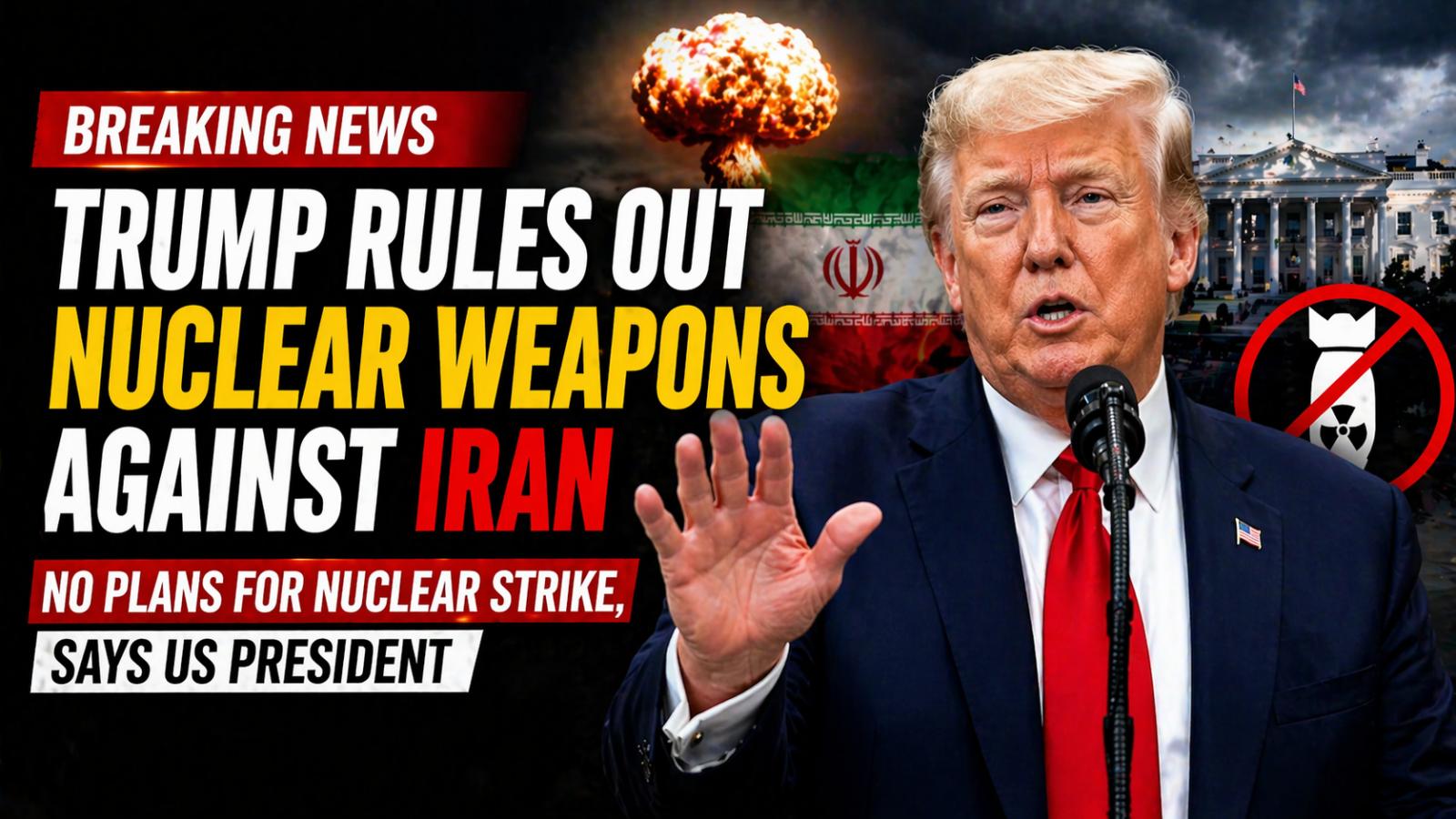
Donald Trump stated that the United States currently has no intention of using nuclear weapons against Iran, offering clarity on a key concern amid ongoing geopolitical tensions. Speaking to reporters at the White House, Trump emphasized that conventional military actions had already achieved significant results without the need for nuclear escalation. Addressing recent speculation, Trump said there was no justification for deploying nuclear weapons, noting that existing strategies had been effective. His remarks come after earlier statements that had drawn international attention, where strong rhetoric raised concerns about the potential use of extreme measures during the conflict that began earlier this year. The president reiterated that nuclear weapons should not be used by any nation, signaling a shift toward a more restrained public stance. At the same time, he underscored the administration’s objective of preventing Iran from developing nuclear capabilities that could pose a threat to regional and global security. Comments from senior officials have also contributed to the broader discussion. JD Vance had previously indicated that the United States was prepared to escalate its response if necessary, though the White House clarified that such remarks did not imply nuclear action. Trump’s latest statement appears to balance deterrence with reassurance, highlighting a focus on maintaining pressure through conventional means while avoiding the risks associated with nuclear engagement. As tensions persist, the administration continues to stress its commitment to preventing further escalation while safeguarding national interests and stability in the region.
US President Says No Plans for Nuclear Strike on Iran
Donald Trump stated that the United States currently has no intention of using nuclear weapons against Iran, offering clarity on a key concern amid ongoing geopolitical tensions. Speaking to reporters at the White House, Trump emphasized that conventional military actions had already achieved significant results without the need for nuclear escalation. Addressing recent speculation, Trump said there was no justification for deploying nuclear weapons, noting that existing strategies had been effective. His remarks come after earlier statements that had drawn international attention, where strong rhetoric raised concerns about the potential use of extreme measures during the conflict that began earlier this year. The president reiterated that nuclear weapons should not be used by any nation, signaling a shift toward a more restrained public stance. At the same time, he underscored the administration’s objective of preventing Iran from developing nuclear capabilities that could pose a threat to regional and global security. Comments from senior officials have also contributed to the broader discussion. JD Vance had previously indicated that the United States was prepared to escalate its response if necessary, though the White House clarified that such remarks did not imply nuclear action. Trump’s latest statement appears to balance deterrence with reassurance, highlighting a focus on maintaining pressure through conventional means while avoiding the risks associated with nuclear engagement. As tensions persist, the administration continues to stress its commitment to preventing further escalation while safeguarding national interests and stability in the region.
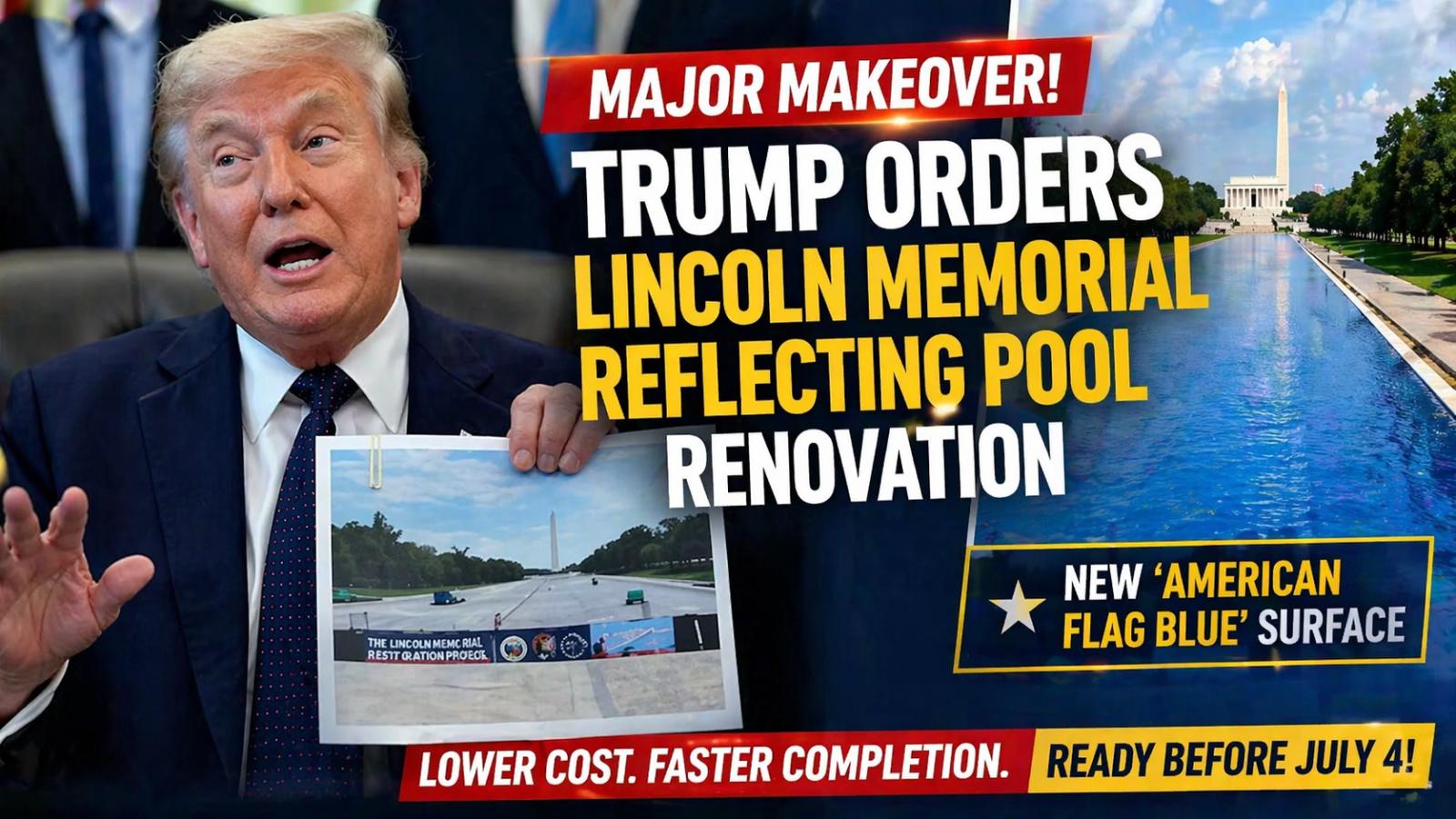
Lincoln Memorial Reflecting Pool to Get New “American Flag Blue” Surface
In a new infrastructure decision, Donald Trump has announced plans to renovate the Lincoln Memorial Reflecting Pool by applying a specialized coating designed to resemble a swimming pool surface in what he described as “American flag blue.” The project aims to address long-standing concerns about leaka
Lincoln Memorial Reflecting Pool to Get New “American Flag Blue” Surface
In a new infrastructure decision, Donald Trump has announced plans to renovate the Lincoln Memorial Reflecting Pool by applying a specialized coating designed to resemble a swimming pool surface in what he described as “American flag blue.” The project aims to address long-standing concerns about leaka
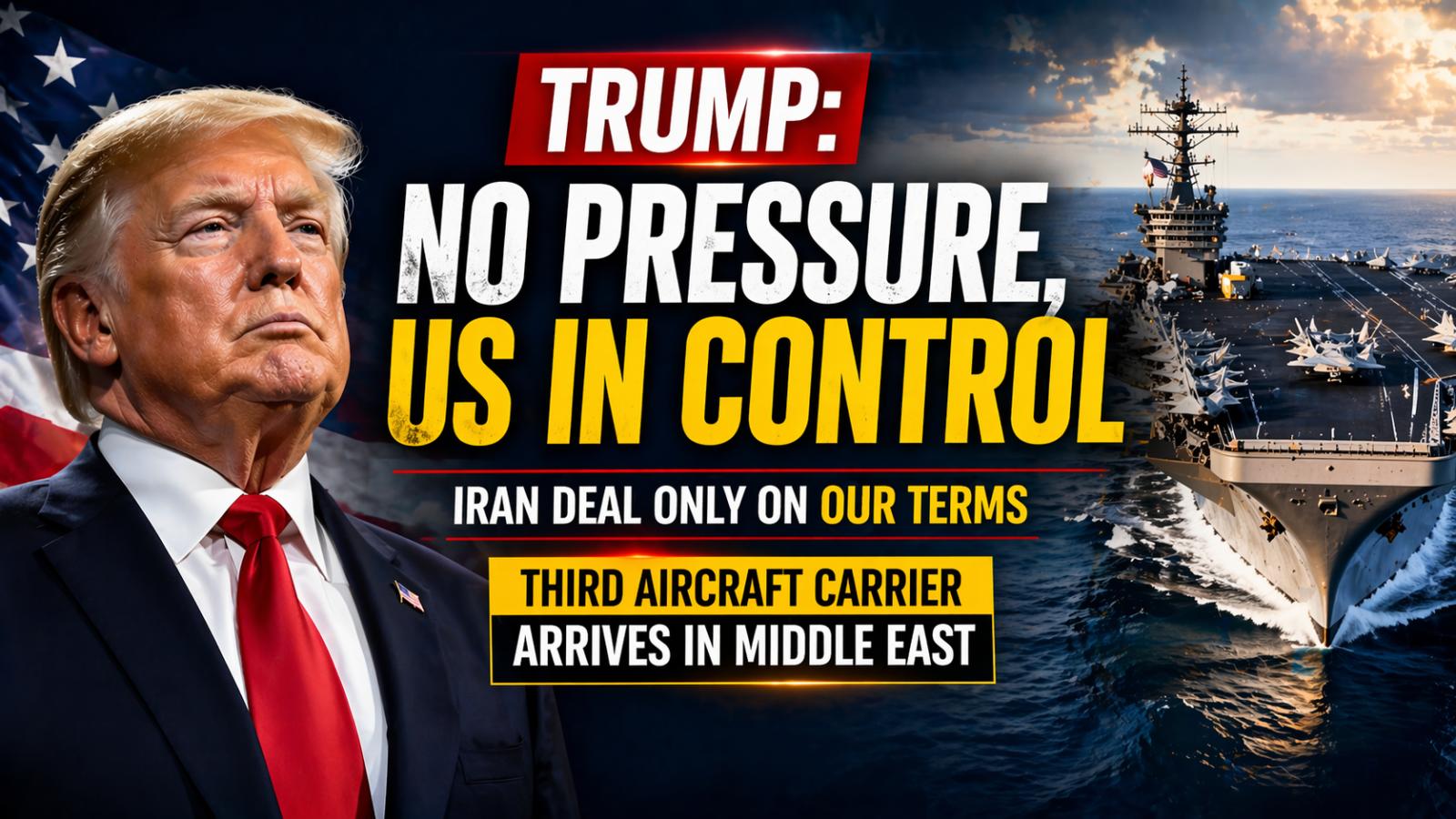
US Deploys Third Aircraft Carrier as Trump Signals No Urgency for Iran Deal
US President Donald Trump has dismissed speculation that Washington is under pressure to secure a deal with Iran, stating that the United States is in no rush to negotiate amid ongoing tensions. In a recent statement, Trump emphasized that while the US has the flexibility to wait, Iran faces increasing urgency as conditions evolve. He asserted that recent developments have significantly weakened Iran’s military capabilities, pointing to setbacks across its naval and air forces as well as the degradation of its defense systems. Trump also highlighted what he described as a tightening blockade, suggesting that the strategic balance currently favors the United States and its allies. He reiterated that any agreement would only move forward if it aligns with American interests and broader global stability, rejecting claims that his administration is eager to conclude talks quickly. At the same time, the US military has reinforced its presence in the region. United States Central Command confirmed the arrival of a third aircraft carrier, the USS George H.W. Bush, into its operational zone. The carrier is currently positioned in the Indian Ocean, joining the USS Abraham Lincoln in the Arabian Sea and the USS Gerald R. Ford in the Red Sea. The deployment marks a notable expansion of US naval strength in the Middle East during a fragile ceasefire period. The USS George H.W. Bush followed an unusual route, traveling around the Horn of Africa before entering the region, underscoring the strategic importance of its positioning. These developments reflect a continued emphasis on military readiness while diplomatic uncertainty persists, with Washington signaling that timing and terms of any agreement will remain firmly under its control.
US Deploys Third Aircraft Carrier as Trump Signals No Urgency for Iran Deal
US President Donald Trump has dismissed speculation that Washington is under pressure to secure a deal with Iran, stating that the United States is in no rush to negotiate amid ongoing tensions. In a recent statement, Trump emphasized that while the US has the flexibility to wait, Iran faces increasing urgency as conditions evolve. He asserted that recent developments have significantly weakened Iran’s military capabilities, pointing to setbacks across its naval and air forces as well as the degradation of its defense systems. Trump also highlighted what he described as a tightening blockade, suggesting that the strategic balance currently favors the United States and its allies. He reiterated that any agreement would only move forward if it aligns with American interests and broader global stability, rejecting claims that his administration is eager to conclude talks quickly. At the same time, the US military has reinforced its presence in the region. United States Central Command confirmed the arrival of a third aircraft carrier, the USS George H.W. Bush, into its operational zone. The carrier is currently positioned in the Indian Ocean, joining the USS Abraham Lincoln in the Arabian Sea and the USS Gerald R. Ford in the Red Sea. The deployment marks a notable expansion of US naval strength in the Middle East during a fragile ceasefire period. The USS George H.W. Bush followed an unusual route, traveling around the Horn of Africa before entering the region, underscoring the strategic importance of its positioning. These developments reflect a continued emphasis on military readiness while diplomatic uncertainty persists, with Washington signaling that timing and terms of any agreement will remain firmly under its control.
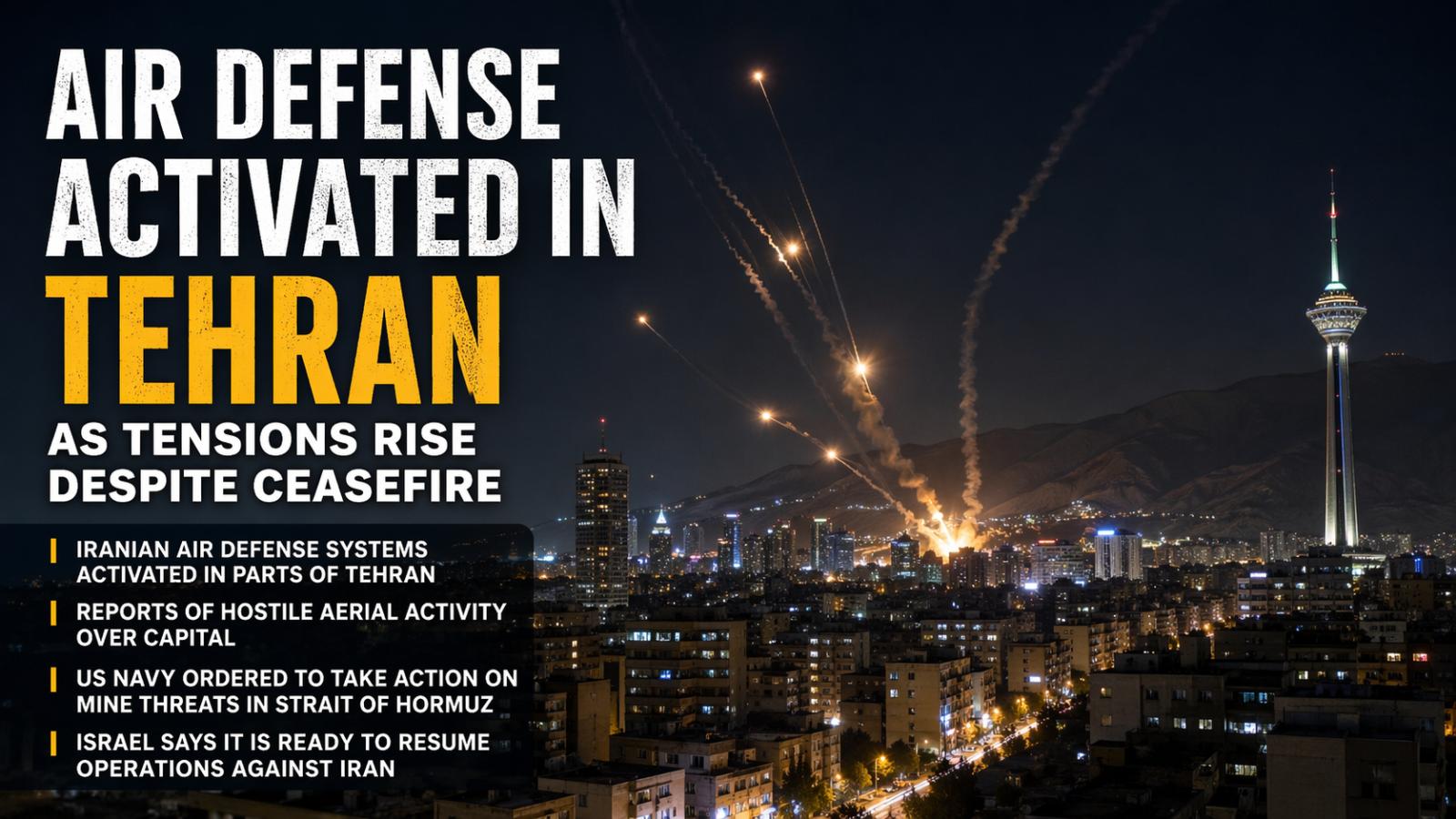
Air defense activated in Tehran as tensions rise despite ceasefire
Air defense systems light up Tehran’s night sky as tensions escalate despite a ceasefire, with U.S. naval warnings and Israel signaling readiness for possible renewed conflict. Air defense activated in Tehran as tensions rise despite ceasefire as Iran’s capital experienced renewed military alert activity on Thursday, April 23, 2026, according to state media reports, marking the first such incident since a ceasefire was announced in the region. The developments
Air defense activated in Tehran as tensions rise despite ceasefire
Air defense systems light up Tehran’s night sky as tensions escalate despite a ceasefire, with U.S. naval warnings and Israel signaling readiness for possible renewed conflict. Air defense activated in Tehran as tensions rise despite ceasefire as Iran’s capital experienced renewed military alert activity on Thursday, April 23, 2026, according to state media reports, marking the first such incident since a ceasefire was announced in the region. The developments
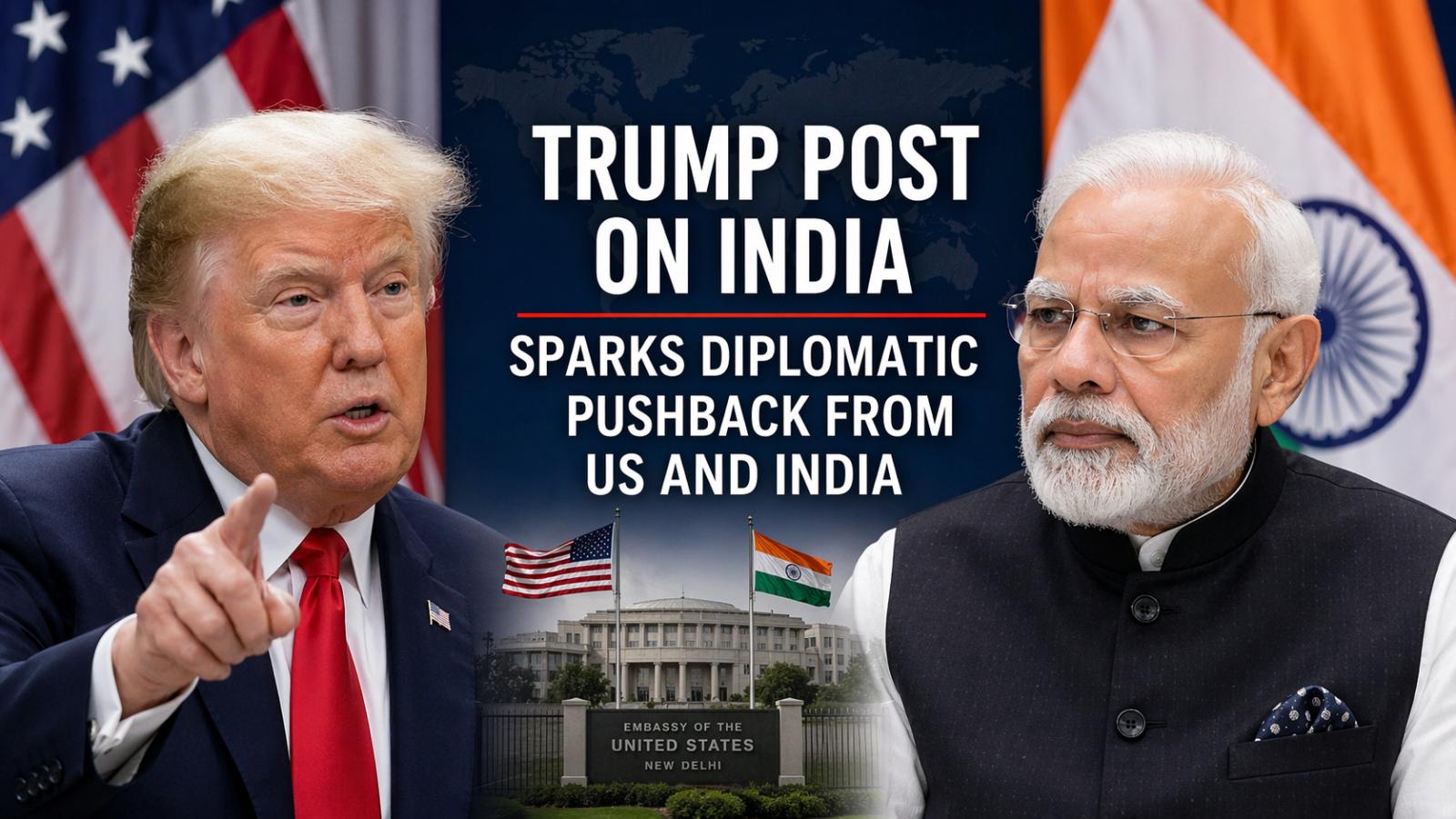
Trump post on India sparks diplomatic pushback from US and India
A controversial Trump post on India triggered diplomatic reactions from US and Indian officials, prompting efforts to reaffirm strong bilateral ties and address global political concerns. Trump post on India sparks diplomatic pushback from US and India — Hours after Donald Trump shared a social media post containing derogatory language about India, US officials moved sw
Trump post on India sparks diplomatic pushback from US and India
A controversial Trump post on India triggered diplomatic reactions from US and Indian officials, prompting efforts to reaffirm strong bilateral ties and address global political concerns. Trump post on India sparks diplomatic pushback from US and India — Hours after Donald Trump shared a social media post containing derogatory language about India, US officials moved sw