#earningsreport
Could Alphabet overtake Nvidia as the most valuable company? Yes, analysts say it may happen soon
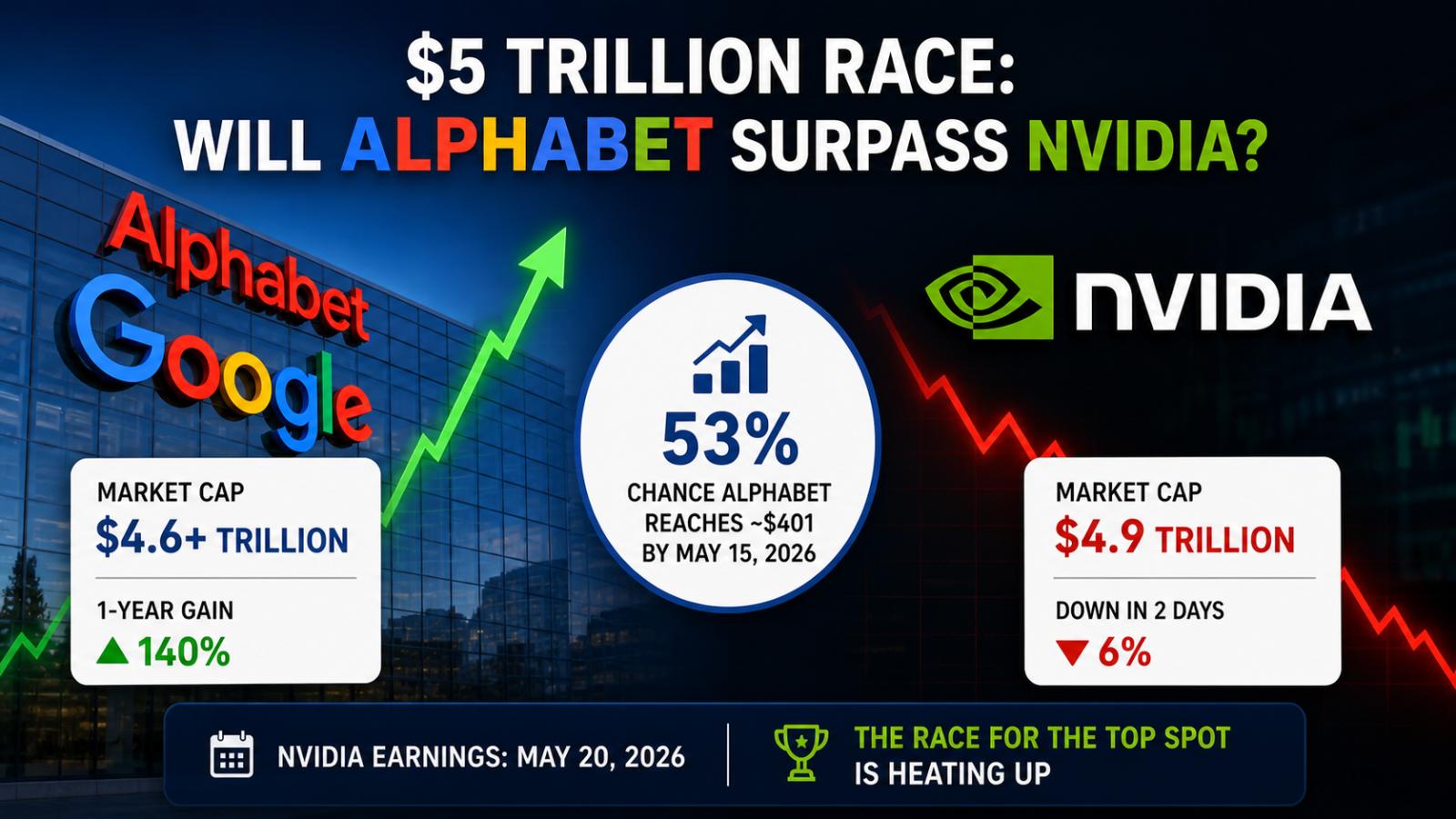
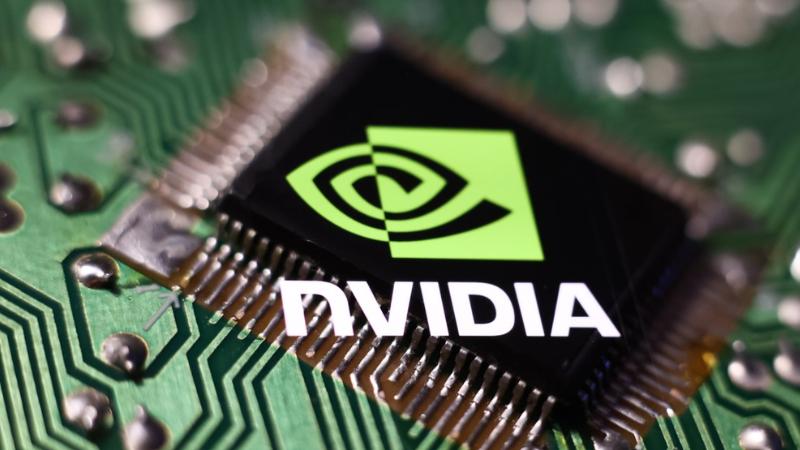
Shares of Alphabet are approaching a historic milestone, with the company nearing a $5 trillion valuation and potentially overtaking Nvidia as the world’s most valuable publicly traded firm. The surge comes after a strong rally in Alphabet’s stock, which climbed 10% on Thursday, extending its one-year gain to approximately 140% and pushing its market capitalization beyond $4.6 trillion. Strong earnings and cloud growth drive Alphabet’s surge The momentum follows a better-than-expected earnings report released on Wednesday, in which Alphabet exceeded analyst forecasts. A key highlight was its Google Cloud division, which generated more than $20 billion in revenue, reinforcing investor confidence in the company’s position within the artificial intelligence and cloud computing sectors. This performance has strengthened Alphabet’s standing among major AI-focused companies and boosted overall investor sentiment. Nvidia faces pressure amid partner concerns and stock decline Meanwhile, Nvidia, currently valued at under $4.9 trillion, has seen its stock decline by more than 6% over two trading sessions. The drop follows a report from The Wall Street Journal indicating that business partner OpenAI missed internal revenue and growth projections. The development has raised concerns about near-term demand and growth expectations in the AI ecosystem, impacting Nvidia’s market performance. Options market signals a potential shift in market leadership Options trading data suggests that Alphabet could soon close the valuation gap. For Alphabet to match Nvidia’s current market capitalization, its stock would need to rise by roughly 4%, reaching about $401 per share. Based on call option premiums around that level, traders estimate a 53% probability that Alphabet could reach that price before Thursday, May 15, 2026. Further projections indicate about a 30% chance that Alphabet will close above $400 on Friday, May 22, 2026, shortly after Nvidia’s upcoming earnings report scheduled for Tuesday, May 20, 2026. Notably, Nvidia’s stock has declined after four of its last five earnings announcements, adding uncertainty to its near-term outlook. Historical context as Alphabet eyes a return to the top Alphabet has previously held the top position among global companies, most recently in 2016 when it briefly surpassed Apple. A renewed rise to the top would mark a significant shift in market leadership, driven largely by advancements in artificial intelligence and cloud infrastructure. As both companies approach key earnings milestones, investors are closely watching whether Alphabet can capitalize on its momentum and reclaim the top spot in global market valuation. Alphabet has previously held the top position among global companies, most recently in 2016 when it briefly surpassed Apple. A renewed rise to the top would mark a significant shift in market leadership, driven largely by advancements in artificial intelligence and cloud infrastructure. As both companies approach key earnings milestones, investors are closely watching whether Alphabet can capitalize on its momentum and reclaim the top spot in global market valuation.
Could Alphabet overtake Nvidia as the most valuable company? Yes, analysts say it may happen soon
Shares of Alphabet are approaching a historic milestone, with the company nearing a $5 trillion valuation and potentially overtaking Nvidia as the world’s most valuable publicly traded firm. The surge comes after a strong rally in Alphabet’s stock, which climbed 10% on Thursday, extending its one-year gain to approximately 140% and pushing its market capitalization beyond $4.6 trillion. Strong earnings and cloud growth drive Alphabet’s surge The momentum follows a better-than-expected earnings report released on Wednesday, in which Alphabet exceeded analyst forecasts. A key highlight was its Google Cloud division, which generated more than $20 billion in revenue, reinforcing investor confidence in the company’s position within the artificial intelligence and cloud computing sectors. This performance has strengthened Alphabet’s standing among major AI-focused companies and boosted overall investor sentiment. Nvidia faces pressure amid partner concerns and stock decline Meanwhile, Nvidia, currently valued at under $4.9 trillion, has seen its stock decline by more than 6% over two trading sessions. The drop follows a report from The Wall Street Journal indicating that business partner OpenAI missed internal revenue and growth projections. The development has raised concerns about near-term demand and growth expectations in the AI ecosystem, impacting Nvidia’s market performance. Options market signals a potential shift in market leadership Options trading data suggests that Alphabet could soon close the valuation gap. For Alphabet to match Nvidia’s current market capitalization, its stock would need to rise by roughly 4%, reaching about $401 per share. Based on call option premiums around that level, traders estimate a 53% probability that Alphabet could reach that price before Thursday, May 15, 2026. Further projections indicate about a 30% chance that Alphabet will close above $400 on Friday, May 22, 2026, shortly after Nvidia’s upcoming earnings report scheduled for Tuesday, May 20, 2026. Notably, Nvidia’s stock has declined after four of its last five earnings announcements, adding uncertainty to its near-term outlook. Historical context as Alphabet eyes a return to the top Alphabet has previously held the top position among global companies, most recently in 2016 when it briefly surpassed Apple. A renewed rise to the top would mark a significant shift in market leadership, driven largely by advancements in artificial intelligence and cloud infrastructure. As both companies approach key earnings milestones, investors are closely watching whether Alphabet can capitalize on its momentum and reclaim the top spot in global market valuation. Alphabet has previously held the top position among global companies, most recently in 2016 when it briefly surpassed Apple. A renewed rise to the top would mark a significant shift in market leadership, driven largely by advancements in artificial intelligence and cloud infrastructure. As both companies approach key earnings milestones, investors are closely watching whether Alphabet can capitalize on its momentum and reclaim the top spot in global market valuation.
AI spending surge could top $1 trillion by 2027, analysts say
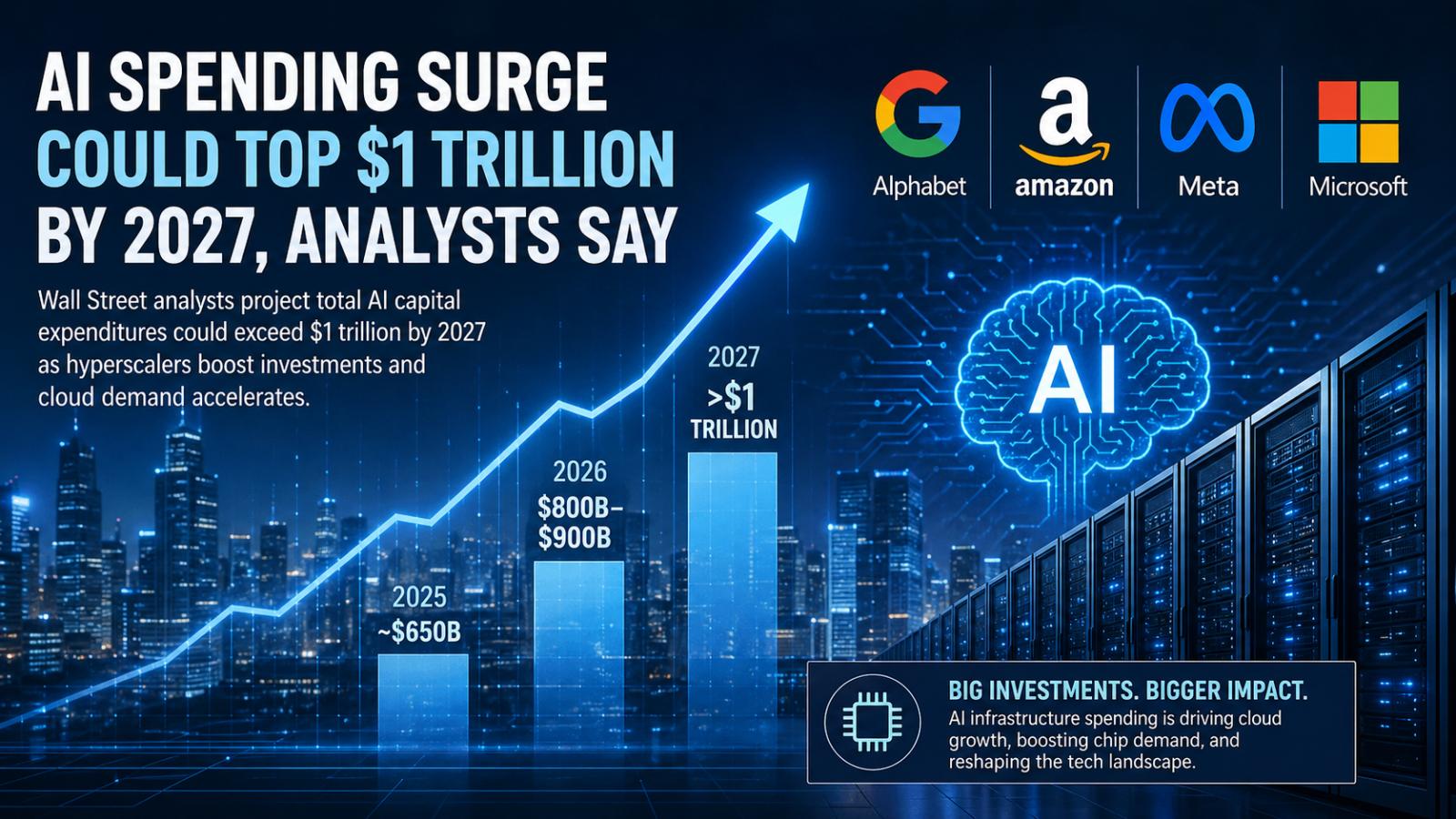
Wall Street analysts project AI spending could exceed $1 trillion by 2027 as major tech firms boost investments. Strong cloud demand and rising revenues support growth, though investor concerns remain over returns and rising infrastructure costs AI spending surge could top $1 trillion by 2027, analysts say is increasingly shaping expectations across the technology sector, as Wall Street analysts project unprecedented capital expenditures driven by artificial intelligence demand. Following recent tech earnings announcements on Wednesday, analysts at firms including Evercore and Bank of America estimate total AI-related capital spending could surpass $1 trillion by 2027, with 2026 projections already rising to between $800 billion and $900 billion. The surge reflects aggressive investment strategies by major technology companies, including Alphabet, Amazon, Meta, and Microsoft. According to analyst estimates, projected capital spending for 2026 includes approximately $200 billion from Amazon, $190 billion from Microsoft, $185 billion from Alphabet, and $135 billion from Meta, reflecting broad increases across the sector. Executives continue to signal confidence in long-term AI investments despite investor concerns about the scale of spending. Amazon CEO Andy Jassy emphasized the company’s commitment to infrastructure expansion, citing strong long-term returns. Similarly, Alphabet reported significant growth in its cloud segment, with revenue increasing sharply year over year, reinforcing expectations that AI-driven services are becoming a major revenue driver. Analysts note that while capital expenditures continue to rise, early signs of return on investment are emerging. Strong cloud demand, expanding contract backlogs, and increasing enterprise adoption of AI tools are contributing to revenue growth. Alphabet, in particular, has seen substantial backlog expansion tied to its cloud platform, with a large portion expected to convert into revenue over the next two years. However, not all companies are receiving equal investor confidence. Meta’s increased spending plans have raised concerns about near-term returns, particularly as its free cash flow has declined significantly compared to the previous year. CEO Mark Zuckerberg acknowledged higher infrastructure costs, including rising component prices, while maintaining confidence in the long-term value of AI investments. The rapid expansion of AI infrastructure is also benefiting semiconductor manufacturers and hardware suppliers. Companies such as Intel are seeing increased demand as AI workloads require a broader range of computing hardware beyond graphics processors. Analysts highlight growing demand for specialized chips and custom silicon solutions, suggesting that AI development could drive sustained growth across the semiconductor industry. Overall, analysts expect improving revenue and cash flow trends across the sector by 2026, supporting continued investment. While skepticism remains about the pace and scale of spending, the combination of strong demand, expanding cloud services, and technological advancements indicates that the AI-driven capital expenditure cycle is likely to continue shaping the global technology landscape.
AI spending surge could top $1 trillion by 2027, analysts say
Wall Street analysts project AI spending could exceed $1 trillion by 2027 as major tech firms boost investments. Strong cloud demand and rising revenues support growth, though investor concerns remain over returns and rising infrastructure costs AI spending surge could top $1 trillion by 2027, analysts say is increasingly shaping expectations across the technology sector, as Wall Street analysts project unprecedented capital expenditures driven by artificial intelligence demand. Following recent tech earnings announcements on Wednesday, analysts at firms including Evercore and Bank of America estimate total AI-related capital spending could surpass $1 trillion by 2027, with 2026 projections already rising to between $800 billion and $900 billion. The surge reflects aggressive investment strategies by major technology companies, including Alphabet, Amazon, Meta, and Microsoft. According to analyst estimates, projected capital spending for 2026 includes approximately $200 billion from Amazon, $190 billion from Microsoft, $185 billion from Alphabet, and $135 billion from Meta, reflecting broad increases across the sector. Executives continue to signal confidence in long-term AI investments despite investor concerns about the scale of spending. Amazon CEO Andy Jassy emphasized the company’s commitment to infrastructure expansion, citing strong long-term returns. Similarly, Alphabet reported significant growth in its cloud segment, with revenue increasing sharply year over year, reinforcing expectations that AI-driven services are becoming a major revenue driver. Analysts note that while capital expenditures continue to rise, early signs of return on investment are emerging. Strong cloud demand, expanding contract backlogs, and increasing enterprise adoption of AI tools are contributing to revenue growth. Alphabet, in particular, has seen substantial backlog expansion tied to its cloud platform, with a large portion expected to convert into revenue over the next two years. However, not all companies are receiving equal investor confidence. Meta’s increased spending plans have raised concerns about near-term returns, particularly as its free cash flow has declined significantly compared to the previous year. CEO Mark Zuckerberg acknowledged higher infrastructure costs, including rising component prices, while maintaining confidence in the long-term value of AI investments. The rapid expansion of AI infrastructure is also benefiting semiconductor manufacturers and hardware suppliers. Companies such as Intel are seeing increased demand as AI workloads require a broader range of computing hardware beyond graphics processors. Analysts highlight growing demand for specialized chips and custom silicon solutions, suggesting that AI development could drive sustained growth across the semiconductor industry. Overall, analysts expect improving revenue and cash flow trends across the sector by 2026, supporting continued investment. While skepticism remains about the pace and scale of spending, the combination of strong demand, expanding cloud services, and technological advancements indicates that the AI-driven capital expenditure cycle is likely to continue shaping the global technology landscape.
What do Apple options trades reveal? Mixed sentiment ahead of earnings
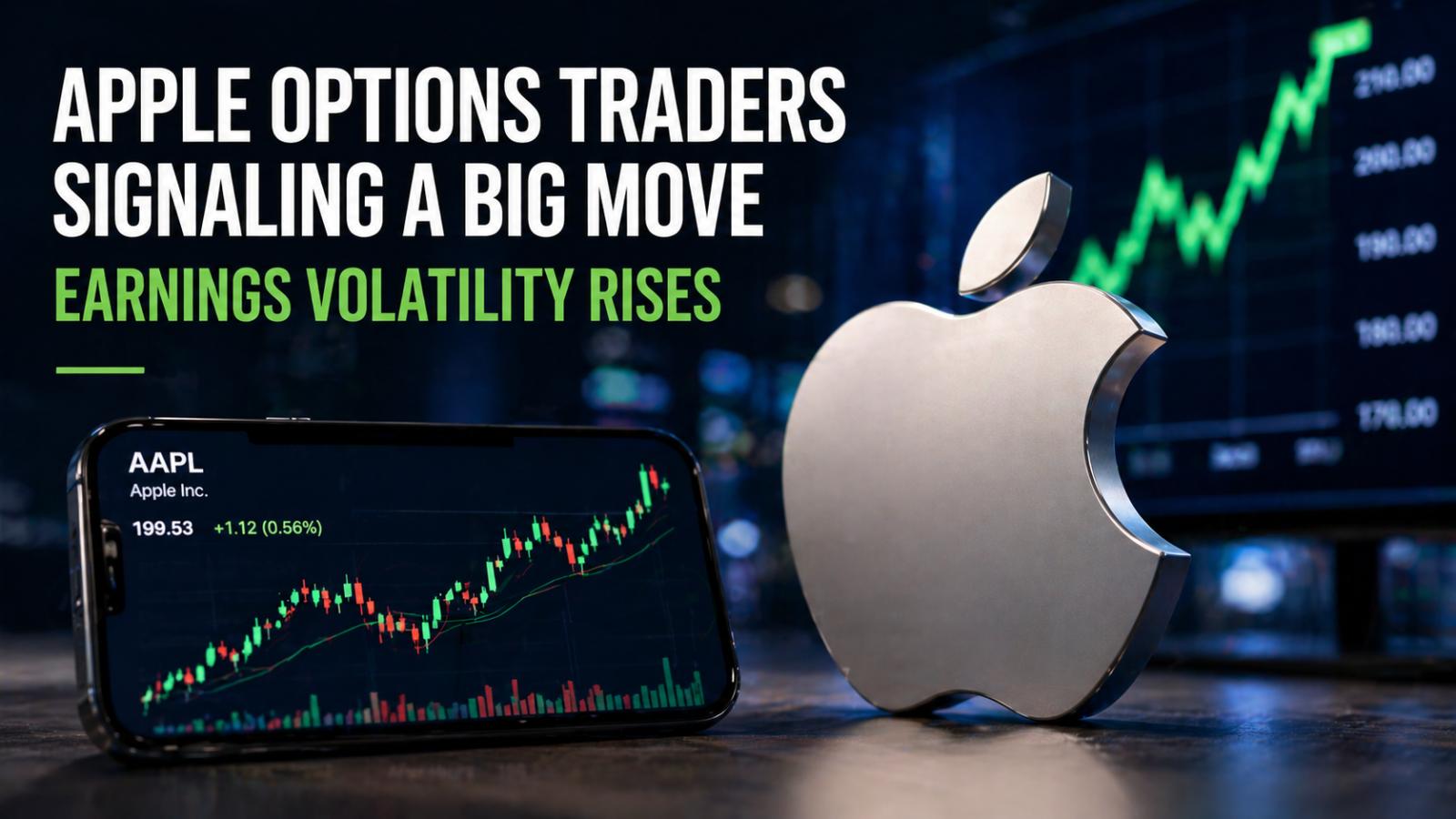
Apple’s stock may have remained largely flat over the past six months, but activity in the options market suggests traders are anticipating significant movement following its latest earnings report. Implied volatility points to a potential 3.5% swing in either direction, notably higher than the average 1.8% move seen after the company’s previous four quarterly earnings announcements. Options pricing reflects heightened expectations The increase in im
What do Apple options trades reveal? Mixed sentiment ahead of earnings
Apple’s stock may have remained largely flat over the past six months, but activity in the options market suggests traders are anticipating significant movement following its latest earnings report. Implied volatility points to a potential 3.5% swing in either direction, notably higher than the average 1.8% move seen after the company’s previous four quarterly earnings announcements. Options pricing reflects heightened expectations The increase in im
Why did Intel shares surge over 20%? AI demand and leadership changes drive rebound
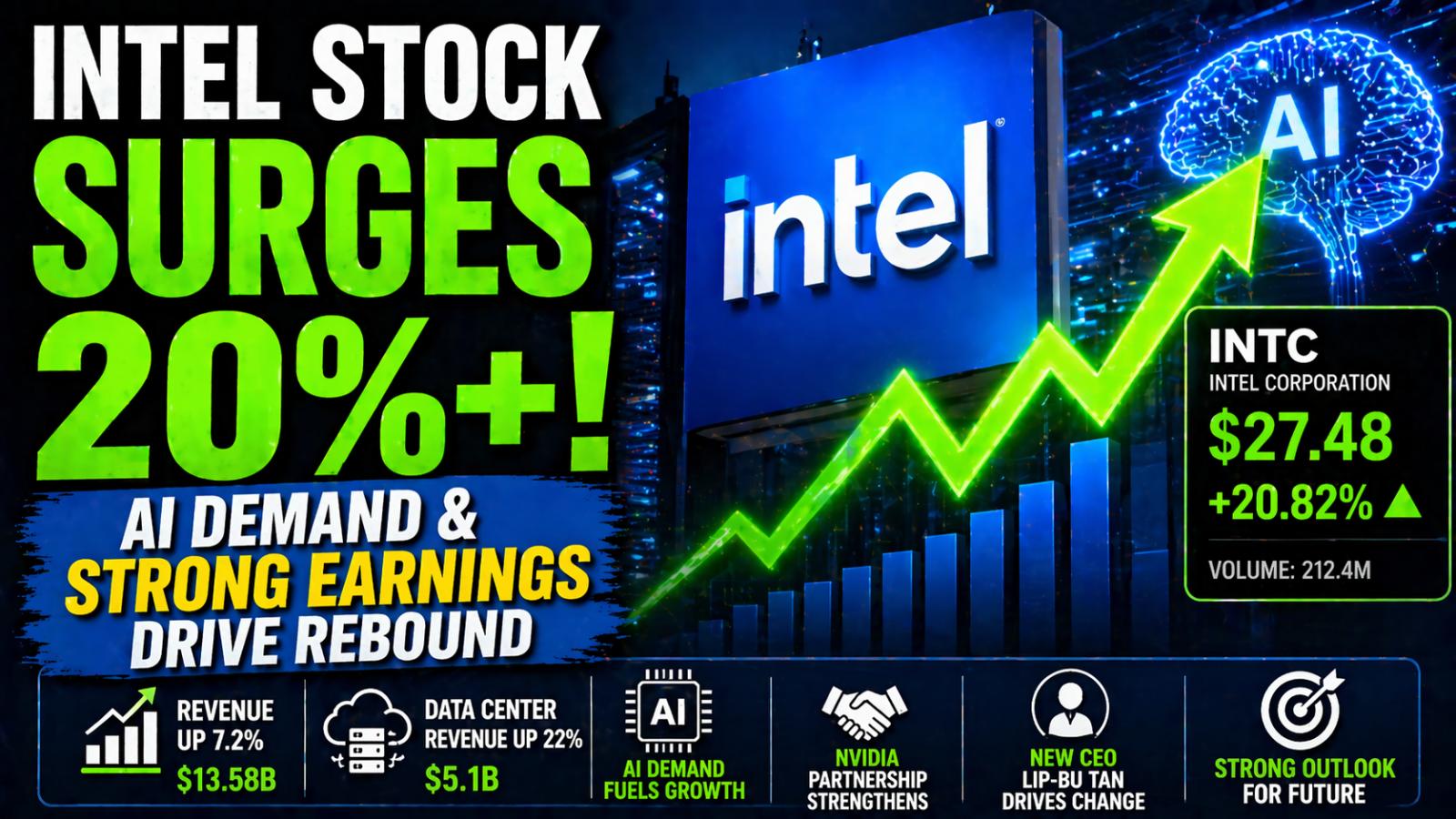
Strong market reaction to earnings and AI momentum Shares of Intel surged more than 20% during trading hours on Friday, reflecting renewed investor confidence driven by rising artificial intelligence demand and stronger-than-expected financial results. By early afternoon, the stock had climbed approximately 22%, putting it on track for its best single-day performance in d
Why did Intel shares surge over 20%? AI demand and leadership changes drive rebound
Strong market reaction to earnings and AI momentum Shares of Intel surged more than 20% during trading hours on Friday, reflecting renewed investor confidence driven by rising artificial intelligence demand and stronger-than-expected financial results. By early afternoon, the stock had climbed approximately 22%, putting it on track for its best single-day performance in d
Amazon shares slide 9% as heavy AI spending plan rattles investors
Amazon shares fell sharply on Friday, sliding more than 9% after the company outlined an aggressive capital spending plan that unsettled investors already wary about the sustainability of the artificial intelligence boom. The drop added to a broader technology selloff, as market participants questioned whether escalating investments in AI infrastructure could outpace future returns and create excess capacity across the sector. The e-commerce and cloud computing group disclosed in it
Amazon shares slide 9% as heavy AI spending plan rattles investors
Amazon shares fell sharply on Friday, sliding more than 9% after the company outlined an aggressive capital spending plan that unsettled investors already wary about the sustainability of the artificial intelligence boom. The drop added to a broader technology selloff, as market participants questioned whether escalating investments in AI infrastructure could outpace future returns and create excess capacity across the sector. The e-commerce and cloud computing group disclosed in it
UPS plans 30,000 job cuts in 2026 as Amazon partnership winds down
United Parcel Service announced Tuesday that it plans to eliminate approximately 30,000 positions during the current year as the company continues to wind down its longstanding business relationship with Amazon and executes a broader, multi-year turnaround strategy. The workforce reduction is expected to be driven primarily by lower shipping volumes connected to the gradual exit from Amazon-related operations. Speaking during a conference call with analysts following the release of
UPS plans 30,000 job cuts in 2026 as Amazon partnership winds down
United Parcel Service announced Tuesday that it plans to eliminate approximately 30,000 positions during the current year as the company continues to wind down its longstanding business relationship with Amazon and executes a broader, multi-year turnaround strategy. The workforce reduction is expected to be driven primarily by lower shipping volumes connected to the gradual exit from Amazon-related operations. Speaking during a conference call with analysts following the release of
Nvidia becomes first company to surpass $4 trillion in market value
Nvidia has reached an unprecedented milestone by becoming the first publicly traded company in history to surpass a $4 trillion market valuation. This historic achievement, reached on Wednesday, showcases the company’s rapid ascent in the global technology landscape, driven largely by the surging demand for its artificial intelligence-focused chips. Shares of Nvidia rose by 2.5% in early trading on Wednesday, climbing by $3.97 to exceed $164 per share. This marks a staggerin
Nvidia becomes first company to surpass $4 trillion in market value
Nvidia has reached an unprecedented milestone by becoming the first publicly traded company in history to surpass a $4 trillion market valuation. This historic achievement, reached on Wednesday, showcases the company’s rapid ascent in the global technology landscape, driven largely by the surging demand for its artificial intelligence-focused chips. Shares of Nvidia rose by 2.5% in early trading on Wednesday, climbing by $3.97 to exceed $164 per share. This marks a staggerin