



















#environmentalnews
50-foot whale discovered in Newark Bay under investigation by experts
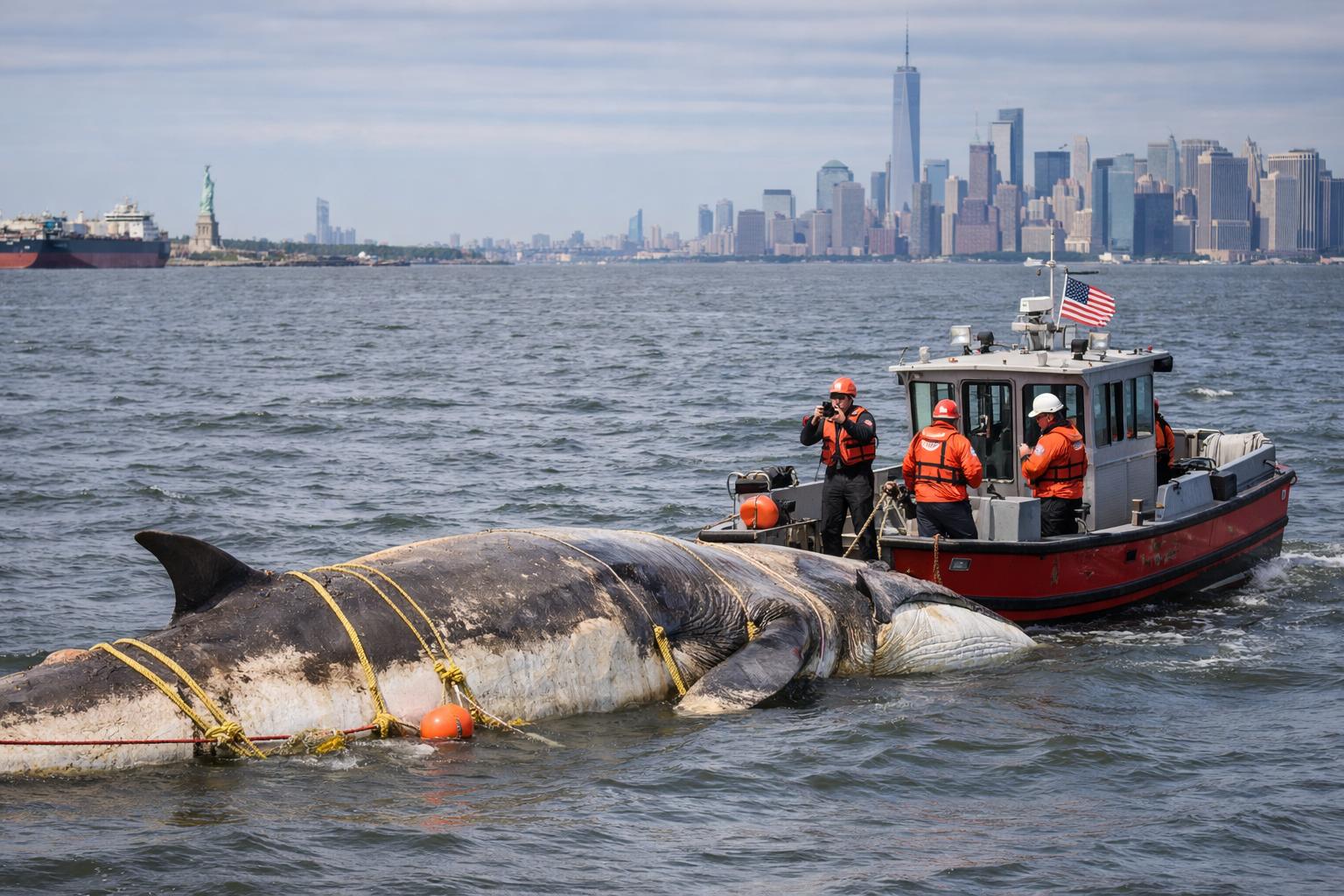
Marine response teams are working to remove a large whale carcass discovered in Newark Bay, as officials coordinate a complex recovery and investigation effort involving multiple agencies. Authorities said the Marine Mammal Stranding Center received a report of the dead whale on Wednesday, April 9, 2026. The animal, estimated to be about 50 feet long, is believed to be either a fin whale or a sei whale, though confirmation is pending further examination. Following the report, the U.S. Army Corps of Engineers assisted in securing the whale to prevent it from posing a navigational hazard in the busy waterway. The carcass was then relocated to a staging area in New York Harbor while officials worked to develop a detailed response plan. On Friday morning, April 11, 2026, specialists from the Marine Mammal Stranding Center, supported by the Army Corps of Engineers, boarded a vessel to document the whale and collect initial tissue samples. These early steps are part of a broader scientific effort to determine the species and assess potential causes of death. The Marine Mammal Stranding Center is collaborating with the Atlantic Marine Conservation Society, along with local, state, and federal partners, to coordinate the next phase of the operation. Plans include towing the whale to a suitable location where a full necropsy can be conducted. Officials emphasized that assembling the necessary team and equipment remains a priority. However, the operation faces several logistical challenges. Authorities are still working to secure an appropriate landing site, manage weather-related constraints, and arrange transportation and heavy machinery needed for the examination. Experts say a comprehensive necropsy will be critical to identifying the species definitively and understanding the circumstances surrounding the whale’s death. Additional updates are expected as the investigation progresses and more information becomes available.
50-foot whale discovered in Newark Bay under investigation by experts
Marine response teams are working to remove a large whale carcass discovered in Newark Bay, as officials coordinate a complex recovery and investigation effort involving multiple agencies. Authorities said the Marine Mammal Stranding Center received a report of the dead whale on Wednesday, April 9, 2026. The animal, estimated to be about 50 feet long, is believed to be either a fin whale or a sei whale, though confirmation is pending further examination. Following the report, the U.S. Army Corps of Engineers assisted in securing the whale to prevent it from posing a navigational hazard in the busy waterway. The carcass was then relocated to a staging area in New York Harbor while officials worked to develop a detailed response plan. On Friday morning, April 11, 2026, specialists from the Marine Mammal Stranding Center, supported by the Army Corps of Engineers, boarded a vessel to document the whale and collect initial tissue samples. These early steps are part of a broader scientific effort to determine the species and assess potential causes of death. The Marine Mammal Stranding Center is collaborating with the Atlantic Marine Conservation Society, along with local, state, and federal partners, to coordinate the next phase of the operation. Plans include towing the whale to a suitable location where a full necropsy can be conducted. Officials emphasized that assembling the necessary team and equipment remains a priority. However, the operation faces several logistical challenges. Authorities are still working to secure an appropriate landing site, manage weather-related constraints, and arrange transportation and heavy machinery needed for the examination. Experts say a comprehensive necropsy will be critical to identifying the species definitively and understanding the circumstances surrounding the whale’s death. Additional updates are expected as the investigation progresses and more information becomes available.
Young gray whale found dead after river journey in Washington state
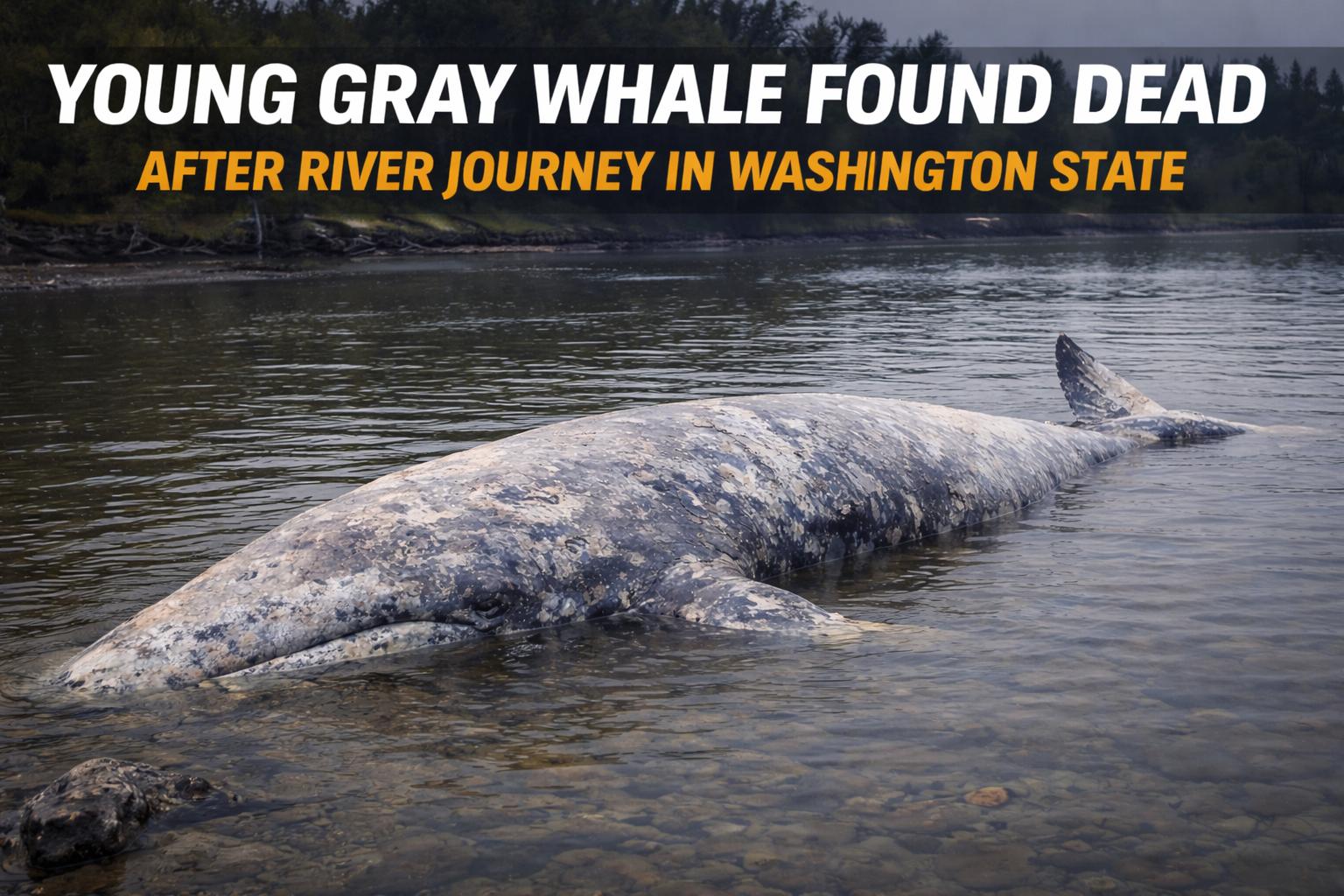
A young gray whale has been found dead after traveling approximately 20 miles inland along the Willapa River in Washington state, according to an update shared by the Cascadia Research Collective on Saturday (full date not specified in the official report). The juvenile whale, which had drawn local attention and was nicknamed “Willapa Willy,” had been observed in the river for several days before its death. The whale was first spotted on Wednesday in the north fork of the Willapa River, located about 145 miles southwest of Seattle. At the time, researchers noted that although the animal appeared thin, it showed no visible injuries and was behaving normally. Teams had initially hoped the whale would navigate back toward the ocean on its own, but it ultimately did not leave the river. Researchers now believe hunger may have been a contributing factor. Gray whales undertake long seasonal migrations along the Pacific Coast, traveling north in the spring to feeding grounds in Arctic waters. During this journey, they rely heavily on stored energy reserves. Scientists say that when food sources become scarce, whales may deviate from their typical routes in search of alternative feeding areas. Recent environmental conditions have added pressure on gray whale populations. Reduced food availability in the northern Bering and Chukchi seas has been linked to declining health among the species. According to NOAA Fisheries, the eastern North Pacific gray whale population was estimated at approximately 13,000 during the winter of 2025, marking one of the lowest levels recorded since the 1970s. Additional incidents in the region have raised concerns among researchers. Earlier in April, two adult gray whales were found dead near Ocean Shores, both showing signs of malnourishment, with one also exhibiting injuries consistent with a vessel strike. These events highlight ongoing risks facing the species, including limited food resources, ship collisions, and entanglement in fishing gear. The Cascadia Research Collective is assessing conditions to determine whether a detailed examination of the juvenile whale can be safely conducted, which may provide further insight into the circumstances surrounding its death.
Young gray whale found dead after river journey in Washington state
A young gray whale has been found dead after traveling approximately 20 miles inland along the Willapa River in Washington state, according to an update shared by the Cascadia Research Collective on Saturday (full date not specified in the official report). The juvenile whale, which had drawn local attention and was nicknamed “Willapa Willy,” had been observed in the river for several days before its death. The whale was first spotted on Wednesday in the north fork of the Willapa River, located about 145 miles southwest of Seattle. At the time, researchers noted that although the animal appeared thin, it showed no visible injuries and was behaving normally. Teams had initially hoped the whale would navigate back toward the ocean on its own, but it ultimately did not leave the river. Researchers now believe hunger may have been a contributing factor. Gray whales undertake long seasonal migrations along the Pacific Coast, traveling north in the spring to feeding grounds in Arctic waters. During this journey, they rely heavily on stored energy reserves. Scientists say that when food sources become scarce, whales may deviate from their typical routes in search of alternative feeding areas. Recent environmental conditions have added pressure on gray whale populations. Reduced food availability in the northern Bering and Chukchi seas has been linked to declining health among the species. According to NOAA Fisheries, the eastern North Pacific gray whale population was estimated at approximately 13,000 during the winter of 2025, marking one of the lowest levels recorded since the 1970s. Additional incidents in the region have raised concerns among researchers. Earlier in April, two adult gray whales were found dead near Ocean Shores, both showing signs of malnourishment, with one also exhibiting injuries consistent with a vessel strike. These events highlight ongoing risks facing the species, including limited food resources, ship collisions, and entanglement in fishing gear. The Cascadia Research Collective is assessing conditions to determine whether a detailed examination of the juvenile whale can be safely conducted, which may provide further insight into the circumstances surrounding its death.
Top Countries Recycling The Most Waste In 2026 Revealed
Recycling has become one of the most effective solutions to address the growing global waste crisis. As populations grow and consumption increases, the amount of waste generated worldwide has risen dramatically. Many countries still struggle with waste management due to limited infrastructure and poor segregation practices. However, a few nations have successfully developed highly efficient recycling systems that allow them to recover a significant portion of their waste instead of sending it
Top Countries Recycling The Most Waste In 2026 Revealed
Recycling has become one of the most effective solutions to address the growing global waste crisis. As populations grow and consumption increases, the amount of waste generated worldwide has risen dramatically. Many countries still struggle with waste management due to limited infrastructure and poor segregation practices. However, a few nations have successfully developed highly efficient recycling systems that allow them to recover a significant portion of their waste instead of sending it
Chicago air quality worsens due to ozone and wildfire smoke, alerts issued across Midwest
An air quality alert has been issued for the Chicago metropolitan area and parts of northwest Indiana as ozone levels remain elevated and wildfire smoke continues to affect the region. The alert was declared by the National Weather Service and the Illinois Environmental Protection Agency, extending through Tuesday night and affecting several counties in both states. In Illinois, it includes Lake, McHenry, Kane, DuPage, central Cook, Kendall, Grundy, and northern Will Counties. In Indiana, the
Chicago air quality worsens due to ozone and wildfire smoke, alerts issued across Midwest
An air quality alert has been issued for the Chicago metropolitan area and parts of northwest Indiana as ozone levels remain elevated and wildfire smoke continues to affect the region. The alert was declared by the National Weather Service and the Illinois Environmental Protection Agency, extending through Tuesday night and affecting several counties in both states. In Illinois, it includes Lake, McHenry, Kane, DuPage, central Cook, Kendall, Grundy, and northern Will Counties. In Indiana, the


