



















#europe-politics
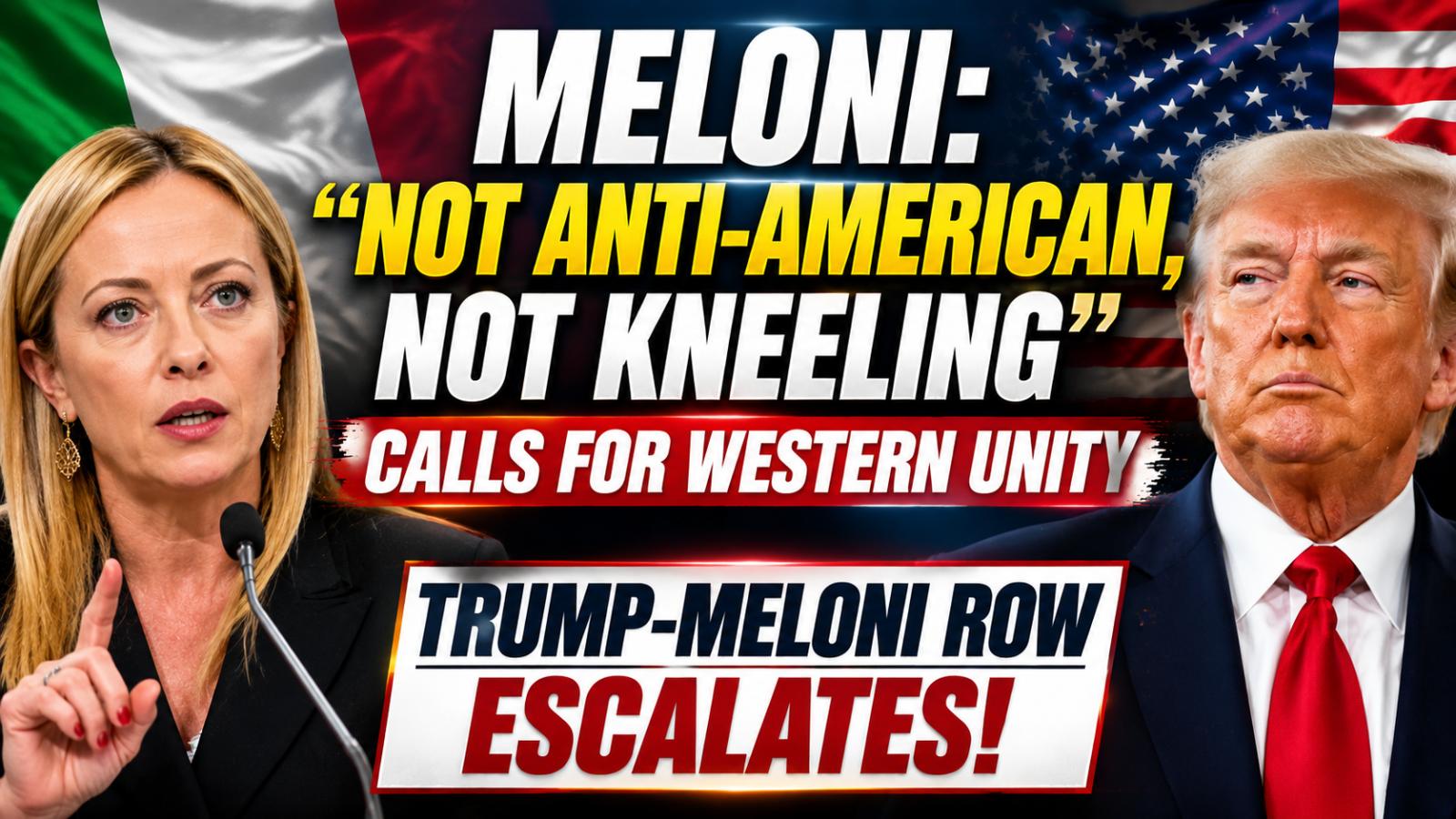
Italy’s Meloni calls for unity with US after Trump dispute
Meloni pushes back amid US controversy Italian Prime Minister Giorgia Meloni has responded to recent tensions with US President Donald Trump, stating that she is not anti-American but also refuses to be “kneeling” in political relationships. Her remarks come amid an ongoing public exchange that has drawn attention to the state of Italy–US relations and broader Western unity. Meloni stressed that her posit
Italy’s Meloni calls for unity with US after Trump dispute
Meloni pushes back amid US controversy Italian Prime Minister Giorgia Meloni has responded to recent tensions with US President Donald Trump, stating that she is not anti-American but also refuses to be “kneeling” in political relationships. Her remarks come amid an ongoing public exchange that has drawn attention to the state of Italy–US relations and broader Western unity. Meloni stressed that her posit
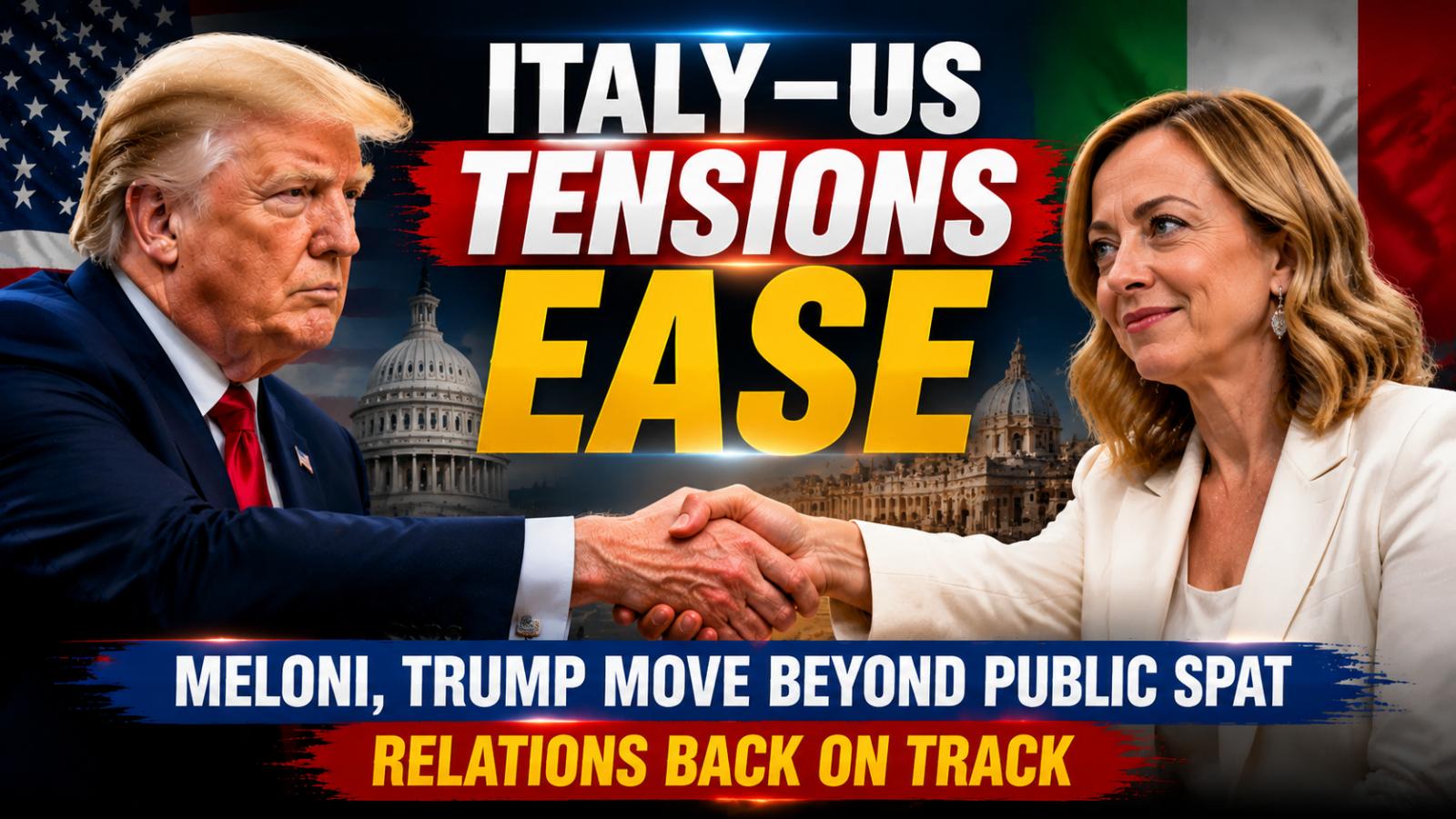
Trump–Meloni tensions ease as Italy–US diplomatic dispute cools down
Diplomatic tensions begin to cool between Italy and US Relations between Italy and the United States showed signs of stabilisation following several days of public disagreement between Italian Prime Minister Giorgia Meloni and US President Donald Trump. Speaking at a public event in Rome, Meloni indicated that she was not interested in extending the dispute and expressed a preference for moving forward, sign
Trump–Meloni tensions ease as Italy–US diplomatic dispute cools down
Diplomatic tensions begin to cool between Italy and US Relations between Italy and the United States showed signs of stabilisation following several days of public disagreement between Italian Prime Minister Giorgia Meloni and US President Donald Trump. Speaking at a public event in Rome, Meloni indicated that she was not interested in extending the dispute and expressed a preference for moving forward, sign
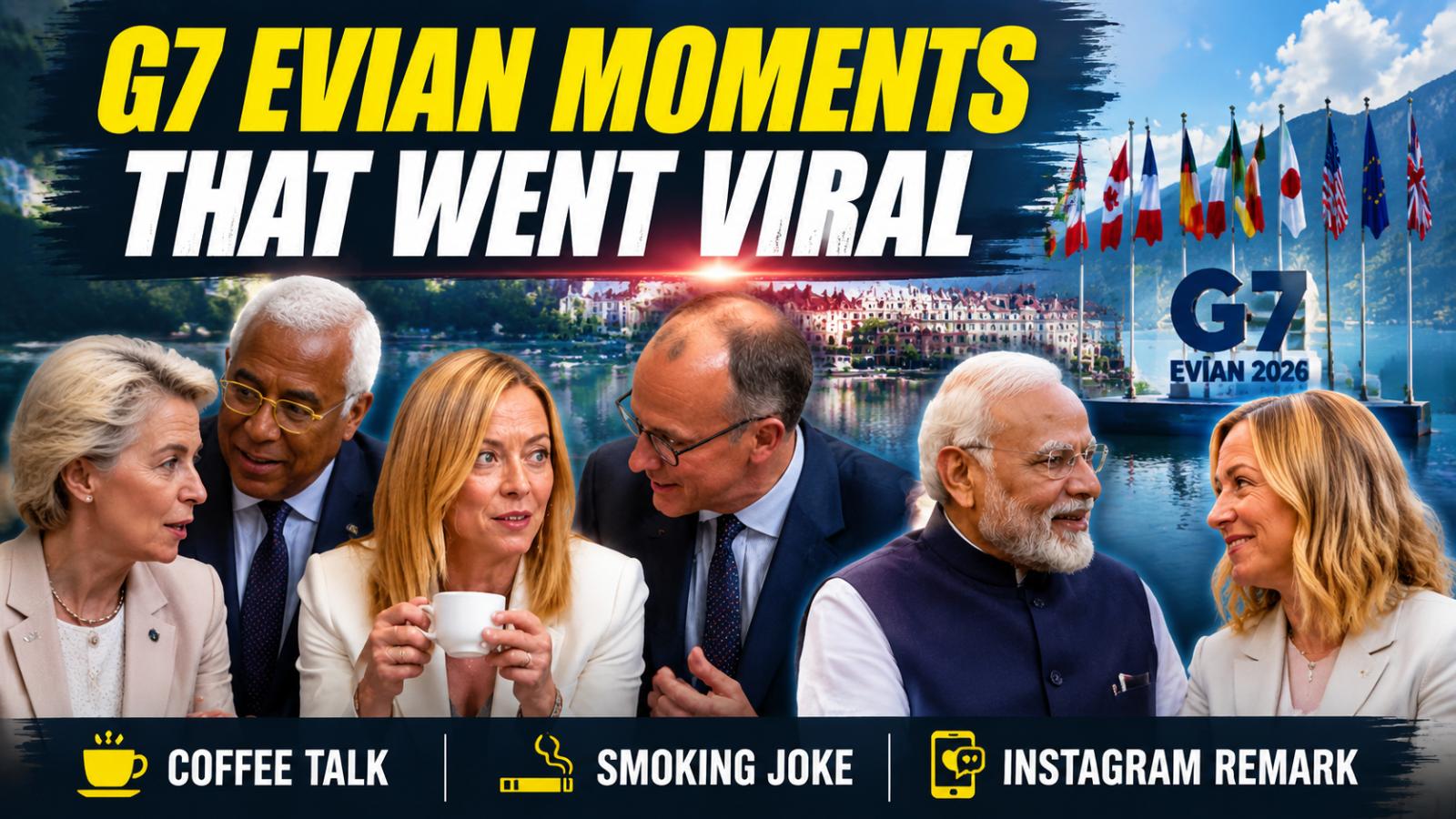
G7 Evian leaders informal chat sparks viral buzz
At the G7 gathering in Evian, moments outside official discussions drew unexpected attention as world leaders were seen engaging in relaxed conversation. Italian Prime Minister Giorgia Meloni was part of a brief informal exchange with several European counterparts, where everyday topics such as coffee habits and lifestyle choices surfaced during a pause between sessions. The interaction quickly spread across social platforms, overshadowing parts of the formal agenda in online discussions. Light remarks on personal habits draw reactions During the interaction, discussions shifted to routine habits, with references to coffee consumption and smoking-related comments among leaders including Friedrich Merz, Ursula von der Leyen, Antonio Costa and Keir Starmer. Meloni’s mention of recently changing personal habits added a relatable tone to the exchange, prompting light reactions from others in the group. The unscripted nature of the conversation contributed to its rapid circulation online, where short clips gained traction within hours. Modi and Meloni brief exchange becomes symbolic online moment A separate moment during the leaders’ photo session involving Indian Prime Minister Narendra Modi and Giorgia Meloni also gained attention online. Their brief exchange, followed by remarks about their visibility on social media platforms, was widely shared by users who often highlight their diplomatic rapport in informal contexts. While the comment was light in tone, it reinforced how global leaders’ public interactions are increasingly interpreted through a digital and cultural lens. Informal diplomacy shapes online perception Although the summit primarily focused on global economic and strategic issues, the viral spread of these informal exchanges highlighted a growing shift in how international events are consumed. Short, unscripted moments now often travel faster than official statements, influencing public perception of diplomacy. The Evian summit became another example of how modern political communication extends beyond negotiation rooms into real-time social media narratives.
G7 Evian leaders informal chat sparks viral buzz
At the G7 gathering in Evian, moments outside official discussions drew unexpected attention as world leaders were seen engaging in relaxed conversation. Italian Prime Minister Giorgia Meloni was part of a brief informal exchange with several European counterparts, where everyday topics such as coffee habits and lifestyle choices surfaced during a pause between sessions. The interaction quickly spread across social platforms, overshadowing parts of the formal agenda in online discussions. Light remarks on personal habits draw reactions During the interaction, discussions shifted to routine habits, with references to coffee consumption and smoking-related comments among leaders including Friedrich Merz, Ursula von der Leyen, Antonio Costa and Keir Starmer. Meloni’s mention of recently changing personal habits added a relatable tone to the exchange, prompting light reactions from others in the group. The unscripted nature of the conversation contributed to its rapid circulation online, where short clips gained traction within hours. Modi and Meloni brief exchange becomes symbolic online moment A separate moment during the leaders’ photo session involving Indian Prime Minister Narendra Modi and Giorgia Meloni also gained attention online. Their brief exchange, followed by remarks about their visibility on social media platforms, was widely shared by users who often highlight their diplomatic rapport in informal contexts. While the comment was light in tone, it reinforced how global leaders’ public interactions are increasingly interpreted through a digital and cultural lens. Informal diplomacy shapes online perception Although the summit primarily focused on global economic and strategic issues, the viral spread of these informal exchanges highlighted a growing shift in how international events are consumed. Short, unscripted moments now often travel faster than official statements, influencing public perception of diplomacy. The Evian summit became another example of how modern political communication extends beyond negotiation rooms into real-time social media narratives.
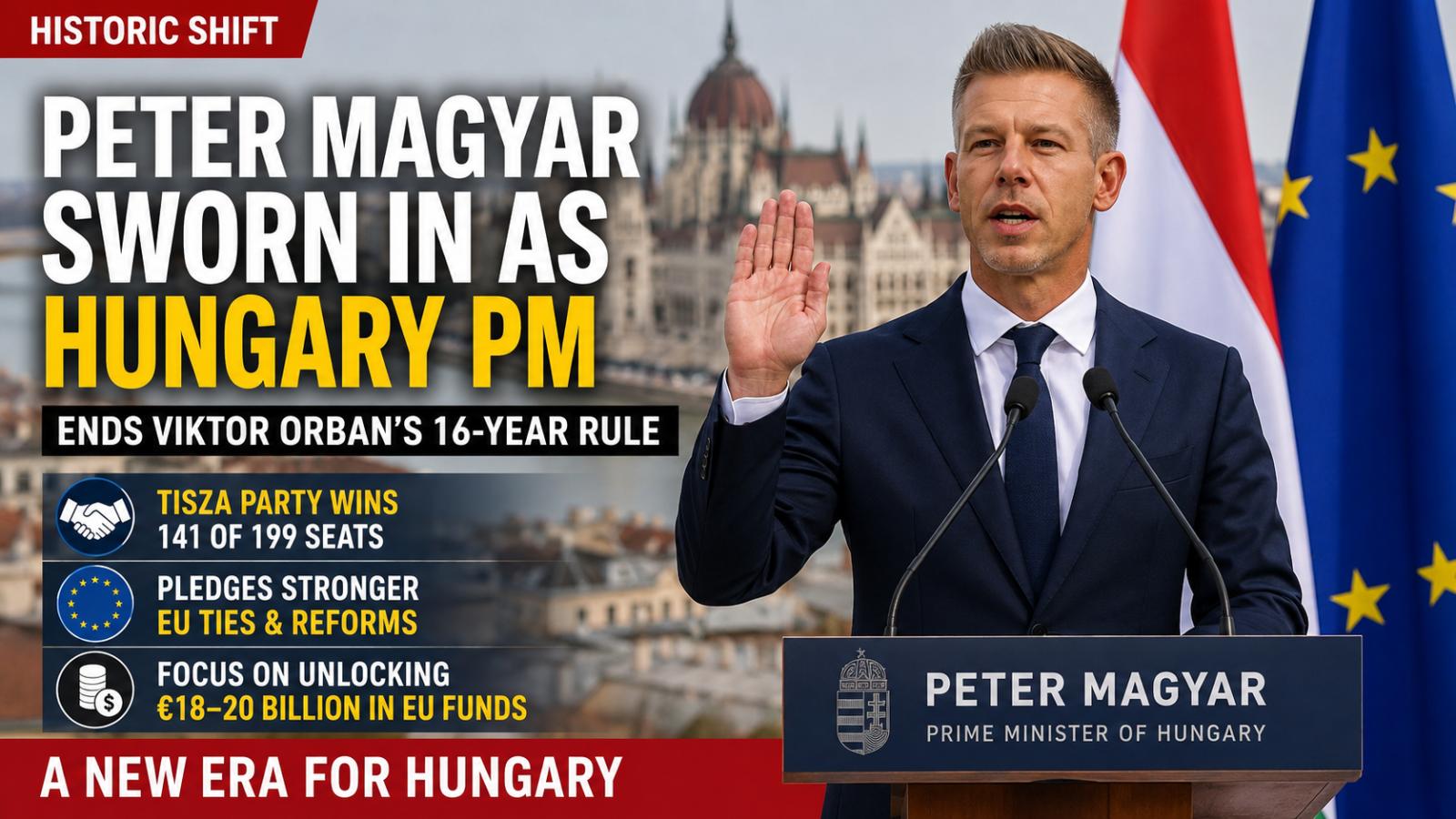
Peter Magyar Sworn In as Hungary PM, Ending Viktor Orban’s 16-Year Rule
Peter Magyar Becomes Hungary PM After Historic Orban Defeat Peter Magyar was sworn in as Hungary’s new prime minister in Budapest on Saturday, May 9, 2026, ending Viktor Orban’s 16-year rule and opening one of Hungary’s biggest political shifts since the fall of communism. Magyar’s centre-right Tisza Party won 141 of 199 parliamentary seats, giving it a powerful two-thirds majority and a mandate to reshape Hungary’s political system. Why Magyar’s Victory Matters The result marks a sharp turn for Hungary after years of tension with the European Union over rule of law, corruption concerns and democratic checks. Magyar has pledged to rebuild trust with Brussels, strengthen institutions and unlock billions in frozen EU funds. The EU flag’s return inside Hungary’s parliament added symbolic weight to the transition, signaling a possible reset in Budapest’s relationship with Europe. Major Challenges Ahead Magyar inherits a strained economy, a widening budget deficit and deep political divisions after the Orban era. He has also urged several Orban-appointed officials, including President Tamás Sulyok, to resign before the end of May 2026. In his inaugural message, Magyar framed the election as more than a change of government, calling it a public demand for reform, accountability and a more hopeful future for Hungary.
Peter Magyar Sworn In as Hungary PM, Ending Viktor Orban’s 16-Year Rule
Peter Magyar Becomes Hungary PM After Historic Orban Defeat Peter Magyar was sworn in as Hungary’s new prime minister in Budapest on Saturday, May 9, 2026, ending Viktor Orban’s 16-year rule and opening one of Hungary’s biggest political shifts since the fall of communism. Magyar’s centre-right Tisza Party won 141 of 199 parliamentary seats, giving it a powerful two-thirds majority and a mandate to reshape Hungary’s political system. Why Magyar’s Victory Matters The result marks a sharp turn for Hungary after years of tension with the European Union over rule of law, corruption concerns and democratic checks. Magyar has pledged to rebuild trust with Brussels, strengthen institutions and unlock billions in frozen EU funds. The EU flag’s return inside Hungary’s parliament added symbolic weight to the transition, signaling a possible reset in Budapest’s relationship with Europe. Major Challenges Ahead Magyar inherits a strained economy, a widening budget deficit and deep political divisions after the Orban era. He has also urged several Orban-appointed officials, including President Tamás Sulyok, to resign before the end of May 2026. In his inaugural message, Magyar framed the election as more than a change of government, calling it a public demand for reform, accountability and a more hopeful future for Hungary.


