Cyprus and Bangladesh Compete for UNGA Leadership
The United Nations is under intense pressure to demonstrate its relevance amid numerous global crises, and attention now turns to the election of the 81st President of the General Assembly. Cyprus and Bangladesh are in a tight contest, with the vote set for Tuesday, 2 June. The winner will assume office when the new session opens in September, overseeing the
Cyprus and Bangladesh Compete for UNGA Leadership
The United Nations is under intense pressure to demonstrate its relevance amid numerous global crises, and attention now turns to the election of the 81st President of the General Assembly. Cyprus and Bangladesh are in a tight contest, with the vote set for Tuesday, 2 June. The winner will assume office when the new session opens in September, overseeing the
A proposal to create a new income tax bracket for Virginia’s highest earners is advancing through the General Assembly, with supporters arguing that the measure could generate significant new revenue for public schools, child care programs and affordable housing initiatives across the state.
House Bill 188, introduced by Del. Kelly Convirs-Fowler, who represents Virginia Beach’s 96th House District, would establish a higher tax rate beginning in the 2026 tax year. Under the proposal, individuals earning more than $1 million annually would pay a 10 percent tax on income exceeding that threshold. Lawmakers backing the bill say the change would modernize Virginia’s tax structure and target additional contributions from the state’s wealthiest residents.
Currently, Virginia uses a relatively flat income tax system in which all income above $17,000 is taxed at a rate of 5.75 percent. Advocates for the legislation contend that the structure places a proportionally heavier burden on middle-income families while allowing top earners to pay the same marginal rate. By creating a new bracket, they argue, the state can make its tax policy more progressive while securing funds for critical public needs.
The bill specifies how revenue from the higher tax rate would be distributed. Half of the additional funds would go toward increased basic aid for public schools, a move intended to help districts address teacher shortages, classroom resources and rising operational costs. Thirty percent of the new revenue would be directed to the Child Care Subsidy Program, which assists working families with the cost of care and aims to expand access for low- and moderate-income households. The remaining 20 percent would be allocated to the Virginia Housing Trust Fund to support affordable housing development and homelessness prevention efforts.
Supporters say the targeted investments could strengthen education, improve workforce participation and address housing shortages that have affected communities statewide. Critics, however, have raised concerns about potential impacts on business competitiveness and the possibility that higher-income residents could relocate, affecting overall tax collections. Those debates are expected to continue as the measure moves through committee review.
In addition to the new tax bracket, HB 188 includes several technical amendments intended to align existing statutes with the proposed changes. The bill remains under consideration in committee, where lawmakers will determine whether it advances to a full vote in the House and Senate. If approved, the policy would mark one of the most significant adjustments to Virginia’s income tax system in decades and could reshape how the state funds key services tied to education, child care and housing.
A proposal to create a new income tax bracket for Virginia’s highest earners is advancing through the General Assembly, with supporters arguing that the measure could generate significant new revenue for public schools, child care programs and affordable housing initiatives across the state.
House Bill 188, introduced by Del. Kelly Convirs-Fowler, who represents Virginia Beach’s 96th House District, would establish a higher tax rate beginning in the 2026 tax year. Under the proposal, individuals earning more than $1 million annually would pay a 10 percent tax on income exceeding that threshold. Lawmakers backing the bill say the change would modernize Virginia’s tax structure and target additional contributions from the state’s wealthiest residents.
Currently, Virginia uses a relatively flat income tax system in which all income above $17,000 is taxed at a rate of 5.75 percent. Advocates for the legislation contend that the structure places a proportionally heavier burden on middle-income families while allowing top earners to pay the same marginal rate. By creating a new bracket, they argue, the state can make its tax policy more progressive while securing funds for critical public needs.
The bill specifies how revenue from the higher tax rate would be distributed. Half of the additional funds would go toward increased basic aid for public schools, a move intended to help districts address teacher shortages, classroom resources and rising operational costs. Thirty percent of the new revenue would be directed to the Child Care Subsidy Program, which assists working families with the cost of care and aims to expand access for low- and moderate-income households. The remaining 20 percent would be allocated to the Virginia Housing Trust Fund to support affordable housing development and homelessness prevention efforts.
Supporters say the targeted investments could strengthen education, improve workforce participation and address housing shortages that have affected communities statewide. Critics, however, have raised concerns about potential impacts on business competitiveness and the possibility that higher-income residents could relocate, affecting overall tax collections. Those debates are expected to continue as the measure moves through committee review.
In addition to the new tax bracket, HB 188 includes several technical amendments intended to align existing statutes with the proposed changes. The bill remains under consideration in committee, where lawmakers will determine whether it advances to a full vote in the House and Senate. If approved, the policy would mark one of the most significant adjustments to Virginia’s income tax system in decades and could reshape how the state funds key services tied to education, child care and housing.
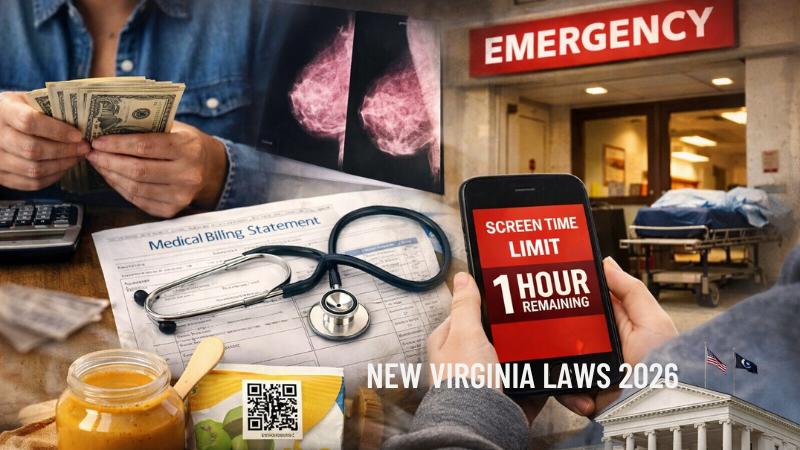
Several new state laws aimed at improving worker pay, expanding health care protections, and strengthening consumer safeguards are set to take effect across Virginia on Jan. 1, marking one of the most wide-ranging policy updates in recent years. The measures touch on issues ranging from minimum wage increases to medical billing practices and digital protections for children, reflecting priorities lawmakers say are rooted in everyday concerns of residents.
Political analyst Leslie Ca
Several new state laws aimed at improving worker pay, expanding health care protections, and strengthening consumer safeguards are set to take effect across Virginia on Jan. 1, marking one of the most wide-ranging policy updates in recent years. The measures touch on issues ranging from minimum wage increases to medical billing practices and digital protections for children, reflecting priorities lawmakers say are rooted in everyday concerns of residents.
Political analyst Leslie Ca