



























United Airlines flight 169 collision at Newark under FAA investigation
A United Airlines Boeing 767 was involved in a serious aviation incident near Newark Airport on Sunday, May 3, when its landing gear struck a truck during final approach, leaving one driver injured and prompting an FAA probe. The aircraft, operating as flight 169 from Venice, was carrying 231 people and landed safely despite the collision. Authorities confirmed no passengers or crew were injured, while the driver on the ground suffered minor injuries. The airline has removed the crew from dut
United Airlines flight 169 collision at Newark under FAA investigation
A United Airlines Boeing 767 was involved in a serious aviation incident near Newark Airport on Sunday, May 3, when its landing gear struck a truck during final approach, leaving one driver injured and prompting an FAA probe. The aircraft, operating as flight 169 from Venice, was carrying 231 people and landed safely despite the collision. Authorities confirmed no passengers or crew were injured, while the driver on the ground suffered minor injuries. The airline has removed the crew from dut
Star Wars Day: how “May the Fourth” became a global fan tradition
Star Wars Day, observed on May 4, is a global fan-driven celebration inspired by the famous line from Star Wars, “May the Force be with you.” The phrase sounds similar to “May the Fourth be with you,” which is why fans chose this date. Today, May 4 represents a worldwide celebration of storytelling, imagination, and the lasting popularity of the Star Wars universe. The origin of this tradition dates back to 1979, when a British newspaper used the phrase “May the Fourth Be With You, Maggie” to congratulate Margaret Thatcher after she became Prime Minister. At the time, it was simply a witty headline. However, as Star Wars gained a massive global following, fans recognized the clever connection and began using it to mark the day. Over time, the celebration grew organically without any official planning. Fans across different countries started sharing content, organizing events, and rewatching Star Wars movies. What began as a small idea eventually gained global attention. Recognizing its popularity, Lucasfilm and later The Walt Disney Company joined in to support and promote the celebration. Today, May 4 is celebrated with great enthusiasm worldwide. Fans dress up as their favorite characters, participate in themed events, and revisit iconic moments from the films. Theme parks host special activities, and online platforms see a surge in discussions, quizzes, and fan creations. In a notable moment, astronauts aboard the International Space Station even celebrated by watching Star Wars while orbiting Earth. What keeps Star Wars Day popular every year? The continued success of Star Wars Day lies in its ability to bring people together. New generations discover the story, while longtime fans relive their favorite memories. The celebration also extends to May 5, known as “Revenge of the Fifth,” inspired by Star Wars: Episode III – Revenge of the Sith, where attention shifts to darker characters. Star Wars Day stands out because it was created by fans, not institutions. Its growth reflects the power of shared passion and creativity. What started as a simple play on words has evolved into a global cultural event that continues to thrive year after year.
Star Wars Day: how “May the Fourth” became a global fan tradition
Star Wars Day, observed on May 4, is a global fan-driven celebration inspired by the famous line from Star Wars, “May the Force be with you.” The phrase sounds similar to “May the Fourth be with you,” which is why fans chose this date. Today, May 4 represents a worldwide celebration of storytelling, imagination, and the lasting popularity of the Star Wars universe. The origin of this tradition dates back to 1979, when a British newspaper used the phrase “May the Fourth Be With You, Maggie” to congratulate Margaret Thatcher after she became Prime Minister. At the time, it was simply a witty headline. However, as Star Wars gained a massive global following, fans recognized the clever connection and began using it to mark the day. Over time, the celebration grew organically without any official planning. Fans across different countries started sharing content, organizing events, and rewatching Star Wars movies. What began as a small idea eventually gained global attention. Recognizing its popularity, Lucasfilm and later The Walt Disney Company joined in to support and promote the celebration. Today, May 4 is celebrated with great enthusiasm worldwide. Fans dress up as their favorite characters, participate in themed events, and revisit iconic moments from the films. Theme parks host special activities, and online platforms see a surge in discussions, quizzes, and fan creations. In a notable moment, astronauts aboard the International Space Station even celebrated by watching Star Wars while orbiting Earth. What keeps Star Wars Day popular every year? The continued success of Star Wars Day lies in its ability to bring people together. New generations discover the story, while longtime fans relive their favorite memories. The celebration also extends to May 5, known as “Revenge of the Fifth,” inspired by Star Wars: Episode III – Revenge of the Sith, where attention shifts to darker characters. Star Wars Day stands out because it was created by fans, not institutions. Its growth reflects the power of shared passion and creativity. What started as a simple play on words has evolved into a global cultural event that continues to thrive year after year.
Trump’s Project Freedom sparks Iran warning amid Strait of Hormuz crisis
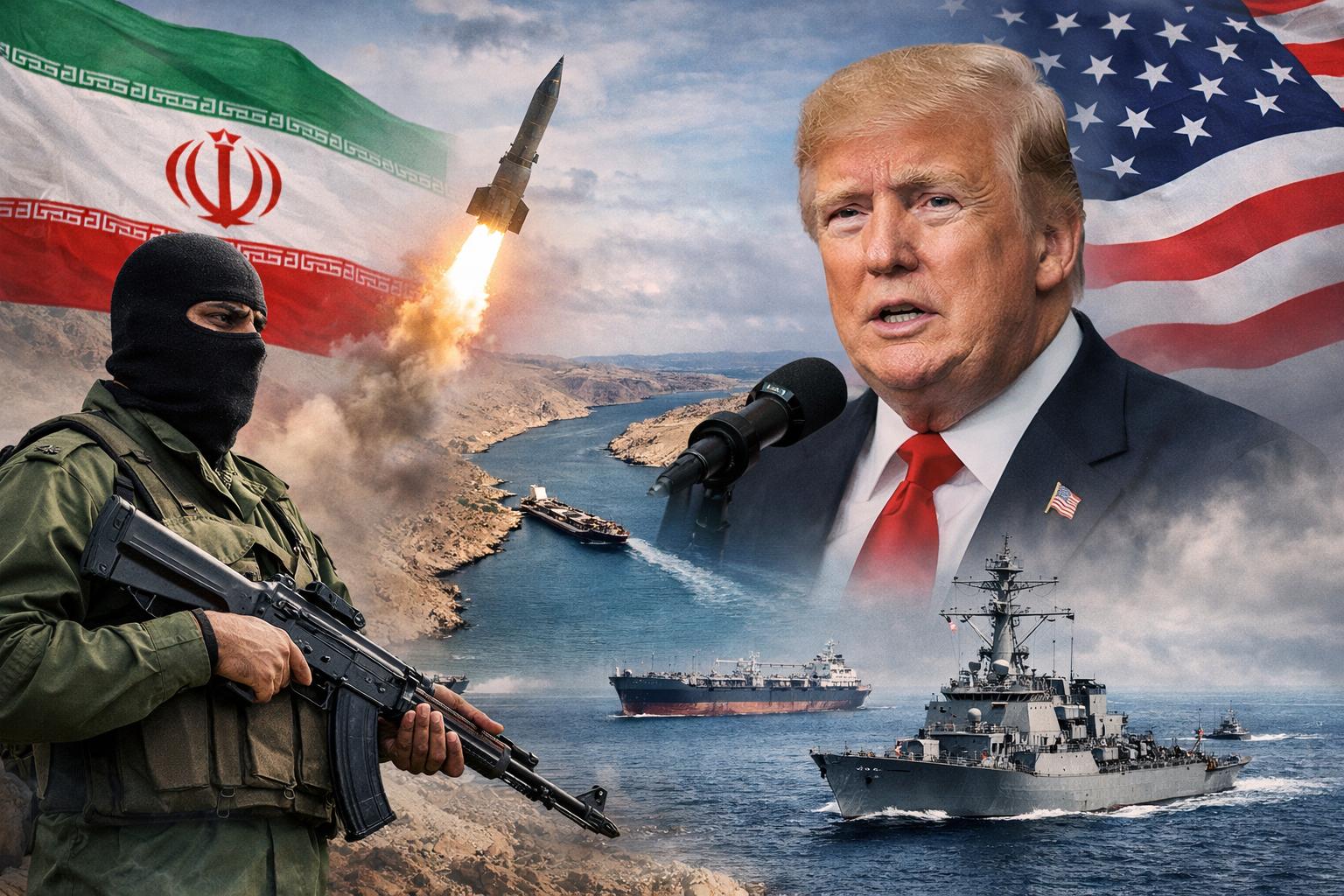
The Strait of Hormuz crisis has intensified after Ebrahim Azizi warned that any US intervention would be treated as a ceasefire violation. His remarks came in response to Donald Trump’s announcement of Project Freedom, a naval initiative aimed at guiding merchant vessels through the strategically vital w
Trump’s Project Freedom sparks Iran warning amid Strait of Hormuz crisis
The Strait of Hormuz crisis has intensified after Ebrahim Azizi warned that any US intervention would be treated as a ceasefire violation. His remarks came in response to Donald Trump’s announcement of Project Freedom, a naval initiative aimed at guiding merchant vessels through the strategically vital w
Yen strengthens as Japan signals decisive currency action
The Japanese yen recorded a sharp rise against the US dollar for the second consecutive day, drawing significant attention from global financial markets already focused on geopolitical tensions and rising oil prices. In early Asian trading on Monday, the yen surged nearly 0.9 percent within minutes of market opening, suggesting strong intervention signals from Japanese authorities. Market reports indicate that Japan may have injected approximately 5.48 trillion yen, equivalent to ab
Yen strengthens as Japan signals decisive currency action
The Japanese yen recorded a sharp rise against the US dollar for the second consecutive day, drawing significant attention from global financial markets already focused on geopolitical tensions and rising oil prices. In early Asian trading on Monday, the yen surged nearly 0.9 percent within minutes of market opening, suggesting strong intervention signals from Japanese authorities. Market reports indicate that Japan may have injected approximately 5.48 trillion yen, equivalent to ab
US Launches Project Freedom to Escort Ships in Strait of Hormuz
The United States has announced a new maritime initiative aimed at assisting commercial vessels stranded in the Strait of Hormuz, a critical global shipping route impacted by ongoing tensions. The operation, referred to as Project Freedom, is intended to guide ships safely through restricted waters as part of what officials described as a humanitarian effort to stabilize maritime activity in the region. According to statements from US leadership, the initiative will focus on escorti
US Launches Project Freedom to Escort Ships in Strait of Hormuz
The United States has announced a new maritime initiative aimed at assisting commercial vessels stranded in the Strait of Hormuz, a critical global shipping route impacted by ongoing tensions. The operation, referred to as Project Freedom, is intended to guide ships safely through restricted waters as part of what officials described as a humanitarian effort to stabilize maritime activity in the region. According to statements from US leadership, the initiative will focus on escorti
Hantavirus Outbreak Reported on Cruise Ship Leaves Three Dead
A suspected outbreak of hantavirus on board the cruise vessel MV Hondius has resulted in three deaths and several serious illnesses, raising concerns among global health authorities. The ship, operated by a Netherlands-based expedition company, was sailing near Cape Verde when the medical situation emerged, prompting urgent response measures and international coordination. Officials confirmed that at least three passengers died, while others showed symptoms consistent with a hantavi
Hantavirus Outbreak Reported on Cruise Ship Leaves Three Dead
A suspected outbreak of hantavirus on board the cruise vessel MV Hondius has resulted in three deaths and several serious illnesses, raising concerns among global health authorities. The ship, operated by a Netherlands-based expedition company, was sailing near Cape Verde when the medical situation emerged, prompting urgent response measures and international coordination. Officials confirmed that at least three passengers died, while others showed symptoms consistent with a hantavi
Nepal Objects to India-China Kailash Yatra Route via Lipulekh
Nepal has formally raised objections to the planned Kailash Mansarovar Yatra route through Lipulekh Pass, stating that the area falls within its territory and that it was not consulted on the decision. The government reiterated its longstanding claim that Limpiyadhura, Lipulekh, and Kalapani, located east of the Mahakali River, are integral parts of Nepal based on the Treaty of 1816. The issue resurfaced after India announced that this year’s pilgrimage would take place between Ju
Nepal Objects to India-China Kailash Yatra Route via Lipulekh
Nepal has formally raised objections to the planned Kailash Mansarovar Yatra route through Lipulekh Pass, stating that the area falls within its territory and that it was not consulted on the decision. The government reiterated its longstanding claim that Limpiyadhura, Lipulekh, and Kalapani, located east of the Mahakali River, are integral parts of Nepal based on the Treaty of 1816. The issue resurfaced after India announced that this year’s pilgrimage would take place between Ju
US-Iran Standoff Deepens with Reports of Experimental Maritime Strategies
Iran is reportedly evaluating unconventional military approaches as tensions continue in the Gulf, with discussions centered on alternative maritime tactics that could impact security in the Strait of Hormuz. The move comes at a time when economic pressure from ongoing restrictions on oil exports is intensifying internal debate within the country’s leadership. Officials are said to be considering a range of options that extend beyond traditional naval operations. These deliberations reflect growing frustration among certain factions, which increasingly view the prolonged blockade as a direct threat to national stability. While a fragile ceasefire remains in place, some policymakers argue that the economic consequences of continued restrictions could outweigh the risks of escalation. Iran has previously explored the use of trained marine animals for defense-related purposes, highlighting a history of experimental approaches within its military planning. Such methods, if pursued, would represent a broader shift toward unconventional strategies aimed at countering perceived disadvantages in conventional naval power. Alongside these discussions, there are concerns that Iran could deploy submarines or other underwater capabilities within the strategic waterway. Additional threats have included the potential disruption of critical telecommunications infrastructure, which could have far-reaching consequences for global connectivity and trade. For international shipping, the primary concern remains surface-level disruptions that could directly affect the flow of goods through one of the world’s most vital energy corridors. Security officials continue to monitor developments closely, as any escalation in the region could have immediate implications for global markets and maritime safety.
US-Iran Standoff Deepens with Reports of Experimental Maritime Strategies
Iran is reportedly evaluating unconventional military approaches as tensions continue in the Gulf, with discussions centered on alternative maritime tactics that could impact security in the Strait of Hormuz. The move comes at a time when economic pressure from ongoing restrictions on oil exports is intensifying internal debate within the country’s leadership. Officials are said to be considering a range of options that extend beyond traditional naval operations. These deliberations reflect growing frustration among certain factions, which increasingly view the prolonged blockade as a direct threat to national stability. While a fragile ceasefire remains in place, some policymakers argue that the economic consequences of continued restrictions could outweigh the risks of escalation. Iran has previously explored the use of trained marine animals for defense-related purposes, highlighting a history of experimental approaches within its military planning. Such methods, if pursued, would represent a broader shift toward unconventional strategies aimed at countering perceived disadvantages in conventional naval power. Alongside these discussions, there are concerns that Iran could deploy submarines or other underwater capabilities within the strategic waterway. Additional threats have included the potential disruption of critical telecommunications infrastructure, which could have far-reaching consequences for global connectivity and trade. For international shipping, the primary concern remains surface-level disruptions that could directly affect the flow of goods through one of the world’s most vital energy corridors. Security officials continue to monitor developments closely, as any escalation in the region could have immediate implications for global markets and maritime safety.
US-Iran Conflict Escalates: Why Trump Has No Clear Exit Strategy
More than two months into military action against Iran, Donald Trump is facing a difficult reality: the conflict is far from over—and there’s no clear way out. What began as a show of strength has turned into a prolonged standoff, with rising global consequences. Military Gains, But No Strategic Victory The United States, alongside Israeli forces, has carried out multiple strikes targeting Iran’s
US-Iran Conflict Escalates: Why Trump Has No Clear Exit Strategy
More than two months into military action against Iran, Donald Trump is facing a difficult reality: the conflict is far from over—and there’s no clear way out. What began as a show of strength has turned into a prolonged standoff, with rising global consequences. Military Gains, But No Strategic Victory The United States, alongside Israeli forces, has carried out multiple strikes targeting Iran’s
Luxury Car Oil Shortage Could Hit Soon: What the Global Base Oil Crisis Means for You
The global base oil shortage is no longer just an industry headline—it’s becoming a real concern for luxury car owners worldwide. As supply chains tighten due to geopolitical tensions around the Strait of Hormuz, the availability of high-performance engine oils used in premium vehicles is under pressure. For owners of brands like BMW, Mercedes-Benz, and Audi, this could soon translate into higher maintenance costs, limited oil availability, and delayed servicing. What’s Causing the Global Base Oil Shortage? At the heart of the issue is the ongoing instability linked to tensions involving Iran and critical oil transit routes. The Strait of Hormuz handles a significant portion of the world’s petroleum shipments—not just crude oil, but also refined products like base oils, which are essential for lubricant production. Base oils form the foundation of: Synthetic engine oils Industrial lubricants High-performance automotive fluids With shipping disruptions, delayed tankers, and rising insurance risks, the supply of these materials has tightened globally. Why Luxury Cars Are Hit Harder Not all vehicles are affected equally. Luxury and high-performance cars rely heavily on Group III and Group IV base oils, including advanced formulations like polyalphaolefins (PAO). These oils are designed to: Handle extreme temperatures Protect high-speed engines Maintain performance under pressure Unlike regular vehicles, luxury cars cannot easily switch to cheaper alternatives without risking engine damage or reduced efficiency. That’s why this shortage hits premium segments first—and hardest. Rising Prices and Supply Pressure The numbers already show stress in the system: The Gulf region contributes around 20% of global Group III base oil production It accounted for nearly half of U.S. imports in recent periods Prices in some markets have nearly doubled since the crisis began With inventories shrinking and delivery times increasing, lubricant manufacturers are struggling to keep up. If disruptions continue, experts warn that: Oil prices could rise further Service costs for luxury vehicles may spike Availability could become inconsistent in certain regions What This Means for Luxury Car Owners If you own a premium vehicle, here’s what you might notice in the coming weeks or months: Higher Maintenance Costs Synthetic oil changes could become significantly more expensive. Service Delays Workshops may face shortages or longer wait times for specific oil grades. Risk of Substitutes Some service centers might use alternative oils—potentially affecting performance if not approved. Should You Be Worried Right Now? Not immediately—but it’s something to watch closely. There’s no need to panic or stockpile engine oil. However: Stick to authorized service centers Ensure correct oil specifications are used Avoid delaying essential maintenance Being proactive now can help you avoid bigger issues later. A Bigger Energy and Supply Chain Problem This isn’t just about cars—it reflects a deeper issue in the global energy ecosystem. Heavy reliance on specific regions like the Persian Gulf makes supply chains vulnerable. Alongside geopolitical tensions, factors like: Refinery disruptions Export restrictions Seasonal risks (like hurricanes in U.S. Gulf Coast) are amplifying the pressure. Industry experts see this as a warning sign of long-term structural risks in the oil and automotive sectors. What Happens Next? If shipping routes stabilize and production resumes, the situation could ease within months. But if disruptions persist: Prices may remain elevated Supply chains could tighten further Luxury vehicle ownership costs may rise globally For now, both manufacturers and consumers are bracing for continued uncertainty. Final Takeaway The global base oil shortage is quietly building into a significant challenge—especially for luxury car owners. While it may not yet be visible at every service center, the signs are clear: tightening supply, rising costs, and growing dependence on fragile global networks. Staying informed—and maintaining your vehicle responsibly—will be key in navigating what could become one of the most overlooked automotive disruptions of the year.
Luxury Car Oil Shortage Could Hit Soon: What the Global Base Oil Crisis Means for You
The global base oil shortage is no longer just an industry headline—it’s becoming a real concern for luxury car owners worldwide. As supply chains tighten due to geopolitical tensions around the Strait of Hormuz, the availability of high-performance engine oils used in premium vehicles is under pressure. For owners of brands like BMW, Mercedes-Benz, and Audi, this could soon translate into higher maintenance costs, limited oil availability, and delayed servicing. What’s Causing the Global Base Oil Shortage? At the heart of the issue is the ongoing instability linked to tensions involving Iran and critical oil transit routes. The Strait of Hormuz handles a significant portion of the world’s petroleum shipments—not just crude oil, but also refined products like base oils, which are essential for lubricant production. Base oils form the foundation of: Synthetic engine oils Industrial lubricants High-performance automotive fluids With shipping disruptions, delayed tankers, and rising insurance risks, the supply of these materials has tightened globally. Why Luxury Cars Are Hit Harder Not all vehicles are affected equally. Luxury and high-performance cars rely heavily on Group III and Group IV base oils, including advanced formulations like polyalphaolefins (PAO). These oils are designed to: Handle extreme temperatures Protect high-speed engines Maintain performance under pressure Unlike regular vehicles, luxury cars cannot easily switch to cheaper alternatives without risking engine damage or reduced efficiency. That’s why this shortage hits premium segments first—and hardest. Rising Prices and Supply Pressure The numbers already show stress in the system: The Gulf region contributes around 20% of global Group III base oil production It accounted for nearly half of U.S. imports in recent periods Prices in some markets have nearly doubled since the crisis began With inventories shrinking and delivery times increasing, lubricant manufacturers are struggling to keep up. If disruptions continue, experts warn that: Oil prices could rise further Service costs for luxury vehicles may spike Availability could become inconsistent in certain regions What This Means for Luxury Car Owners If you own a premium vehicle, here’s what you might notice in the coming weeks or months: Higher Maintenance Costs Synthetic oil changes could become significantly more expensive. Service Delays Workshops may face shortages or longer wait times for specific oil grades. Risk of Substitutes Some service centers might use alternative oils—potentially affecting performance if not approved. Should You Be Worried Right Now? Not immediately—but it’s something to watch closely. There’s no need to panic or stockpile engine oil. However: Stick to authorized service centers Ensure correct oil specifications are used Avoid delaying essential maintenance Being proactive now can help you avoid bigger issues later. A Bigger Energy and Supply Chain Problem This isn’t just about cars—it reflects a deeper issue in the global energy ecosystem. Heavy reliance on specific regions like the Persian Gulf makes supply chains vulnerable. Alongside geopolitical tensions, factors like: Refinery disruptions Export restrictions Seasonal risks (like hurricanes in U.S. Gulf Coast) are amplifying the pressure. Industry experts see this as a warning sign of long-term structural risks in the oil and automotive sectors. What Happens Next? If shipping routes stabilize and production resumes, the situation could ease within months. But if disruptions persist: Prices may remain elevated Supply chains could tighten further Luxury vehicle ownership costs may rise globally For now, both manufacturers and consumers are bracing for continued uncertainty. Final Takeaway The global base oil shortage is quietly building into a significant challenge—especially for luxury car owners. While it may not yet be visible at every service center, the signs are clear: tightening supply, rising costs, and growing dependence on fragile global networks. Staying informed—and maintaining your vehicle responsibly—will be key in navigating what could become one of the most overlooked automotive disruptions of the year.
USS New Orleans Deployed in Arabian Sea as U.S.-Iran Tensions Rise Over Strait of Hormuz
The deployment of the USS New Orleans (LPD-18) in the Arabian Sea is drawing global attention as tensions between the United States and Iran continue to escalate. According to the U.S. Central Command, the warship has been actively involved in maritime patrol operations aimed at enforcing restrictions linked to Iran. Images released on May 2, 2026, show the vessel operatin
USS New Orleans Deployed in Arabian Sea as U.S.-Iran Tensions Rise Over Strait of Hormuz
The deployment of the USS New Orleans (LPD-18) in the Arabian Sea is drawing global attention as tensions between the United States and Iran continue to escalate. According to the U.S. Central Command, the warship has been actively involved in maritime patrol operations aimed at enforcing restrictions linked to Iran. Images released on May 2, 2026, show the vessel operatin
China Rejects US Sanctions on Iranian Oil Trade, Escalating Global Energy Tensions in 2026
China has strongly rejected new sanctions imposed by the United States on Chinese firms accused of purchasing Iranian oil, calling the measures “unlawful” and a violation of international trade norms. The move marks a fresh escalation in tensions between China and Washington, with potential ripple effe
China Rejects US Sanctions on Iranian Oil Trade, Escalating Global Energy Tensions in 2026
China has strongly rejected new sanctions imposed by the United States on Chinese firms accused of purchasing Iranian oil, calling the measures “unlawful” and a violation of international trade norms. The move marks a fresh escalation in tensions between China and Washington, with potential ripple effe
India’s High-Risk Energy Move: LPG Tanker Braces for Dangerous Strait of Hormuz Crossing
In a moment that could quietly shape global energy markets, an India-linked LPG tanker is attempting something most ships are now avoiding. The vessel, Sarv Shakti, loaded with nearly 45,000 tonnes of liquefied petroleum gas, is moving toward the tense waters of the Strait of Hormuz — a route that has suddenly become one of the world’s most dangerous maritime
India’s High-Risk Energy Move: LPG Tanker Braces for Dangerous Strait of Hormuz Crossing
In a moment that could quietly shape global energy markets, an India-linked LPG tanker is attempting something most ships are now avoiding. The vessel, Sarv Shakti, loaded with nearly 45,000 tonnes of liquefied petroleum gas, is moving toward the tense waters of the Strait of Hormuz — a route that has suddenly become one of the world’s most dangerous maritime
Why the US Rushed $8.6B Arms Deal to Middle East Allies Amid Iran Crisis
The United States has fast-tracked more than $8.6 billion in arms sales to key Middle East allies, signaling a sharp escalation in its response to rising tensions with Iran. Approved under emergency powers, the move bypasses Congress and reflects Washington’s urgency to strengthen regional defenses as the conflict enters a critical phase. Emergency Approval Signals Rising Urgency The decision, issued on Friday, invokes a rarely used em
Why the US Rushed $8.6B Arms Deal to Middle East Allies Amid Iran Crisis
The United States has fast-tracked more than $8.6 billion in arms sales to key Middle East allies, signaling a sharp escalation in its response to rising tensions with Iran. Approved under emergency powers, the move bypasses Congress and reflects Washington’s urgency to strengthen regional defenses as the conflict enters a critical phase. Emergency Approval Signals Rising Urgency The decision, issued on Friday, invokes a rarely used em
Interstellar comet 3I/ATLAS reveals origins in an alien solar system
Interstellar comet 3I/ATLAS reveals origins in an alien solar system as astronomers analyzing the rare celestial object have uncovered evidence suggesting it formed in conditions vastly different from those that shaped our own planetary system. The comet, known as 3I/ATLAS, was first detected passing through our solar system in July and is only the third known interstellar object ever observed in such a trajectory. New findings, published on Wednesday, April 23, 2026, in the journal Nature Astronomy, indicate that the comet likely originated in an extremely cold and distant region of another planetary system. Researchers used the Atacama Large Millimeter/submillimeter Array (ALMA) in Chile to observe the comet in early November, shortly after it made its closest approach to the sun. The study marks the first time scientists have detected deuterium, a heavier isotope of hydrogen, in an interstellar object. This form of hydrogen is typically found in deuterated water, also known as semi-heavy water. According to lead researcher Luis Eduardo Salazar Manzano of the University of Michigan, the concentration of deuterium in 3I/ATLAS is more than 40 times higher than levels found in Earth’s oceans and over 30 times higher than in comets within our solar system. Such unusually high levels suggest that the comet formed in an environment with extremely low temperatures—below 30 Kelvin, or approximately minus 405 degrees Fahrenheit. Scientists believe this indicates formation in the outer regions of a protoplanetary disk, far from its host star, where icy materials can preserve their original chemical signatures for billions of years. Further analysis suggests that 3I/ATLAS may be up to 11 billion years old, making it significantly older than our solar system, which formed about 4.5 billion years ago. The preserved water within the comet likely dates back to the early stages of the Milky Way, offering a rare glimpse into the galaxy’s ancient conditions. Researchers also noted that standard water (H₂O) was not directly detected during observations, likely due to instrument sensitivity limits. However, the clear detection of deuterated water underscores the comet’s unusual composition and reinforces its value as a scientific “time capsule.” Experts say interstellar objects like 3I/ATLAS provide unique insights into how planetary systems form and evolve across the universe. Future observations from facilities such as the Vera C. Rubin Observatory are expected to identify more such objects, potentially helping scientists determine whether 3I/ATLAS is an anomaly or part of a broader population of chemically distinct comets. By studying these rare visitors, astronomers hope to better understand how the composition of planets—and even the building blocks of life—may differ across the galaxy, offering new perspectives on the origins of planetary systems beyond our own.
Interstellar comet 3I/ATLAS reveals origins in an alien solar system
Interstellar comet 3I/ATLAS reveals origins in an alien solar system as astronomers analyzing the rare celestial object have uncovered evidence suggesting it formed in conditions vastly different from those that shaped our own planetary system. The comet, known as 3I/ATLAS, was first detected passing through our solar system in July and is only the third known interstellar object ever observed in such a trajectory. New findings, published on Wednesday, April 23, 2026, in the journal Nature Astronomy, indicate that the comet likely originated in an extremely cold and distant region of another planetary system. Researchers used the Atacama Large Millimeter/submillimeter Array (ALMA) in Chile to observe the comet in early November, shortly after it made its closest approach to the sun. The study marks the first time scientists have detected deuterium, a heavier isotope of hydrogen, in an interstellar object. This form of hydrogen is typically found in deuterated water, also known as semi-heavy water. According to lead researcher Luis Eduardo Salazar Manzano of the University of Michigan, the concentration of deuterium in 3I/ATLAS is more than 40 times higher than levels found in Earth’s oceans and over 30 times higher than in comets within our solar system. Such unusually high levels suggest that the comet formed in an environment with extremely low temperatures—below 30 Kelvin, or approximately minus 405 degrees Fahrenheit. Scientists believe this indicates formation in the outer regions of a protoplanetary disk, far from its host star, where icy materials can preserve their original chemical signatures for billions of years. Further analysis suggests that 3I/ATLAS may be up to 11 billion years old, making it significantly older than our solar system, which formed about 4.5 billion years ago. The preserved water within the comet likely dates back to the early stages of the Milky Way, offering a rare glimpse into the galaxy’s ancient conditions. Researchers also noted that standard water (H₂O) was not directly detected during observations, likely due to instrument sensitivity limits. However, the clear detection of deuterated water underscores the comet’s unusual composition and reinforces its value as a scientific “time capsule.” Experts say interstellar objects like 3I/ATLAS provide unique insights into how planetary systems form and evolve across the universe. Future observations from facilities such as the Vera C. Rubin Observatory are expected to identify more such objects, potentially helping scientists determine whether 3I/ATLAS is an anomaly or part of a broader population of chemically distinct comets. By studying these rare visitors, astronomers hope to better understand how the composition of planets—and even the building blocks of life—may differ across the galaxy, offering new perspectives on the origins of planetary systems beyond our own.
Thirteen Killed in Israeli Airstrikes on Southern Lebanon, Health Ministry Reports
Date: May 2, 2026 | Time: 04:30 PM IST | Place: Southern Lebanon, Lebanon At least 13 people have been killed in Israeli airstrikes on southern Lebanon, according to the Lebanese Health Ministry. The airstrikes targeted multiple areas, with the most significant fatalities reported in Haboush, located in the Nabatieh district, where two women and a child were among the eight killed. The Israel Defense Forces (IDF) had issued an evacuation order for residents in these areas, but th
Thirteen Killed in Israeli Airstrikes on Southern Lebanon, Health Ministry Reports
Date: May 2, 2026 | Time: 04:30 PM IST | Place: Southern Lebanon, Lebanon At least 13 people have been killed in Israeli airstrikes on southern Lebanon, according to the Lebanese Health Ministry. The airstrikes targeted multiple areas, with the most significant fatalities reported in Haboush, located in the Nabatieh district, where two women and a child were among the eight killed. The Israel Defense Forces (IDF) had issued an evacuation order for residents in these areas, but th
Ukraine Strikes Russian Oil Facilities As Fuel Prices Surge Globally
Ukraine has intensified its long-range strikes on energy infrastructure located deep inside Russia, targeting oil refineries, storage depots, and supply routes. These attacks mark a significant escalation in the ongoing
Ukraine Strikes Russian Oil Facilities As Fuel Prices Surge Globally
Ukraine has intensified its long-range strikes on energy infrastructure located deep inside Russia, targeting oil refineries, storage depots, and supply routes. These attacks mark a significant escalation in the ongoing
US fast-tracks $9 billion arms deals to Middle East allies
US Authorizes $9 Billion in Arms Sales to Middle East Allies The United States has authorized the expedited sale of arms to Israel, Kuwait, Qatar, and the UAE, totaling nearly $9 billion. This decision, approved by Secretary of State Marco Rubio, bypasses the standard congressional review process and is designed t
US fast-tracks $9 billion arms deals to Middle East allies
US Authorizes $9 Billion in Arms Sales to Middle East Allies The United States has authorized the expedited sale of arms to Israel, Kuwait, Qatar, and the UAE, totaling nearly $9 billion. This decision, approved by Secretary of State Marco Rubio, bypasses the standard congressional review process and is designed t
Explosion of leftover bombs kills 14 IRGC members in northwestern Iran
Explosion kills 14 IRGC members in northwestern Iran On Friday, May 1, 14 members of Iran's Islamic Revolutionary Guard Corps (IRGC) were killed in an explosion caused by leftover bombs from the ongoing war. The explosion took place in Zanjan Province, a region in northwestern Iran. This incident marks the largest number of casualties for the IRGC since the US-Iran ceasefi
Explosion of leftover bombs kills 14 IRGC members in northwestern Iran
Explosion kills 14 IRGC members in northwestern Iran On Friday, May 1, 14 members of Iran's Islamic Revolutionary Guard Corps (IRGC) were killed in an explosion caused by leftover bombs from the ongoing war. The explosion took place in Zanjan Province, a region in northwestern Iran. This incident marks the largest number of casualties for the IRGC since the US-Iran ceasefi
Operation Neptune Spear: Inside the raid that killed Osama bin Laden
The world’s most wanted man: Osama bin Laden On May 2, 2011, Osama bin Laden, the world’s most wanted terrorist, was killed in a CIA-led operation called Operation Neptune Spear. After nearly a decade of intensive intelligence work, Bin Laden’s hideout in Abbottabad, Pakistan, was pinpointed, marking a major victory in the war on terror. The mission, involving a covert night
Operation Neptune Spear: Inside the raid that killed Osama bin Laden
The world’s most wanted man: Osama bin Laden On May 2, 2011, Osama bin Laden, the world’s most wanted terrorist, was killed in a CIA-led operation called Operation Neptune Spear. After nearly a decade of intensive intelligence work, Bin Laden’s hideout in Abbottabad, Pakistan, was pinpointed, marking a major victory in the war on terror. The mission, involving a covert night


