Google warned on Monday, May 12, 2026, that hackers attempted to use artificial intelligence tools to plan a large-scale zero-day cyberattack capable of bypassing two-factor authentication systems.
The company’s Threat Intelligence Group (GTIG) said it has “high confidence” that cybercriminals used advanced AI models to identify and exploit an undisclosed software vulnerability before developers became aware of it.
Officials said Google’s proactive discovery may have stopped what could have become a “mass vulnerability exploitation operation.”
AI Security Threats Raise Industry Alarm
The report highlights growing fears that AI-powered hacking tools are accelerating cyber threats against businesses, government agencies, and critical digital infrastructure worldwide.
Google clarified that its own Gemini AI model was not involved. However, investigators found evidence that hackers were using publicly available AI systems, including OpenClaw, to discover software flaws, develop malware, and automate cyberattacks.
Security analysts say AI-driven vulnerability discovery could dramatically reduce the time hackers need to launch sophisticated attacks.
OpenAI and Anthropic Also Tighten Security
The findings come as major AI companies increase restrictions on powerful cybersecurity-focused models.
Last week, OpenAI announced limited access to GPT-5.5-Cyber for vetted security teams, while Anthropic previously delayed the release of its Mythos model over fears criminals could exploit older software vulnerabilities.
According to Google, cyber groups linked to China and North Korea showed “significant interest” in using AI for vulnerability discovery and cyber operations, signaling a rapidly evolving global cybersecurity threat landscape.
Google warned on Monday, May 12, 2026, that hackers attempted to use artificial intelligence tools to plan a large-scale zero-day cyberattack capable of bypassing two-factor authentication systems.
The company’s Threat Intelligence Group (GTIG) said it has “high confidence” that cybercriminals used advanced AI models to identify and exploit an undisclosed software vulnerability before developers became aware of it.
Officials said Google’s proactive discovery may have stopped what could have become a “mass vulnerability exploitation operation.”
AI Security Threats Raise Industry Alarm
The report highlights growing fears that AI-powered hacking tools are accelerating cyber threats against businesses, government agencies, and critical digital infrastructure worldwide.
Google clarified that its own Gemini AI model was not involved. However, investigators found evidence that hackers were using publicly available AI systems, including OpenClaw, to discover software flaws, develop malware, and automate cyberattacks.
Security analysts say AI-driven vulnerability discovery could dramatically reduce the time hackers need to launch sophisticated attacks.
OpenAI and Anthropic Also Tighten Security
The findings come as major AI companies increase restrictions on powerful cybersecurity-focused models.
Last week, OpenAI announced limited access to GPT-5.5-Cyber for vetted security teams, while Anthropic previously delayed the release of its Mythos model over fears criminals could exploit older software vulnerabilities.
According to Google, cyber groups linked to China and North Korea showed “significant interest” in using AI for vulnerability discovery and cyber operations, signaling a rapidly evolving global cybersecurity threat landscape.
Hackers claim to leak thousands of records
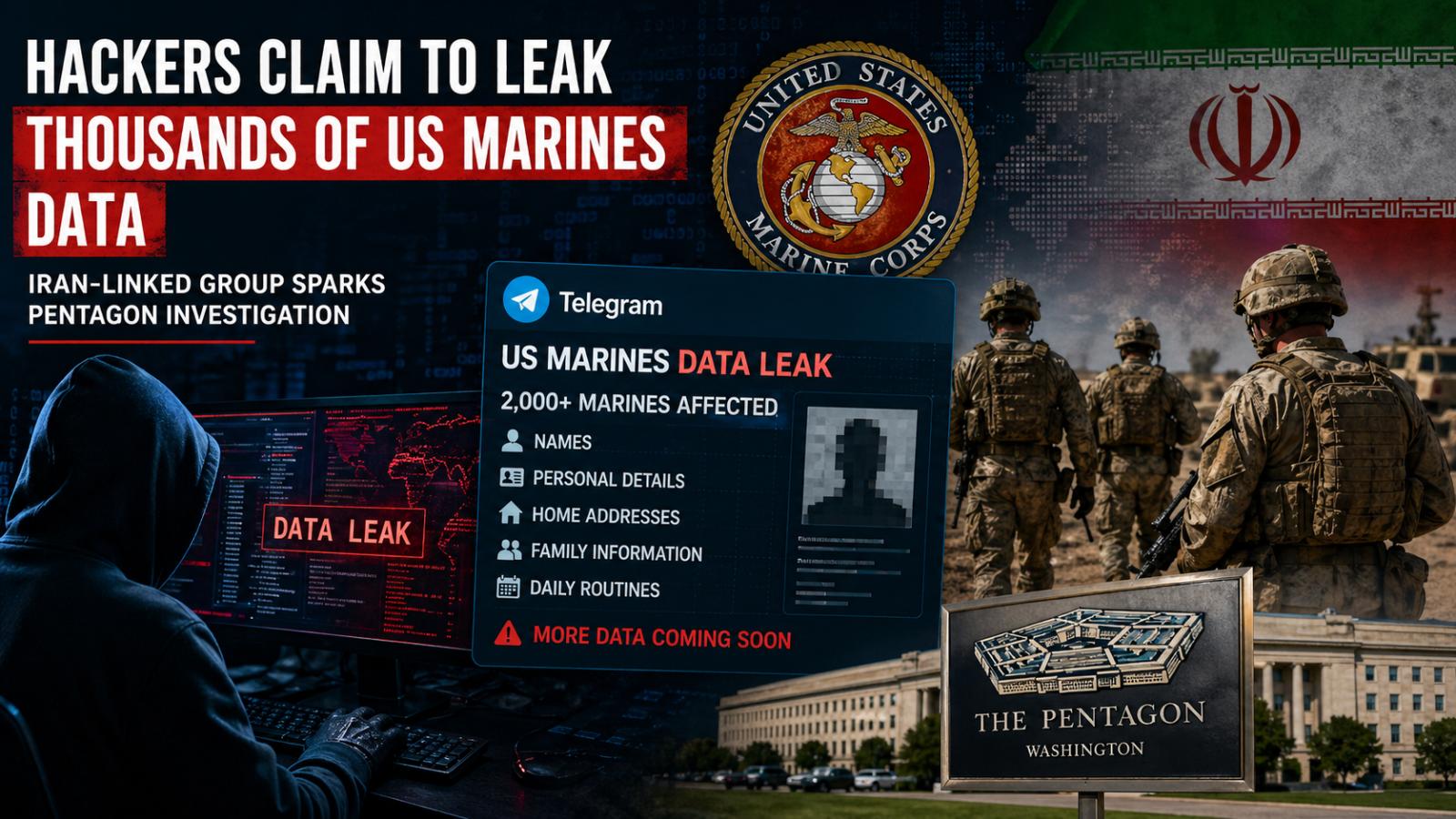
A hacker group reportedly linked to Iran has claimed responsibility for leaking sensitive personal data of thousands of US Marines deployed in West Asia, triggering an investigation by the US Department of Defense. Reports indicate that the breach involved the release of names and personal details belonging to more than 2,000 Marines, raising serious concerns about military cybersecurity and operational safety.
According to The Wall Street Journal, the leaked dataset included records of over 2,000 personnel, while another report suggested the number could be as high as 2,379. The group claiming responsibility has been identified as Handala, also known as Hanzala, which has previously been associated with cyber activities targeting Western interests.
Details of leaked information and surveillance claims
The hackers reportedly published the data on a channel on Telegram, presenting it as proof of their surveillance capabilities. The exposed information allegedly includes names and potentially other identifying details of US Marines stationed in the region. Reports also indicate that US troops received warning messages via WhatsApp, claiming they were being monitored and could be targeted.
The group further asserted that it possesses additional sensitive data, including home addresses, family details, and daily routines of American personnel. It warned that more information could be released in the future, escalating concerns about the safety of military members and their families.
Rising geopolitical tensions amplify cybersecurity risks
The reported breach comes amid heightened tensions between the United States and Iran. The incident underscores growing cybersecurity threats tied to geopolitical rivalries, particularly in regions where US forces are actively deployed. Analysts say such cyber operations can serve both as intelligence-gathering efforts and psychological pressure tactics.
Trump comments add to diplomatic strain
Amid these developments, Donald Trump commented on relations with Iran, stating that the country had reached out to the United States regarding reopening the Strait of Hormuz. In posts on his social media platform, Trump described Iran as being in a “state of collapse” and criticized its handling of negotiations over a non-nuclear agreement.
The convergence of cyber threats and diplomatic friction highlights the evolving nature of modern conflict, where digital attacks increasingly accompany traditional geopolitical disputes.
Hackers claim to leak thousands of records
A hacker group reportedly linked to Iran has claimed responsibility for leaking sensitive personal data of thousands of US Marines deployed in West Asia, triggering an investigation by the US Department of Defense. Reports indicate that the breach involved the release of names and personal details belonging to more than 2,000 Marines, raising serious concerns about military cybersecurity and operational safety.
According to The Wall Street Journal, the leaked dataset included records of over 2,000 personnel, while another report suggested the number could be as high as 2,379. The group claiming responsibility has been identified as Handala, also known as Hanzala, which has previously been associated with cyber activities targeting Western interests.
Details of leaked information and surveillance claims
The hackers reportedly published the data on a channel on Telegram, presenting it as proof of their surveillance capabilities. The exposed information allegedly includes names and potentially other identifying details of US Marines stationed in the region. Reports also indicate that US troops received warning messages via WhatsApp, claiming they were being monitored and could be targeted.
The group further asserted that it possesses additional sensitive data, including home addresses, family details, and daily routines of American personnel. It warned that more information could be released in the future, escalating concerns about the safety of military members and their families.
Rising geopolitical tensions amplify cybersecurity risks
The reported breach comes amid heightened tensions between the United States and Iran. The incident underscores growing cybersecurity threats tied to geopolitical rivalries, particularly in regions where US forces are actively deployed. Analysts say such cyber operations can serve both as intelligence-gathering efforts and psychological pressure tactics.
Trump comments add to diplomatic strain
Amid these developments, Donald Trump commented on relations with Iran, stating that the country had reached out to the United States regarding reopening the Strait of Hormuz. In posts on his social media platform, Trump described Iran as being in a “state of collapse” and criticized its handling of negotiations over a non-nuclear agreement.
The convergence of cyber threats and diplomatic friction highlights the evolving nature of modern conflict, where digital attacks increasingly accompany traditional geopolitical disputes.
Rockstar Games has confirmed a new cybersecurity incident after hackers claimed to have accessed company data, marking the second breach involving the developer in recent years. The breach was reported on Saturday, though the company emphasized that the impact appears minimal.
In a statement, Rockstar said a “limited amount of non-material company information” was accessed through a third-party cloud service provider. The company added that the incident has had no effect on its operations or players, seeking to reassure its global user base.
The group claiming responsibility, known as ShinyHunters, alleged it had gained access to Rockstar’s systems and threatened to release stolen data unless a ransom was paid. The group is known for targeting major corporations and exploiting vulnerabilities in cloud-based infrastructure.
Cybersecurity experts generally advise against paying ransom demands, noting that such payments often encourage further attacks without guaranteeing data recovery or deletion. ShinyHunters has previously been linked to several high-profile breaches involving large companies.
This latest incident follows a major breach in 2023, when sensitive material related to the highly anticipated Grand Theft Auto VI was leaked online. That attack, carried out by a teenage hacker associated with a separate group, exposed early gameplay footage and internal data, forcing Rockstar to accelerate its official announcements.
Despite the repeated targeting, Rockstar has indicated that its current security posture has limited the damage in the latest incident. The company has not disclosed additional technical details but continues to monitor the situation as cybersecurity threats remain a persistent challenge for the gaming industry.
Rockstar Games has confirmed a new cybersecurity incident after hackers claimed to have accessed company data, marking the second breach involving the developer in recent years. The breach was reported on Saturday, though the company emphasized that the impact appears minimal.
In a statement, Rockstar said a “limited amount of non-material company information” was accessed through a third-party cloud service provider. The company added that the incident has had no effect on its operations or players, seeking to reassure its global user base.
The group claiming responsibility, known as ShinyHunters, alleged it had gained access to Rockstar’s systems and threatened to release stolen data unless a ransom was paid. The group is known for targeting major corporations and exploiting vulnerabilities in cloud-based infrastructure.
Cybersecurity experts generally advise against paying ransom demands, noting that such payments often encourage further attacks without guaranteeing data recovery or deletion. ShinyHunters has previously been linked to several high-profile breaches involving large companies.
This latest incident follows a major breach in 2023, when sensitive material related to the highly anticipated Grand Theft Auto VI was leaked online. That attack, carried out by a teenage hacker associated with a separate group, exposed early gameplay footage and internal data, forcing Rockstar to accelerate its official announcements.
Despite the repeated targeting, Rockstar has indicated that its current security posture has limited the damage in the latest incident. The company has not disclosed additional technical details but continues to monitor the situation as cybersecurity threats remain a persistent challenge for the gaming industry.