#hydropowerworkers
Nepal Tunnel Rescue Intensifies as 900 Workers Remain Missing
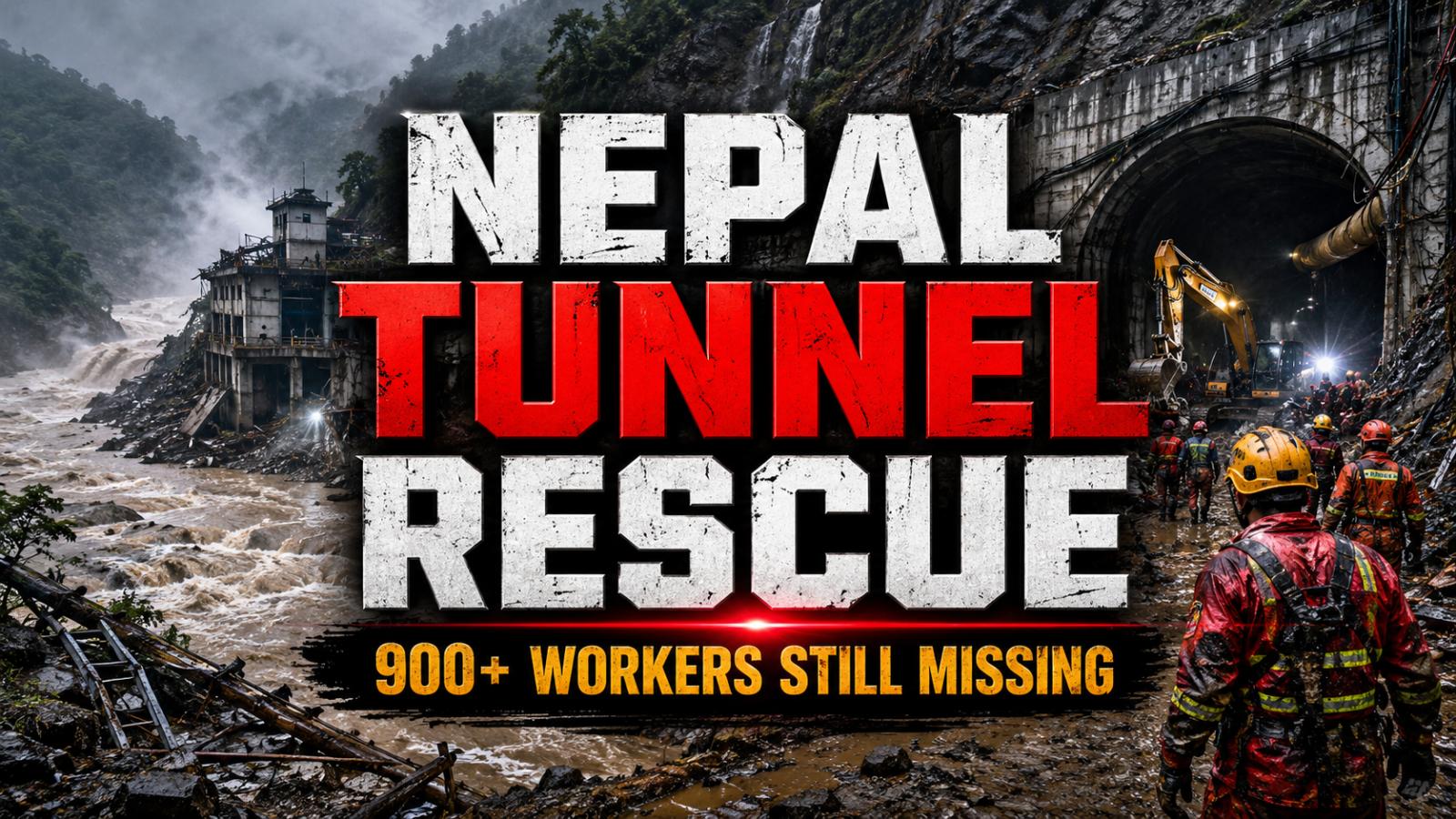
The Nepal tunnel rescue effort has entered a critical phase as more than 900 hydropower workers remain missing after the catastrophic Nepal-Tibet border floods. At the Trishuli site, rescuers have begun blasting through hillsides and pumping air into mud-filled tunnels as officials warn that the window to find survivors is narrowing. Trishuli Site Rescue Rescue teams on Monday escalated operations at the Trishuli-3A hydropower project, where many workers are feared trapped in a sprawling underground tunnel system clogged with mud, debris and floodwater. After days of difficult access, crews resorted to controlled explosives to break through the hillside and improve entry points. They also began pumping air into the tunnel network in the hope that some survivors may still be holding out underground. According to Nepal’s disaster management authority, more than 900 hydropower workers are still missing. Officials believe a significant number may be trapped inside tunnels and underground sections linked to multiple projects along the Trishuli River. Rescue teams briefly entered one tunnel on Monday, but withdrew after finding no survivors in that section. Hydropower Flood Damage The disaster has exposed Nepal’s vulnerability along its river-based hydropower corridor. Authorities say at least 11 hydropower projects, either completed or under construction, suffered damage in the floods. Nepal depends heavily on hydropower, and the destruction now threatens both immediate rescue efforts and longer-term energy infrastructure. About 250 people were rescued from the Upper Trishuli hydroelectric project over the weekend. Army engineers are now trying to reach another group of missing workers believed to be trapped deeper inside the site. Australian tunnelling expert Arnold Dix, who is assisting remotely, said there is still some hope because underground spaces may have offered partial protection from the force of the flood above. Chitwan Burials The rising number of unidentified bodies has created another crisis. In Chitwan, local authorities have begun temporary burials because they do not have enough freezers to store remains. Officials said families will be allowed to reclaim bodies later after DNA testing confirms identities. Chief district officer Ganesh Aryaal said the administration had no other option because morgue facilities were overwhelmed. The move underlines the scale of the tragedy and the pressure now facing local health, police and disaster-response systems. Rising Nepal Death Toll Nepal’s disaster management authority said the death toll has climbed to 939 after the unprecedented flow of ice, rock, mud and debris struck the Nepal-Tibet border region last Wednesday. The number of missing has also been revised sharply upward to 3,925, including 592 foreign nationals. An international rescue operation is now underway, led by Nepalese and Chinese military personnel with technical experts from India, Korea and Australia also involved. Their work remains difficult because unstable slopes, blocked access routes and mud-filled underground chambers continue to slow progress. Tibet Toll and Wider Impact Across the border in Tibet, Chinese state media have put the official death toll at 16, with 546 people reported missing. Chinese authorities have also reportedly cracked down on online speculation that the actual casualty numbers may be much higher. The cross-border nature of the disaster shows how severe the flooding has been throughout the Himalayan region. For Nepal, however, the immediate concern remains the missing workers. As oxygen levels fall and time runs short, the Trishuli tunnel rescue has become the central focus of one of the country’s most desperate recovery operations in recent years.
Nepal Tunnel Rescue Intensifies as 900 Workers Remain Missing
The Nepal tunnel rescue effort has entered a critical phase as more than 900 hydropower workers remain missing after the catastrophic Nepal-Tibet border floods. At the Trishuli site, rescuers have begun blasting through hillsides and pumping air into mud-filled tunnels as officials warn that the window to find survivors is narrowing. Trishuli Site Rescue Rescue teams on Monday escalated operations at the Trishuli-3A hydropower project, where many workers are feared trapped in a sprawling underground tunnel system clogged with mud, debris and floodwater. After days of difficult access, crews resorted to controlled explosives to break through the hillside and improve entry points. They also began pumping air into the tunnel network in the hope that some survivors may still be holding out underground. According to Nepal’s disaster management authority, more than 900 hydropower workers are still missing. Officials believe a significant number may be trapped inside tunnels and underground sections linked to multiple projects along the Trishuli River. Rescue teams briefly entered one tunnel on Monday, but withdrew after finding no survivors in that section. Hydropower Flood Damage The disaster has exposed Nepal’s vulnerability along its river-based hydropower corridor. Authorities say at least 11 hydropower projects, either completed or under construction, suffered damage in the floods. Nepal depends heavily on hydropower, and the destruction now threatens both immediate rescue efforts and longer-term energy infrastructure. About 250 people were rescued from the Upper Trishuli hydroelectric project over the weekend. Army engineers are now trying to reach another group of missing workers believed to be trapped deeper inside the site. Australian tunnelling expert Arnold Dix, who is assisting remotely, said there is still some hope because underground spaces may have offered partial protection from the force of the flood above. Chitwan Burials The rising number of unidentified bodies has created another crisis. In Chitwan, local authorities have begun temporary burials because they do not have enough freezers to store remains. Officials said families will be allowed to reclaim bodies later after DNA testing confirms identities. Chief district officer Ganesh Aryaal said the administration had no other option because morgue facilities were overwhelmed. The move underlines the scale of the tragedy and the pressure now facing local health, police and disaster-response systems. Rising Nepal Death Toll Nepal’s disaster management authority said the death toll has climbed to 939 after the unprecedented flow of ice, rock, mud and debris struck the Nepal-Tibet border region last Wednesday. The number of missing has also been revised sharply upward to 3,925, including 592 foreign nationals. An international rescue operation is now underway, led by Nepalese and Chinese military personnel with technical experts from India, Korea and Australia also involved. Their work remains difficult because unstable slopes, blocked access routes and mud-filled underground chambers continue to slow progress. Tibet Toll and Wider Impact Across the border in Tibet, Chinese state media have put the official death toll at 16, with 546 people reported missing. Chinese authorities have also reportedly cracked down on online speculation that the actual casualty numbers may be much higher. The cross-border nature of the disaster shows how severe the flooding has been throughout the Himalayan region. For Nepal, however, the immediate concern remains the missing workers. As oxygen levels fall and time runs short, the Trishuli tunnel rescue has become the central focus of one of the country’s most desperate recovery operations in recent years.