The United States is stepping up its focus on quantum computing as governments and private companies race to control the next major shift in computing power. The strategy combines research funding, national security planning, and stronger digital defense systems designed to prepare for future computational threats.
Rather than treating quantum computing as a distant research topic, policymakers are now positioning it as a strategic infrastructure priority. The direction signals a broader effort to maintain technological leadership in areas where classical computing is approaching its limits.
Big tech and government alignment
Federal agencies are increasingly coordinating with major technology companies including IBM, Microsoft, and Google, all of which are actively building experimental quantum systems. These companies are exploring how quantum processors could eventually solve complex optimization, material science, and cryptography-related problems that are currently impractical for classical machines.
The collaboration is not just scientific. It reflects a competitive global environment where control over advanced computing could influence national security, economic strength, and cybersecurity resilience.
Why qubits change the computing model
Unlike traditional computers that process data in binary form, quantum systems rely on qubits. These units can exist in multiple states simultaneously, enabling different types of computation through principles such as superposition and entanglement.
In theory, this allows quantum systems to evaluate a vast number of possibilities at once. However, real-world systems remain extremely fragile, expensive, and difficult to scale. Most current machines operate in controlled laboratory environments rather than practical deployment settings.
Cybersecurity pressure is rising
One of the biggest drivers behind quantum investment is its impact on encryption. Modern security systems depend on mathematical problems that are extremely difficult for classical computers to solve. Quantum algorithms, in the long term, could potentially break some of these systems.
This risk is pushing governments toward post-quantum cryptography standards developed by research bodies such as NIST. These new encryption models are designed to remain secure even against quantum-level computational attacks.
Long road to practical systems
Despite rapid progress, fully functional large-scale quantum computers are still years away. Challenges include error correction, stability, and hardware scaling. Researchers agree that meaningful commercial use is still in early stages.
Even so, the strategic push continues because early leadership in quantum infrastructure could determine future advantages in defense, intelligence, and advanced science applications.
The current phase is less about immediate transformation and more about positioning for a technological shift that could redefine computing over the next decade.
The United States is stepping up its focus on quantum computing as governments and private companies race to control the next major shift in computing power. The strategy combines research funding, national security planning, and stronger digital defense systems designed to prepare for future computational threats.
Rather than treating quantum computing as a distant research topic, policymakers are now positioning it as a strategic infrastructure priority. The direction signals a broader effort to maintain technological leadership in areas where classical computing is approaching its limits.
Big tech and government alignment
Federal agencies are increasingly coordinating with major technology companies including IBM, Microsoft, and Google, all of which are actively building experimental quantum systems. These companies are exploring how quantum processors could eventually solve complex optimization, material science, and cryptography-related problems that are currently impractical for classical machines.
The collaboration is not just scientific. It reflects a competitive global environment where control over advanced computing could influence national security, economic strength, and cybersecurity resilience.
Why qubits change the computing model
Unlike traditional computers that process data in binary form, quantum systems rely on qubits. These units can exist in multiple states simultaneously, enabling different types of computation through principles such as superposition and entanglement.
In theory, this allows quantum systems to evaluate a vast number of possibilities at once. However, real-world systems remain extremely fragile, expensive, and difficult to scale. Most current machines operate in controlled laboratory environments rather than practical deployment settings.
Cybersecurity pressure is rising
One of the biggest drivers behind quantum investment is its impact on encryption. Modern security systems depend on mathematical problems that are extremely difficult for classical computers to solve. Quantum algorithms, in the long term, could potentially break some of these systems.
This risk is pushing governments toward post-quantum cryptography standards developed by research bodies such as NIST. These new encryption models are designed to remain secure even against quantum-level computational attacks.
Long road to practical systems
Despite rapid progress, fully functional large-scale quantum computers are still years away. Challenges include error correction, stability, and hardware scaling. Researchers agree that meaningful commercial use is still in early stages.
Even so, the strategic push continues because early leadership in quantum infrastructure could determine future advantages in defense, intelligence, and advanced science applications.
The current phase is less about immediate transformation and more about positioning for a technological shift that could redefine computing over the next decade.
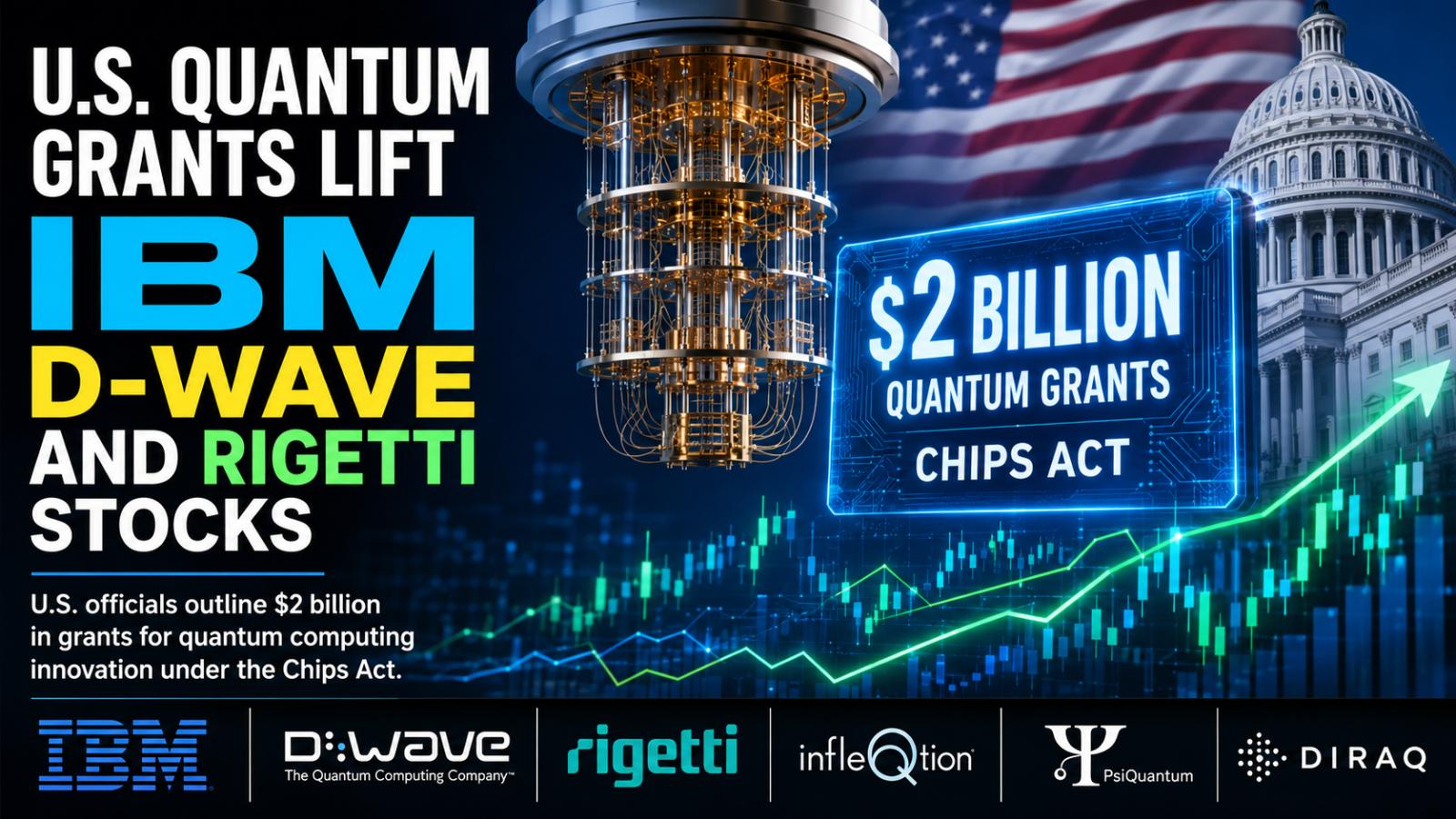
U.S. quantum grants stocks moved higher after federal officials announced planned CHIPS Act incentives for nine companies working on quantum computing hardware and manufacturing.
The U.S. Department of Commerce announced on Thursday, May 21, 2026, that it had signed letters of intent for $2.013 billion in planned federal incentives under the CHIPS and Science Act. The funding is intended to accelerate U.S. leadership in quantum comp
U.S. quantum grants stocks moved higher after federal officials announced planned CHIPS Act incentives for nine companies working on quantum computing hardware and manufacturing.
The U.S. Department of Commerce announced on Thursday, May 21, 2026, that it had signed letters of intent for $2.013 billion in planned federal incentives under the CHIPS and Science Act. The funding is intended to accelerate U.S. leadership in quantum comp
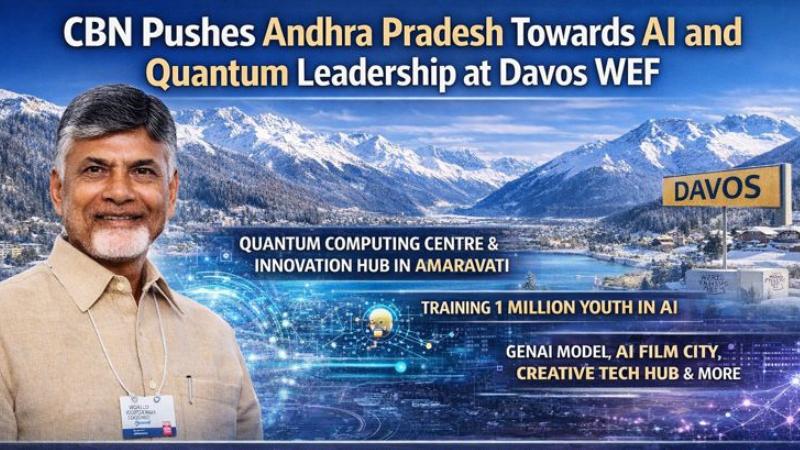
Andhra Pradesh Chief Minister Chandrababu Naidu once again proved why he is regarded as one of India’s most visionary leaders during his participation at the World Economic Forum in Davos. Known for anticipating global trends ahead of time, Naidu is now placing a strong strategic focus on artificial intelligence and quantum computing to transform Andhra Pradesh into a global technology destination. His series of high-level meetings and policy-driven initiatives at Davos reflect a clear comm
Andhra Pradesh Chief Minister Chandrababu Naidu once again proved why he is regarded as one of India’s most visionary leaders during his participation at the World Economic Forum in Davos. Known for anticipating global trends ahead of time, Naidu is now placing a strong strategic focus on artificial intelligence and quantum computing to transform Andhra Pradesh into a global technology destination. His series of high-level meetings and policy-driven initiatives at Davos reflect a clear comm
Former tennis star Sania Mirza revealed the emotional challenges she faced following her divorce from former Pakistan cricket captain Shoaib Malik. In a heartfelt conversation on her new YouTube talk show Serving It Up With Sania, the 38-year-old shared that she experienced a panic attack during one of the lowest moments of her life. She credited close friend and Bollywood director Farah Khan for being her pillar of support during this critical time. Sania recalled that without Farah
Former tennis star Sania Mirza revealed the emotional challenges she faced following her divorce from former Pakistan cricket captain Shoaib Malik. In a heartfelt conversation on her new YouTube talk show Serving It Up With Sania, the 38-year-old shared that she experienced a panic attack during one of the lowest moments of her life. She credited close friend and Bollywood director Farah Khan for being her pillar of support during this critical time. Sania recalled that without Farah
The healthcare industry has always been driven by innovation, but the integration of artificial intelligence is pushing it into a new era. At the forefront of this transformation is IBM Watson, a cognitive computing system that’s redefining how medical professionals diagnose, treat, and manage diseases. By analyzing vast amounts of data quickly and accurately, IBM Watson is helping doctors make more informed decisions, ultimately improving patient outcomes.
One of the key ways
The healthcare industry has always been driven by innovation, but the integration of artificial intelligence is pushing it into a new era. At the forefront of this transformation is IBM Watson, a cognitive computing system that’s redefining how medical professionals diagnose, treat, and manage diseases. By analyzing vast amounts of data quickly and accurately, IBM Watson is helping doctors make more informed decisions, ultimately improving patient outcomes.
One of the key ways
Artificial Intelligence (AI) is reshaping industries worldwide, and the demand for AI professionals is skyrocketing. For Indian professionals aspiring to elevate their careers in the US, acquiring AI certifications can provide the edge needed to stand out in this competitive field. Whether you're in tech or looking to pivot into AI, these certifications help equip you with valuable skills and improve your employability.
In this article, we’ll explore the top AI certificati
Artificial Intelligence (AI) is reshaping industries worldwide, and the demand for AI professionals is skyrocketing. For Indian professionals aspiring to elevate their careers in the US, acquiring AI certifications can provide the edge needed to stand out in this competitive field. Whether you're in tech or looking to pivot into AI, these certifications help equip you with valuable skills and improve your employability.
In this article, we’ll explore the top AI certificati
Tech giant IBM has laid off approximately 8,000 employees, with a significant portion of the job cuts reportedly targeting the company’s Human Resources (HR) department. The sweeping layoffs are believed to be directly tied to IBM’s increased adoption of Artificial Intelligence (AI) in its internal operations.
The announcement comes shortly after reports revealed that IBM had already replaced 200 HR roles with AI agents capable of automating tasks such as sorting informa
Tech giant IBM has laid off approximately 8,000 employees, with a significant portion of the job cuts reportedly targeting the company’s Human Resources (HR) department. The sweeping layoffs are believed to be directly tied to IBM’s increased adoption of Artificial Intelligence (AI) in its internal operations.
The announcement comes shortly after reports revealed that IBM had already replaced 200 HR roles with AI agents capable of automating tasks such as sorting informa
In a major move that reflects the rapidly evolving role of artificial intelligence in corporate structures, IBM has begun replacing a portion of its human resources team with AI-powered agents. This decision, confirmed by IBM CEO Arvind Krishna, has led to the automation of tasks previously handled by approximately 200 HR employees. The shift is part of IBM's broader automation push to streamline internal workflows and reduce time spent on routine, manual tasks.
Though this chan
In a major move that reflects the rapidly evolving role of artificial intelligence in corporate structures, IBM has begun replacing a portion of its human resources team with AI-powered agents. This decision, confirmed by IBM CEO Arvind Krishna, has led to the automation of tasks previously handled by approximately 200 HR employees. The shift is part of IBM's broader automation push to streamline internal workflows and reduce time spent on routine, manual tasks.
Though this chan
The State of Sustainability Readiness Report 2024 by IBM reveals a strong trend among Indian business leaders to significantly increase investments in IT for sustainability over the next 12 months. With 98% of respondents planning to expand their IT budgets, Indian executives view sustainability as essential for driving environmental responsibility, long-term business resilience, and improving brand reputation. The report highlights AI's transformative potential in helping busine
The State of Sustainability Readiness Report 2024 by IBM reveals a strong trend among Indian business leaders to significantly increase investments in IT for sustainability over the next 12 months. With 98% of respondents planning to expand their IT budgets, Indian executives view sustainability as essential for driving environmental responsibility, long-term business resilience, and improving brand reputation. The report highlights AI's transformative potential in helping busine