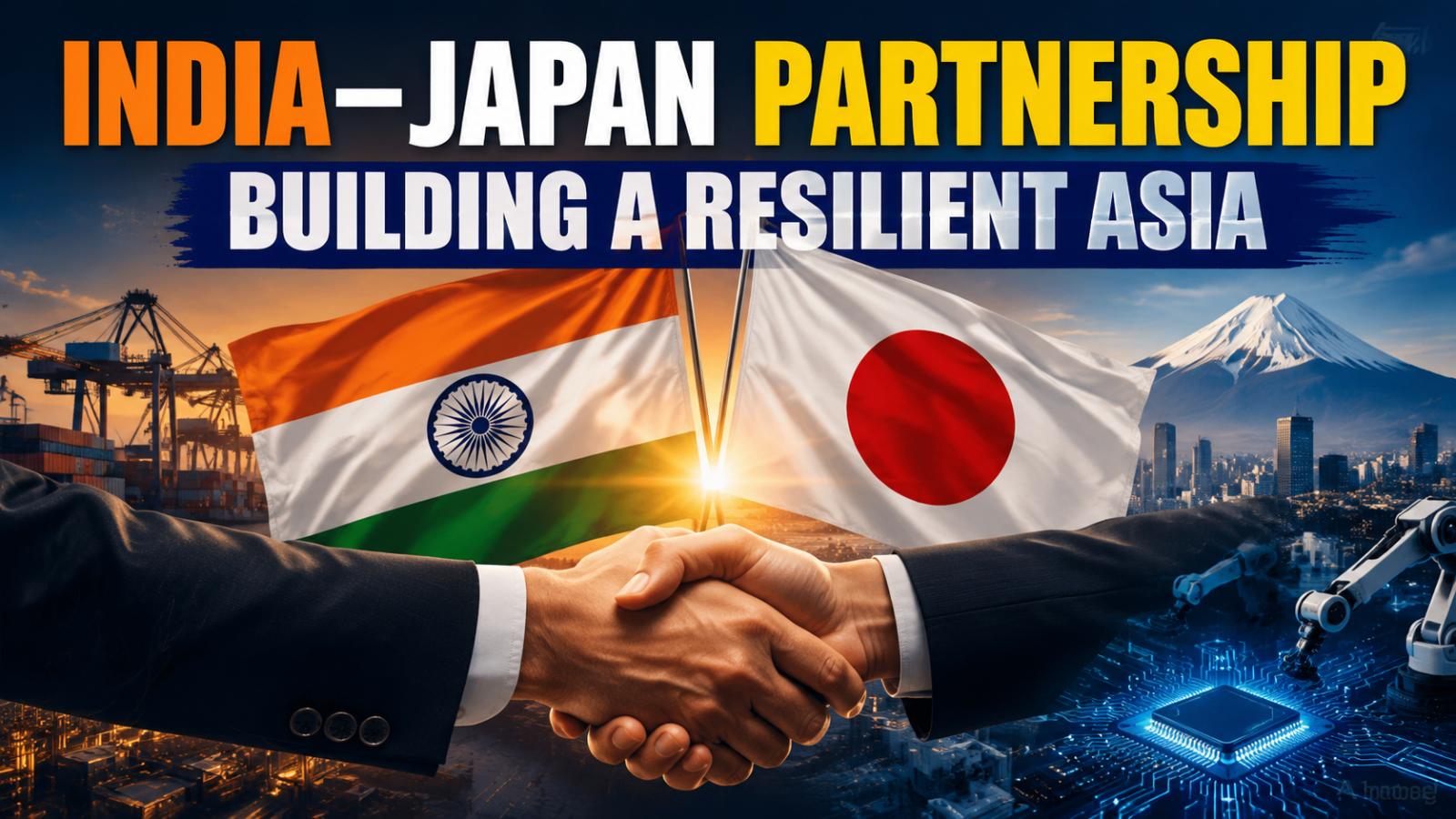
India and Japan are steadily moving their partnership beyond routine trade discussions into a broader realignment shaped by global risk and industrial restructuring. What looks like increased investment flows is actually part of a deeper repositioning of how both countries want to secure long-term economic stability in an uncertain global environment.
Investment growth driven by risk recalibration
Japanese companies are expanding their footprint in India not only for growth but also to reduce exposure to concentrated supply networks in East Asia. Rising geopolitical friction and periodic trade restrictions have forced firms to reconsider how dependent they are on single-country manufacturing systems. India is increasingly viewed as a viable diversification hub due to its scale, labor availability, and expanding industrial base.
Supply chain restructuring becomes the core driver
The most significant shift is happening in supply chains rather than headline investment figures. Japanese manufacturers are gradually redesigning sourcing and production models to reduce vulnerabilities in electronics, automotive components, and precision engineering. India fits into this transition as an alternative production and assembly base, especially for sectors where demand is growing but diversification is still limited.
Technology and industrial cooperation deepen
Cooperation is also expanding into advanced sectors such as semiconductors, digital systems, and artificial intelligence. These areas are no longer treated as purely commercial exchanges but as strategic capabilities. Both countries are aligning on technology resilience, where production continuity and security of supply matter as much as cost efficiency.
Rare earths and critical materials gain importance
Another emerging focus is critical minerals and rare earth supply chains. These materials are essential for electronics, renewable energy systems, and defence manufacturing. Dependence on concentrated suppliers has pushed both India and Japan to explore alternative sourcing strategies and joint development frameworks to reduce long-term risk.
Financial flows signal long-term positioning
Japanese capital inflows into Indian financial institutions and industrial projects suggest more than short-term investment interest. Financial participation typically indicates long-term confidence in policy stability and market expansion. However, the real test will be whether this capital flow expands into deeper manufacturing integration rather than remaining portfolio-based exposure.
Economic security becomes the defining theme
At the core of this evolving relationship is economic security. Trade decisions are increasingly shaped by geopolitical uncertainty rather than pure cost advantage. This marks a shift from efficiency-driven globalization to resilience-driven partnerships, where countries prioritize stability over optimization.
A cautious but strategic realignment
The India–Japan partnership is gradually becoming a case study in how middle and advanced economies adjust to global fragmentation. While the direction is clear—greater cooperation in technology, investment, and supply chains—the pace will depend on regulatory alignment, infrastructure readiness, and how effectively both sides manage external geopolitical pressures.
India and Japan are steadily moving their partnership beyond routine trade discussions into a broader realignment shaped by global risk and industrial restructuring. What looks like increased investment flows is actually part of a deeper repositioning of how both countries want to secure long-term economic stability in an uncertain global environment.
Investment growth driven by risk recalibration
Japanese companies are expanding their footprint in India not only for growth but also to reduce exposure to concentrated supply networks in East Asia. Rising geopolitical friction and periodic trade restrictions have forced firms to reconsider how dependent they are on single-country manufacturing systems. India is increasingly viewed as a viable diversification hub due to its scale, labor availability, and expanding industrial base.
Supply chain restructuring becomes the core driver
The most significant shift is happening in supply chains rather than headline investment figures. Japanese manufacturers are gradually redesigning sourcing and production models to reduce vulnerabilities in electronics, automotive components, and precision engineering. India fits into this transition as an alternative production and assembly base, especially for sectors where demand is growing but diversification is still limited.
Technology and industrial cooperation deepen
Cooperation is also expanding into advanced sectors such as semiconductors, digital systems, and artificial intelligence. These areas are no longer treated as purely commercial exchanges but as strategic capabilities. Both countries are aligning on technology resilience, where production continuity and security of supply matter as much as cost efficiency.
Rare earths and critical materials gain importance
Another emerging focus is critical minerals and rare earth supply chains. These materials are essential for electronics, renewable energy systems, and defence manufacturing. Dependence on concentrated suppliers has pushed both India and Japan to explore alternative sourcing strategies and joint development frameworks to reduce long-term risk.
Financial flows signal long-term positioning
Japanese capital inflows into Indian financial institutions and industrial projects suggest more than short-term investment interest. Financial participation typically indicates long-term confidence in policy stability and market expansion. However, the real test will be whether this capital flow expands into deeper manufacturing integration rather than remaining portfolio-based exposure.
Economic security becomes the defining theme
At the core of this evolving relationship is economic security. Trade decisions are increasingly shaped by geopolitical uncertainty rather than pure cost advantage. This marks a shift from efficiency-driven globalization to resilience-driven partnerships, where countries prioritize stability over optimization.
A cautious but strategic realignment
The India–Japan partnership is gradually becoming a case study in how middle and advanced economies adjust to global fragmentation. While the direction is clear—greater cooperation in technology, investment, and supply chains—the pace will depend on regulatory alignment, infrastructure readiness, and how effectively both sides manage external geopolitical pressures.
High-level diplomatic engagement in New Delhi
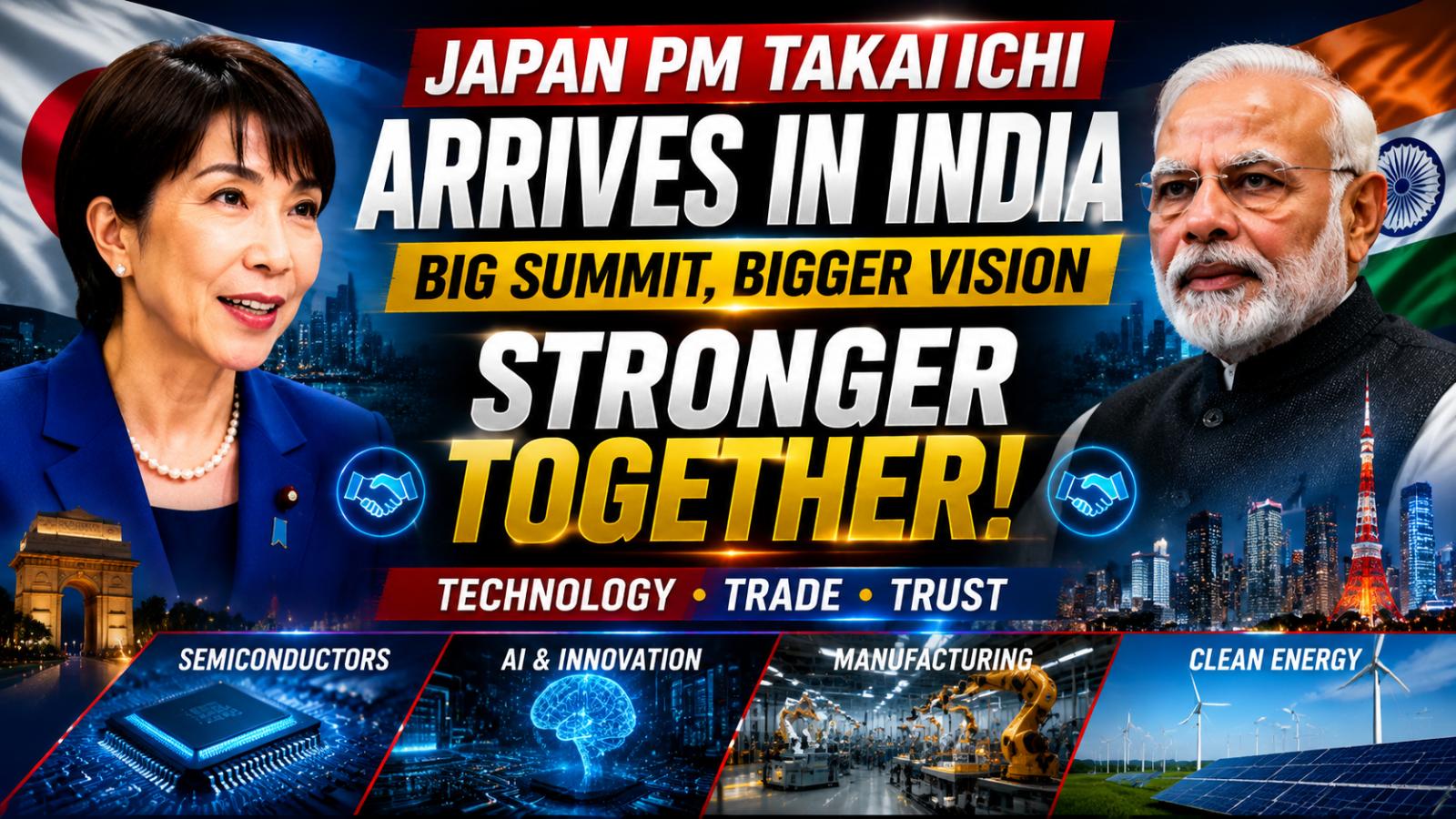
Japanese Prime Minister Sanae Takaichi will arrive in India on July 1,2026 for the 16th India-Japan Annual Summit at the invitation of Prime Minister Narendra Modi. The visit marks her first official trip to India since taking office in 2025 and comes at a time when both nations are seeking to strengthen strategic and economic alignment in a rapidly changing global environment.
High-level diplomatic engagement in New Delhi
Japanese Prime Minister Sanae Takaichi will arrive in India on July 1,2026 for the 16th India-Japan Annual Summit at the invitation of Prime Minister Narendra Modi. The visit marks her first official trip to India since taking office in 2025 and comes at a time when both nations are seeking to strengthen strategic and economic alignment in a rapidly changing global environment.
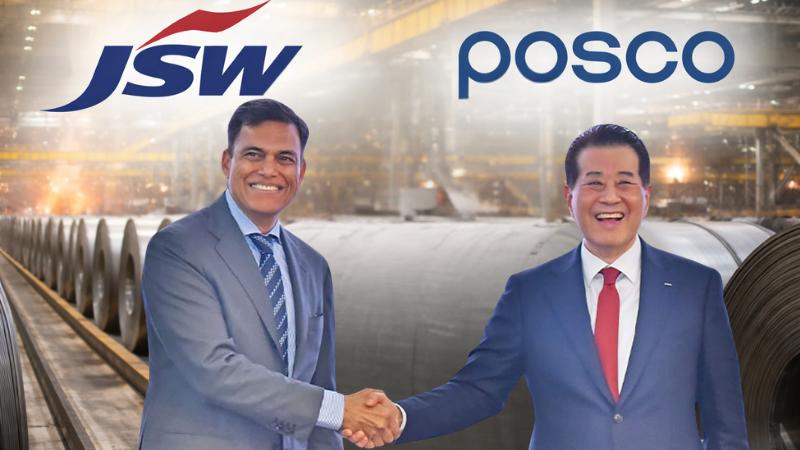
JSW Steel and POSCO have entered into a joint venture agreement to establish a new steel manufacturing plant in Odisha. The development comes at a significant time, coinciding with the official visit of the South K
JSW Steel and POSCO have entered into a joint venture agreement to establish a new steel manufacturing plant in Odisha. The development comes at a significant time, coinciding with the official visit of the South K
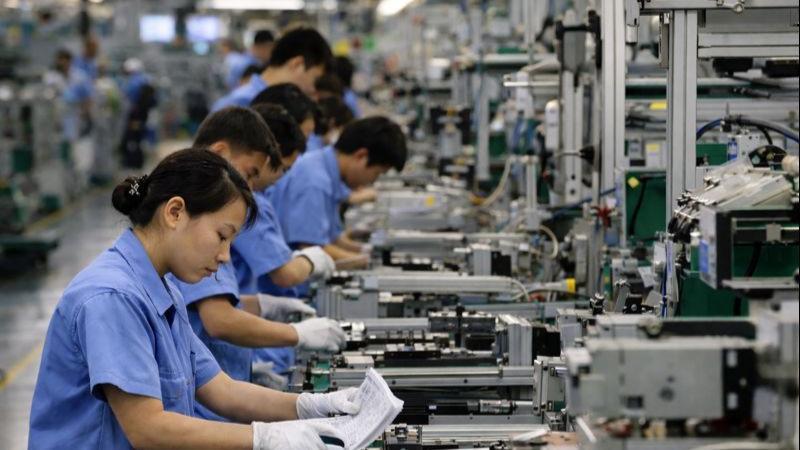
China’s manufacturing success was attributed to cheap labour. That perception has now changed completely. Factory wages in China have climbed close to eight dollars per hour, far higher than those in Vietnam, Malaysia, Thailand, and India. By cost logic alone, China should have lost its position as the world’s manufacturing hub. Instead, it continues to dominate global production, contributing nearly 28 percent of worldwide manufacturing output. The reason lies not in wages, but in produc
China’s manufacturing success was attributed to cheap labour. That perception has now changed completely. Factory wages in China have climbed close to eight dollars per hour, far higher than those in Vietnam, Malaysia, Thailand, and India. By cost logic alone, China should have lost its position as the world’s manufacturing hub. Instead, it continues to dominate global production, contributing nearly 28 percent of worldwide manufacturing output. The reason lies not in wages, but in produc
India’s economy recorded a faster pace of expansion in the July–September quarter, with official data showing that gross domestic product rose 8.2% year-on-year. The acceleration reflects a combination of stronger consumer demand, a revival in manufacturing activity, and accelerated production schedules ahead of India’s major festive season. Economists had widely expected the quarter to deliver robust growth, but the latest figure surpassed the projected 7.3% expansion for the period, e
India’s economy recorded a faster pace of expansion in the July–September quarter, with official data showing that gross domestic product rose 8.2% year-on-year. The acceleration reflects a combination of stronger consumer demand, a revival in manufacturing activity, and accelerated production schedules ahead of India’s major festive season. Economists had widely expected the quarter to deliver robust growth, but the latest figure surpassed the projected 7.3% expansion for the period, e
The long-awaited trade deal between India and the United States is expected to materialize in the near future, according to U.S. Secretary of Commerce Howard Lutnick. Speaking on June 2, 2025, at the eighth edition of the Leadership Summit hosted by the U.S.-India Strategic Partnership Forum in Washington, Mr. Lutnick shared insights on the progress of the negotiations, highlighting that India stands to gain favorable tariffs on multiple manufacturing sectors, providing it a competitive advan
The long-awaited trade deal between India and the United States is expected to materialize in the near future, according to U.S. Secretary of Commerce Howard Lutnick. Speaking on June 2, 2025, at the eighth edition of the Leadership Summit hosted by the U.S.-India Strategic Partnership Forum in Washington, Mr. Lutnick shared insights on the progress of the negotiations, highlighting that India stands to gain favorable tariffs on multiple manufacturing sectors, providing it a competitive advan
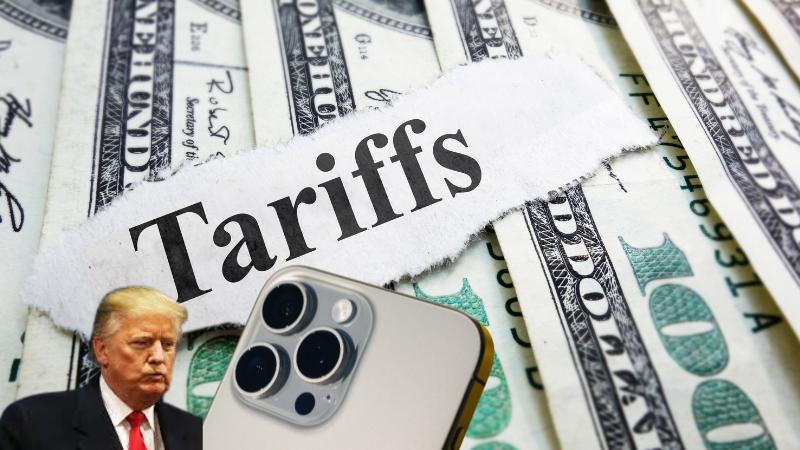
In a series of statements that have stirred global business conversations, U.S. President Donald Trump has issued a stark warning to Apple, insisting that the tech giant must manufacture iPhones within the United States if it intends to sell them in the American market. Speaking from the Oval Office while signing multiple executive orders aimed at strengthening the U.S. nuclear power sector, Trump said it is acceptable for Apple to go to India to build plants, but under no circumstances
In a series of statements that have stirred global business conversations, U.S. President Donald Trump has issued a stark warning to Apple, insisting that the tech giant must manufacture iPhones within the United States if it intends to sell them in the American market. Speaking from the Oval Office while signing multiple executive orders aimed at strengthening the U.S. nuclear power sector, Trump said it is acceptable for Apple to go to India to build plants, but under no circumstances
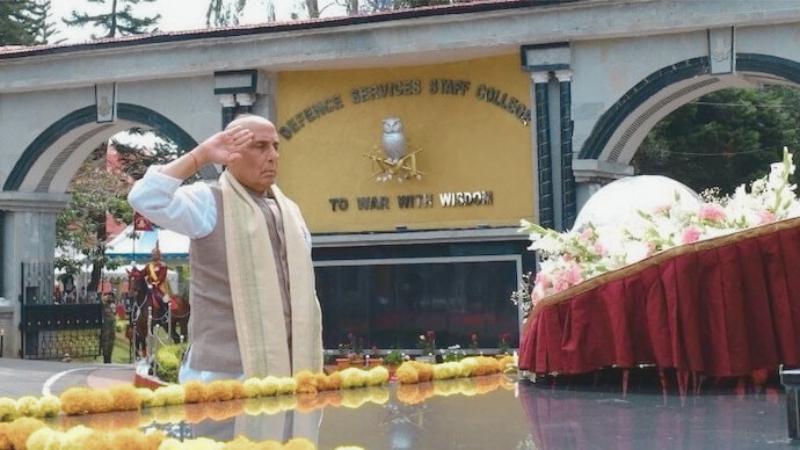
India’s Defence Minister Rajnath Singh today delivered a forward-looking and comprehensive address at the convocation ceremony of the 80th Staff Course at the Defence Services Staff College (DSSC) in Wellington. Stressing the importance of modernization, jointness, and preparedness, he urged the armed forces to be technologically empowered and resilient in facing evolving multi-domain threats in the current global security landscape. With 479 officers attending the 80th Staff Course, in
India’s Defence Minister Rajnath Singh today delivered a forward-looking and comprehensive address at the convocation ceremony of the 80th Staff Course at the Defence Services Staff College (DSSC) in Wellington. Stressing the importance of modernization, jointness, and preparedness, he urged the armed forces to be technologically empowered and resilient in facing evolving multi-domain threats in the current global security landscape. With 479 officers attending the 80th Staff Course, in
India is positioning itself to become a global player in the rapidly expanding fields of artificial intelligence (AI) and chip manufacturing. Experts believe the country’s entry into the AI space, akin to the emergence of China’s DeepSeek, will be driven by strategic public-private partnerships within the next 4-5 years. Kunal Bahl, co-founder of Titan Capital and a prominent entrepreneur, emphasized this potential growth in a conversation about India&
India is positioning itself to become a global player in the rapidly expanding fields of artificial intelligence (AI) and chip manufacturing. Experts believe the country’s entry into the AI space, akin to the emergence of China’s DeepSeek, will be driven by strategic public-private partnerships within the next 4-5 years. Kunal Bahl, co-founder of Titan Capital and a prominent entrepreneur, emphasized this potential growth in a conversation about India&
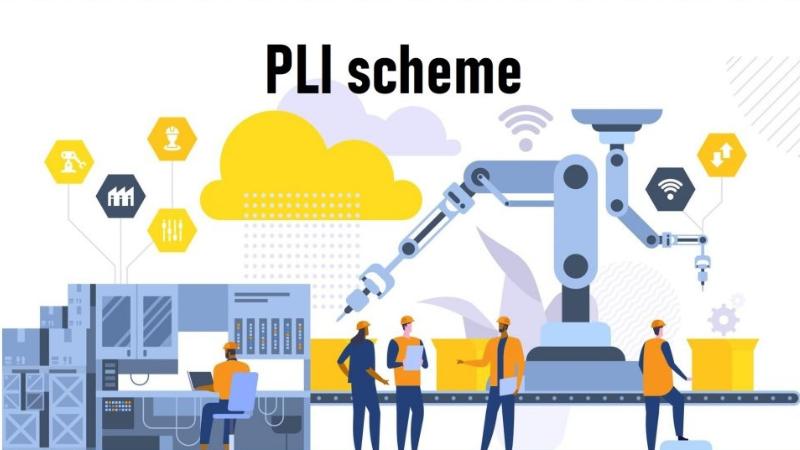
The Indian government is working on refining the Production-Linked Incentive (PLI) scheme to increase local value addition and export-driven growth in key industries. While the scheme has successfully attracted investment across multiple sectors, officials believe that further improvements are needed to address import dependency and enhance India's global manufacturing competitiveness.Since its launch in April 2020, the PLI scheme has been instrumental in drawing substantial investments i
The Indian government is working on refining the Production-Linked Incentive (PLI) scheme to increase local value addition and export-driven growth in key industries. While the scheme has successfully attracted investment across multiple sectors, officials believe that further improvements are needed to address import dependency and enhance India's global manufacturing competitiveness.Since its launch in April 2020, the PLI scheme has been instrumental in drawing substantial investments i
Impact of China’s Export Restrictions on Indian Manufacturing:
India’s manufacturing industry is facing significant disruptions due to China’s export restrictions, which are part of the ongoing trade tensions between the United States and China. These curbs primarily affect industries in India that rely on raw materials, machinery, and components from China, such as the solar po
Impact of China’s Export Restrictions on Indian Manufacturing:
India’s manufacturing industry is facing significant disruptions due to China’s export restrictions, which are part of the ongoing trade tensions between the United States and China. These curbs primarily affect industries in India that rely on raw materials, machinery, and components from China, such as the solar po
The Tata Group is making significant strides into the semiconductor industry, as Chairman N Chandrasekaran announced plans to establish new manufacturing facilities in various locations across India, including Assam and Ozhur in Kerala. Chandrasekaran emphasized the group’s commitment to building a robust semiconductor ecosystem in the country.
The main facility, a semiconductor fabrication plant (Fab), is under construction in Dholera, Gujarat. This state-of-the-art facility
The Tata Group is making significant strides into the semiconductor industry, as Chairman N Chandrasekaran announced plans to establish new manufacturing facilities in various locations across India, including Assam and Ozhur in Kerala. Chandrasekaran emphasized the group’s commitment to building a robust semiconductor ecosystem in the country.
The main facility, a semiconductor fabrication plant (Fab), is under construction in Dholera, Gujarat. This state-of-the-art facility